Xteink X4 Pro Tiny E-Reader Review Roundup: What Buyers Should Know
The Xteink X4 Pro went on sale today through Xteink's website at $99, bringing a touchscreen and adjustable front light to the wallet-sized e-reader for the first time. Several reviewers said those additions make the device more plausible as a primary reader rather than just a portable companion to a Kindle. The catch, which every major review flags in some form, is that the software and content workflow still require more patience than most readers will want to spend.
Initial stock sold out quickly at launch, Notebookcheck reported today. The X4 Pro is not yet available through any third-party retailer.
At 72 grams and 5.95mm thin, the device is one of the smallest e-readers on the market, considerably smaller than Amazon's 6-inch Kindle and slim enough to attach magnetically to any Qi2-compatible smartphone, according to TechCrunch and Notebookcheck, both writing today. The hardware improvements are real. The software situation is more complicated.
Xteink X4 Pro specs and the upgrades that change the device's purpose
Video of the Day

Display and size: 4.26-inch E Ink screen, 219 ppi, 800 x 480 resolution. Body weighs 72 grams and measures 5.95mm thin. MicroSD slot supports up to 256GB of expanded storage.
Battery: 1,100mAh, up from 650mAh on the original X4 and larger than the entry-level Kindle's 900mAh, Lifehacker noted today.
Charging: Proprietary magnetic pogo-pin connector with USB-C adapter included. No USB-C port.
Connectivity: Wi-Fi, Bluetooth, built-in Qi2-compatible magnets.
Price: $99, available at launch exclusively through Xteink's online store.
The front light is the addition reviewers from The Verge and TechCrunch point to most directly today. Both had used earlier Xteink models and described nighttime reading as a use case the original X4 simply couldn't serve. The X4 Pro offers ten brightness levels and a full warmth range, from cool white to warm amber. There's no automatic brightness adjustment or ambient sensing yet, but manual control handles the basics.
The touchscreen replaces the X4's button-heavy front panel while keeping two physical page-turn buttons, one on each side, and a touch-sensitive home button below the screen. Touch can be disabled entirely for button-only navigation, Lifehacker and The Verge both noted today. Xteink built the X4 Pro directly in response to users requesting both features, TechCrunch reported.
Battery life is a clear strength. Moderate readers using the light at 70% brightness should expect one to two weeks between charges; lighter readers could stretch that to three or four weeks, Lifehacker estimated. TechCrunch's reviewer used the device most days across three weeks and still had 60% remaining.
The one step backward is charging. The X4 Pro drops USB-C for a proprietary magnetic pogo-pin connector. An adapter ships in the box, but it's now one more cable to keep track of. Both TechCrunch and Lifehacker flagged it today as a likely engineering trade for thinness.
Video of the Day
Where the Xteink X4 Pro tiny e-reader falls short of Kindle
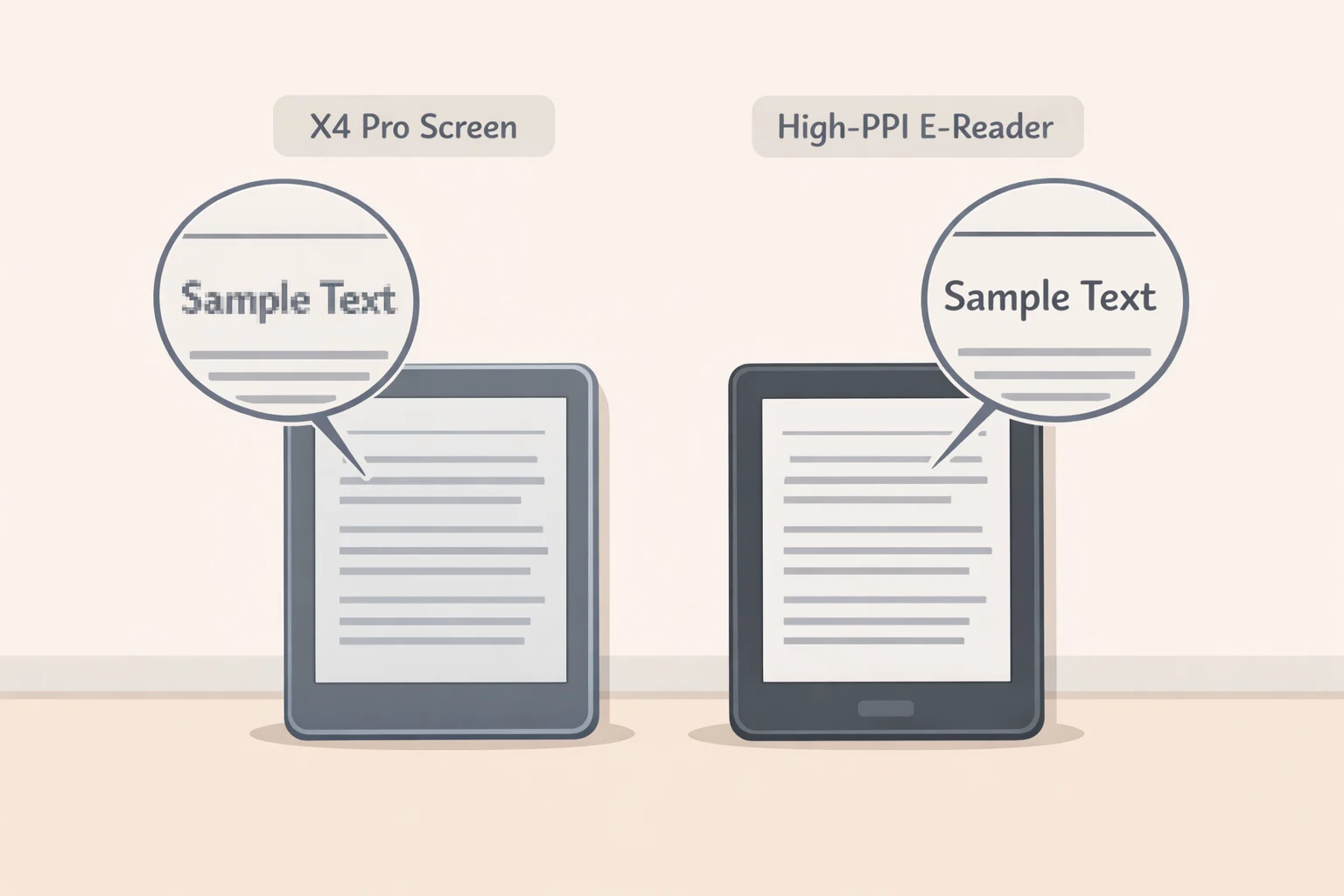
The pixel density gap is the sharpest hardware limitation. The X4 Pro's 219 ppi display is roughly 37% less sharp than the 300 ppi screens on the entry-level Kindle and comparable Kobo models. Text also reads as slightly less crisp than on the original X4, likely because the added touchscreen and front-light layers introduce some visual diffusion above the E Ink panel, Lifehacker reported today. For standard prose, most reviewers found the screen workable. It is still a small screen.
Touchscreen responsiveness split the review record. The Verge found the screen noticeably less sensitive than a Kindle or Kobo, frequently requiring a second, firmer tap to register. Lifehacker found touch response acceptable in daily use. A pre-release reviewer testing an early firmware build three weeks before launch rated the lag severe enough to advise against buying until fixed, Joshua Lowcock wrote earlier this month. Whether the shipping firmware resolved that issue, or whether it reflects a hardware ceiling, is not settled across the available reviews.
Screen size is a real constraint for some content. TechCrunch's reviewer returned to a Kindle specifically for rereading poetry, because formatted line breaks become awkward on 4.26 inches. Prose readers will mostly be fine.
The portability angle remains the device's clearest differentiator. No mainstream e-reader attaches to the back of a smartphone, and the X4 Pro is considerably more pocketable than Amazon's 6-inch Kindle. No case is available at launch, Lowcock noted earlier this month, and there's no waterproofing either, a notable omission for something marketed as a daily-carry device.
The software reality: stock OS, getting books on it, and why CrossPoint matters
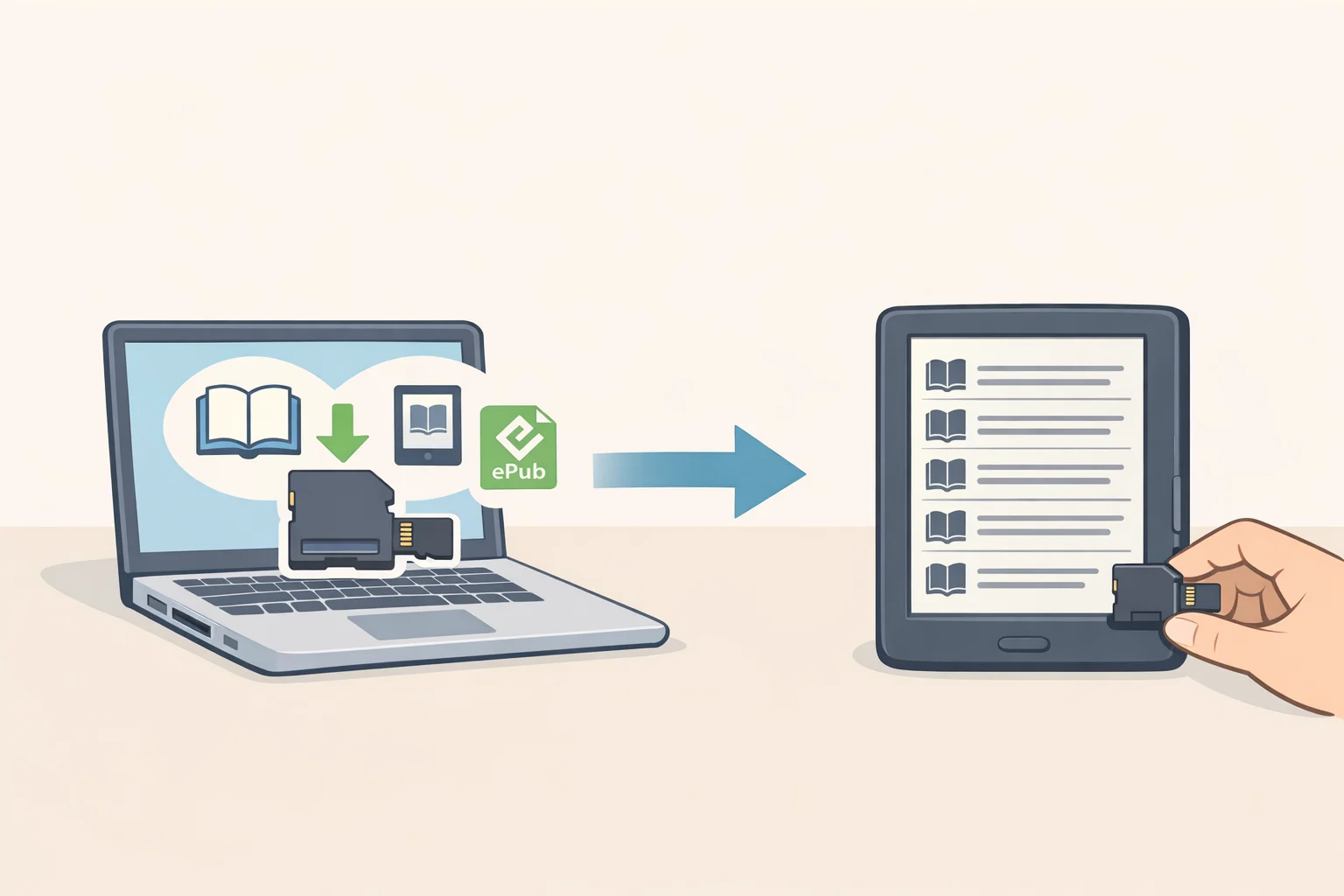
Getting books onto the X4 Pro is not a turn-it-on-and-shop workflow. There's no Libby integration and no support for DRM-protected epub files, which rules out library lending entirely, TechCrunch reported. For DRM-free files, the most reliable path is removing the microSD card and loading files via adapter; TechCrunch's reviewer settled on this after finding the companion app's wireless transfer unreliable. The device can also be mounted as an external drive via USB mode, though Lifehacker found even that inconsistent. Some tolerance for manual file management is a prerequisite for ownership.
The stock OS compounds the friction. Multiple reviewers describe the bundled software as rough: line breaks split words mid-syllable, bold and italic rendering are absent, and a single preloaded font ships in the box. The UI can require guesswork to navigate, Lifehacker and The Verge both observed today. TechCrunch described the software as a meaningful upgrade over previous models, though still clunky in practice. The pre-release build Lowcock reviewed three weeks ago read as a beta in both feel and stability, he wrote.
CrossPoint Reader is the fix, or will be. The free, community-built firmware overhauls the UI and adds font options, reading statistics, and other features the stock OS lacks. The Verge called it the single most compelling reason to buy the X4 Pro, and CrossPoint's lead maintainer told The Verge that support would be ready before US customers receive their first units. Lifehacker described it as not yet available for the X4 Pro but likely coming soon. Both agree CrossPoint substantially improves the experience. As of today, it remains promised firmware, not a verified shipping fact.
Xteink is now an official hardware partner in the Free Ink project that maintains CrossPoint, The Verge reported, signaling that the relationship between the company and the community firmware is formalizing. The practical question for buyers is whether they're comfortable purchasing hardware whose best software version hasn't shipped yet.
For existing X4 owners specifically, the upgrade calculus is less obvious. The front light and touchscreen are real improvements, but the $30 price jump alongside unresolved software friction makes it a judgment call rather than a clear yes, Lowcock concluded earlier this month.
What's settled, what isn't, and who should wait
Here's where the review record lands today. The hardware improvements are real and broadly agreed upon: the front light works, the battery life is strong, and reviewers at TechCrunch, The Verge, and Lifehacker each recommend it over any previous Xteink model. At $99, it's $11 below the entry-level Kindle, though Lifehacker noted that gap is narrow enough to make the software limitations and missing Kindle polish matter.
Several things remain unresolved. Whether shipping firmware fixed the touch lag that Lowcock flagged in his pre-release build is not confirmed across reviews. CrossPoint availability at launch is promised but unverified as of today. First stock sold out on launch; restock timing is unknown.
Readers who borrow from Libby, rely on Amazon's or Kobo's storefronts, or expect a frictionless setup should look elsewhere. The X4 Pro is best suited to readers who own DRM-free ebooks, are comfortable with manual file management, and for whom pocketability is the priority. For that group, the device makes a credible case.
The most important development to watch in the coming days is CrossPoint's actual availability. If the firmware lands before US units ship, as the maintainer told The Verge it would, the software gap closes considerably faster than any internal update schedule could manage. That would also test whether Xteink's formal partnership with the Free Ink project translates into something buyers can rely on for future devices, not just this one.