Best Time of Day to Cut Grass: Morning, Evening, or Neither?
Mid-morning is the best time of day to cut grass. That's the short answer. The longer answer is that mid-morning works because the dew has dried by then and dry grass is what actually matters, not the position of the sun or the number on the clock.
University of Georgia turfgrass extension specialist Clint Waltz puts it plainly: mow when the canopy is dry, after the dew has cleared, which is usually around mid-morning even in the humid Southeast, UGA Today reported. Wet grass sticks to the mower deck, cuts unevenly, and makes the soil more likely to rut under the mower's wheels. Those problems compound across a season.
Timing is only part of it, though. A homeowner who mows at the right hour into an overgrown lawn with a dull blade hasn't gained much. The sections below cover the two recommended windows, how to read your grass for mowing readiness, and the habits height, frequency, blade condition that determine whether good timing actually pays off.
Best time to mow the lawn: morning vs. evening
Video of the Day
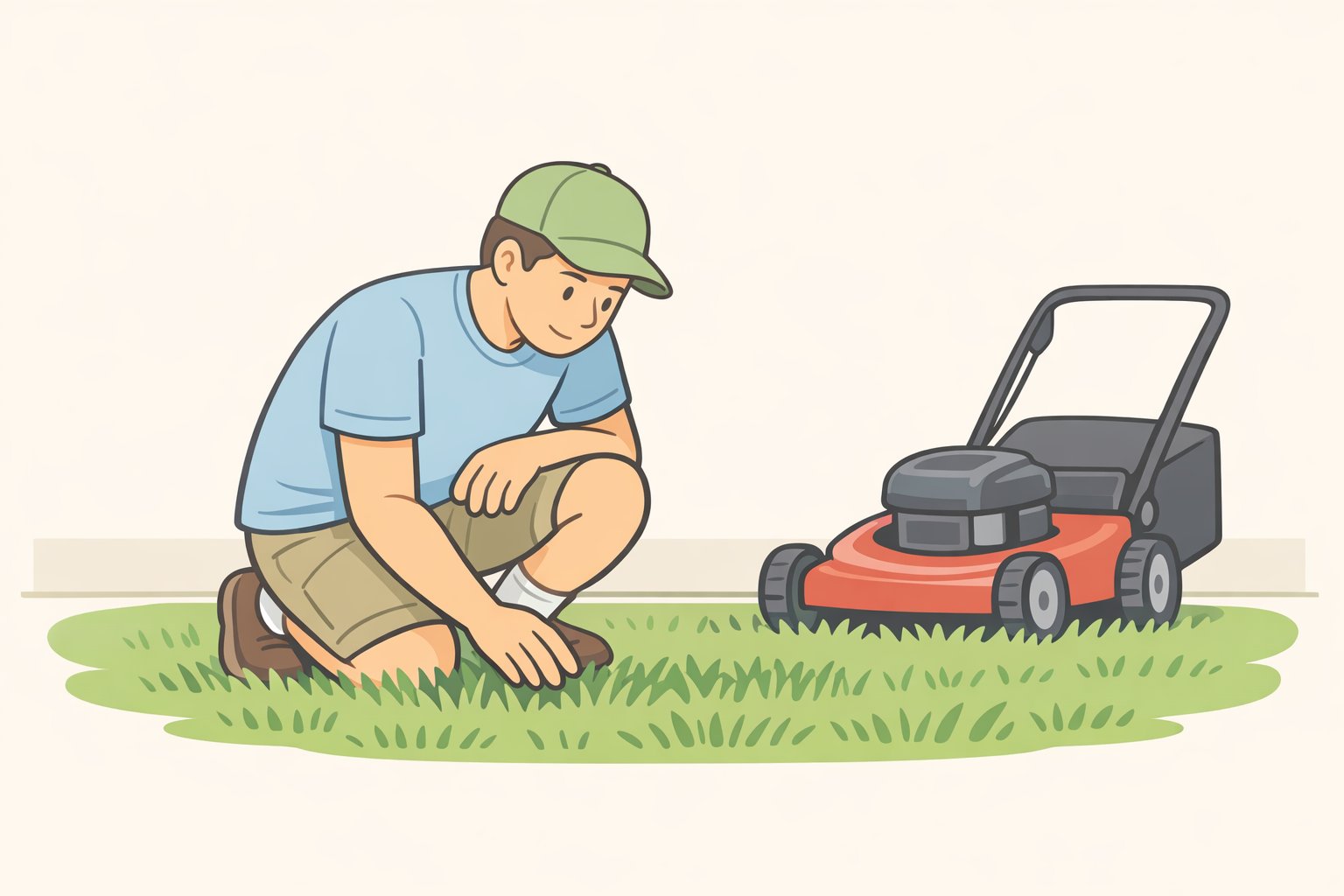
Mid-morning is the default. Once dew has cleared which Waltz describes as usually mid-morning, even in wetter climates the grass canopy is dry and cuts cleanly, UGA Today reported. In reliably humid regions, that window may come later than expected; adjust based on what you observe rather than the clock.
Late afternoon is the backup. Waltz also endorses around 5:30 to 6 p.m. as a workable alternative the heat of the day has passed, and there's enough remaining daylight for the lawn to begin recovering, UGA Today reported.
Skip early morning entirely. Cutting into dew produces clumped clippings that stick to the mower deck and smother the turf underneath. As for midday, the concern is less about sun angle and more about whether the grass is dry after any morning moisture.
What to do when conditions aren't ideal:
- If the lawn is still wet, wait. Check by walking across it if your footprints stay compressed rather than recovering, the turf is still holding moisture.
- After rain or heavy irrigation, the clock is irrelevant. Let the lawn dry out regardless of the hour.
- If late afternoon is the only available window on a given day, use it while daylight remains.
Wet grass creates ruts in the soil that accumulate across multiple mowings, UGA Today noted. Early morning mowing feels efficient. It consistently isn't the extra hour of patience produces a better cut and prevents problems that build quietly over a full season.
Video of the Day
Step 1: Mow based on growth, not the calendar
A fixed weekly schedule fails in both directions. Sometimes it has you cutting before the lawn needs it; more often, it means you've waited too long and end up removing too much in a single pass. Mowing frequency should be based on the growth rate of the lawn, not the day of the week, according to Kansas State University horticulture experts Cynthia Domenghini and Matt McKernan, writing separately for K-State Research and Extension and K-State Research and Extension.
During peak spring growth, once a week may not be enough. Penn State Extension notes that some lawns need cutting more than once per week during vigorous spring periods. That's not a problem mow more often rather than letting it get tall and then removing too much at once.
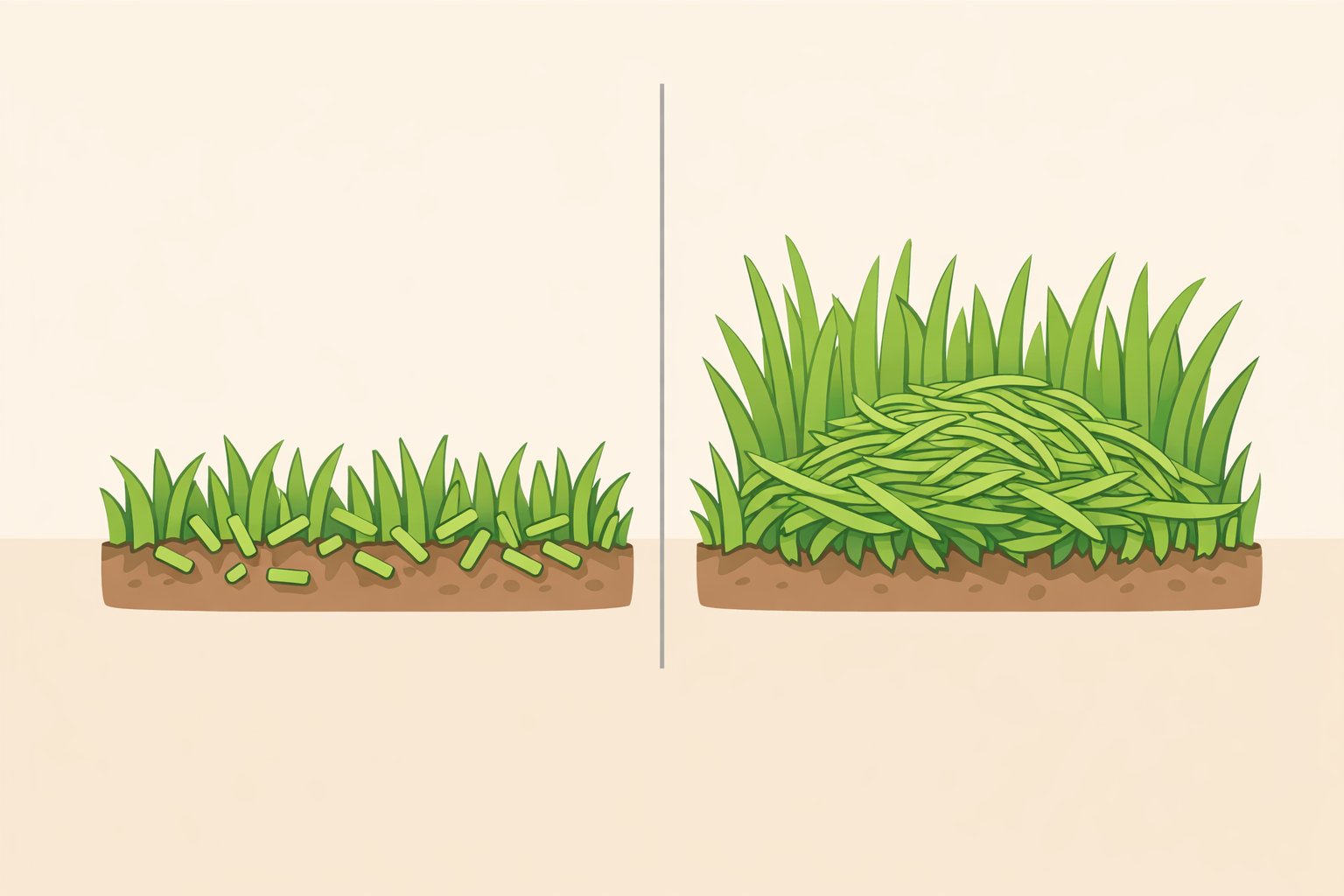
The feedback signal to watch is clipping length. Short clippings fall between the grass blades and break down in place, contributing nitrogen and other nutrients back to the lawn, K-State Research and Extension reported. Long clippings clump, block sunlight, and promote disease bag and compost those rather than leaving them on the turf.
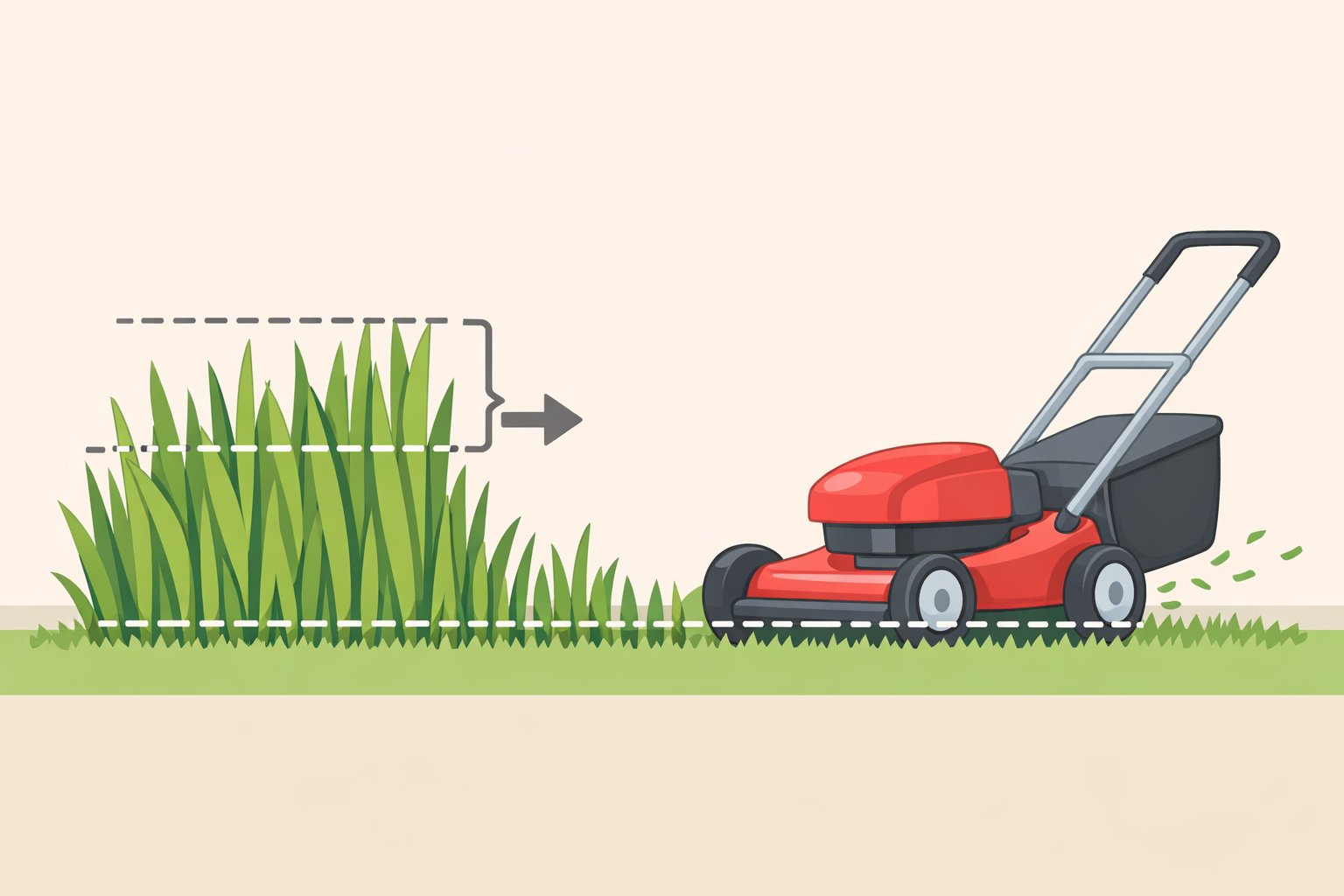
If the lawn has gotten away from you, don't try to correct it in one pass. Bring the height down gradually over several mowing sessions spaced a few days apart, K-State Research and Extension advises.
Step 2: Set the right height for your grass type
Taller grass develops deeper roots, which lets it draw water from further down in the soil during dry stretches. The practical guidance from K-State is consistent: mow at the high end of the recommended range for your species, K-State Research and Extension reported.
Species-specific targets:
| Grass type | Mowing height |
|---|---|
| Tall fescue, Kentucky bluegrass, buffalograss | 3–4 inches |
| Zoysia, bermudagrass | ~2.5 inches |
Source: K-State Research and Extension
Penn State Extension sets a baseline of 2 inches or above for most lawns during any period of active growth.
If you're not sure what grass type you have, check the original seed bag or sod paperwork, or call your county's cooperative extension office. Your region is also a useful guide: warm-season grasses like bermuda and zoysia are most common in the South; cool-season varieties like fescue and bluegrass dominate northern and transitional zones.
Apply the one-third rule on every pass. Never remove more than one-third of the grass blade in a single mowing session. Cutting below that threshold stresses the plant, increasing vulnerability to heat injury, cold damage, and weed encroachment, according to both K-State Research and Extension and K-State Research and Extension. Stressed turf fills in slowly, and opportunistic weeds are quick to claim the gaps.
A common mistake: cutting short deliberately to buy more time between mowings. The trade is short-term convenience for long-term lawn health. Stressed turf demands more fertilizer and water to recover. Mow high, mow on schedule.
Step 3: Sharp blade, different pattern
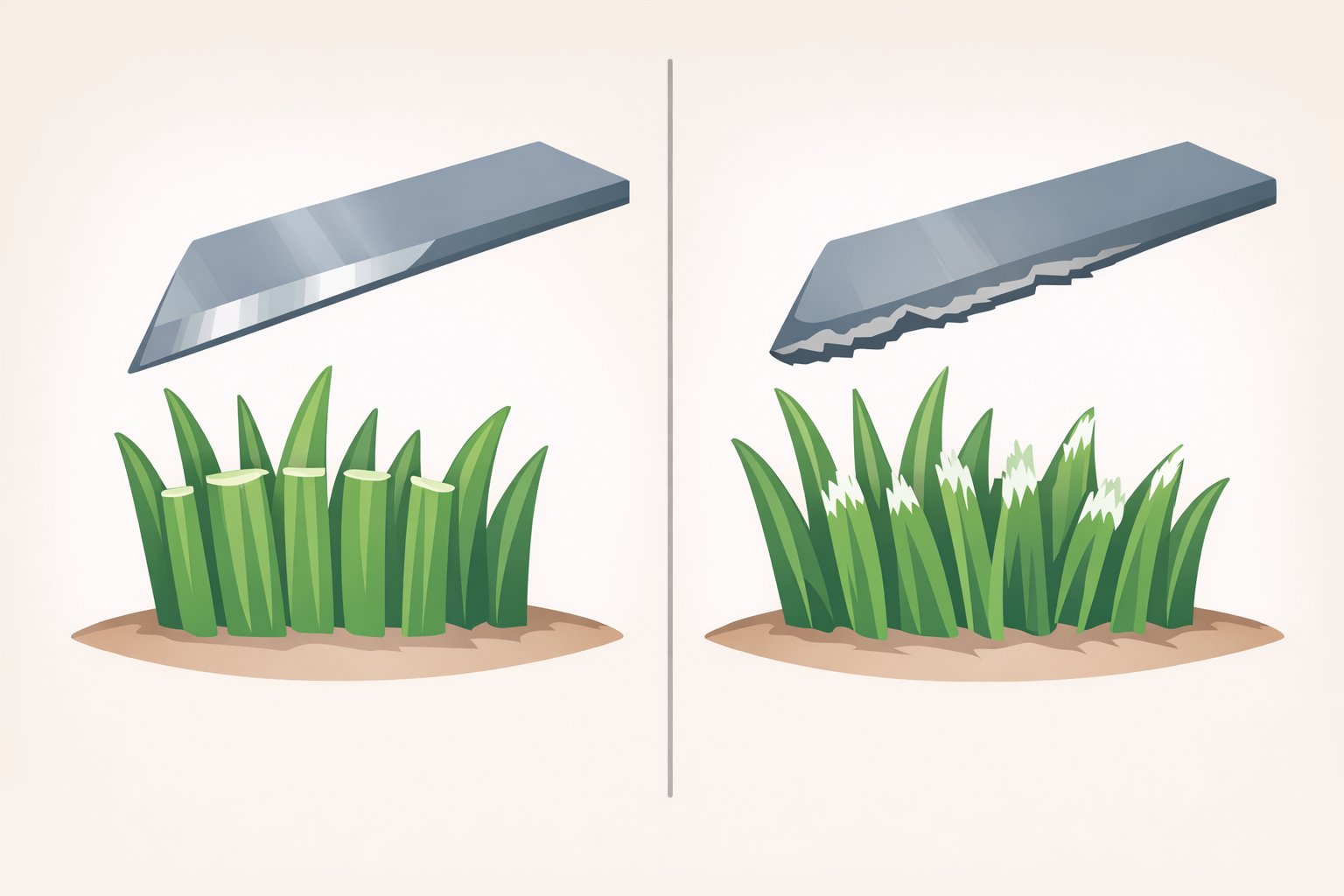
Blade sharpness is the most-overlooked variable. A dull blade tears grass rather than cutting it. The visible sign is ragged, whitish tips where the blade shredded rather than sliced. If the lawn looks brownish-grey in the days after mowing, the blade is the first thing to check. Both Domenghini and McKernan at K-State identify a sharp blade as essential for a clean cut, K-State Research and Extension and K-State Research and Extension reported. Check the blade after any impact hitting a rock, root, or edging strip is enough to nick it.
Change your pattern each session. Grass blades lean in the direction of travel. Mowing the same route every time causes grass to lean permanently in that direction and compacts the soil in the same wheel tracks. Rotating between north-south, east-west, and diagonal passes keeps turf standing upright and distributes wear more evenly, McKernan said, per K-State Research and Extension. One more note from McKernan: keep the mower deck away from tree trunks repeated contact damages bark.
Your mowing checklist
Everything above boils down to a handful of decisions made before you start the engine:
- Window: Mid-morning once dew has cleared. Late afternoon (around 5:30–6 p.m.) if mid-morning isn't possible.
- Condition check: If the lawn is wet from dew, rain, or irrigation, wait regardless of the hour.
- Frequency: Mow when the grass is approaching the one-third threshold above your target height, not when the week turns over.
- Height: High end of your species' recommended range, one-third rule on every pass.
- Clippings: Short clippings can stay on the lawn and return nutrients. Long, clumping ones go in the compost.
- Blade: Sharp enough to slice cleanly. Check after any impact or if tips appear ragged after mowing.
Mowing timing and technique are one leg of a seasonal lawn routine. Pair this with a sound watering schedule and well-timed fertilization and the lawn takes care of itself through most of what summer throws at it.