Corsair Skiff 100 gaming keyboard gets a control dial, Plus model, and wireless mouse
Corsair's budget keyboards just inherited a feature the company usually saves for pricier gear. The Corsair Skiff 100 gaming keyboard and its sibling, the Skiff 100 Plus, both ship with a rotary control dial, and Corsair paired the launch with a new wireless mouse, the Harpoon V2, Engadget reported yesterday. All three are available to order now.
Pricing lands squarely in mainstream territory: $60 for the Skiff 100, $70 for the Skiff 100 Plus, and $70 for the Harpoon V2, according to Engadget.
None of the three products lean on raw performance specs to justify their price. The pitch centers on a rotary dial built into both keyboards and a claimed 140-hour battery life on the mouse, per Engadget's report. That combination puts a familiar Corsair control scheme, and an ambitious battery number, into a price band that usually skips such extras.
What the Skiff 100 and Skiff 100 Plus gaming keyboards offer
Video of the Day
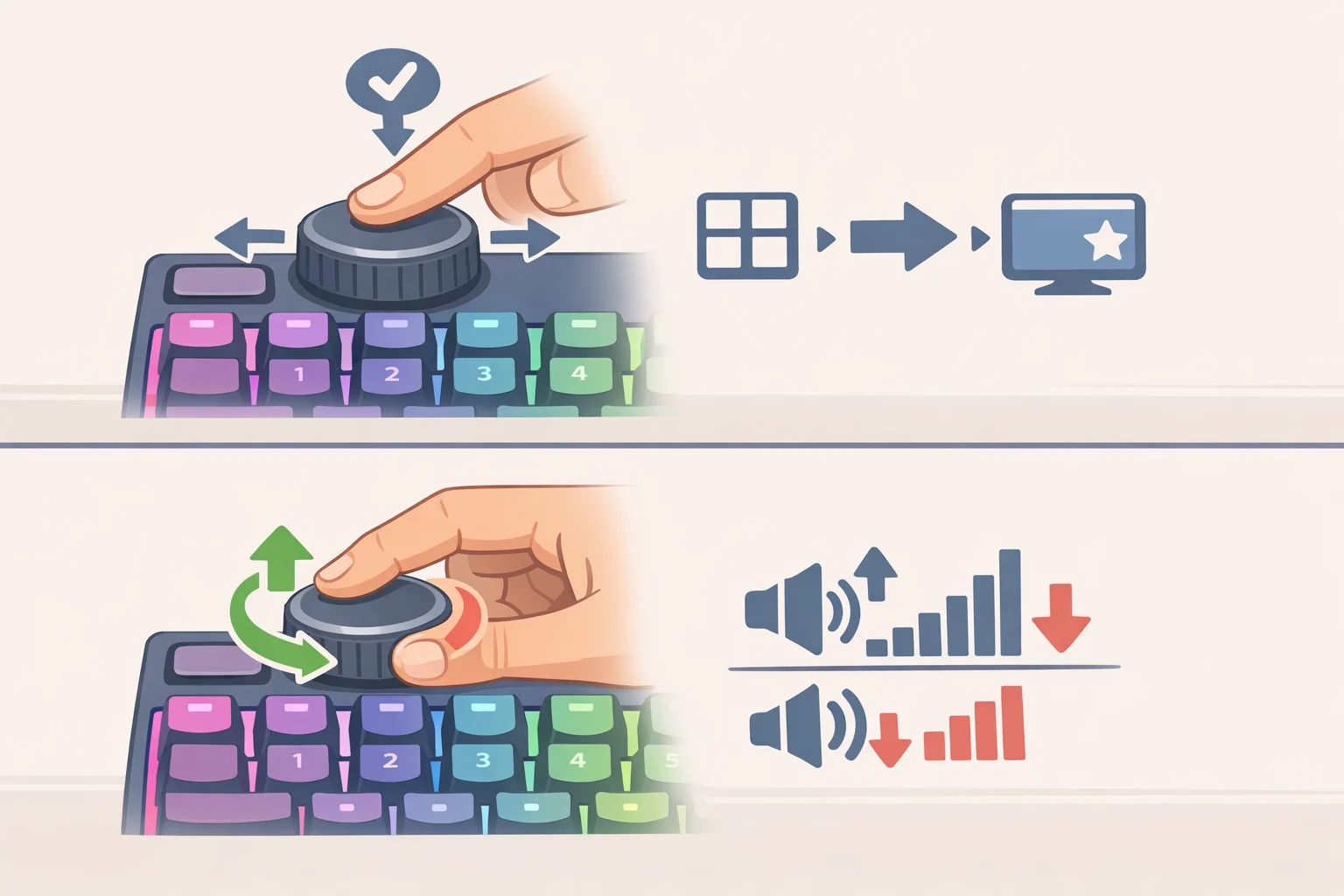
Both keyboards use the dial to skip past on-screen menus for certain adjustments. That same dial doubles as a volume and track-skip control when the keyboard is just running music in the background, Engadget reported.
Beyond the dial, the Skiff 100 and Skiff 100 Plus share an identical feature set: 10-zone RGB lighting, quiet membrane switches, and a detachable wrist rest with a rubberized surface, per Engadget.
Both work across PC, Mac, Xbox, and PlayStation with no software installation required, according to Engadget's report. That claim sits a little awkwardly next to the Skiff 100 Plus's programmable macro keys, since a keyboard billed as needing no software has to handle macro assignment somehow. That wrinkle gets addressed below.
Video of the Day
Corsair Skiff 100 vs. Skiff 100 Plus: what the $10 buys
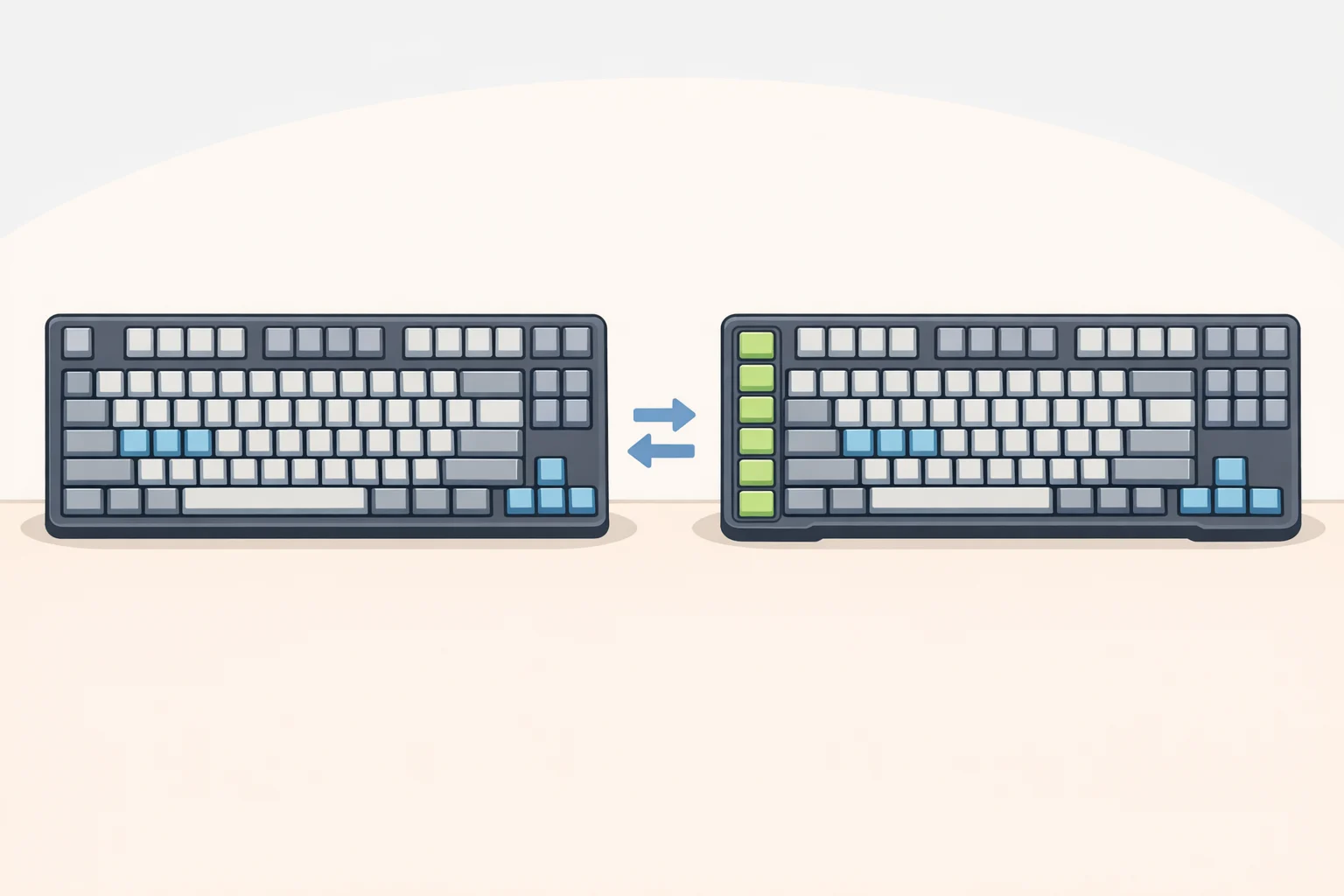
Engadget describes the two boards as "nearly identical." Strip away the shared dial, lighting, switches, wrist rest, and cross-platform support, and one difference remains: the Plus model's six programmable G-keys.
Corsair positions those G-keys for macros and in-game commands, Engadget reported. That's the entire gap between the two boards: $10 and six extra keys.
How those G-keys actually get programmed is left unanswered in the launch material. Both keyboards are marketed as needing no software at all, so it's unclear what interface handles macro assignment on the Plus. Corsair has solved a similar problem before: its Sabre V2 Pro mouse uses a browser-based tool called Corsair Web Hub to remap buttons and assign macros without installing dedicated software, Corsair said when it announced that mouse last year. Whether the Skiff 100 Plus uses anything comparable hasn't been confirmed in the material Corsair and Engadget have published so far.
How Corsair's control dial fits its lineup
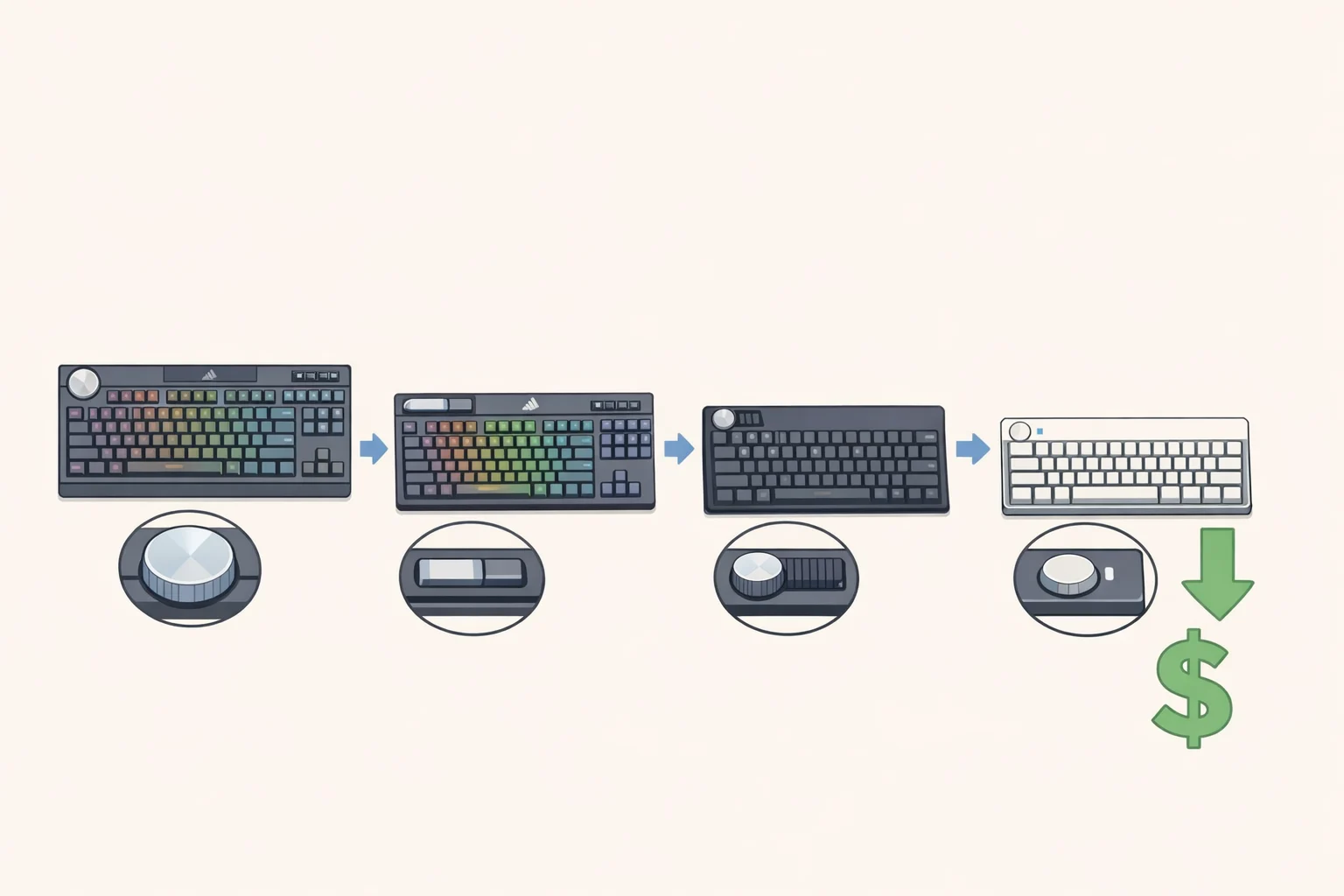
The dial on the Skiff 100 is not a new idea for Corsair. The K70 Core keyboard, launched in October 2023, already had a multi-function rotary dial for adjusting RGB brightness, scrolling through webpages, and zooming, plus a separate programmable button for media controls, Corsair said in its announcement.
A month later, the K70 Core SE carried the same dial concept forward, pairing it with a programmable media button for controlling music and video, Corsair said at the time. That keyboard also claimed switches rated for up to 70 million keystrokes and a case built from 85% post-consumer recycled material, details that placed it well above budget territory.
Corsair pushed the dial concept much further at CES earlier this year with the Galleon 100 SD, a keyboard pairing two push-dials with a 12-key Stream Deck panel and a 5-inch full-color display. Corsair called it its first gaming keyboard with a built-in Stream Deck controller, fusing its own engineering with Elgato's. The board also runs hyper-polling up to 8,000Hz and includes SOCD handling for competitive play, features aimed at a very different buyer than the Skiff line. Unlike the Skiff's no-install claim, the Galleon's dials and Stream Deck keys are customized through the Stream Deck app, which Corsair describes as running lightweight in the background.
Seen against that timeline, the Skiff 100's dial is less a new feature than a familiar one arriving at a lower price. Corsair has now built some version of a rotary control into keyboards spanning close to three years, from a mainstream board up through a Stream Deck-equipped flagship.
Corsair Harpoon V2 wireless gaming mouse and its battery claim
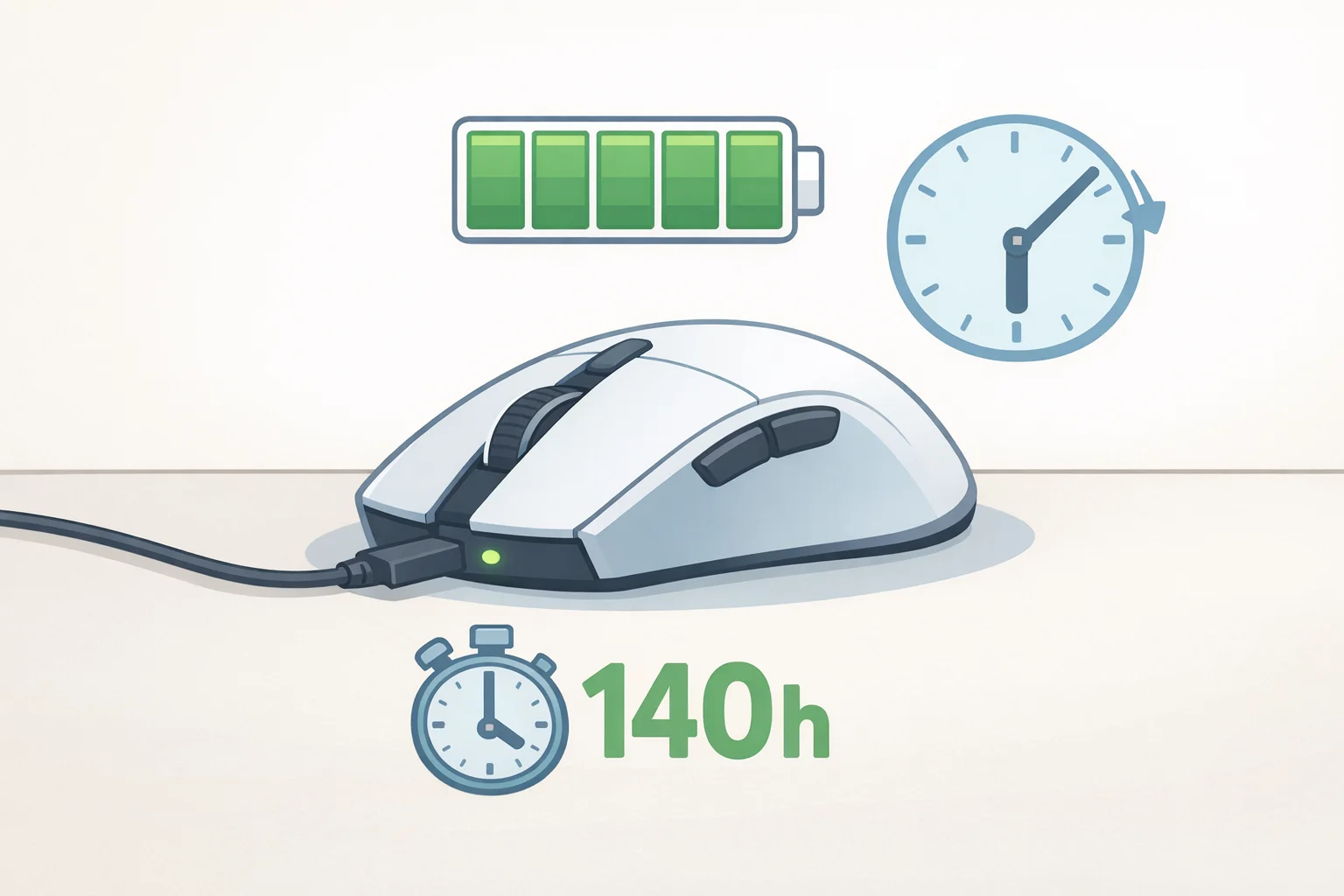
The Harpoon V2 rounds out yesterday's announcement at $70. It pairs an asymmetric shape Corsair describes as "built for long gaming sessions" with the company's Marksman 26K sensor and six programmable buttons, per Engadget's report. Like the two keyboards, it works on PC and Mac without requiring any software install.
The headline number is battery life: a claimed 140 hours per charge, per Engadget. Engadget's report doesn't specify the testing conditions behind that figure, so it reads as a manufacturer claim rather than a verified benchmark.
For comparison, Corsair's Sabre V2 Pro, a 36-gram mouse built last year for competitive FPS play, claimed up to 70 hours of battery life. That figure came with a footnote: it applies specifically to a 2.4GHz wireless connection at a 1kHz polling rate. No such footnote accompanies the Harpoon V2's 140-hour figure in Engadget's report. The Sabre V2 Pro also runs at up to 8,000Hz polling in wired or wireless mode and uses a sensor rated for 33,000 DPI and 99.7% resolution accuracy, specs built for a very different kind of buyer than the Harpoon V2.
Corsair's own marketing draws that same line. It describes the Sabre V2 Pro as "engineered for professional esports athletes and competitive FPS gamers who demand every possible edge," while Engadget's description of the Harpoon V2 focuses on comfort during long sessions rather than competitive performance. That's a difference in how Corsair frames each product's audience, not evidence of a broader strategy shift.
What buyers know at launch
Across all three products, the pattern holds: convenience features that used to sit higher up Corsair's lineup, a control dial, a long battery claim, an easy macro upsell, are now landing in a $60-to-$70 bracket. The dial itself is the clearest thread, tracing back through the K70 Core and K70 Core SE up to the Stream Deck-equipped Galleon 100 SD.
What's missing so far is independent testing. The Harpoon V2's battery figure, the dial's precision at this price point, and how macro programming actually works on the Skiff 100 Plus are all open questions. Reviewers typically start answering them within weeks of retail availability, and this launch should be no exception.