How Much Are Retro Game Consoles Worth? A Value Guide
A boxed, tested-working Amstrad CPC 464 turned up on eBay UK earlier this summer priced around £259, plus another £88 for postage. PriceCharting's benchmark for the same machine, complete, sits closer to $48 (GamesHub, citing PriceCharting). The two numbers aren't measuring quite the same thing, currency and condition both differ, but the gap is the whole story: an asking price tells you what someone hopes to get, not what the machine is actually worth. That's the real answer to how much are retro game consoles worth, in one sentence: less than the listing, usually, and it depends heavily on exact model, condition, and completeness.
Here's the retro console value guide version of that idea, condensed: figure out the exact variant you own, be honest about its working condition, know exactly what's included, then check what similar units have actually sold for, not what sellers are asking for them. A completed-sales tracker gives a starting number. A handful of genuinely comparable recent sold listings confirm or correct it.
PriceCharting builds its figures from historic sales where a buyer and seller actually agreed on a price, and by its own methodology, unsold listings don't factor into the number at all (PriceCharting). That's PriceCharting describing its own process, not an independent audit of the algorithm, but it's a reasonable starting point precisely because it filters out wishful pricing. Mainstream consoles tend to land in modest territory: a PAL GameCube runs about $58 loose and $125 complete, a PAL PlayStation 2 about $58 loose and $139 complete (GamesHub, citing PriceCharting). All the dollar and pound figures in this piece come from that single GamesHub snapshot of PriceCharting data from earlier this summer. Treat them as benchmarks, not live quotes.
How to value old game consoles using sold listings
Video of the Day
The method has a clear order. Start with a tracker for a baseline number, then validate it against several recent sold, not active, listings for the exact same model. Active listings are just other people's hopes; sold listings are evidence.
The mainstream numbers most readers will recognize: a PAL SNES runs around $53 loose and $177 complete, a PAL Nintendo 64 about $93 loose and $243 complete, a PAL Dreamcast roughly $111 loose and $188 complete (GamesHub, citing PriceCharting). None of these are going to fund a vacation. That's normal, and it's worth knowing before spending an evening photographing a console for eBay.
Not every sold listing is a fair comparison, though. A listing only counts as genuinely comparable if it matches the exact region and hardware revision, matches the completeness level, and excludes bundles that throw in games or extra accessories. A single high sale isn't a benchmark either; it's an outlier until several similar sales agree with it. Pull three or four recent sold listings that match on all of those points before trusting a number.
Video of the Day
What actually moves vintage game console prices
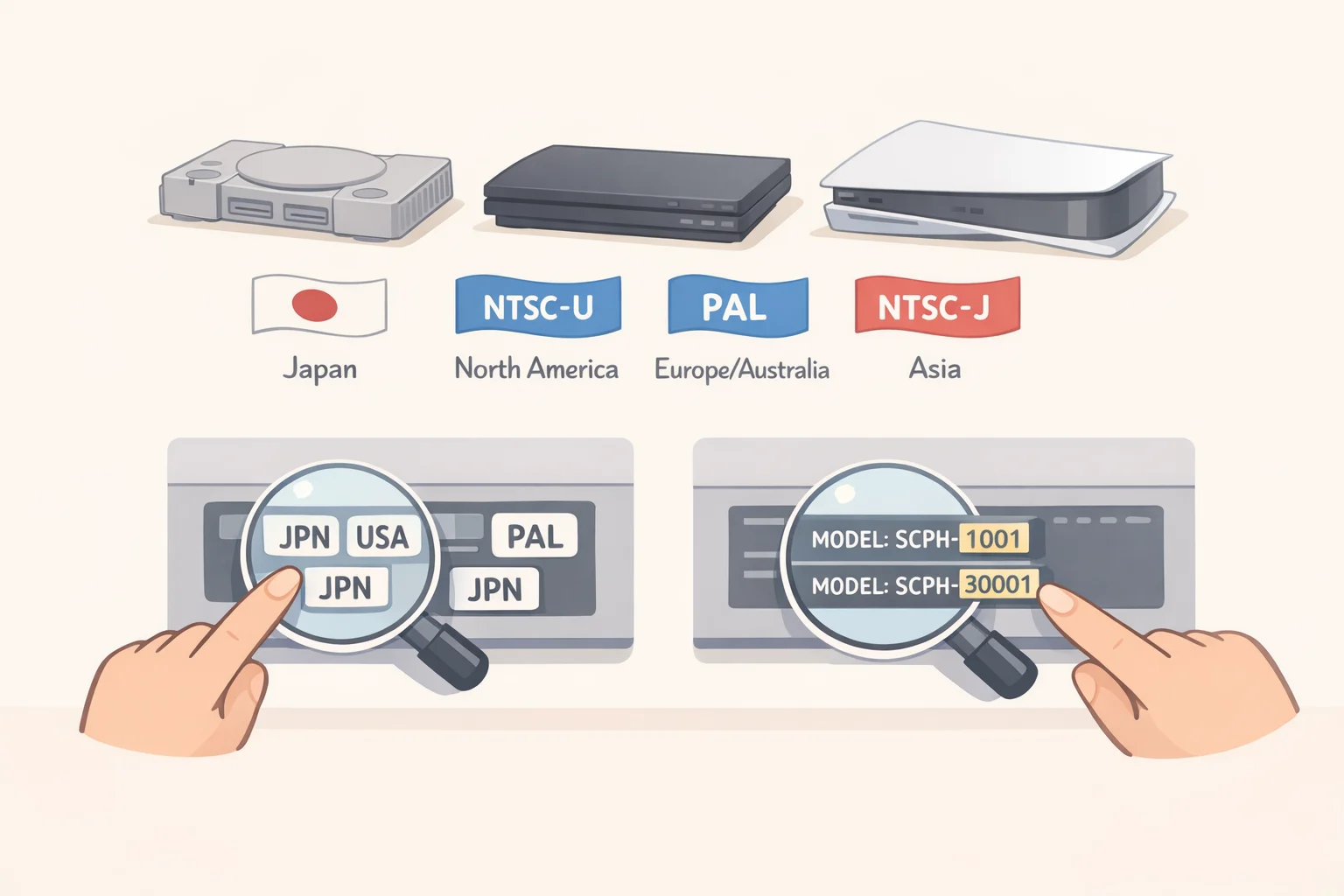
Model and region come first, and the same product family can span an enormous range depending on which version landed in your closet. The ZX Spectrum 48K benchmarks around $57 loose and $66 complete, while the rarer 128K reaches roughly $459 loose and $533 complete (GamesHub, citing PriceCharting). That's not a rounding difference, it's a nearly tenfold gap for machines that look almost identical on a shelf. The same logic shows up elsewhere in the home-computer data: a Commodore 64 sits around $116 loose and $580 complete, and an Amiga 500 runs about $171 loose and $376 complete, with live UK listings ranging from roughly £199 for a boxed A500 with mouse up past £365 for another working boxed unit (GamesHub, citing PriceCharting). Console color variants, regional releases, and later hardware revisions carry the same risk of being mistaken for the base model. Check the rating label and serial number before assuming a console is the common version.
Completeness matters almost as much. In the GameCube and PlayStation 2 examples above, a complete unit is worth a little more than twice the loose benchmark, $125 versus $58 for the GameCube, $139 versus $58 for the PS2 (GamesHub, citing PriceCharting). Original box, manuals, and cables aren't sentimental clutter. For pricing purposes, "complete" generally means the console itself, its original box, the manuals, the official cables, and at least one official controller. Anything short of that is loose, however good the console itself looks.
Condition needs finer categories than "loose" and "complete" suggest. Separate a unit into one of five buckets: tested and confirmed working, partially tested (it powers on but not every port or output has been checked), untested, known faulty, or for parts. These distinctions do real work in a listing. Rather than writing "tested working" and hoping that covers everything, list exactly which ports and functions were checked and flag the ones that weren't. That's a concrete disclosure standard a buyer can act on, instead of a blanket claim that falls apart the first time something doesn't work.
PriceCharting's own tier breakdown for one console line shows how granular this gets in practice: item-and-box comes in around $27, item-and-manual around $17, complete around $67.50, and factory new around $88.20 (PriceCharting). Treat the exact figures as directional rather than fixed; they update as new sales come in. The pattern matters more than the specific dollar amounts: every piece of the original package has its own line item in the market's mind, whether or not a seller thinks of it that way.
Before pricing anything, build an inventory. Note whether the power supply is original or a generic replacement, whether the AV, RF, or composite cables are original, whether the controllers are official or third-party, and whether any manuals or inserts survived. None of these items has a fixed universal value worth assigning on its own. What they do is determine which sold listings are actually comparable to the unit sitting in front of you, and mismatching on any of them is how a seller ends up chasing a price that was never really available.
Turning a baseline into retro gaming console resale value
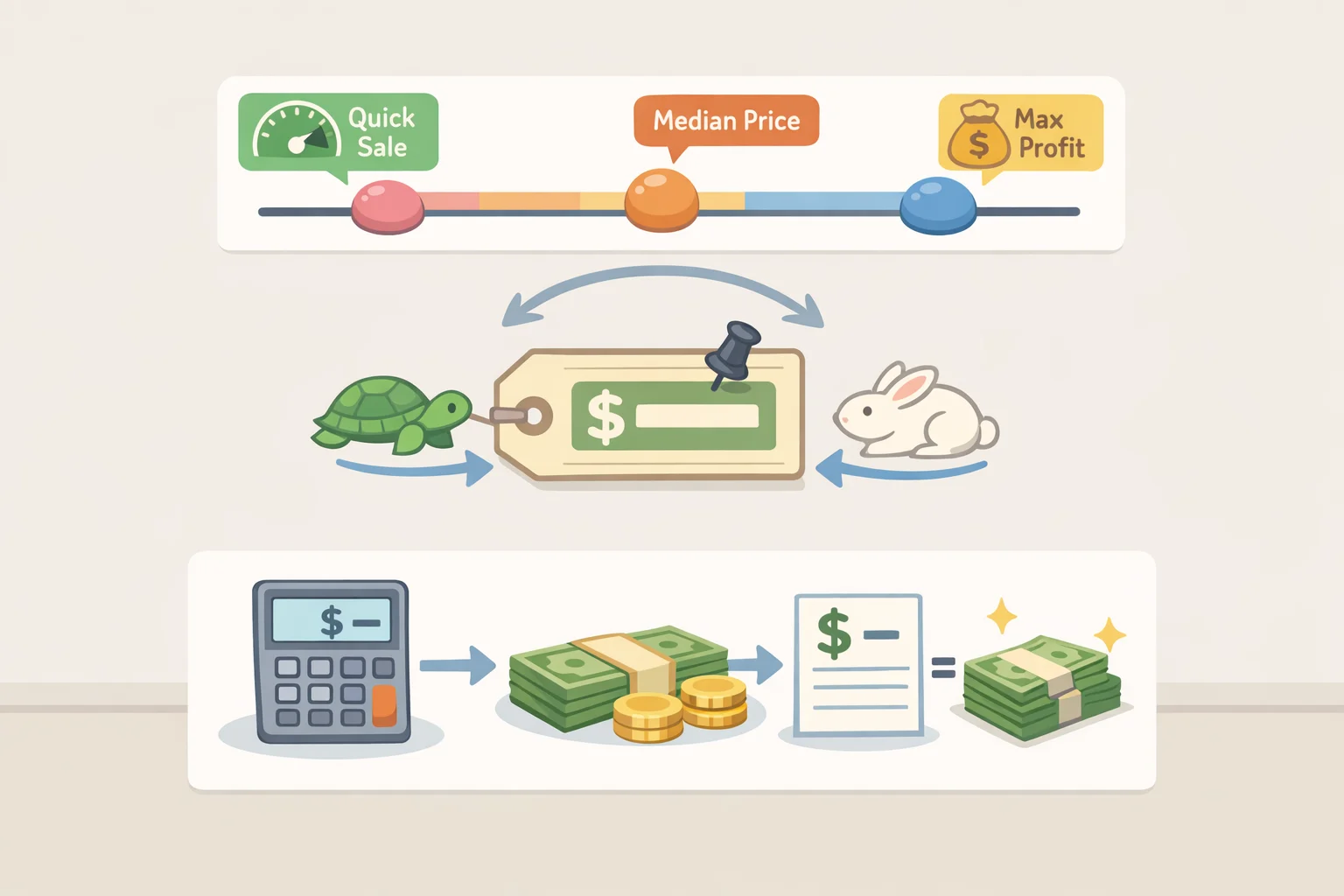
With the variant identified, the condition tested and categorized, and the inventory listed, the process becomes mechanical:
- Identify the exact variant and region.
- Test the hardware and record condition honestly, using the five categories above.
- Inventory accessories and packaging.
- Check a completed-sales tracker for a baseline.
- Review several recent, closely comparable sold listings, excluding bundles.
- Decide whether speed or maximum return matters more.
- Set a price.
That last decision shapes the number. Pricing near the recent median of comparable sold listings suits a normal-speed sale. Pricing somewhat below median moves a console faster if speed matters more than squeezing out the last few dollars. Either way, disclose faults, missing accessories, or replacement parts upfront. A buyer who discovers an undisclosed problem after paying is a returned item and a bad review waiting to happen, not a saved sale.
Whatever number that process produces isn't what ends up in a seller's account. Marketplace fees, payment processing charges, packaging materials, and shipping or insurance all take a bite out of the sale price. The exact deduction depends on the platform and shipping method chosen, so it's worth running the actual sale price through the marketplace's current fee schedule rather than assuming some fixed percentage disappears.
One thing that doesn't apply to most of this: professional grading. Services like WATA and VGA seal sealed games in tamper-evident cases with a numeric condition grade, and the economics here concern sealed games specifically, not the console hardware most sellers are trying to price (NOSTOS). For most used consoles, grading simply isn't the relevant question. NOSTOS's own rule of thumb is that grading tends to make financial sense only for sealed games worth $200 or more that are likely to grade 85 or higher, given standard fees of $50 to $100 or more per item and a turnaround of six to twelve weeks (NOSTOS). Below that threshold, the math rarely works out.
It's also worth knowing that the high end of that graded market has cooled considerably. Auction averages for graded material in many categories are down an estimated 30 to 60 percent from their 2021 peaks (NOSTOS). As one collector put it to Time Extension, "People love this stuff. People will still buy loose carts. It just means the market got overheated. Now there's a pullback, at least with the high-end graded stuff." That pullback is a reason to treat headline six-figure auction results as noise when estimating what an ordinary used console is worth, rather than evidence of where the broader market is heading.
The takeaway
In the PAL examples cited here, mainstream consoles like the SNES, N64, Dreamcast, GameCube, and PS2 sit in modest double-to-low-triple-digit territory, while a rarer variant like a Spectrum 128K or a genuinely complete example can be worth several times more (GamesHub, citing PriceCharting). Nobody's console is worth what a stray high listing suggests, and nobody's console is worthless just because the loose benchmark looks small.
The high-end graded collectibles market has cooled from its pandemic-era highs, and that's worth keeping in mind the next time a six-figure auction headline makes the rounds. It describes a narrow corner of the hobby, not the machine gathering dust in most people's closets. Look up the exact model, pull a handful of genuinely recent sold listings that match it, and price from there. That process won't change, even as the numbers themselves keep moving.