PS5 Pulse Elite and Pulse Explore headset announcement
Sony's PS5 Pulse Elite and Pulse Explore headset announcement, made in August 2023, introduced two audio products built around a proprietary wireless system called PlayStation Link: the Pulse Elite over-ear headset and the Pulse Explore wireless earbuds (PlayStation.Blog). Sony said the pair marked the company's first PlayStation audio devices built with custom-designed planar magnetic drivers, a design more often found in premium studio headphones (PlayStation.Blog). These remain the two Pulse products Sony has announced; nothing in the research reviewed for this piece indicates that lineup has grown since.
Pre-orders opened on November 9, 2023, at 10 a.m. local time across the US, UK, France, Germany, Austria, Belgium, Luxembourg, the Netherlands, Italy, Spain, and Portugal, alongside standalone PlayStation Link adapters (PlayStation.Blog). Pulse Explore reached shelves first, launching in those same markets plus Japan, Australia, and New Zealand on December 6, 2023, at $199.99, with Canada's release shifting to December 20 (PlayStation.Blog). Pulse Elite followed across most global markets on February 21, 2024, at $149.99, per the same announcement.
Southeast Asian markets ran on their own schedule. Singapore received both devices on February 22, 2024, priced at SGD 199.90 for Elite and SGD 295.90 for Explore, with Malaysia, Thailand, Indonesia, and Vietnam following on March 8, 2024 (PlayStation.Blog).
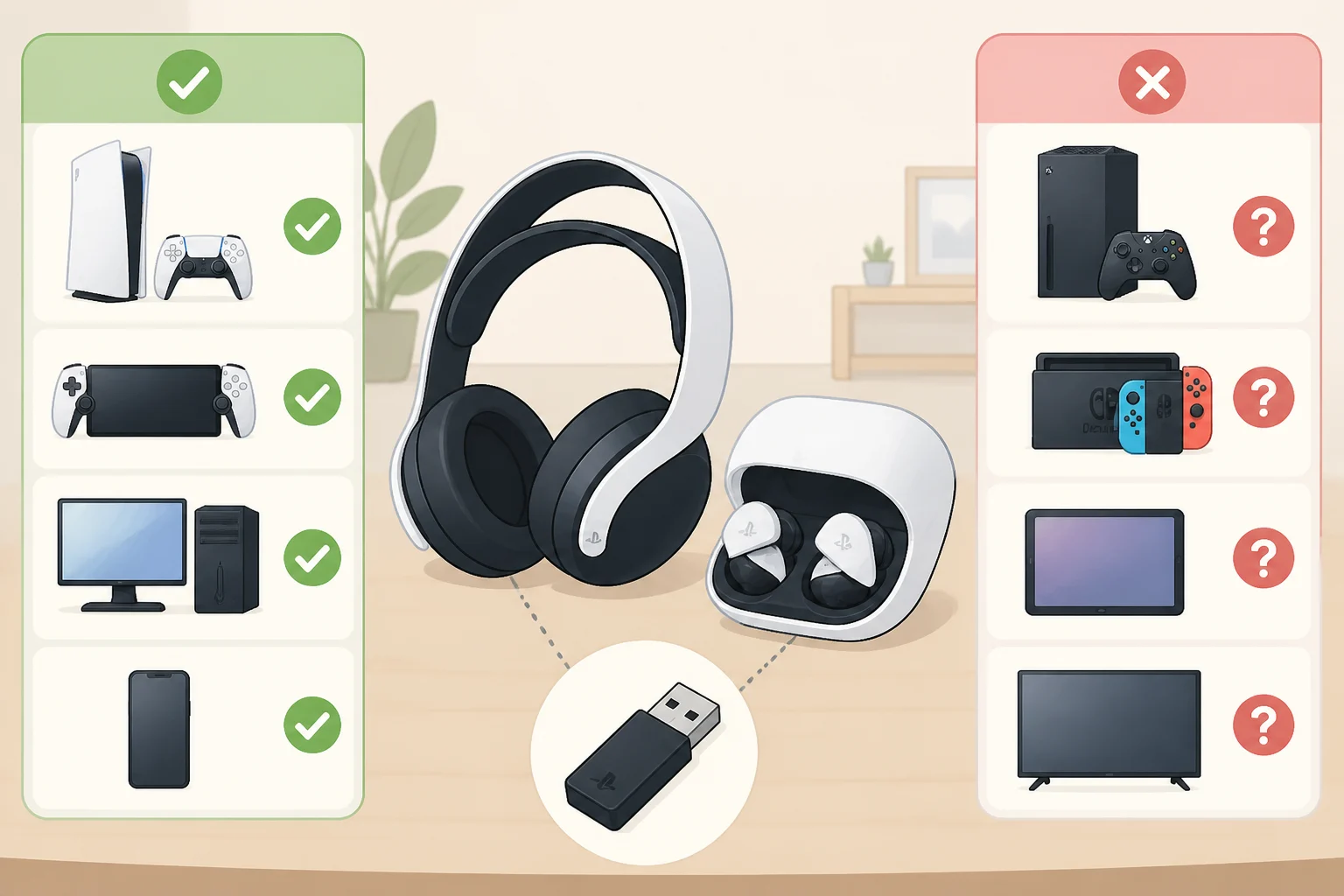
Both devices connect directly to PlayStation Portal through PlayStation Link, no adapter needed. PS5, PC, and Mac all require the bundled PlayStation Link USB adapter that ships with each device. A standalone adapter, useful for a second host or a replacement, sells separately for $24.99 in the US, with regional pricing set at €24.99, £19.99, and ¥3,480 (PlayStation.Blog).
What Sony built into each device
Video of the Day
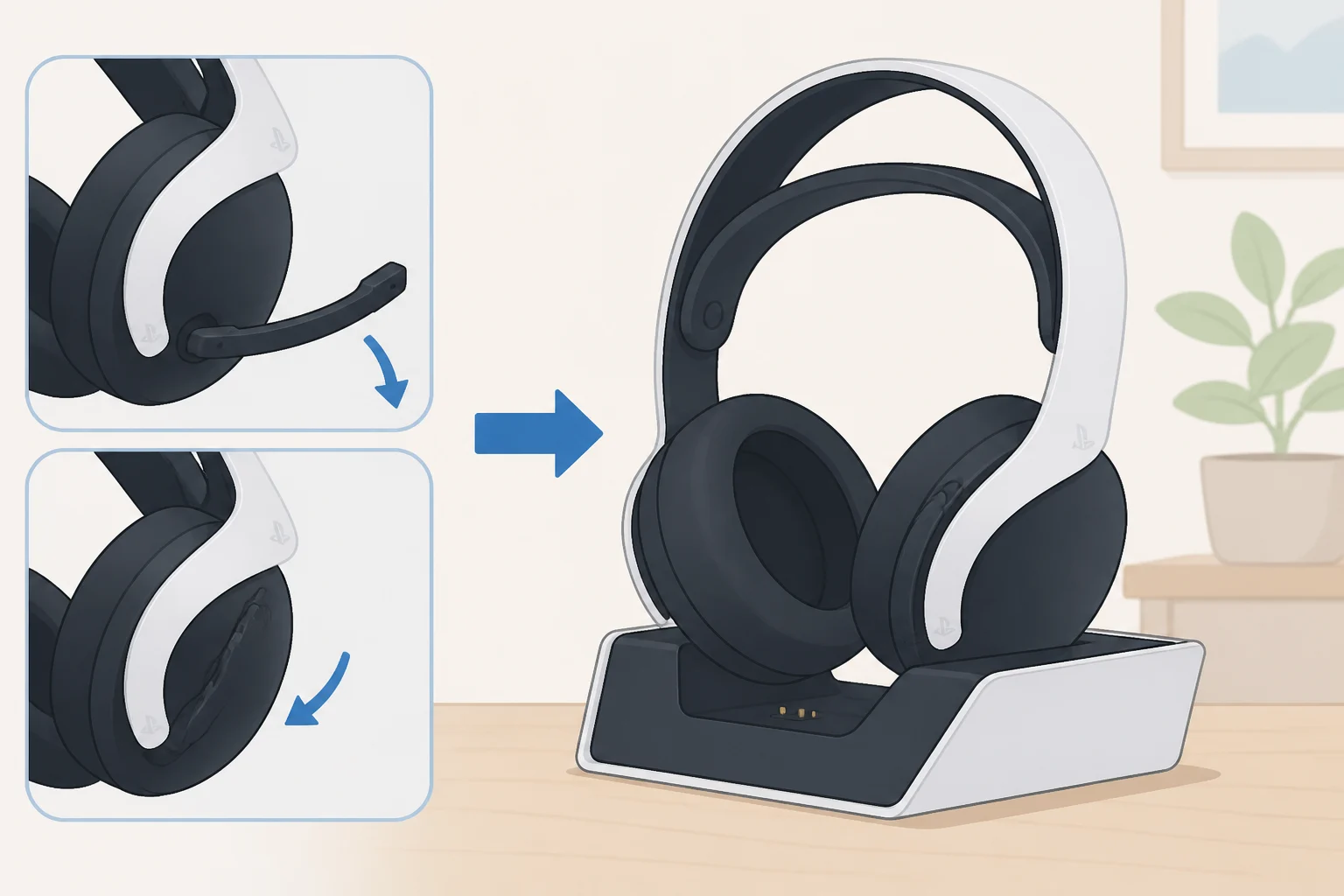
The Pulse Elite is the over-ear model, with a retractable, adjustable boom mic that tucks into the left earcup when not in use, AI-based noise rejection that Sony says filters background sound out of the mic signal, and a bundled charging hanger for storage between sessions (PlayStation.Blog). The hanger has a port for the included charging cable and can be mounted on a desk, tabletop, or wall, though Sony notes mounting hardware such as screws isn't included (PlayStation.Blog). On-ear controls handle volume, mute, and switching between PlayStation Link and Bluetooth, according to TekSignal, and charging also works through the included USB cable.
Elite also has a 3.5mm TRRS jack for wired audio and mic use. Plugging in a cable disables the wireless connections entirely, turning the headset into a standard wired device for anyone whose battery has died or who can't use a Link connection, TekSignal notes.
Pulse Explore is Sony's first pair of wireless earbuds, which Sony describes as delivering a "premium portable audio experience." It packs dual microphones using the same AI noise-rejection approach, plus a charging case (PlayStation.Blog). Sony says it was one of the first companies to bring planar magnetic drivers to mass-market wireless earbuds (PlayStation.Blog).
Sony describes the planar magnetic drivers in both devices as delivering an "audiophile-level" experience comparable to headphones used by sound engineers, which is Sony's own characterization rather than an independently measured result (PlayStation.Blog). TekSignal, in a review published last year, explains planar drivers in more neutral terms: they spread a thin diaphragm across the driver surface instead of relying on a single voice coil, which can reduce distortion and sharpen detail compared with typical dynamic drivers. That's a description of the technology broadly, not a test of these specific products.
Video of the Day
PlayStation Link lossless low-latency audio and device compatibility
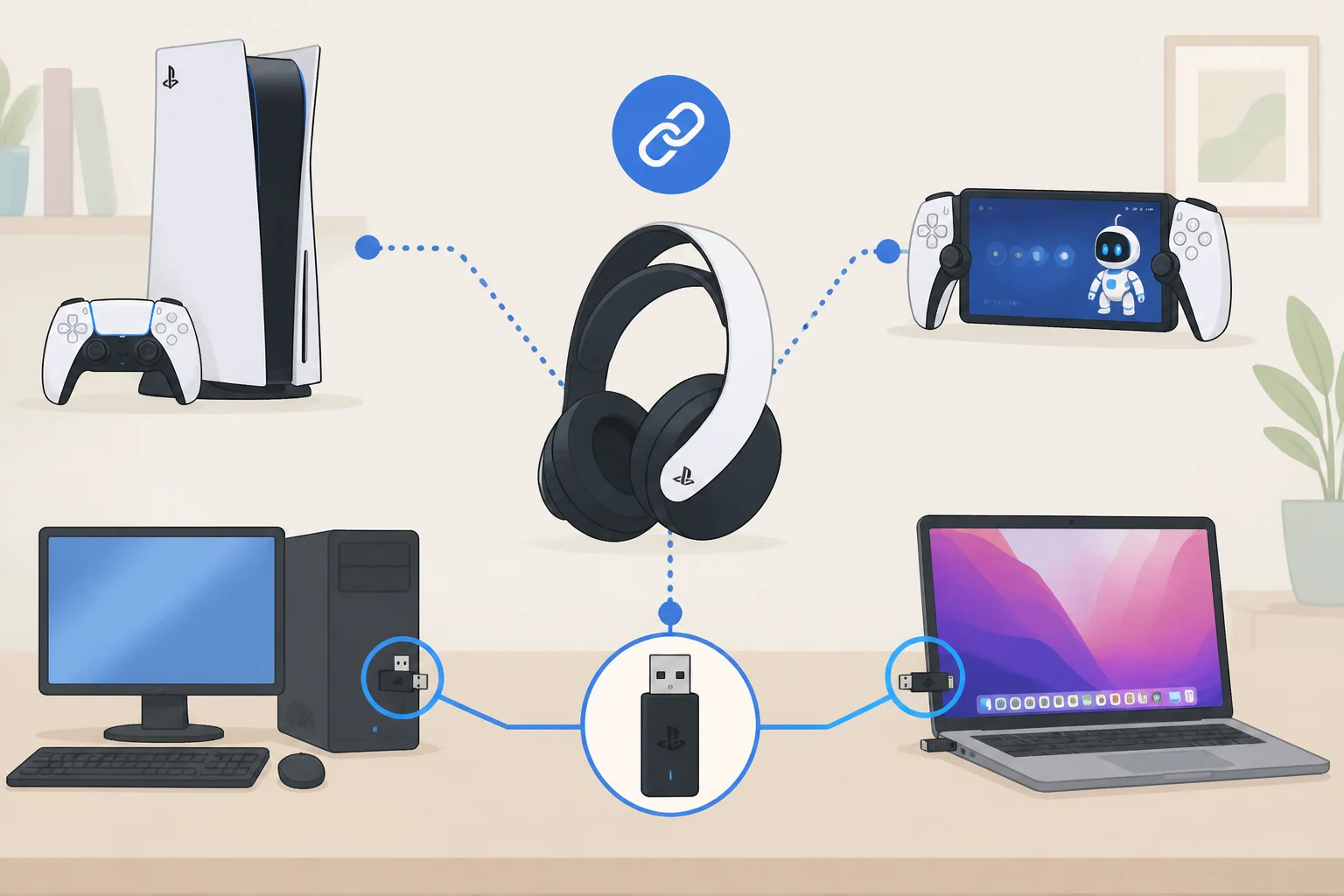
PlayStation Link is the wireless system tying the lineup together, and Sony markets it as delivering low-latency, lossless audio between PS5, PlayStation Portal, PC, and Mac (PlayStation.Blog). Sony's announcements don't specify codec, bitrate, or latency numbers, so that description stays a marketing claim rather than a benchmarked spec.
Switching between hosts takes a few seconds, not a single tap. Sony's instructions call for holding the Link button for about one second until two distinct tones play, then confirming on-screen; on PS5, that means selecting "Connect" after a "PS Link device found" prompt appears (PlayStation.Blog).
Both devices can hold a Link connection and a Bluetooth connection at once, so a player can keep PS5 game audio running over Link while taking a call or streaming music over Bluetooth (PlayStation.Blog). TekSignal confirms the same dual connection works on Elite, describing it as useful for mixing game audio with calls or music without swapping devices.
EQ and sidetone presets configured on PS5 carry over to Portal, PC and Mac via Link, connected Bluetooth devices, and, for Elite specifically, its wired 3.5mm connection (PlayStation.Blog). Sony's software adds three custom EQ slots on top of the Standard, Bass, and Shooter presets, and both devices support a Mono Audio toggle from the PS5 settings menu. Pressing the Link button three times in quick succession during a game also opens a Sound Quick Menu without backing out to the dashboard, per the same announcement.
What independent testing shows, and where evidence is missing

Of the sources gathered for this article, only one is an independent review, and it covers Elite. No comparable third-party review of Explore turned up among the sources examined here, which limits how confidently the two devices can be measured against each other beyond Sony's own spec sheet.
TekSignal repeats Sony's rating of up to 30 hours of battery life on Elite, a manufacturer figure rather than an independently measured one. The same review confirms Elite has no active noise cancellation, relying instead on passive isolation from its closed-back earcups. That finding is specific to Elite; nothing in the sources reviewed here establishes whether Explore has any noise cancellation at all.
TekSignal positions Elite above Sony's older Pulse 3D headset, calling it the company's more serious first-party option for PS5, one that works across PC, Mac, and Portal instead of locking players into a single console. That's the reviewer's characterization, not an established product ranking.
Pulse Explore's battery life, in-ear fit, long-session comfort, and call quality don't appear in any independent review among the sources examined for this piece. Those figures currently come only from Sony's own specification sheet (PlayStation.Blog).
What's verified, and what still needs a live check
The gap between Sony's marketing and Sony's documentation is worth sitting with. "Lossless, low latency" sounds like a spec, but no codec, bitrate, or latency figure appears in any announcement cited above, and independent testing so far covers only Elite's battery rating and lack of active noise cancellation, not Explore's fit, comfort, or call quality.
None of the sources reviewed here confirm current pricing or availability, well over two years after Elite's February 2024 launch. Anyone shopping the lineup now should treat $149.99 and $199.99 as historical launch prices and check a retailer directly, since neither PlayStation.Blog nor the TekSignal review cited in this piece addresses today's stock or pricing.
The bigger question hanging over all of this is whether PlayStation Link ever leaves Sony's own hardware. As it stands, Link only works with Pulse Elite, Pulse Explore, and the first-party adapter that ships with each. Whether Sony ever licenses the technology to third-party accessory makers remains unanswered, and until it does, Link is a convenience tied to two products and one console ecosystem, not an industry standard.