EU Wearable Battery Replacement Rules Explained: What the 2027 Exemption Means
The European Commission adopted a delegated act on July 14 that reshapes how EU wearable battery replacement rules apply to smartwatches, fitness trackers, and smart glasses. The measure exempts these devices from the standard requirement for user-replaceable batteries. Permanently sealed batteries still do not comply. Wearables must be designed for battery replacement, just by independent professionals rather than the person wearing the device.
The EU's broader portable battery regulation takes effect in 2027 and generally requires manufacturers to design products so users can replace the battery themselves, The Register reported yesterday. The July 14 delegated act, formally C(2026) 5031 final, carves out six new product categories from that standard, with wearables as the most prominent consumer-facing addition, per the European Commission news release.
The act's open question is what "independent professionals" actually means, and whether a professional-replacement tier without defined access or availability requirements produces real repair infrastructure or just satisfies the letter of the law.
EU smartwatch battery replaceability exemption: what the delegated act actually says
Video of the Day
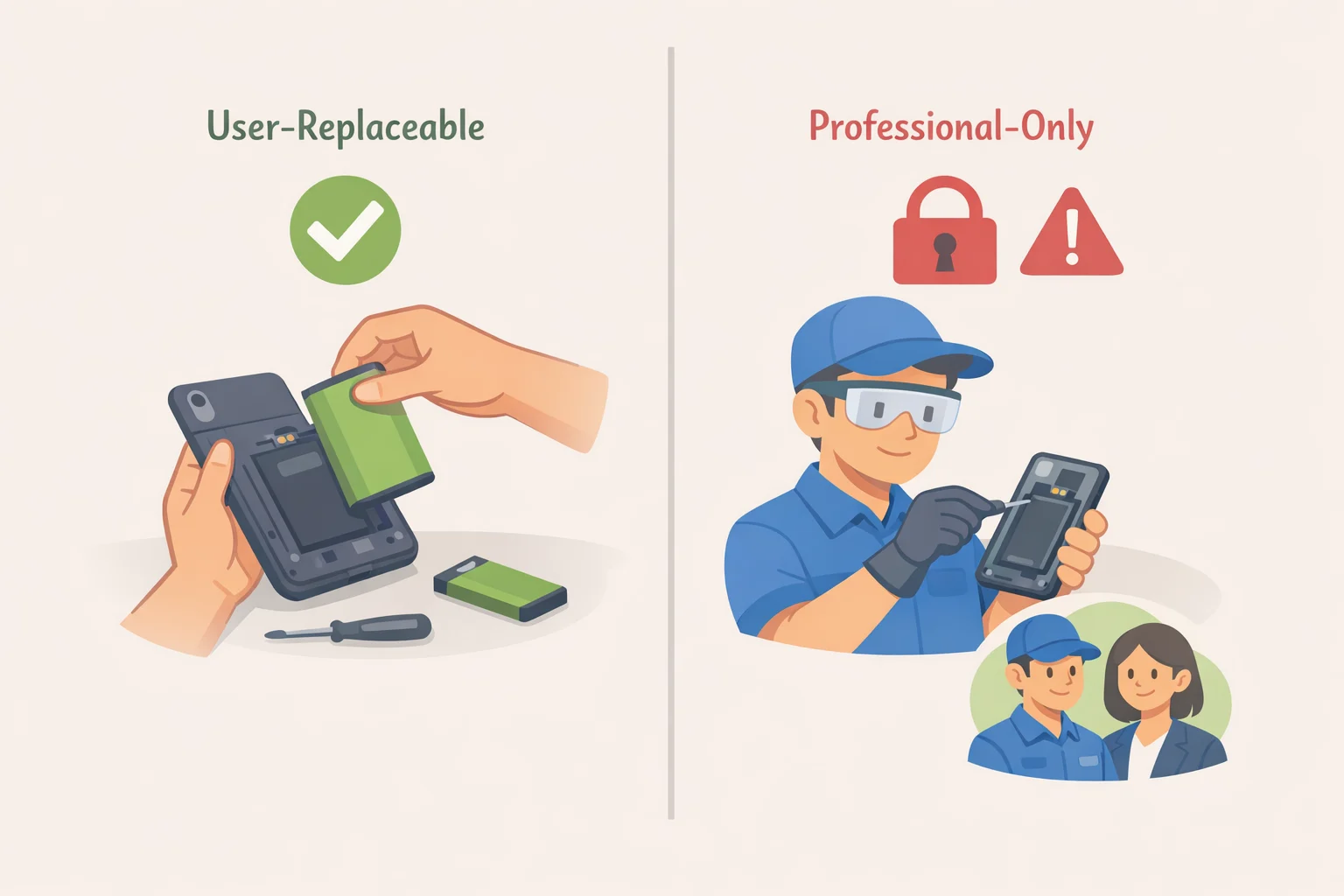
The operative language in the act states that qualifying products "may be designed in such a way as to make the battery removable and replaceable only by independent professionals," per the delegated act. That phrasing rules out permanently sealed batteries as a compliant design. What it does not do is define who qualifies as an independent professional, what parts access manufacturers must extend to them, or what documentation must be made available.
That gap is where the practical stakes live. The Register characterized the Commission's move as having "watered down" replaceability rules for wearables. That is editorial framing rather than a legal finding, but the concern it reflects is concrete: a professional-only tier without enforceable service-availability standards gives manufacturers room to limit repair access while remaining technically compliant.
Video of the Day
Which devices qualify under the European Commission wearable battery rules
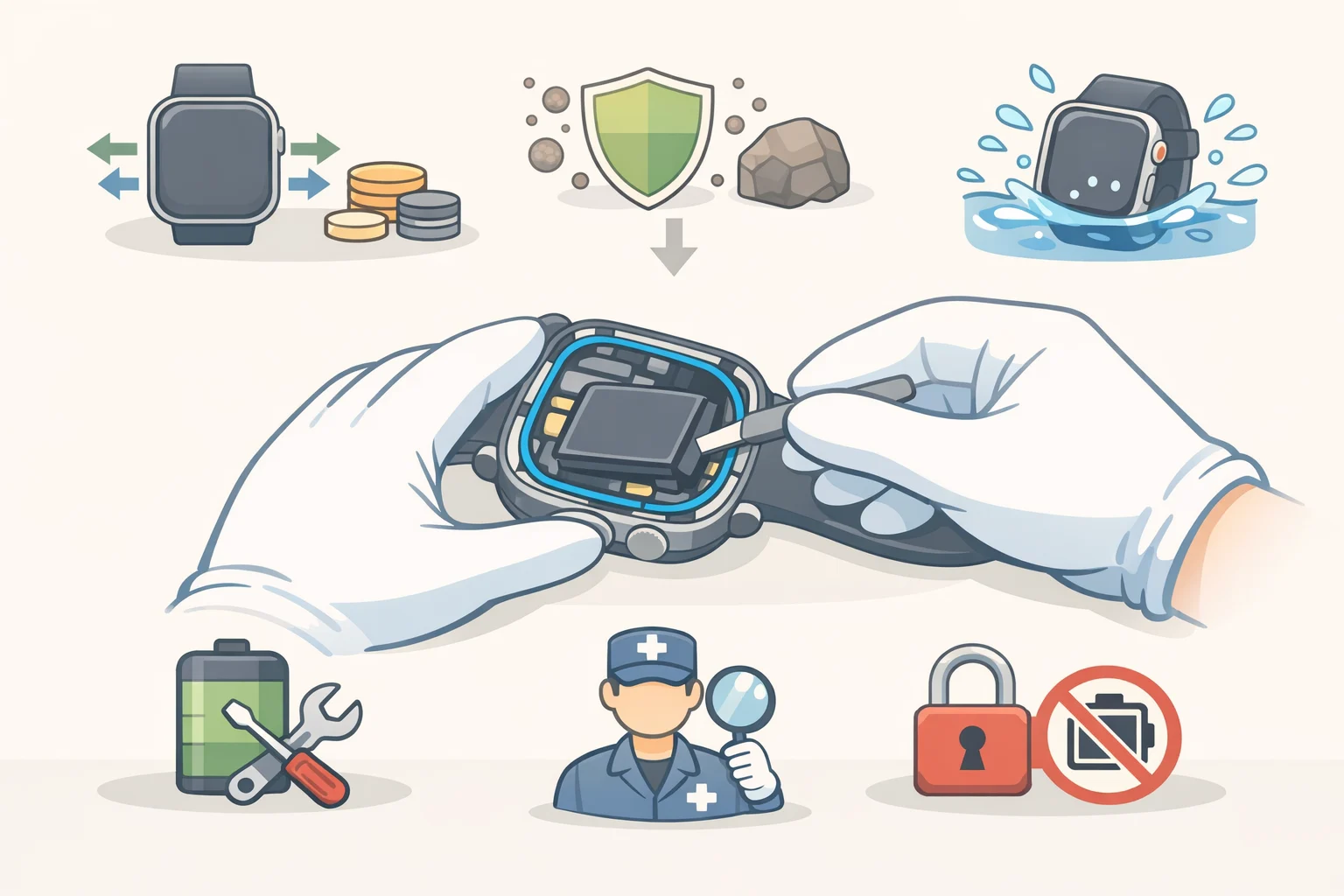
The delegated act does not list approved products. It defines criteria, and manufacturers must demonstrate compliance product by product. Two qualifying paths exist.
The first covers devices designed to operate primarily in wet environments, specifically those intended to be worn in water or meant to be washable or rinseable, per the delegated act. These qualify independently of any other factor.
The second covers wearables where user access to the battery would compromise safety, durability, or water resistance. Within that path, two sub-criteria apply: devices that are too small for end users to safely handle a battery replacement, or devices that rely on a compact, sealed enclosure to maintain functional integrity, including protection against dust and shock, per the same Commission document. These sub-criteria sit underneath the safety or durability threshold; they do not operate independently of it.
Smartwatches, fitness trackers, smart glasses, and electronics integrated into clothing and accessories are all cited as illustrative examples in the delegated act. The Register suggests products built around sealed enclosures and water resistance, naming the Apple Watch and Meta's AI Glasses as examples, would likely meet the criteria. The Commission has not confirmed specific models; that inference follows from matching product characteristics to exemption language, not from official guidance.
The other five categories added by the July 14 act include electric toys and equipment used in explosive atmospheres under the ATEX Directive, per the European Commission news release. Those categories face the same compliance-by-criteria requirement, though they attracted less consumer attention than the wearables addition.
The engineering rationale, and the objection it doesn't fully answer
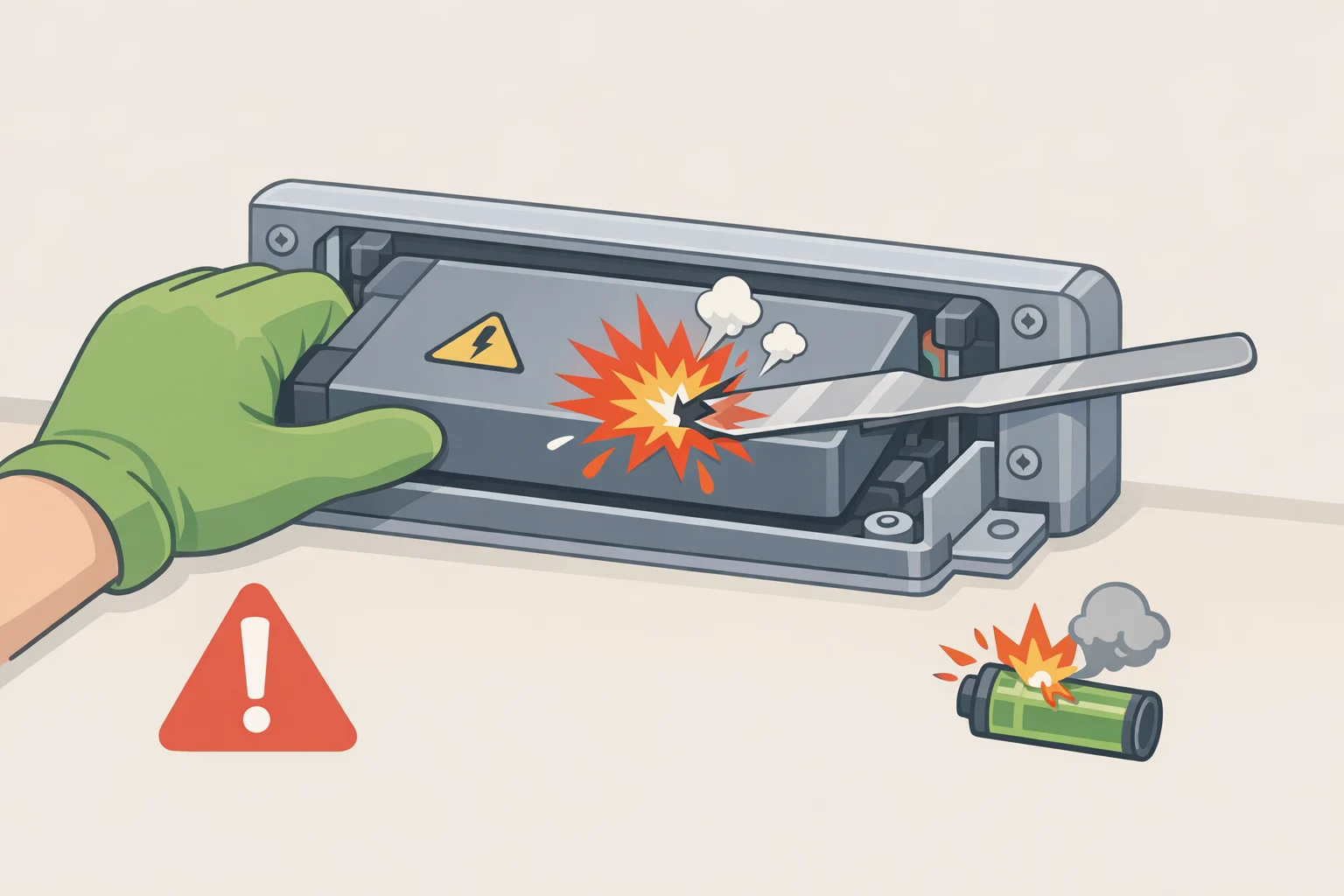
The Commission frames the exemption as a response to engineering constraints rather than a policy concession.
When a battery is packed tightly enough into a small enclosure, removing it creates what the Commission describes as "a non-negligible risk of damage or piercing of the battery," per the delegated act. A punctured lithium cell is a fire hazard. The same document states that "where the nature of the product hinders its redesign (anatomic or ergonomic considerations), it is justified that such small batteries be removable and replaceable only by independent professionals." The Commission's position is that some device geometries make user-level replacement genuinely unsafe.
Those constraints are real. A device worn against the skin is shaped by the body, and the commercial logic of the wearables market runs toward smaller and lighter, not toward battery hatches.
The harder objection starts one step earlier. Critics, as The Register's characterization implies, would argue that the regulation's purpose was precisely to pressure manufacturers into solving that engineering problem rather than accommodating it. If user-replaceable batteries make a device thicker, that cost should fall on the manufacturer, not on consumers as reduced repairability. The exemption addresses whether user replacement is technically difficult. It does not engage with whether manufacturers should have been required to overcome that difficulty.
In April 2026, the Commission sought public views on proposed exemptions that included the six new categories. The delegated act adopted on July 14 reflects those proposed categories as finalized criteria.
What the 2027 deadline does and doesn't resolve

The EU portable battery regulation's 2027 effective date is unchanged. The delegated act determines how wearables fit within that framework. Manufacturers of exempt devices still face a compliance obligation, just under the professional-replacement standard rather than the user-replacement standard.
Brussels has preserved the principle that batteries in these products must be replaceable. Whether that principle delivers anything meaningful to consumers turns on questions the act does not settle: who counts as an independent professional, what documentation and parts manufacturers must make available, and how evenly repair capacity distributes across EU member states. Those are not minor implementation details. The difference between a functioning third-party repair network and a single manufacturer-controlled service channel can determine whether a battery swap costs thirty dollars or whether a device gets discarded instead. The 2027 deadline will test whether the professional-replacement tier is a workable standard or a legal category that exists mostly on paper.