XGIMI Elfin Flip 4K Projector: Room-to-Room Design Tested
XGIMI launched two new projectors this week: the Elfin Flip 4K at $999 and the Elfin Flip Laser at $799, both available on XGIMI's website from July 15, with Amazon listings due July 22, according to Talk Android and New Atlas. XGIMI positions the Elfin Flip 4K projector and its sibling as something specific: not battery-powered portables like its own Mogo 4 series, and not fixed home theater units, but mains-powered devices designed to move between rooms in the same house, with automated setup meant to handle the geometry each time you put them down, per 9to5Google.
Whether that middle-ground category holds up in practice depends on three things: how frictionless the setup actually is, whether the brightness works in real rooms, and what the $200 price gap between models actually buys. Early independent testing of the 4K model offers clearer answers than the marketing does. The Laser is a different story.
What independent testing found on the XGIMI Elfin Flip 4K
Video of the Day
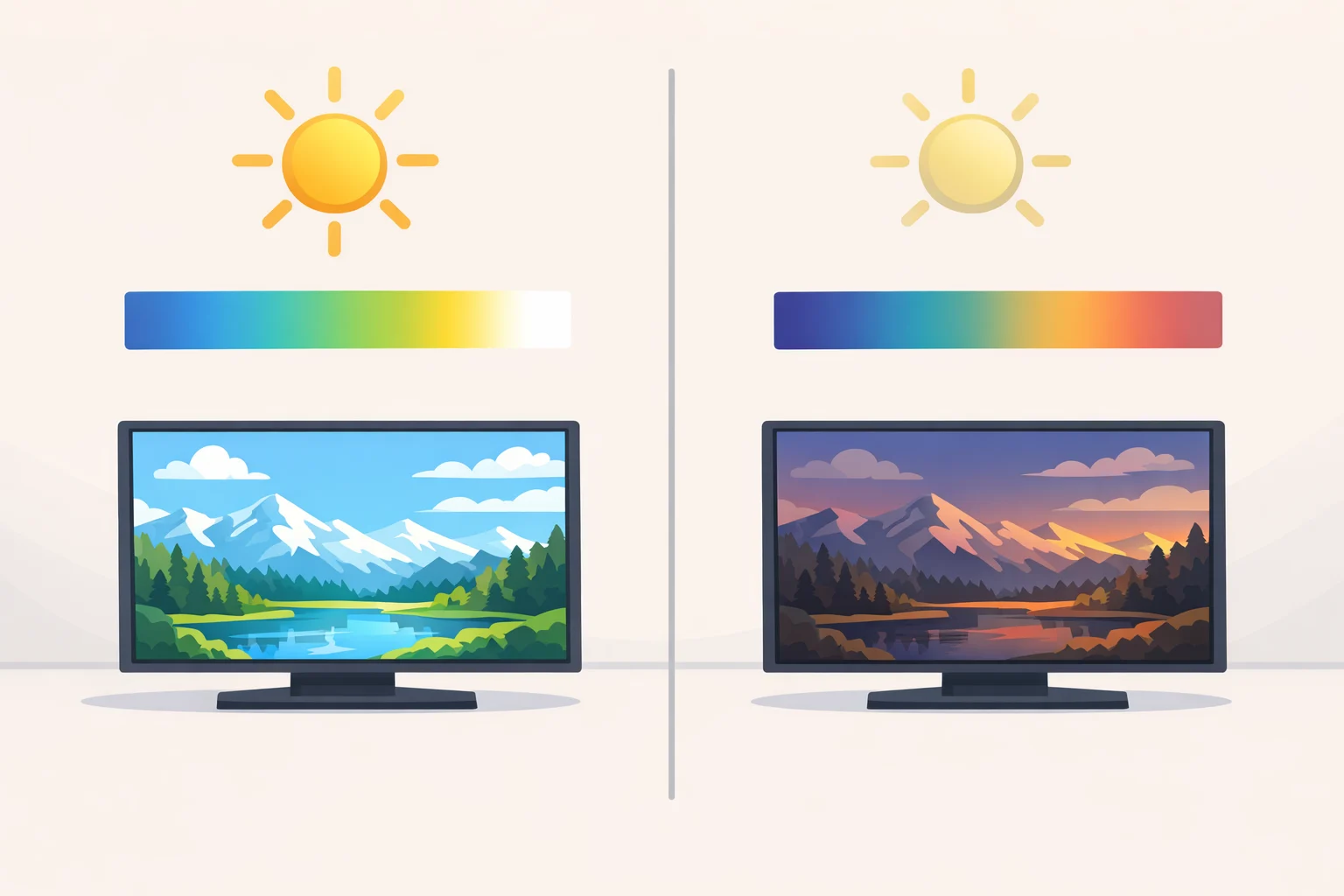
XGIMI rates the Elfin Flip 4K at 1,600 ISO lumens. Engadget's testing measured just over 1,550 ANSI lumens in the brightest Performance mode, close to the claimed figure, but with a visible green color shift at that setting. Switch to Movie mode, the more realistic viewing configuration, and output dropped to just over 1,200 ANSI lumens. The headline number is achievable; calibrated brightness runs lower.
Contrast follows a similar pattern. XGIMI's marketed 20,000:1 figure is a dynamic measurement taken with Dynamic Black Level Enhancement enabled. Engadget measured 5,400:1 with that enhancement on and 1,600:1 with it off. Both figures are competitive for the price range, but neither substitutes for a dark room if deep blacks are a priority.
Gaming specs are real but conditional. The advertised 1ms input lag applies at 1080p/120Hz in Game mode with VRR active, and Engadget found the Flip 4K outperforms most mid-range projectors at that configuration. At native 4K, the frame rate tops out at 30fps. For buyers who want smooth 4K gaming, that's a hard ceiling; Engadget notes the unit won't excel at 4K gaming as a result.
Fan noise measured around 30 decibels at room temperature in Engadget's testing, effectively inaudible during normal viewing. HDR support covers HDR10 and HLG, but not Dolby Vision or HDR10+, which is a meaningful omission for buyers who prioritize those formats.
One important sourcing note: all independent performance data above comes from the 4K model. No equivalent third-party measurements currently exist for the Elfin Flip Laser. Its real-world brightness and contrast are inferred from shared specs rather than independently verified, so buyers considering the Laser should treat that performance picture as provisional until more reviews emerge.
Video of the Day
What "room-to-room" looks like in practice
The physical design is built around the core promise. The Elfin Flip 4K uses a book-sized chassis, 9.64 inches wide and 1.55 kg, with an integrated handle and stand that adjusts across 150 degrees of arc, covering coffee table to ceiling projection without a separate tripod or mount, per New Atlas. Engadget notes it is one of the lightest 4K projectors currently on the market. You pick it up, put it somewhere, and tilt the stand.
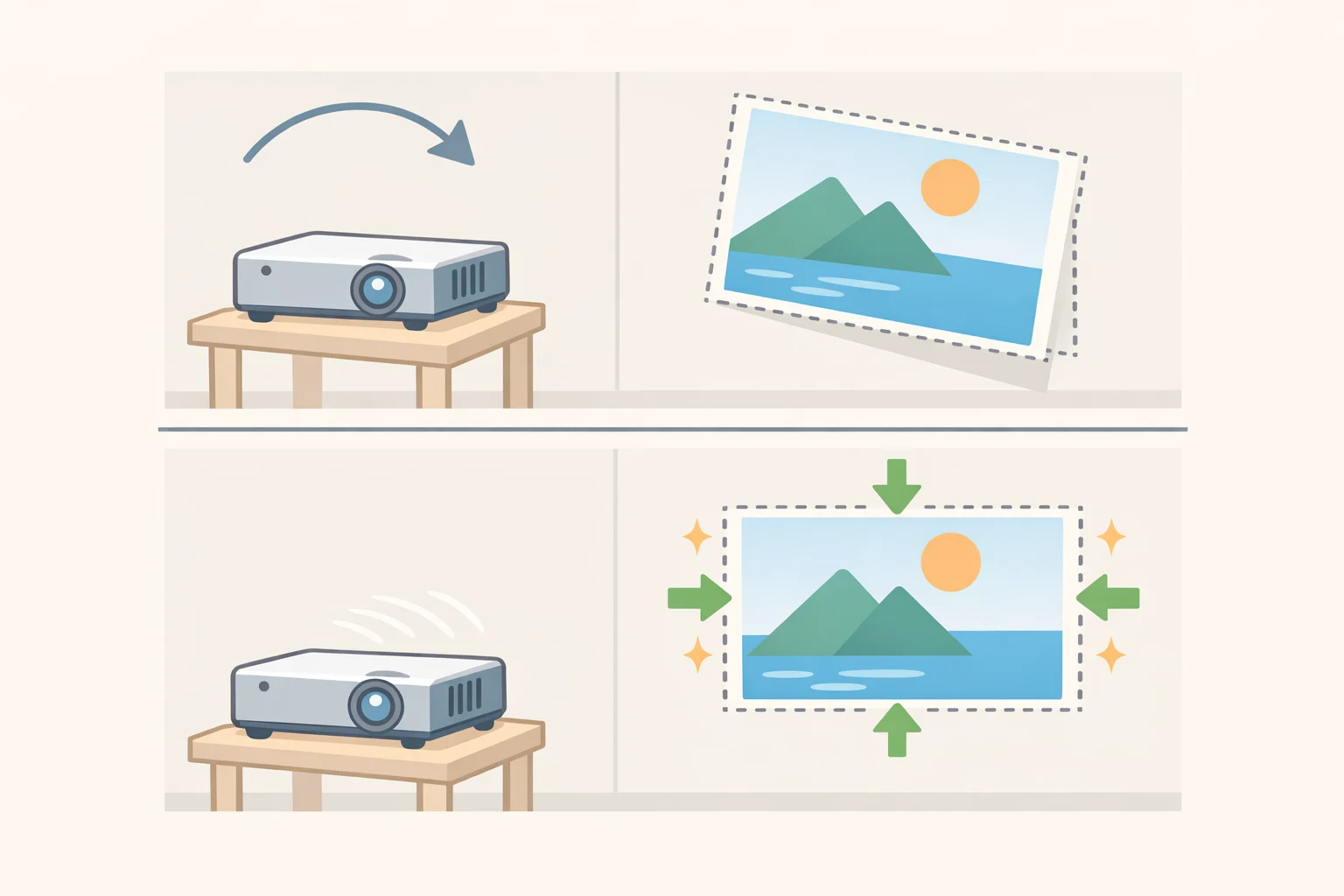
The automation handles the rest. XGIMI's Enhanced ISA 5.0 system is designed to manage keystone correction, autofocus, screen alignment, obstacle avoidance, and wall color adaptation without manual input, according to Talk Android. In hands-on testing, Engadget reported a correctly aligned image on a 120-inch screen in about two minutes from placement to playback.
The hard constraint is the power cord. There's no battery; the unit runs on mains power, as 9to5Google notes. Room-to-room mobility depends entirely on outlet placement, which matters more in some homes than others.
Ambient light is the second constraint worth understanding. Google TV is built in, with Netflix, Prime Video, Hulu, and the standard streaming app roster available without a separate streaming stick, per Talk Android. But at around 1,200 ANSI lumens in Movie mode, the projector performs well in dim or blacked-out rooms, not in a sun-facing bedroom on a bright afternoon. Wall color adaptation and obstacle avoidance handle geometry; they don't compensate for ambient light.
XGIMI Elfin Flip 4K vs Elfin Flip Laser: what the $200 gap buys
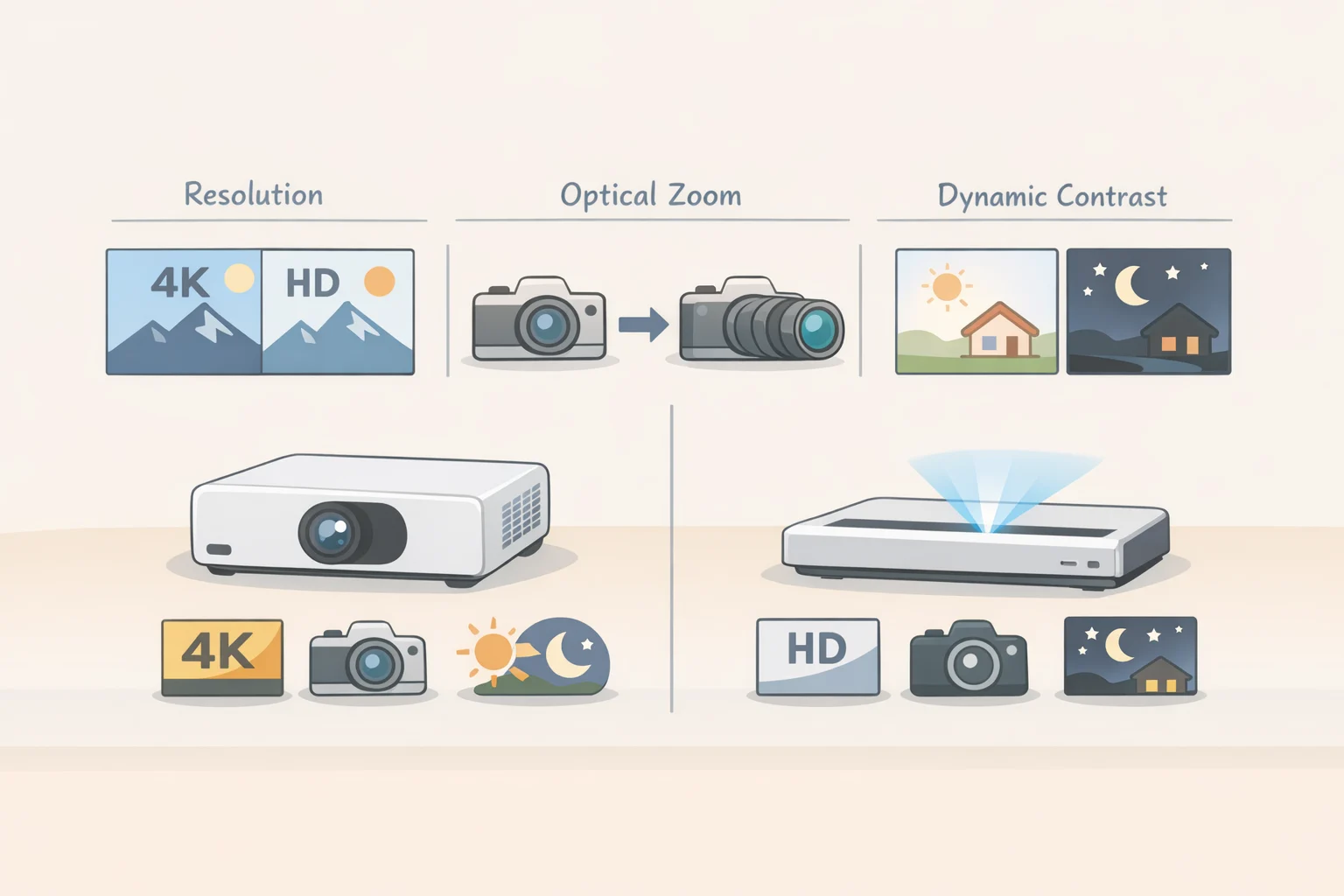
The two models share more than separates them. Both run the same RGB Triple Laser light engine with a 1,600 ISO lumen brightness rating, the same chassis dimensions, Google TV, and a 7W Harman Kardon speaker with Dolby Audio, according to New Atlas. The Laser sheds a little weight, coming in at 1.38 kg versus the 4K's 1.55 kg.
The differences concentrate in three areas. Resolution: the 4K model outputs 3840x2160; the Laser stops at 1080p. Contrast ceiling: 20,000:1 dynamic versus 10,000:1 dynamic. Optical zoom: the 4K model includes a 0.98-1.3:1 throw ratio, which allows image resizing without physically moving the unit; the Laser has no optical zoom, per Talk Android. For a device designed around flexible placement, that zoom range has obvious practical value when getting the image size right in a new room.
The 4K model also carries the full gaming feature set: VRR, ALLM, Black Equalizer, Virtual Crosshair, and a dedicated Gaming Picture Mode, which XGIMI highlights specifically for the 4K model in its launch materials.
At $999, the Flip 4K is priced below most competing triple-laser 4K projectors, Engadget notes, which is a legitimate value argument given what RGB laser light sources typically cost. The tradeoff is brightness; brighter projectors exist at this price point.
Who each model is actually for
For buyers whose main use is streaming movies and TV across a couple of darker rooms, the $799 Laser shares the same Google TV platform, the same flip-to-start setup automation, and the same Harman Kardon speaker setup as the 4K model, as XGIMI positions the series. The $200 saving is real if native 4K resolution and optical zoom aren't priorities.
The $999 4K model earns its premium through native resolution, optical zoom, and the gaming spec sheet, not through meaningfully greater brightness. Engadget's testing backs the 1080p/120Hz gaming credentials, making it a rare option in this form factor for console gaming on a large screen. The 4K resolution serves movies and streaming; at 30fps, it doesn't serve gaming in the same way.
What remains open is how the Laser performs when independent reviewers get more time with it across varied home environments, and whether the room-adaptation features deliver as consistently outside controlled demos as the early 4K results suggest. Those questions will take more reviewers and more rooms to answer.