Roborock Robot Vacuum Sale: What Price Makes the Z70 Worth It
The Roborock Saros Z70 is the first consumer robot vacuum with a mechanical arm, and no verified sale price has been confirmed at publication. That context matters, because whether a Roborock robot vacuum sale on the Z70 is worth acting on depends almost entirely on one number: $1,599. Everything else is details.
The Z70 lists at $2,599, up from its $1,899.99 launch price after tariff-driven increases, per The Verge. Roborock's Saros 10R offers the same floor-cleaning performance without the arm for $1,599.99, according to The Verge. That $1,000 gap is what you're paying for the OmniGrip arm. The problem: three publications that spent weeks testing it agree it doesn't reliably work.
What the OmniGrip arm does and doesn't do
Video of the Day
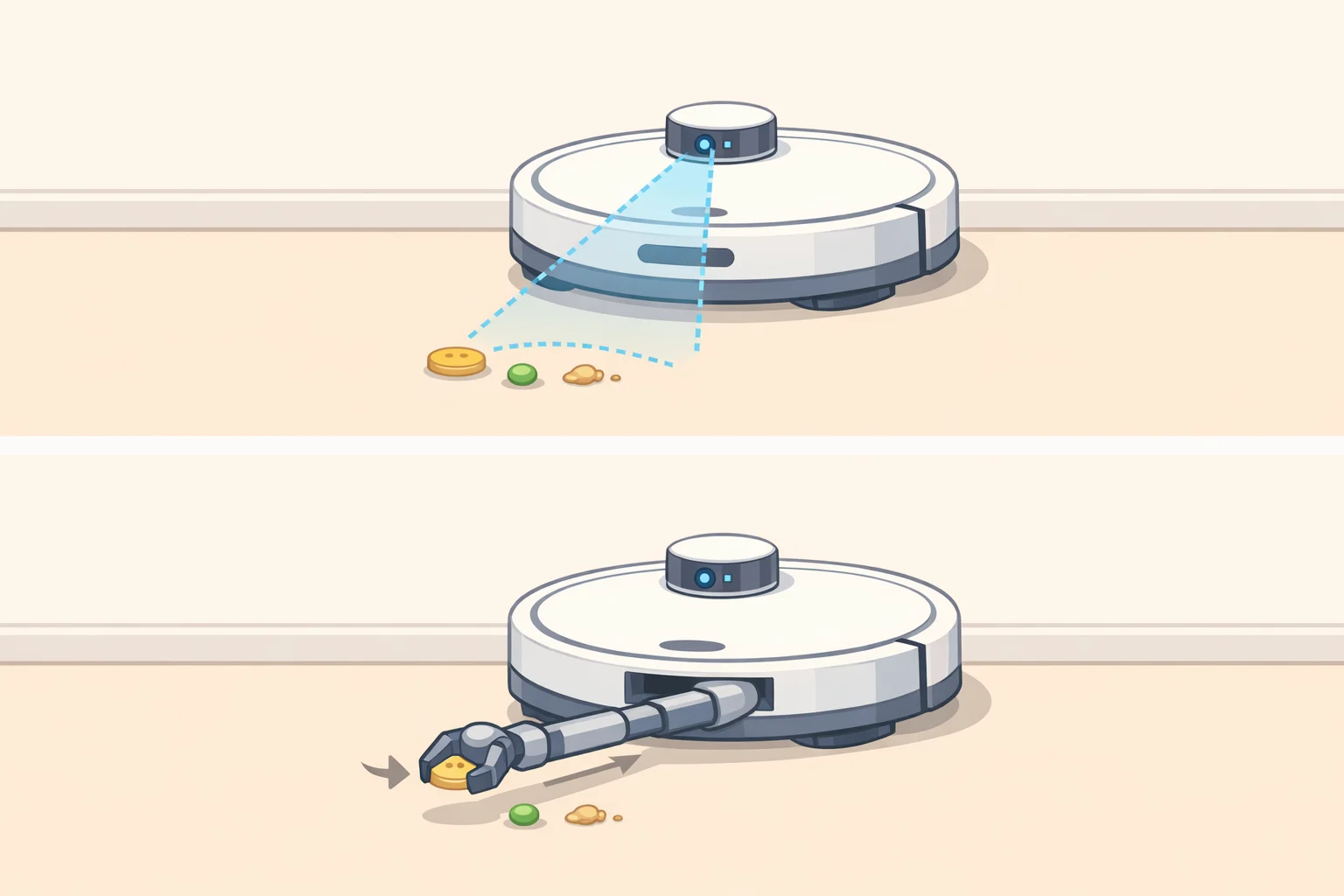
The OmniGrip is a five-axis arm with a camera in its gripper and a sensor that caps pickup weight at 300 grams. The hardware can theoretically handle up to 700 grams, but expanded weight limits require future software updates, per The Verge. During a cleaning run, a front-facing camera flags objects it considers pickable, then the arm deploys on a second pass to retrieve them and deposit them into zones configured in the app.
The object list is short. Roborock confirmed to WIRED that the arm currently identifies only four categories: socks, small towels, tissues, and slippers weighing under roughly 10 ounces. Everything outside that list goes unhandled.
Physical constraints narrow things further. The arm won't pick up items on carpet, won't deploy if ceiling clearance is under 45cm, and fails to recognize footwear that isn't on a hard surface, The Verge reported. These aren't fringe scenarios; they describe exactly where clutter tends to land in real homes.
There's also a manual mode. You can pilot the vacuum to an object via the app and trigger a pickup yourself, though the item must be positioned within a "blue zone" in the camera view. WIRED found the vacuum failed repeatedly to recognize a crumpled tissue even when placed directly in the target area. Functional in theory, finicky in practice.
On privacy: the arm's camera is disabled by default and must be manually activated. Remote viewing streams live only, with no footage stored, and the robot includes a physical emergency stop button, according to The Verge. For a product with a camera-equipped claw roaming your home, those are meaningful design choices.
Video of the Day
What extended testing found
Results across three publications told a consistent story, and it got worse over time.
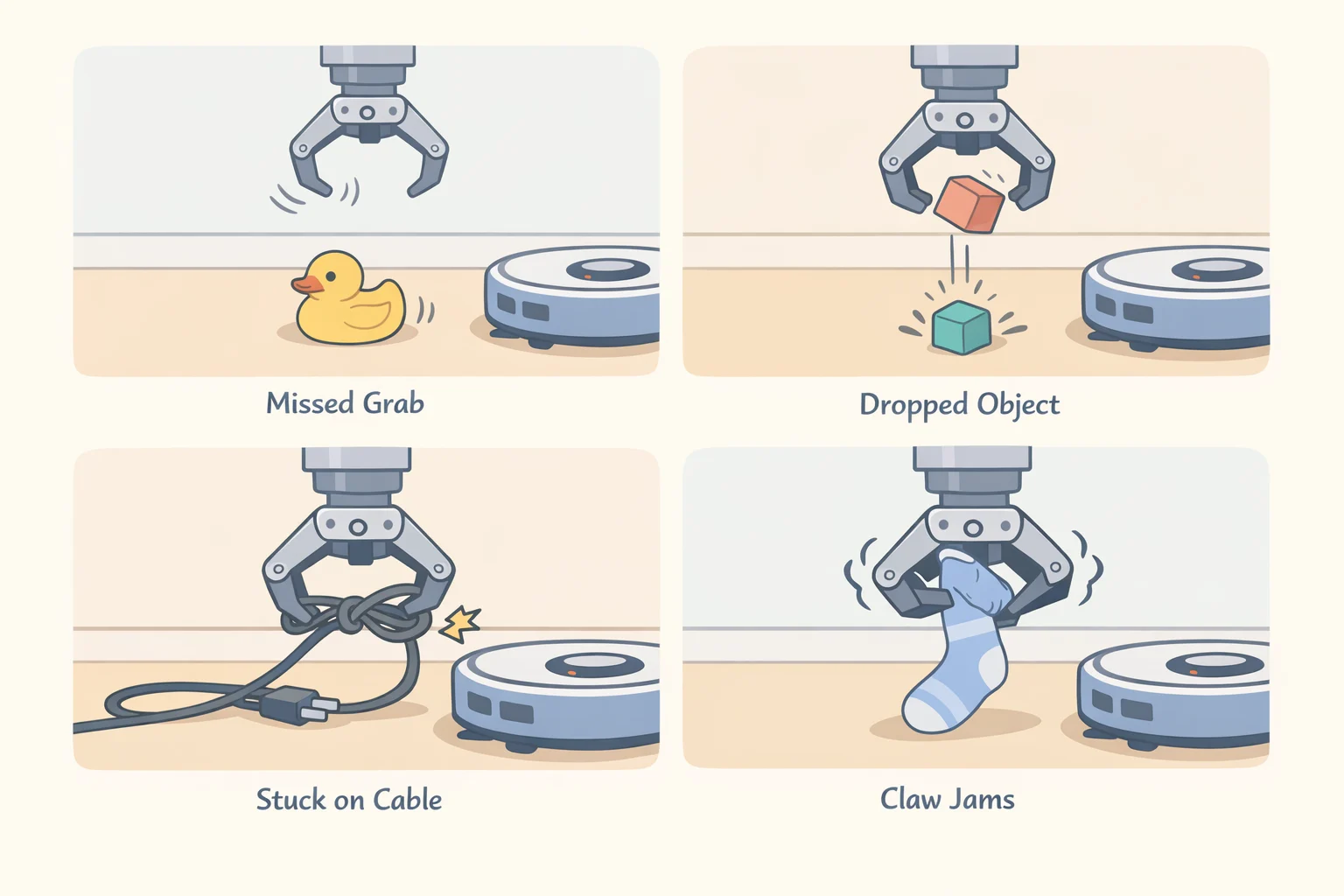
The Verge recorded an 80% success rate when the arm deposited socks or paper into the provided bin. The arm almost never retrieved footwear on its own, though, collecting exactly one sandal across the full testing period despite slippers, flip-flops, and Crocs left directly in its path. It also consistently struggled to handle more than one item per cleaning cycle.
WIRED's results deteriorated sharply over two months of real-household use. After the first month, the arm's machine learning became so confused it stopped attempting pickups altogether, spinning in place and announcing "Sorting failed" before docking. No improvement followed. Trusted Reviews reached the same conclusion a year ago: the arm "sometimes does what it's supposed to, but it often doesn't, and just isn't reliable enough."
Specific failure modes documented across reviews include the claw getting caught inside a shoe and lifting it off the floor, the arm pulling kitchen towels off a rack, and the vacuum picking up an object only to immediately set it back down. Roborock acknowledged to WIRED that OmniGrip has "many weird limitations." No independent review has validated any reliability improvements against real-home conditions since that testing.
Battery performance adds another variable. Trusted Reviews rated it excellent, with a 180-minute rated runtime and enough charge to cover their test space twice at maximum suction. WIRED found the opposite: the Z70 regularly docked mid-clean to recharge, turning a 9am scheduled run into a job that stretched until early afternoon. Buyers with larger homes should treat battery life as a variable, not a given.
Strip the arm away and the picture changes entirely. The Verge called it the first robot vacuum they'd tested that never once got stuck not on rugs, not under sofas, not between chair legs crediting the StarSight 2.0 navigation system's solid-state lidar, 3D sensors, and cameras, alongside the robot's 3.14-inch profile. Trusted Reviews confirmed the 22,000Pa suction "clearly works well." The arm is where the Z70 struggles. The vacuum is not.
The Roborock robot vacuum sale threshold that actually changes the math
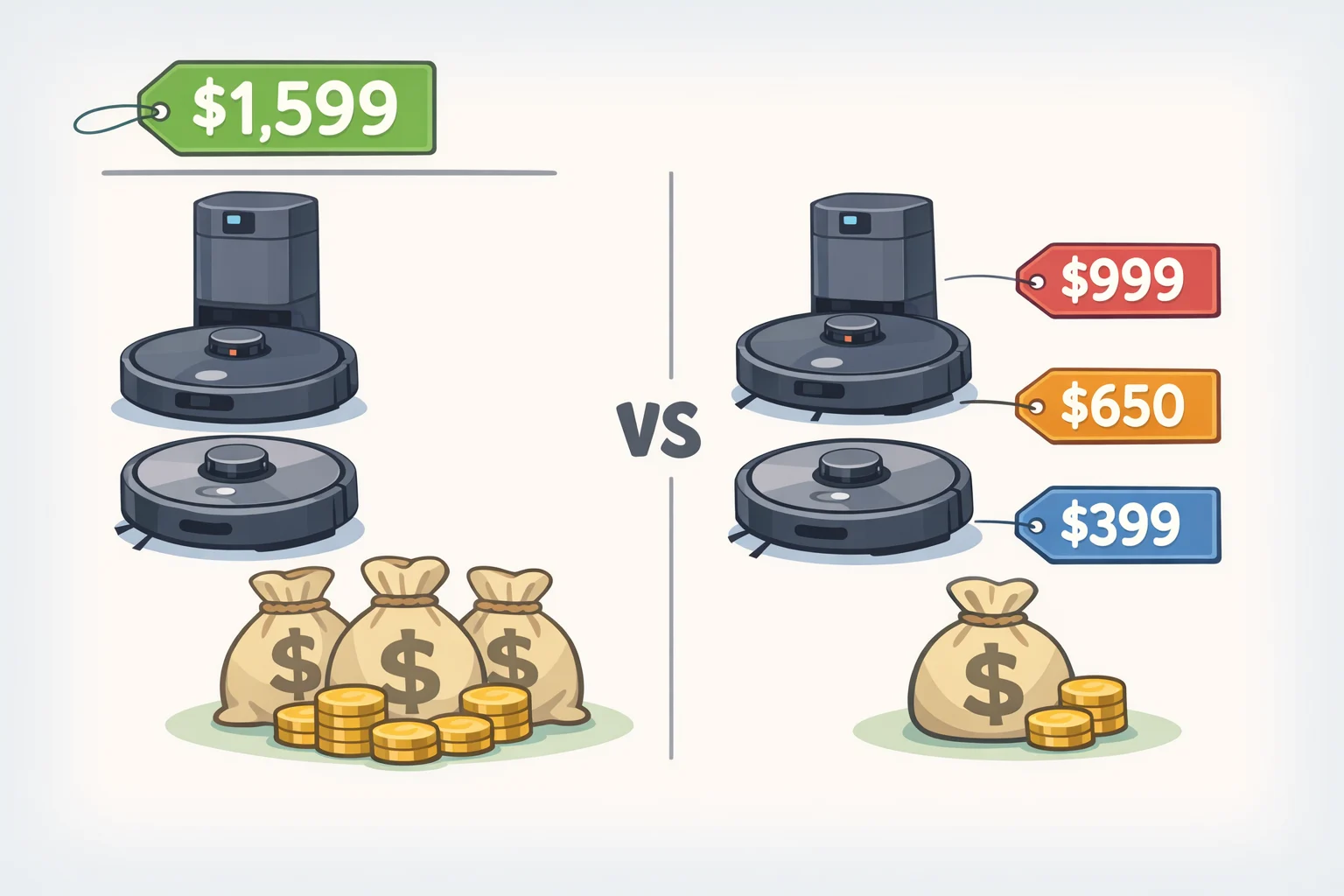
At full price, the Z70 carries roughly a $1,000 premium over the Saros 10R for an arm that WIRED, The Verge, and Trusted Reviews agree doesn't reliably deliver. At $2,599, the math doesn't work.
The number that changes the calculation is $1,599 the Saros 10R's street price, per The Verge. A discount that brings the Z70 to that level or below means the floor-cleaning hardware, which reviewers consistently praised, justifies the purchase on its own. OmniGrip becomes a bonus feature worth monitoring rather than a premium you're paying for. A Roborock smart vacuum 50% off the current list price would land near $1,300, which clears that bar.
If the sale price still sits significantly above $1,599, the case weakens again. You're still paying for an arm that extended reviews found unreliable, with no independently verified evidence that software updates have materially changed outcomes since last year's testing.
The arm is least useful in exactly the situations where clutter is most common: on carpet, under low furniture, and around footwear that isn't on a hard floor. No discount changes what OmniGrip can currently do.
Which Roborock model to buy right now
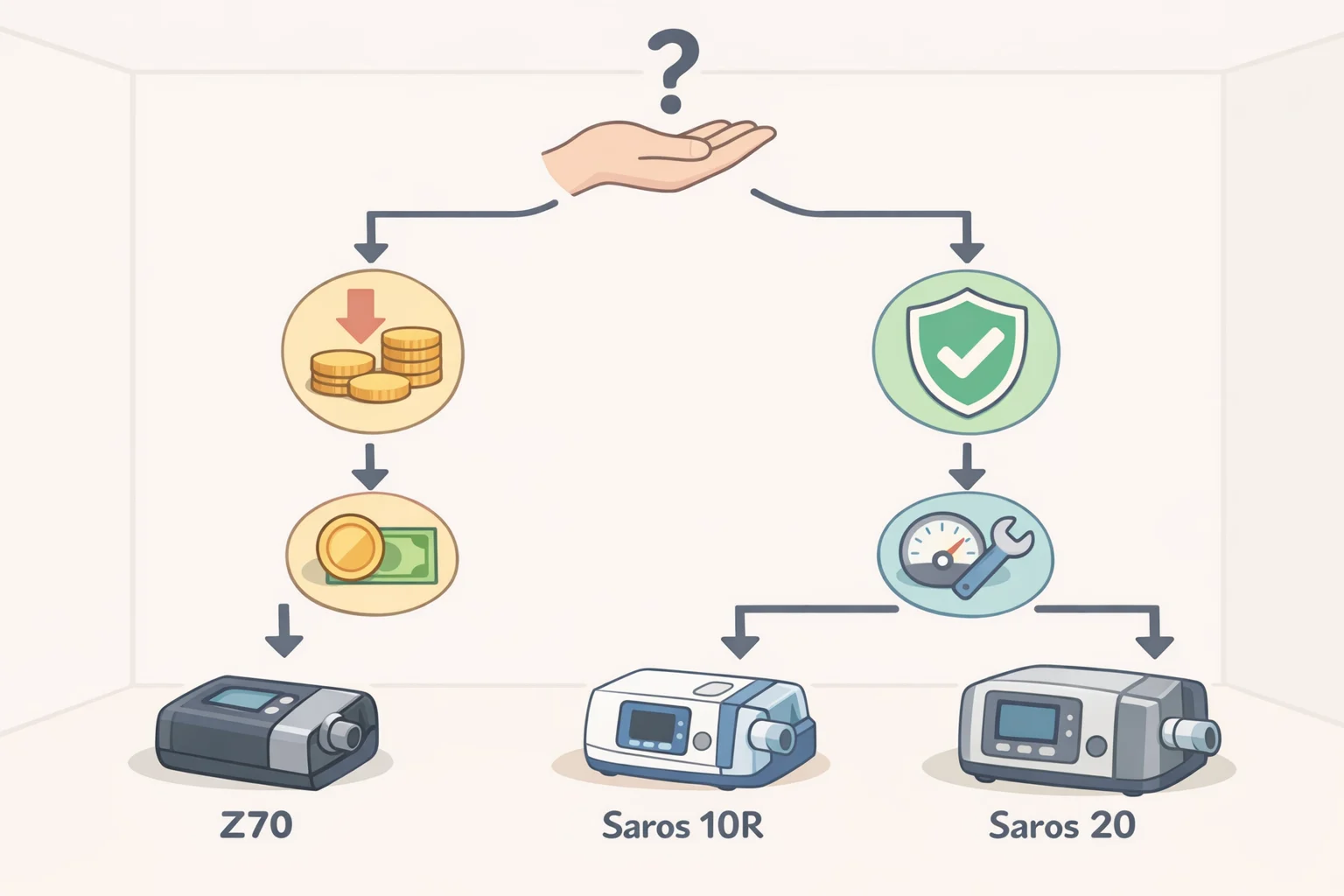
If a verified discount brings the Z70 near or below $1,599, it becomes a legitimate buy for anyone who wants a robot vacuum that never once got stuck in extended testing, per The Verge. Treat OmniGrip as a bonus feature with software upside Roborock has updates planned to expand weight limits and broaden object recognition not the reason for the purchase.
Without that discount, the Saros 10R is the straightforward choice. It offers the same floor-cleaning performance at $1,599.99, minus the arm entirely, according to The Verge.
For buyers who want maximum cleaning capability with no interest in a robotic arm, the Saros 20 is the current Roborock benchmark. Android Authority's review, published two weeks ago, rated it the best robot vacuum for edge cleaning the reviewer had ever tested: 36,000Pa suction, obstacle recognition across more than 300 object types, and a self-cleaning RockDock base station with heated mop washing, all at $1,599.99. It shows what Roborock's engineering looks like when the ambition and the real-world results are actually aligned.
Roborock deserves credit for shipping the first consumer robot with this kind of hardware at all, as WIRED acknowledged. A discount only fixes the price, not the arm.