Augmental MouthPad Launch: Tongue-Controlled Mouse Now Publicly Available
Augmental has opened public sales of the MouthPad in the United States, moving the tongue-controlled mouse from a closed early-access program to a product available to anyone for the first time. The device costs $1,400, plus roughly $100 for the required dental scan. For people with spinal cord injuries already using it daily, the Augmental MouthPad launch changes access, not just availability.
The MouthPad first surfaced in 2023 and ran an early-access program through 2024 before this week's public release, according to Augmental's press materials and Lowyat. Alongside the MouthPad, the company released a beta of Vox, a companion hands-free dictation wearable it describes as an "invisible keyboard," priced at $200 with units expected to ship by late 2026.
How the tongue-operated trackpad works
Video of the Day
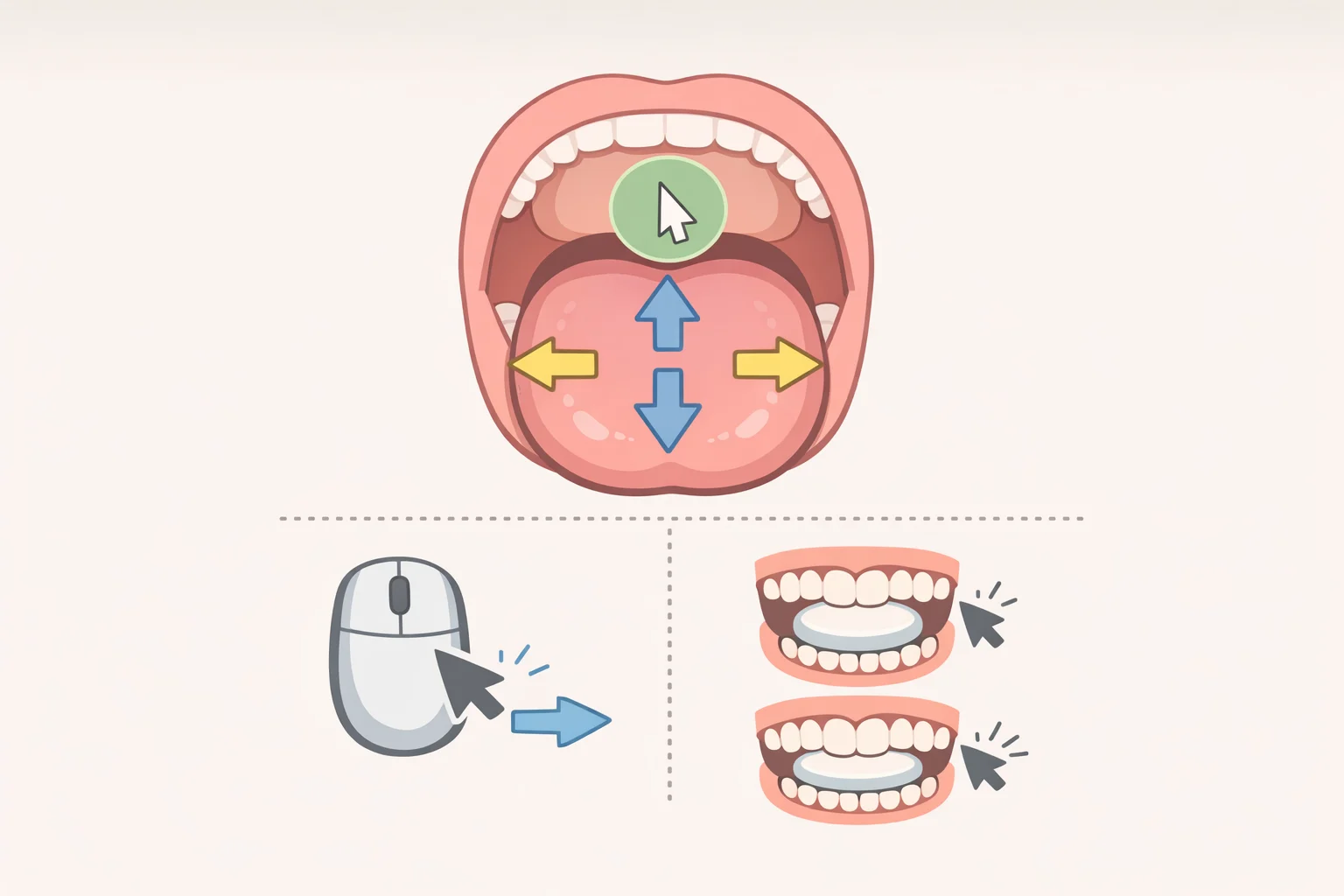
The MouthPad works like a mouse you wear in your mouth. It's a custom-fitted dental retainer worn over the upper teeth, with a pressure-sensitive trackpad embedded in the roof of the mouth. It pairs over Bluetooth with computers, phones, and tablets, and a dedicated button lets users switch between paired devices, Lowyat reported this week.
Sliding the tongue moves the cursor. Pressing against the palate registers a left-click. A sipping breath gesture triggers a right-click. The device also uses head-based motion sensing for additional cursor control, and all inputs are reconfigurable through a companion app, per Augmental's press release and MIT News. That combination of cursor movement, two distinct click actions, and head tracking means the device can handle pointer control without speech or hand movement.
For users with limited tongue mobility, the system supports jaw bites, clenches, and stronger reliance on head-tracking as alternatives, MIT News noted two years ago. The control scheme adapts to varying physical capability rather than assuming a fixed baseline, which matters in a population where spinal cord injuries vary considerably in how much movement they affect.
Augmental also says users can remap the trackpad to WASD directional controls and assign custom shortcuts to gestures for gaming and 3D-modeling workflows, per its press release. Those applications haven't been independently tested, and the company is the only source for those claims.
Video of the Day
What the Augmental MouthPad launch means for hands-free computer access
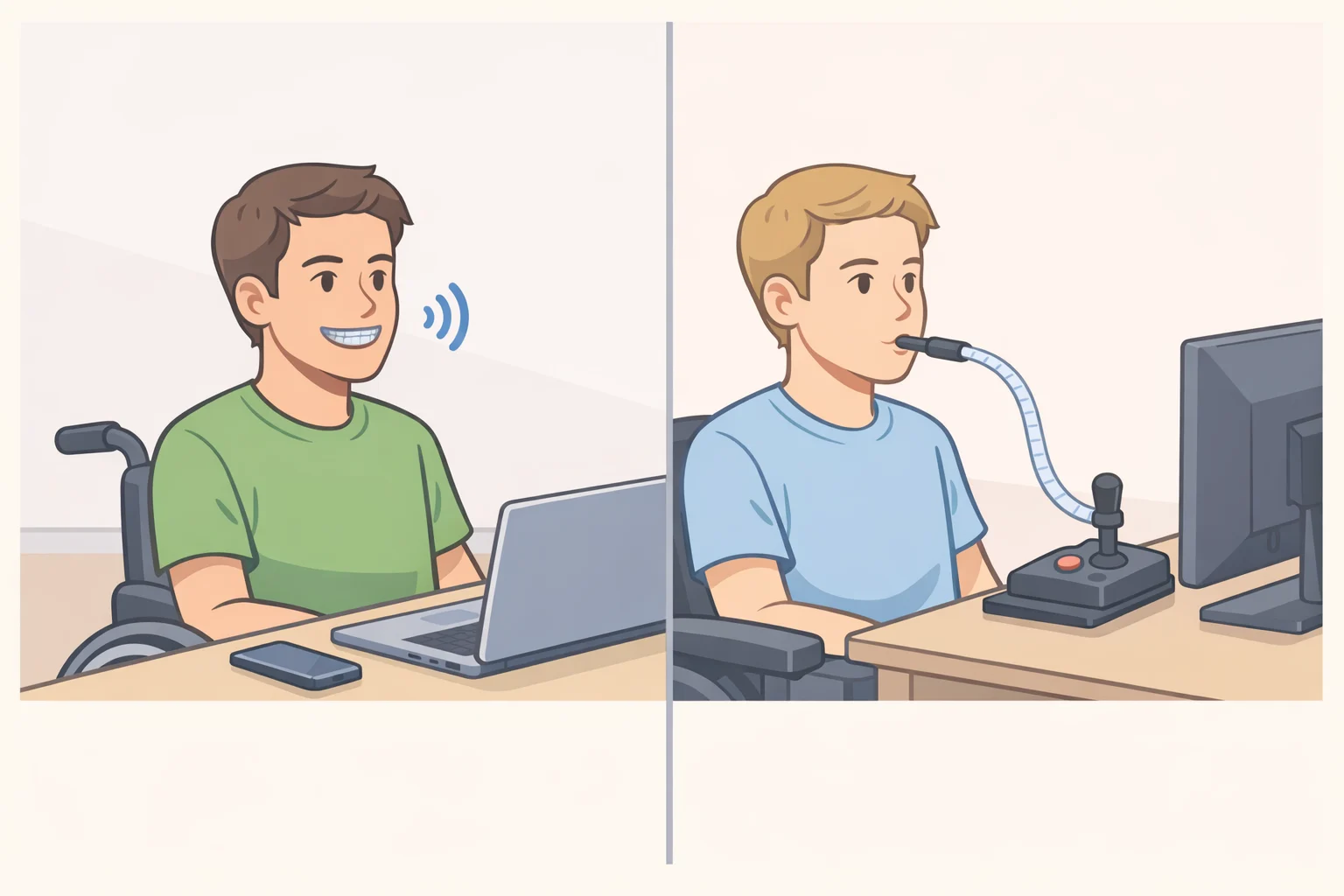
Consider the problem the device is actually solving. A college student with quadriplegia, studying math and computer science, needed to write equations and study in a library setting where speech-based assistive tools were impractical for other people nearby. The MouthPad let her do that, MIT News reported two years ago. People with spinal cord injuries were already using the device daily for independent interaction with phones and computers before this week's launch. The public sale extends a supply chain that already had real users on the other end.
The hands-free Bluetooth mouse sits in a small but established category. QuadStick, a sip-and-puff mouth controller designed for people with tetraplegia, supports PC, Mac, Nintendo Switch, and PlayStation across multiple configurations, according to ForAllWe, an accessibility publication that covered it earlier this year. QuadStick uses four sip-and-puff channels distributed across a joystick mouthpiece, giving users input options for commands like mouse movement and keyboard keys. MouthPad takes a different approach: it sits entirely inside the mouth as a dental retainer and connects natively over Bluetooth, making it more discreet and portable than external joystick-style controllers. The distinction matters most in shared environments, like a library, where visible adaptive hardware can draw attention users may not want.
Academic research on related technology gives some credibility to the underlying category. A peer-reviewed usability study of a different inductive tongue interface found that two participants with tetraplegia rated it 2.6 out of 10 on an unacceptability scale after just three days of use, with minimal disruption to speech, per the published findings. The study suggests some tongue-based interfaces can be adopted quickly and tolerated well, though it evaluated a different device under research conditions and says nothing specific about MouthPad's commercial version.
Price, barriers, and what the launch materials don't say
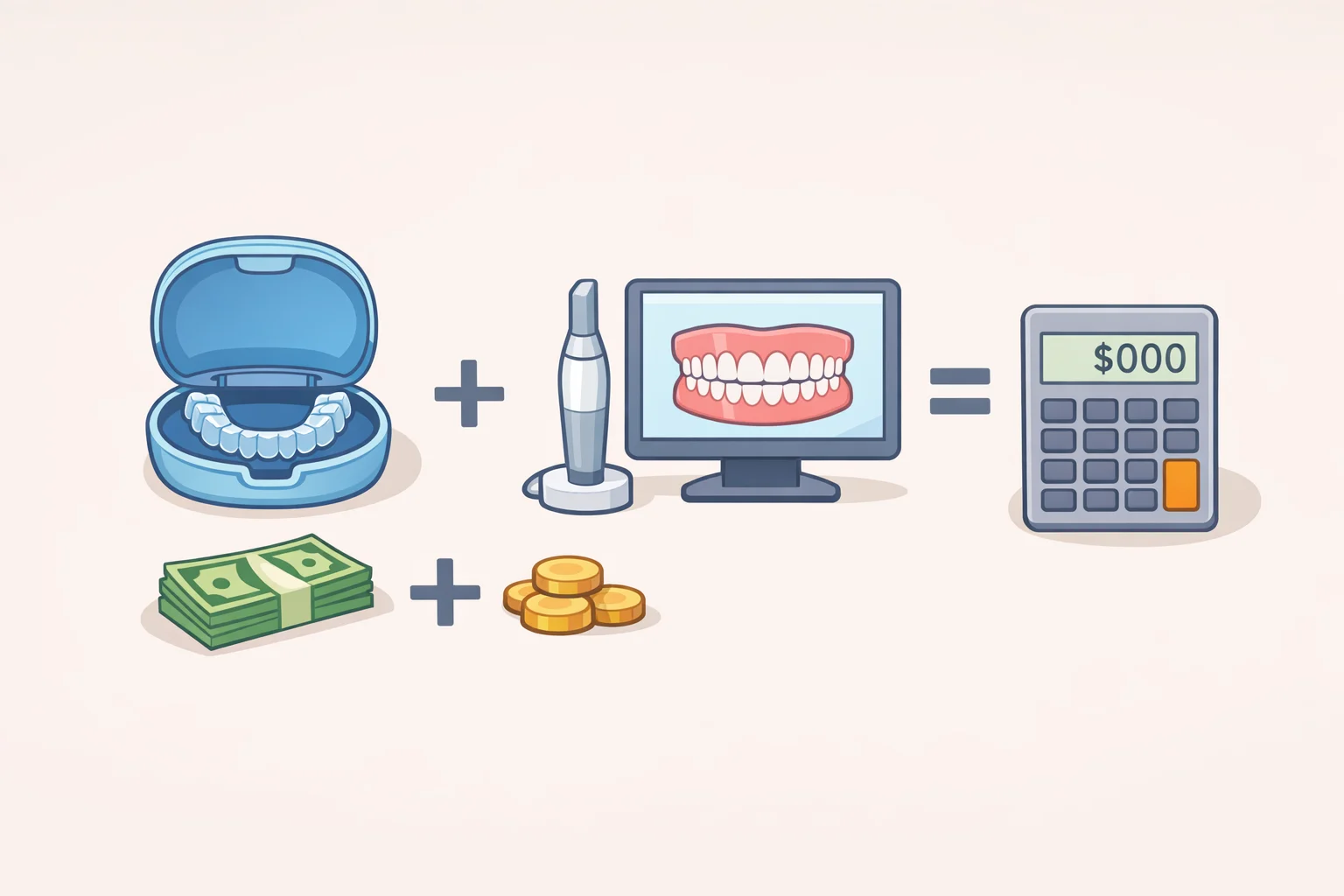
At $1,400 for the device plus roughly $100 for the dental scan, the total entry cost runs approximately $1,500, according to Augmental's press release. The launch materials do not mention any reimbursement pathway or insurance coverage.
Two years ago, MIT News reported that Augmental was pursuing FDA clearance, which the company said would unlock insurance reimbursements and open the door to more ambitious medical applications, including wheelchair and robotic arm control. The current launch materials make no mention of FDA clearance status. Until that changes, MouthPad is a fully out-of-pocket purchase for users who need it most and are often least positioned to absorb that cost.
Independent performance data remains limited. Augmental's press materials cite one user, Baptista, as having recorded a cursor-control throughput of 10.47 bits per second on a speed-and-accuracy task similar to Webgrid, per the press release. That figure comes exclusively from company materials, hasn't been independently verified, and no comparative benchmarks against head mice or eye-trackers have been published. That's not a reason to dismiss the device, but it is a reason to treat performance claims as preliminary.
The Vox companion wearable is worth noting separately. At $200 with expected late-2026 shipping, it's aimed at users building a fully hands-free setup where MouthPad handles cursor control and Vox handles dictation. The pairing is conceptually coherent, but Vox is a beta product with no independent evaluation yet, per Augmental's announcement. Buyers who want that full setup will need to wait on both the shipping timeline and the evidence.
MIT News also reported two years ago that Augmental was working on a next-generation system that would respond to whispers and subtle movements of internal speech organs, per that coverage. No update on that development has appeared in the current launch materials, but it signals the company's longer-term direction: building toward interfaces that become less visible, not more.
What comes next
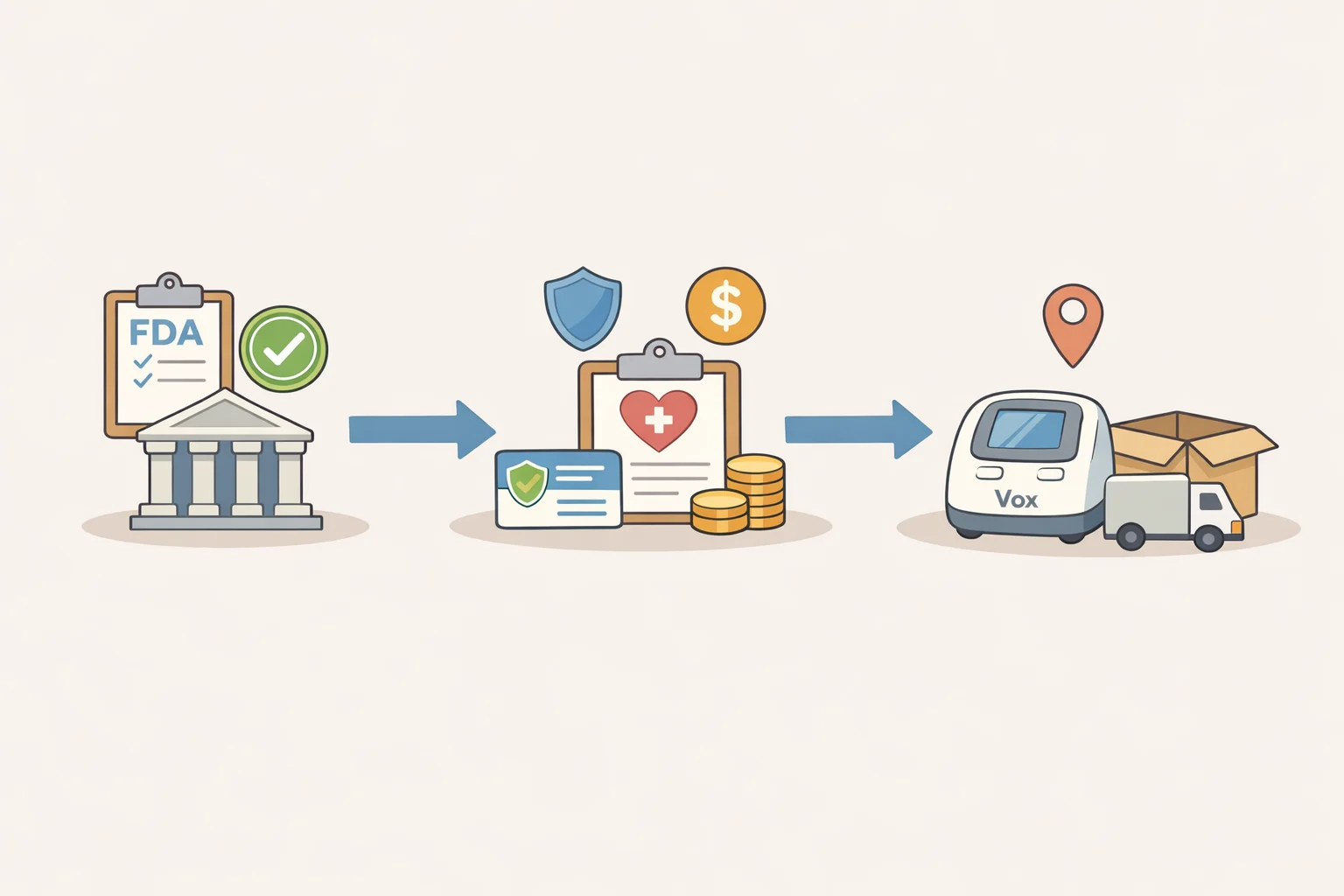
A device that was a prototype in 2023 and a closed pilot in 2024 is now publicly available. The near-term signals worth watching are specific: whether Augmental announces FDA clearance, whether any insurer moves to cover the device, and whether Vox ships on its late-2026 schedule.
FDA clearance is the hinge. It would validate MouthPad as a regulated medical tool, unlock insurance reimbursement, and, if Augmental's earlier statements hold, expand the scope of what the device can be used for from pointer control to wheelchair navigation and robotic limb interfaces. Without it, the $1,500 entry cost stays fully out-of-pocket, and the population of people who can actually buy the device stays narrow. The technology is real. The access problem is still open.