Tile vs AirTag Battery Life Compared: Total Cost Over 5 Years
At first glance, Tile wins the battery race easily. The Tile Mate, Slim, and Sticker claim up to three years of battery life; the AirTag runs just over one. But that comparison only holds if you ignore what happens when the battery dies and that's where the real tradeoff lives.
"Tile vs AirTag battery life" is actually two separate comparisons. The first is AirTag versus Tile Pro: both use user-replaceable CR2032 coin cells and last about a year, as Android Police noted in 2024. The second is AirTag versus Tile Mate, Slim, and Sticker those models last longer, but their batteries are permanently sealed. When the battery goes, the tracker goes too.
A few anchoring numbers: the Tile Mate, Slim, and Sticker are rated for up to three years but have no replaceable battery once depleted, you're buying new hardware, according to SlashGear this week and Rolling Stone from early 2025. The AirTag lasts just over a year and takes a standard CR2032 swap the same cell the Tile Pro uses. Both trackers start within $5 of each other: AirTag at $29, Tile Mate at $24.99, per Life360 this month.
What follows is an examination of what "battery life" actually costs across all three ownership paths starting with long-term finances, then moving to the real-world drain factors that affect the rated specs, and finishing with the ecosystem question that determines which tradeoff is worth accepting.
What tile vs AirTag battery life actually costs over five years
Video of the Day
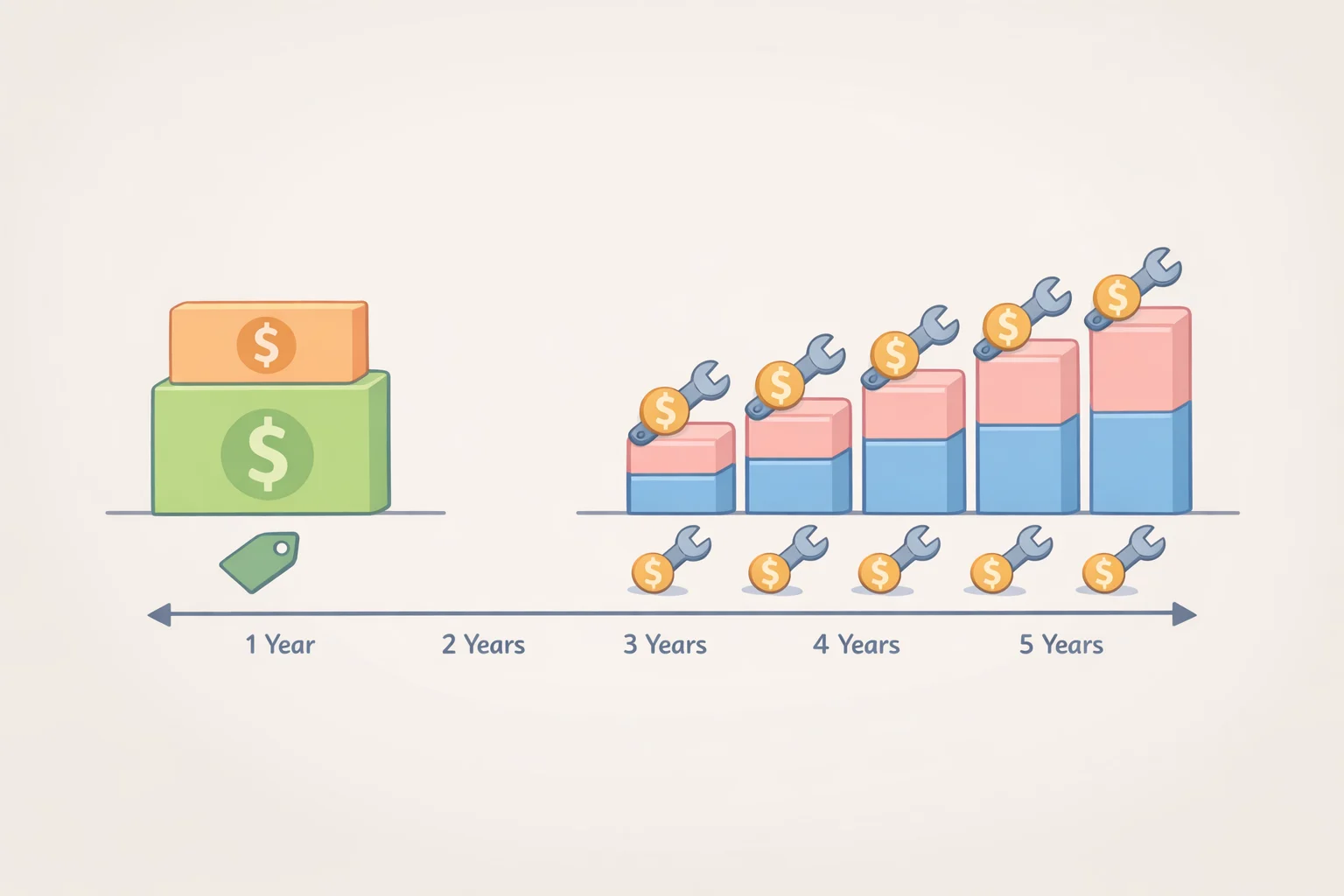
The best place to stress-test the "three years beats one year" claim is a multi-year ownership scenario.
A four-pack of Duracell CR2032 batteries runs about $3.99, putting the annual swap cost for either AirTag or Tile Pro at roughly $1, SlashGear calculated this week. Over five years: AirTag costs $29 upfront plus five battery swaps, approximately $34 total. Tile Pro costs $34.99 upfront plus the same $5 in batteries, approximately $40. Neither becomes e-waste at the one-year mark, as Android Police pointed out in 2024.
The sealed-battery Tile models look cheaper until you run the same math. The Tile Mate at $24.99 requires roughly one full replacement over five years another $24.99 around year three putting five-year cost at approximately $50, per SlashGear and Life360. That's the more expensive option, and it sends hardware to landfill on a roughly three-year cycle. The three-year rated life starts to look less like an advantage and more like a deferred replacement schedule.
Subscriptions complicate the math further. Some features that come standard on AirTag including separation alerts that notify you when you've left an item behind require Tile's $2.99/month plan, Rolling Stone reported in early 2025. Over five years, that's roughly $180 added to any Tile ownership scenario where that feature matters. For buyers comparing sticker prices, that's the number most likely to get missed.
One cost the AirTag carries that Tile doesn't: it has no built-in key ring, while the Tile Mate does, per Rolling Stone. An aftermarket holder adds a few dollars to year-one costs for anyone attaching it to keys. Minor, but worth naming in an honest accounting.
These projections use current retail prices and assume stable battery costs. Treat them as directional rather than precise but note that the directional conclusion is strong across a reasonable range of price variation.
Video of the Day
How real-world use affects the battery life ratings
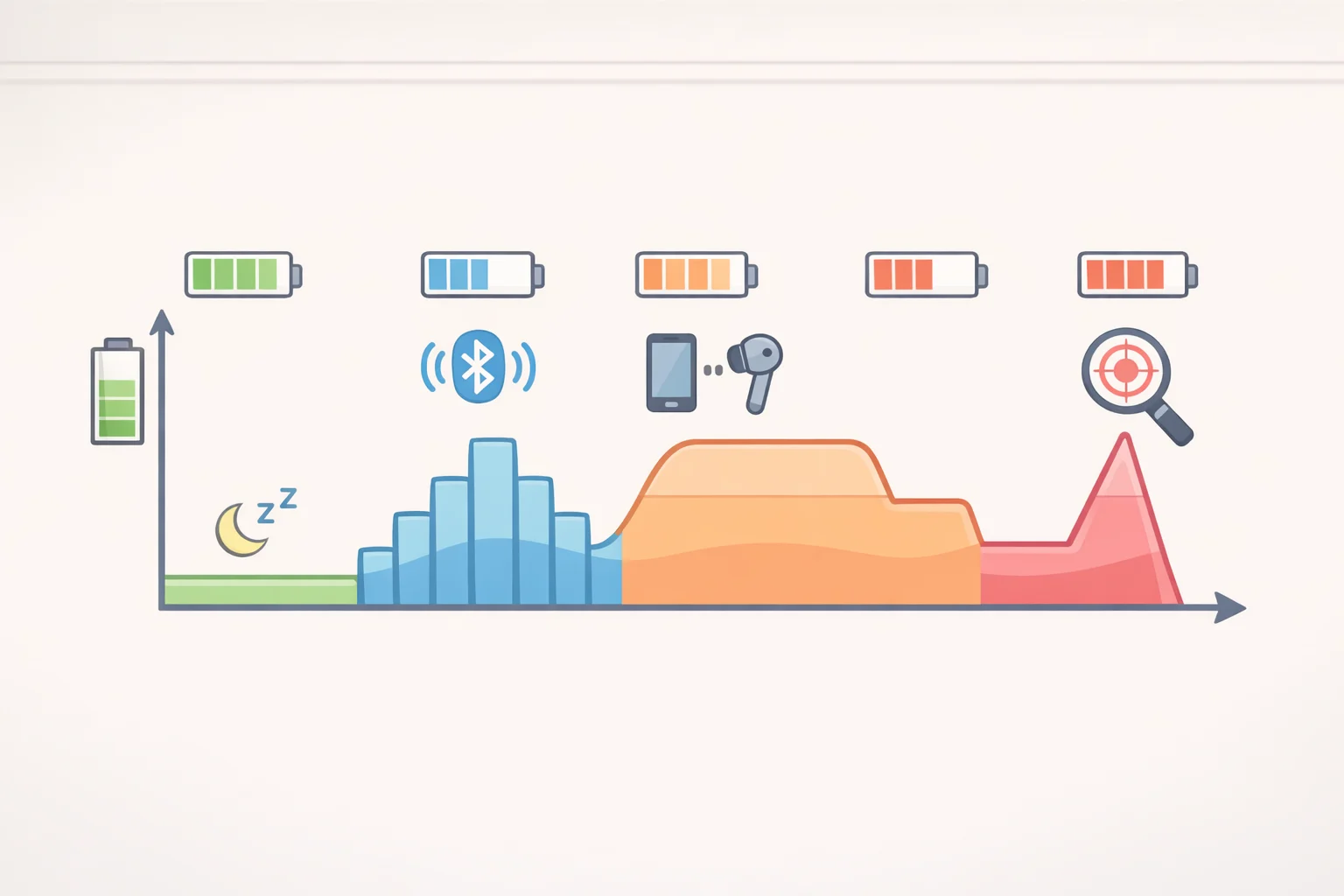
Manufacturer ratings are tested under controlled conditions. What actually shortens battery life in practice is worth understanding, even if no published head-to-head test quantifies the gap.
Reverse-engineering analysis of the AirTag's power consumption, published by João Freitas in 2023, offers some useful context. The AirTag's idle current draw is just 2.3 microamps low enough that a fully passive device could theoretically run for over a decade on the same CR2032. That's the sleep-state ceiling. The real-world ceiling is much lower because the device isn't passive.
The power trace data from that same analysis shows Bluetooth advertising firing every two seconds, each event drawing 6-7 milliamps for roughly four milliseconds. That regular heartbeat is what the one-year estimate is built around. Two higher-drain events push well beyond it: active Bluetooth connections pull spikes of around 25 milliamps, and precision finding sessions draw elevated current across the duration of use. The analysis doesn't quantify exactly how many precision finding sessions compress the one-year estimate, but the current differential between idle and active states is substantial.
The takeaway for AirTag owners: casual use in "leave it on your keys and forget it" mode tracks close to the one-year rating. Frequent precision finding sessions or extended active connections will shorten that. iPhone's low-battery notification gives you a heads-up before the battery dies completely, per SlashGear so there's no risk of losing the tracker unexpectedly, just a $1 swap coming sooner than the spec suggests.
For sealed-battery Tile models, the same principle applies in reverse: the three-year rating assumes typical use patterns. Heavy use won't destroy the battery dramatically faster, but the ceiling on that rated life is the sealed hardware itself. There's no swap when it falls short.
How ecosystem fit determines which battery tradeoff is worth accepting
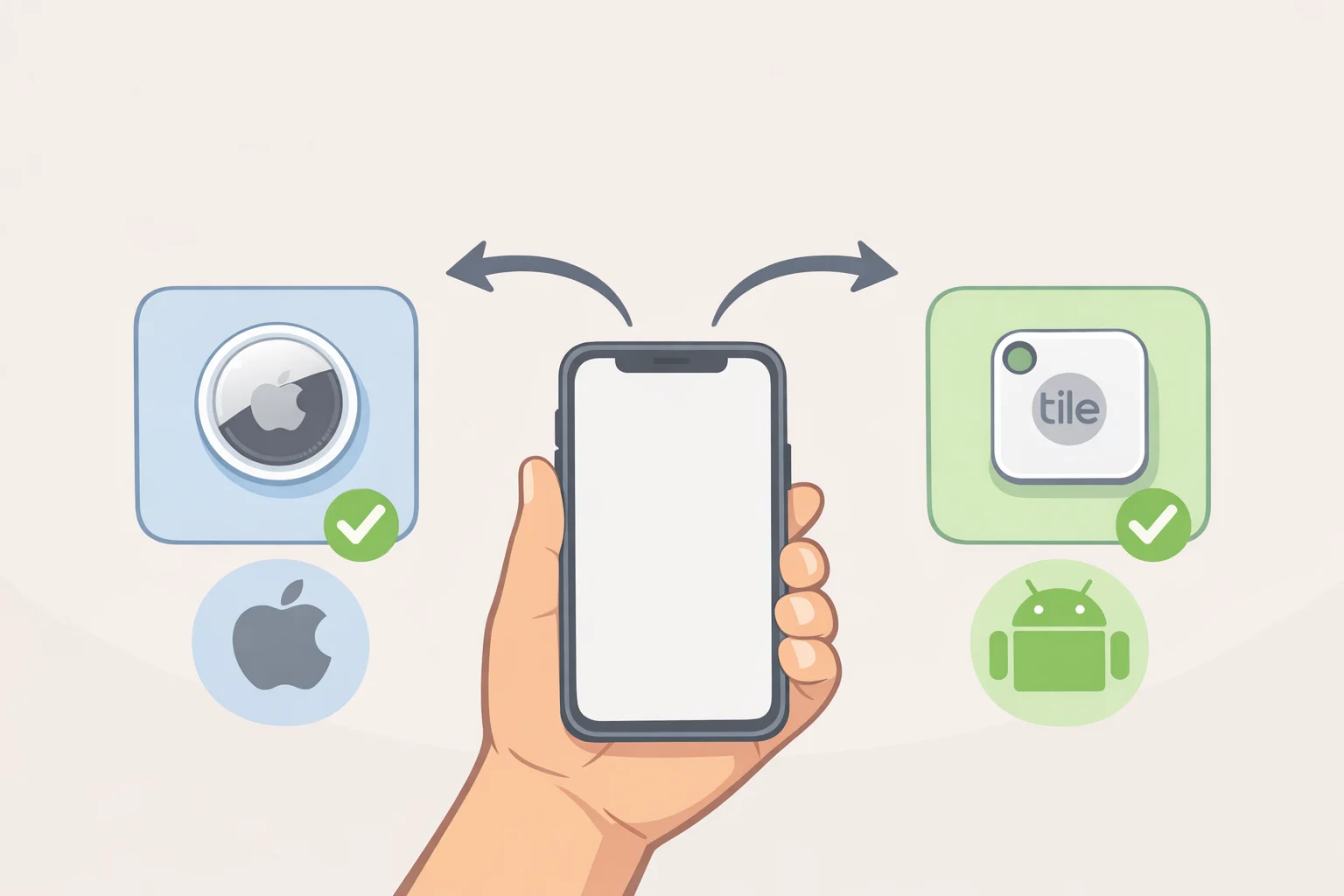
Battery economics only go so far. For most buyers, platform is the more decisive filter it shapes which set of tradeoffs you're even choosing between.
AirTag works exclusively with iPhone and iOS. Android users cannot set one up or use it to locate anything, per Life360 and Rolling Stone. For anyone on Android, or in a household that mixes platforms, Tile is the only option in this comparison. That makes the Tile Pro's replaceable battery the relevant recommendation by default not because it wins on every metric, but because the AirTag isn't on the table.
For iPhone users, the battery question opens up into a capability comparison. On out-of-range tracking, Rolling Stone argues AirTag has the edge for lost luggage and items left far from home, because Apple's Find My network pings off the broad installed base of iPhones to relay location updates. Tile counters with its own crowd-sourced network of tens of millions of users across iOS and Android, per Life360. No published data directly compares recovery rates or update latency between the two networks, so this is a credible editorial judgment from one source, not a settled performance fact.
The cleaner iPhone advantage is UWB precision finding. On compatible iPhones models newer than the iPhone 11, excluding SE models AirTag provides on-screen distance and directional guidance to a nearby item, per Life360 and Rolling Stone. No Tile model offers an equivalent. That's not a rating or an estimate; it's a hardware feature either present or absent.
Tile holds a meaningful edge for in-home use. The Tile Pro's Bluetooth range reaches up to 500 feet, versus roughly 350 feet for the Mate and Slim, and around 250 feet for the Sticker, according to Life360. Apple has never published an official range figure for AirTag. For users who mostly lose things between the couch cushions rather than at baggage claim, that range advantage matters more than UWB precision finding and Tile's speaker reinforces it, measuring over 100 dB in Rolling Stone's testing versus roughly 80 dB for AirTag. A louder chirp in a noisy room is often faster than navigating an arrow on a screen.
The platform question collapses quickly into a short decision tree. iPhone users who travel frequently and want the strongest out-of-range network plus precision finding: AirTag, annual CR2032 swap at $1. Android users or mixed households: Tile Pro, same battery economics, cross-platform setup. The sealed-battery Tile models Mate, Slim, Sticker make sense for one specific buyer: someone who wants the smallest possible form factor and accepts replacing the hardware every three years as the price of that compactness.
A buyer's framework for the battery decision
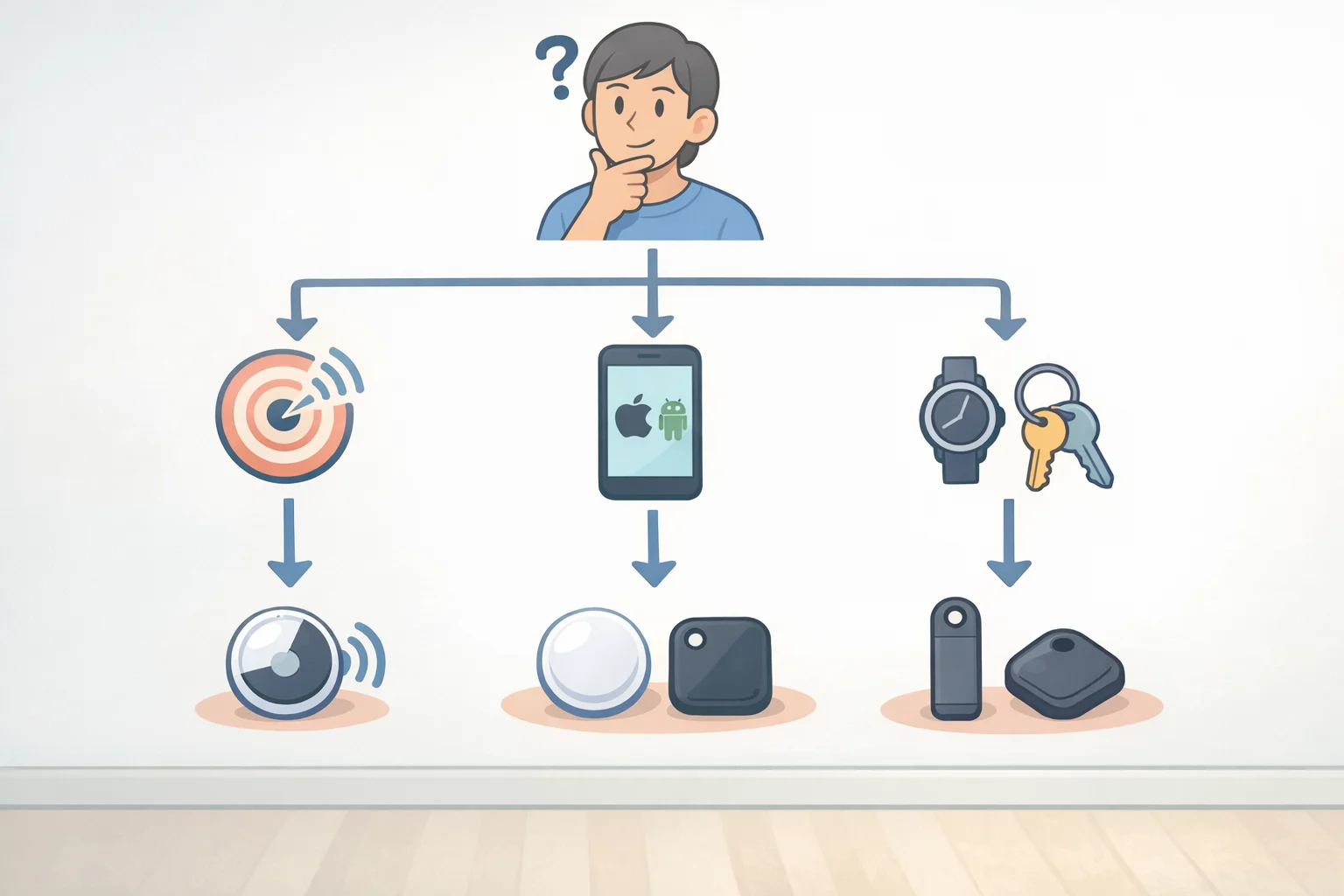
Rated battery life and practical battery value are different things. Three years sounds better than one, but not when the three-year model is disposable and the one-year model costs a dollar to refresh.
Here's how the decision breaks down:
- iPhone user, wants best out-of-range tracking and precision finding: AirTag. Annual CR2032 swap at roughly $1/year; budget a few dollars for a key ring holder if needed. Five-year ownership cost: approximately $34, per SlashGear.
- Android user or mixed-platform household: Tile Pro. Replaceable battery, cross-platform compatibility, longest Bluetooth range in the Tile lineup. Five-year device and battery cost: approximately $40, plus subscription fees if separation alerts matter, per Life360 and Rolling Stone.
- Wants the thinnest or smallest form factor: Tile Mate, Slim, or Sticker. The sealed battery is the cost of the compact design factor in recurring hardware replacement and the waste it generates, per SlashGear.
One honest gap: every battery estimate here is manufacturer-stated. The reverse-engineering data on AirTag's power consumption adds useful texture, but there's no independent longitudinal test that quantifies exactly how much faster heavy UWB use or frequent alerts drain either device against its rated spec. The framework above holds across a reasonable range of real-world variation but treat the specific numbers as directional.
The differentiators in this category are increasingly about ecosystem depth and total cost of ownership. Battery life is the right question to start with. Replaceability is the better one to finish on.