US drone ban 2026: FCC rules explained for DJI, Autel
Ask five people what the "US drone ban" actually means and expect five different answers, because most people are really asking three separate questions at once: is this drone flagged as a security risk, is it still certified for sale, and can it legally be owned or flown? The FCC's own filings keep those questions apart, and blurring them together is where most of the bad advice about the drone ban in the United States comes from. Since December 22, 2025, the FCC has added drones and drone parts produced in a foreign country to its Covered List, a registry of equipment the agency has formally determined poses an unacceptable risk to national security (FCC, 7 months ago). The notice doesn't say the action bans ownership, sale, or flight of every foreign-made drone. What it establishes is narrower, and more procedural, than the headlines suggest.
Sixteen days later, the FCC carved out two exemptions from that same Covered List: one for products on the Pentagon's Blue UAS Cleared List, based on a Department of War national-security determination, and one for products meeting a domestic-manufacturing cost test. Both run only through January 1, 2027 (FCC, 7 months ago). This piece walks through what those filings require, what the exemptions cover, and what a buyer can realistically check before spending money on a drone this year. It won't name which specific DJI, Autel, or other commercial models currently qualify, because the FCC's public notices don't publish that kind of model-by-model list.
FCC drone ban rules: what the Covered List actually does
Video of the Day
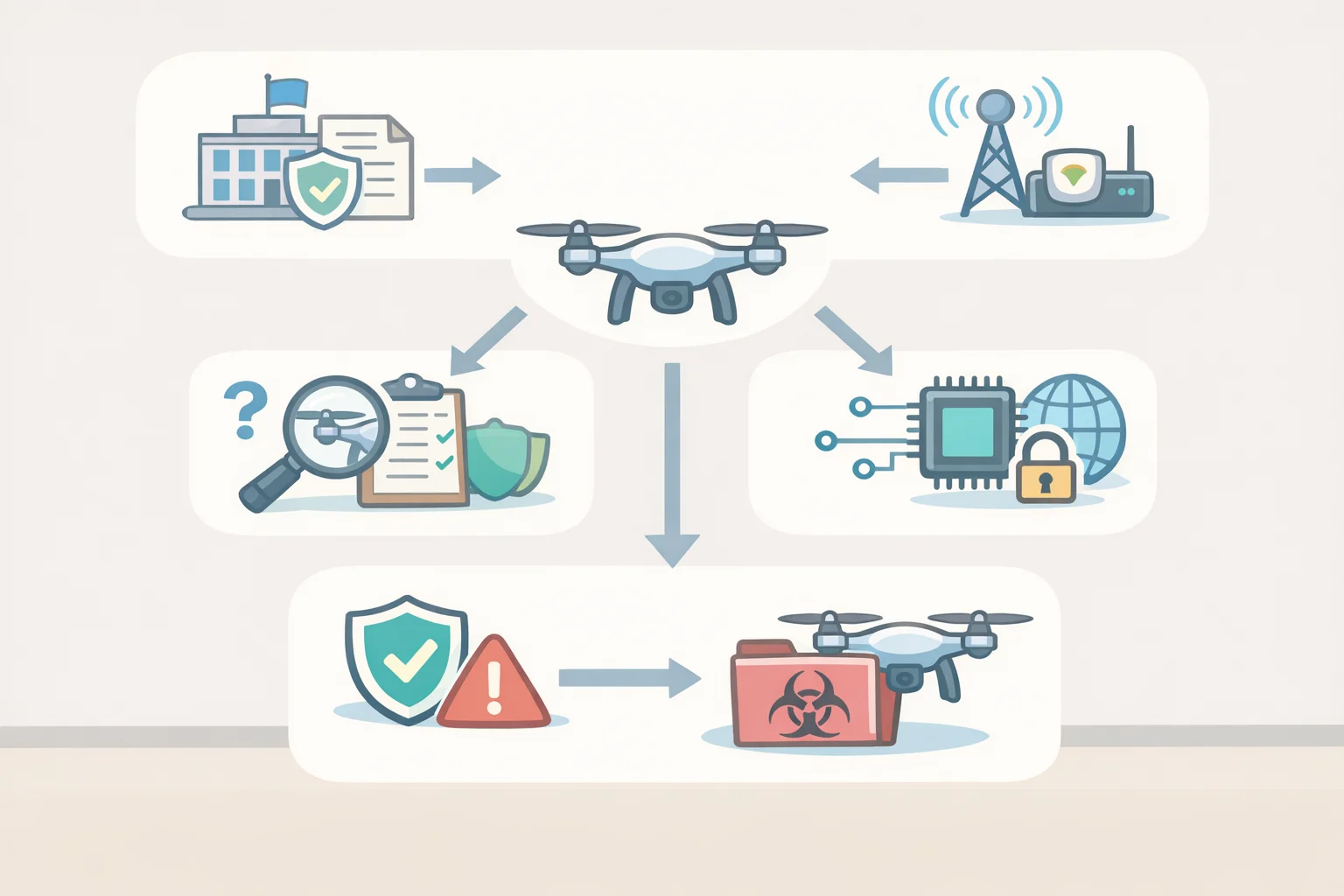
Think of the Covered List as a flag, not a padlock. It's a formal designation the FCC attaches to equipment categories it has judged risky, not a statute that spells out what happens next to a device someone already owns. The notice establishes the designation and its national-security rationale, but it doesn't walk through, item by item, how that applies to a drone already sitting in a garage.
The finding behind the rule is specific. On December 21, 2025, the FCC received a National Security Determination from an Executive Branch interagency body concluding that uncrewed aircraft systems, or UAS, produced in a foreign country pose "an unacceptable risk" to US national security and to the safety of US persons (FCC, 7 months ago). The next day, the Commission added all foreign-produced UAS and their "critical components" to the Covered List. That term reaches well past the aircraft itself. The FCC's definition lists:
- Flight controllers
- Ground control stations and UAS controllers
- Navigation systems
- Sensors and cameras
- Batteries and battery management systems
- Motors
- Data transmission devices and communications systems
- Associated software
(FCC, 7 months ago)
The notice lists these as separate categories but doesn't say whether swapping in a replacement battery or camera module raises its own compliance question apart from the drone body it's attached to. That's a question the wording of the definition raises, not one the document answers, and it matters more to repair shops and hobbyists piecing together parts than to someone buying a sealed retail unit.
The FCC's Public Safety and Homeland Security Bureau maintains the Covered List and describes its purpose plainly: flagging equipment determined to pose an unacceptable risk to national security or to the safety of US persons (FCC, 7 months ago). What the notice doesn't define is an assembly-location threshold for what counts as "produced in a foreign country," the way it defines a specific cost threshold for the domestic-end-product exemption below. That's a gap in the document this article draws on, not necessarily a gap in the broader regulatory record, which may be addressed elsewhere.
Video of the Day
Can you still buy DJI drones in 2026? The two exemptions explained
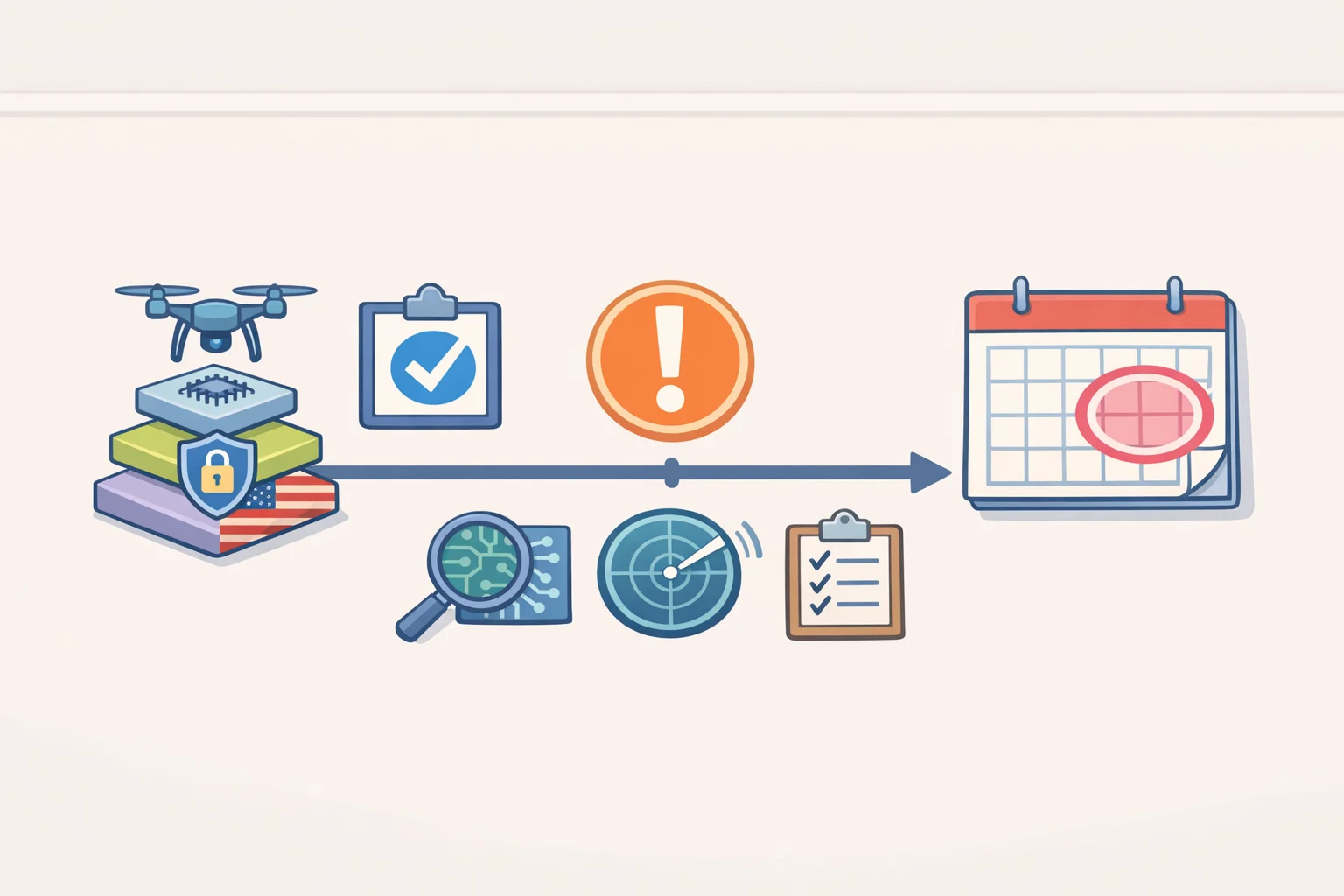
Two categories of product are currently pulled back off the Covered List. The FCC spelled out both in a notice released January 7, 2026, alongside a companion FAQ document explaining the change (FCC, 7 months ago). UAS and components on the Defense Contract Management Agency's Blue UAS Cleared List are exempt through January 1, 2027, based on a Department of War determination that those items don't currently present unacceptable risks (FCC, 7 months ago). Separately, products qualifying as "domestic end products" under the Buy American Standard are exempt through the same date. Qualifying requires US manufacture plus domestic component costs exceeding 65 percent of the finished product's total cost (FCC, 7 months ago).
Both exemptions trace to the same January determination, and both terminate automatically on January 1, 2027 unless a newer national-security determination replaces them (FCC, 7 months ago). So the honest answer to "can you still buy DJI drones in 2026" depends entirely on whether a given model sits on the Blue UAS list or clears the 65-percent domestic-content test, and the FCC's notice doesn't tie either exemption to a specific brand or product. It states the legal test; it doesn't publish a lookup table matching retail models, DJI's or anyone else's, to exemption status. Anyone searching for a firm DJI ban USA 2026 timeline won't find one here either, because the notice frames the restriction around country of origin and component classification, not company names.
The most concrete verification step available to an ordinary buyer is checking the Defense Contract Management Agency's Blue UAS Cleared List directly, since that agency maintains it separately from the FCC. The notice doesn't describe how a consumer would cross-reference that list against a retail model number, which puts the burden of proof on the buyer or the seller rather than on a government database built for that purpose. These two exemptions are also narrowly built for UAS and UAS components specifically. Nothing in the notice suggests they extend to foreign-made electronics generally.
Which drones can you buy in the US right now
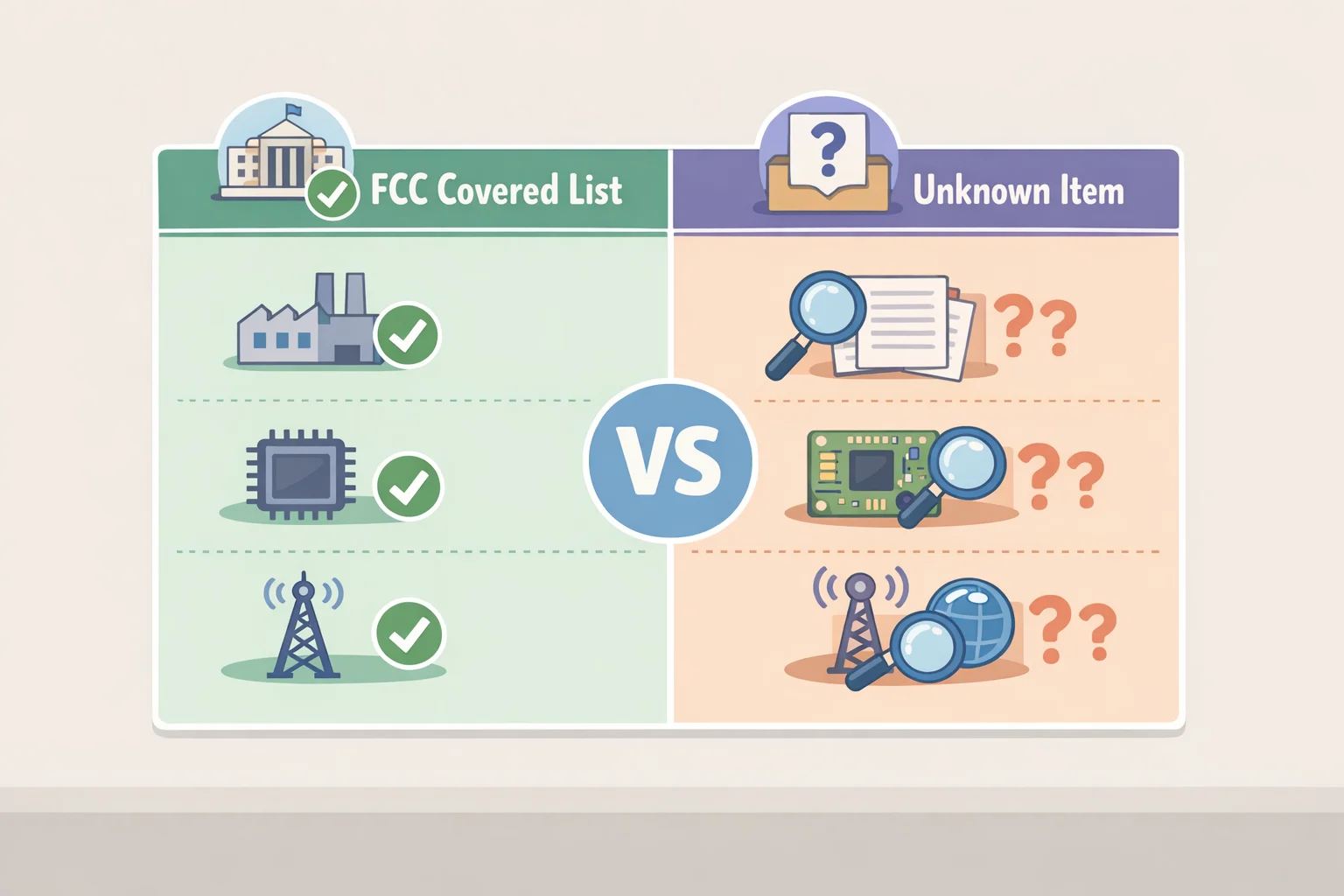
Being removed from the Covered List is not the same as being broadly approved for the American market. The January notice states a legal test for two categories, Blue UAS clearance and domestic-end-product status; it doesn't function as a certification that any specific retail product is cleared for sale (FCC, 7 months ago). Nor does it publish a model-level list matching commercial products, DJI's, Autel's, or anyone else's, to either exemption.
Two other questions sit outside this notice entirely, and they're worth naming because buyers tend to assume Covered List status settles them. Whether a drone still carries a valid FCC equipment certification, separate from its Covered List status, isn't something the notice addresses for devices certified before December 22, 2025. Whether a specific drone can legally be flown is a question for the FAA, state law, and drone registration rules, none of which show up in the document reviewed here.
The table below sorts what this record confirms from what still needs checking elsewhere.
| What you're checking | What the FCC record confirms | What remains unknown or what to check |
|---|---|---|
| Is this UAS or component produced in a foreign country? | Foreign-produced UAS and critical components were added to the Covered List on Dec. 22, 2025 (FCC, 7 months ago) | The notice doesn't publish a model-level list of which specific commercial products qualify |
| Is it on the Blue UAS Cleared List? | Blue UAS-listed items are exempt from the Covered List through Jan. 1, 2027 (FCC, 7 months ago) | DCMA maintains that list separately; the notice doesn't say how a consumer would cross-check it against a retail model number |
| Does it meet the domestic-end-product test? | Requires US manufacture plus domestic component costs over 65% of total product cost (FCC, 7 months ago) | The notice doesn't say who certifies this for a given consumer product or whether that certification is disclosed publicly |
| Does its existing FCC certification still apply? | Covered List status and individual equipment certification are treated as separate matters in the notice (FCC, 7 months ago) | Whether certification predating Dec. 22, 2025 remains valid isn't addressed |
| Can I resell or import a unit I already own? | Not addressed in either the Dec. 22, 2025 or Jan. 7, 2026 notice | Treat as unresolved until the FCC issues further guidance |
A manufacturer's written statement naming a specific model and citing the 65-percent test is a sturdier starting point than marketing copy alone, though nothing in the notice establishes that such a statement carries legal weight on its own. A "Buy American" sticker with no documentation behind it doesn't settle the question either way.
What to watch next
One date matters more than any headline between now and the end of the year: January 1, 2027, when the Blue UAS and domestic-end-product exemptions lapse automatically unless the Department of War issues a new determination extending them (FCC, 7 months ago). If that determination doesn't arrive, both carve-outs disappear and the broader December 2025 restriction applies to a wider set of products by default.
Until then, checking DCMA's Blue UAS Cleared List directly and asking a seller for documentation tied to a specific model beats trusting a "compliant" or "cleared" label at face value. The FCC's own notice answers the Covered List question with real precision: what's listed, what's exempted, and when the exemptions expire (FCC, 7 months ago). It answers the equipment-certification and legal-ownership questions far less clearly, because those simply aren't its subject. Treat a retailer's compliance claim as a starting point, not a substitute for model-level documentation or whatever guidance the FCC and DCMA publish between now and the exemptions' expiration.