Peloton Tread Flex Foldable Treadmill Explained: Cost, Space Savings
Peloton unveiled the Tread Flex today, its first foldable treadmill, pricing the new machine at $2,195 to make it the company's cheapest treadmill ever (Digital Trends). The vertically folding deck cuts the machine's footprint by nearly half, a direct pitch to buyers who've wanted a Peloton treadmill but never had the floor space to keep one out permanently.
The Tread Flex arrives alongside two other new models, the $3,495 Tread Vision and $6,695 Tread+ Vision, rounding out a three-tier lineup that ships in the U.S. and Canada starting October 1 (Quartz).
At a New York City launch event, Peloton chief product officer Nick Caldwell told reporters the folding design responds directly to customer requests for a treadmill that's easier to store (The Verge). Whether a lower price and a smaller footprint are enough to reverse a rough stretch for Peloton's hardware business is a separate question, and the company's own financials hint at the stakes.
How much does the Peloton Tread Flex cost?
Video of the Day
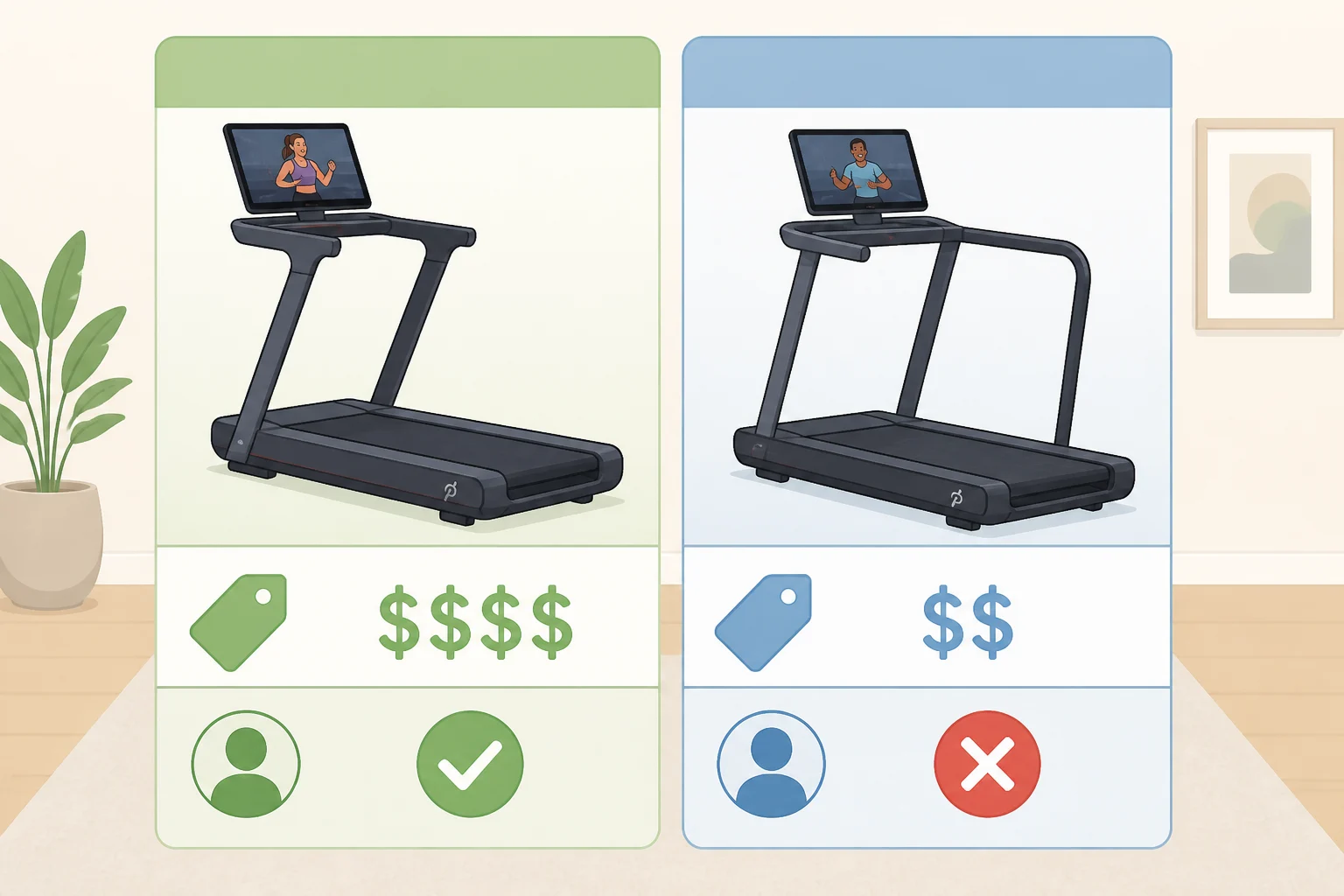
The Peloton Tread Flex price undercuts every treadmill the company has sold before it, starting at $2,195 in the U.S. and CAD $2,995 in Canada (Digital Trends). For context, Peloton's original Tread launched at about $4,000, more than eight years ago, which makes the Flex a genuine departure from the company's historical treadmill pricing (Engadget).
That sticker price doesn't include a Peloton membership, which runs $50 a month regardless of which treadmill a buyer chooses (Tom's Guide). Factor that in over a year of use and the Flex's discount narrows considerably.
The Verge, reporting from the launch event, noted that the Flex's price lines up more closely with Peloton's bikes than with its older treadmills, though plenty of other walking pads and treadmills sell for much less (The Verge). Peloton's price cut is relative: cheap for Peloton, not cheap against the broader treadmill market.
Video of the Day
How the Peloton foldable treadmill saves space
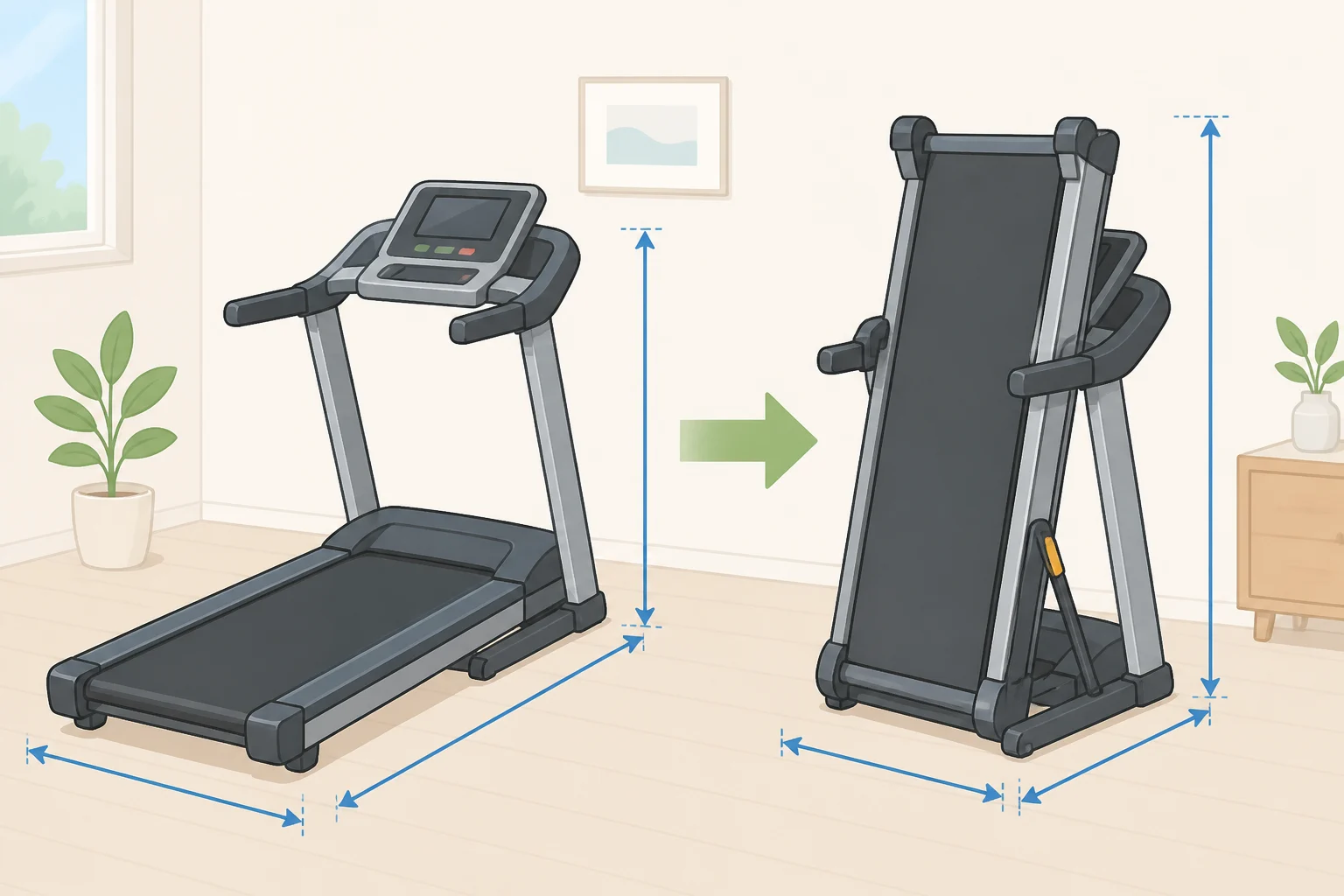
The running deck folds vertically, shrinking the machine from 70.5 by 33.5 by 66 inches unfolded down to 37.8 by 33.5 by 66 inches folded (Tom's Guide). Peloton pitches that as roughly a 50% reduction in footprint, marketing the Flex as a space-saving Peloton treadmill built for smaller homes (Digital Trends).
A two-cylinder release system lowers the deck gradually. Peloton says the process takes about 20 seconds by design, though The Verge's hands-on timing at the launch event clocked it closer to 25 seconds, with the deck settling gently rather than dropping with a thud (Tom's Guide; The Verge).
Once folded, the 290-pound Flex rolls on caster wheels, letting owners reposition it without tools, and a locking pin secures it while stored upright (Tom's Guide). Peloton says the folded unit is purportedly smaller than its Bike+, though the company confirmed at the launch event that the Flex has no sensor-based safety features to detect obstructions while folding (The Verge).
The Flex's motor tops out at 12.5 mph and produces about 70 decibels at maximum speed, according to Peloton's own testing conducted without a runner on the belt (Digital Trends).
What's included: Peloton IQ, coaching, and connected features

All three new treadmills run on Peloton IQ, the AI coaching platform the company launched last October, now expanded with running-specific tools (Quartz). The Flex gets IQ Pace Targets, which analyze roughly 10 running workouts before generating personalized pace ranges that may adjust as fitness changes (The Verge).
A new ReRuns feature lets members import outdoor route data, including a partnership with the New York Road Runners that lets users replay segments of the New York City Marathon course, replicating elevation changes through automatic incline adjustments (The Verge). Peloton told press at the event that it's exploring similar tie-ins with other well-known races.
The lineup also adds heart-rate zone training, with on-screen guidance that adjusts automatically to keep runners in a target zone like Zone 2 (Engadget). On the connectivity side, Peloton is adding Whoop integration alongside its existing links to Apple Health, Fitbit, and Garmin Connect (Quartz). The Flex specifically includes built-in Sonos speakers, an extension of an existing partnership between the two companies (Engadget).
Peloton Tread Flex vs. Tread Vision and Tread+ Vision
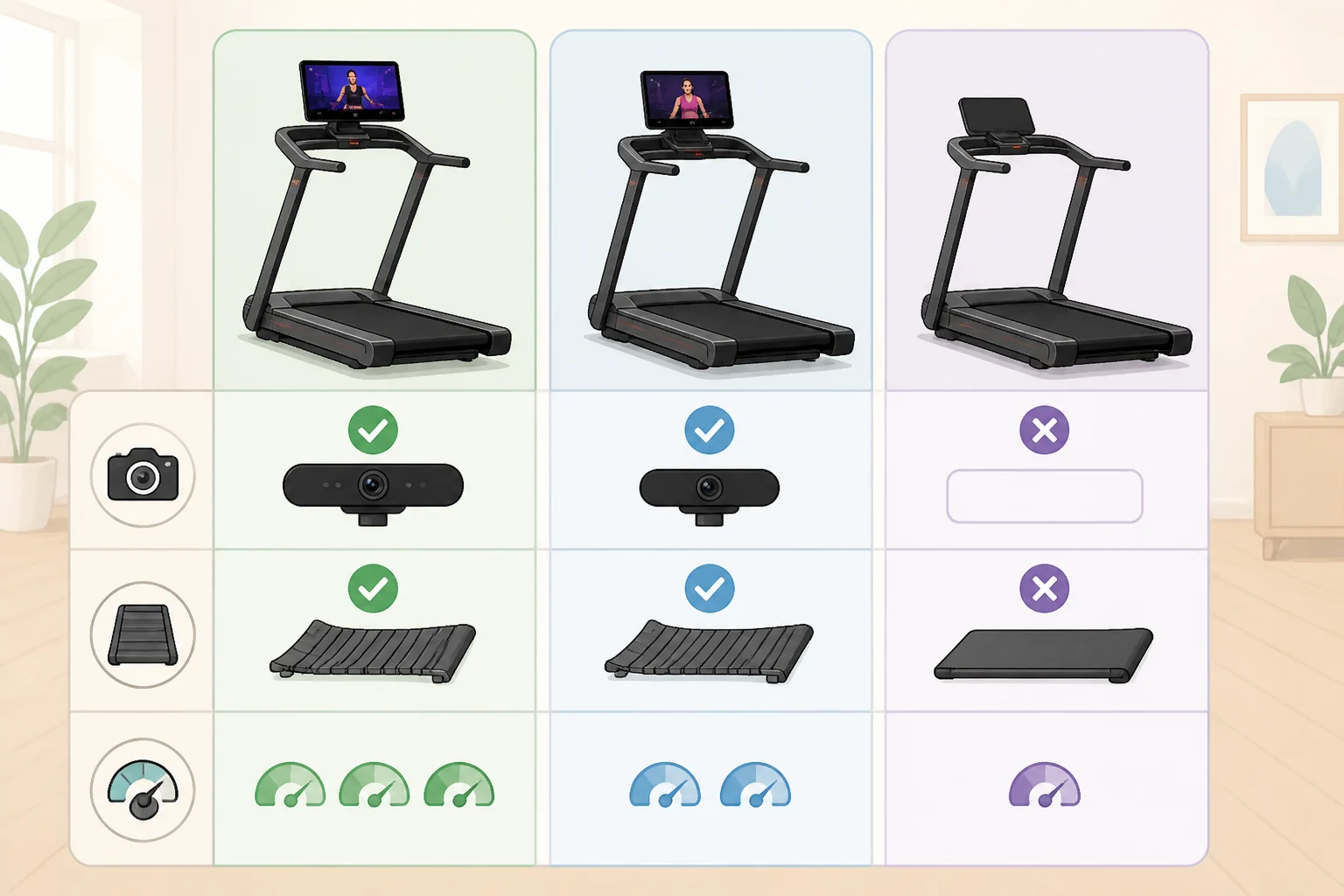
The $3,495 Tread Vision adds a movement-tracking camera and a Run Analysis feature that scores cadence, stride length, and vertical oscillation, something the Flex doesn't offer (Digital Trends). Peloton says it built that scoring system with a biomechanics group that specializes in running and injury prevention (Engadget).
The $6,695 Tread+ Vision goes further, pairing a slat-belt deck with Sled Mode, which applies 30 to 300 pounds of software-controlled resistance to mimic push-sled training (Engadget). Its incline range also tops out higher than the other two models, at 15 degrees versus 12.5 (Tom's Guide).
Notably, the Tread Vision and Tread+ Vision aren't entirely new machines. Peloton's previous Tread was rebranded as the Tread Vision at a $200 price increase, while the previous Tread+ kept its price and became the Tread+ Vision (The Verge).
At the launch event, Peloton staff repeatedly framed each model around a different kind of buyer: the Flex for walkers, hikers, and people living in cramped apartments; the Tread Vision for multi-person households with mixed fitness levels; and the Tread+ Vision for performance athletes (The Verge). Seen that way, the missing camera and slat belt on the Flex look less like corner-cutting and more like a lineup built around distinct budgets.
Peloton Tread Flex release date and availability
The Tread Flex, Tread Vision, and Tread+ Vision all go on sale in the U.S. and Canada on October 1 (Quartz). Buyers outside North America will have to wait until spring 2027, when the lineup expands to additional markets (Quartz).
The launch lands days after Peloton reported its first full fiscal year of net income, a $63.2 million profit for the year ended June 30, even as annual revenue slipped to $2.446 billion from $2.491 billion the prior year and paid subscriptions fell roughly 9% to 2.553 million (Quartz). For fiscal 2027, the company projected revenue of $2.3 billion to $2.4 billion, below what analysts had expected and a further step down from this year's total (Quartz).
CEO Peter Stern framed the expanded lineup as a way to "connect with a much wider audience," positioning the Flex's lower price and running-specific software as tools to reach customers Peloton's pricier equipment never did (Quartz). North America's at-home treadmill market is projected to grow to $5.6 billion by 2030, which offers some sense of why Peloton is betting on a cheaper, smaller machine instead of another high-end release (Quartz).
Closing thoughts
The Tread Flex checks the boxes Peloton set out for it: a folding deck, caster wheels, and a footprint cut nearly in half, wrapped in the company's cheapest treadmill package yet (Tom's Guide). At $2,195 plus a mandatory $50 monthly membership, it's still a premium purchase next to the walking pads and budget treadmills The Verge noted are available for far less (The Verge).
Peloton's own figures, 70 decibels of noise at top speed with nobody on the belt, a 20-to-25-second fold time, a 290-pound frame, are the only performance data available so far (Digital Trends). With shipments starting October 1 and revenue guidance already pointing lower for fiscal 2027, the Tread Flex folding treadmill has one job: prove that a cheaper, foldable machine can reach the space-conscious buyers Peloton's pricier equipment never did (Quartz).