Honor Robot Phone Debuts in China With 200MP Gimbal Camera
Honor is now taking pre-orders in China for the Robot Phone, a motorized gimbal smartphone built around a 200MP camera that pops out of the rear housing, rotates up to 300 degrees, and physically tracks whoever it's pointed at. The company opened pre-orders at 8:30 p.m. on August 12, with retail sales set to begin August 18, according to Honor's announcement. WIRED got early hands-on time with the device this week and found the mechanism works largely as advertised, WIRED reported.
The Honor Robot Phone China release caps a rollout that started as a curiosity. Android Police first spotted a prototype with a manually operated camera arm at CES 2026, five months ago, Android Police reported. By the time Honor brought a working version to MWC 2026 that same month, the arm moved on its own. Honor has since paraded the device through Cannes' China Night and the 28th Shanghai International Film Festival ahead of this week's commercial launch, Honor said.
What follows is a look at what the phone actually does, how Honor built the gimbal, what creators get out of it, and why nobody outside China can buy one yet.
Honor Robot Phone specifications and pricing
Video of the Day
Strip away the moving parts and the Robot Phone reads like most 2026 flagships. It runs on Qualcomm's Snapdragon 8 Elite Gen 5, paired with three Honor-designed chips: a C1 radio frequency booster, an E2 power management chip, and an H1 imaging processor, according to a spec leak GSMArena published last week, GSMArena reported. Honor's own announcement confirms the same chipset lineup, alongside a custom cooling system built to hold performance steady through long recording sessions, Honor said.
The display is a 6.31-inch LTPO OLED panel with adaptive 1 to 120Hz refresh rates, 6,800-nit peak brightness, and 4320Hz PWM dimming for eye comfort, all under Honor's NanoCrystal Shield glass, Honor said. Battery life comes from a 7,060mAh silicon-carbon cell with 120W wired and 50W wireless charging, Honor said.
Honor is selling two configurations: 12GB of RAM with 512GB of storage for RMB 9,999, and 16GB with 1TB for RMB 12,999, Honor said. Buyers also get a lifetime of complimentary YOYO AI Membership SVIP benefits and a gift pack with a magnetic stand, lanyard, and 120W charger, Honor said.
The phone weighs 248 grams, noticeably more than the 206-gram iPhone 17 Pro, and at 9.59mm it's also thicker than Apple's 8.75mm phone, WIRED reported. WIRED expected that extra mass to feel top-heavy given the moving camera assembly but found the phone "decently balanced" in hand, according to WIRED.
None of that is unusual for a flagship on its own. What makes the Robot Phone a genuinely different product is what sits behind that rear glass.
Video of the Day
How the Honor Robot Phone's gimbal camera works
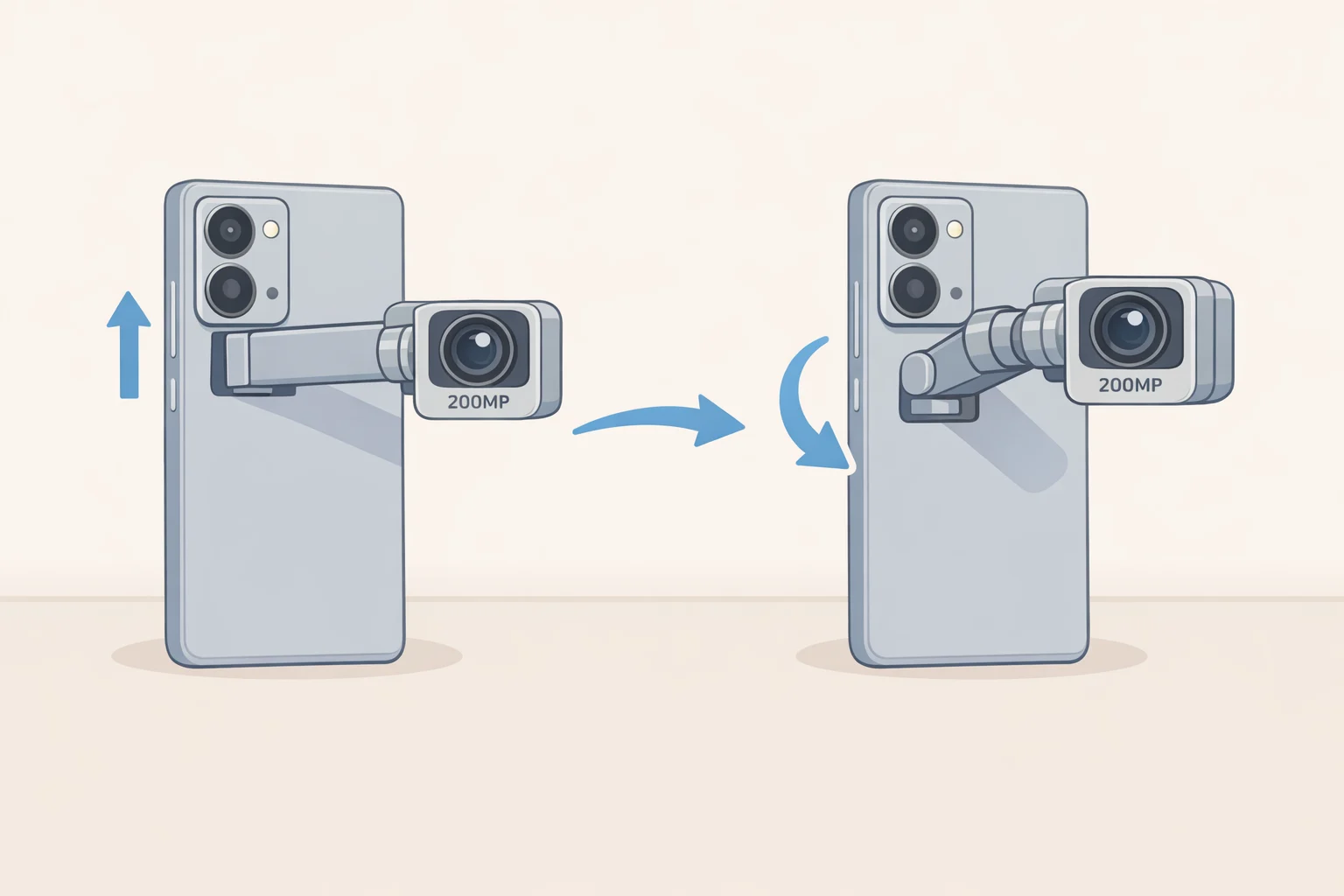
The main camera is a 200MP sensor mounted on what Honor calls a 4-DoF mechanical gimbal, built around a 2.6-gram titanium motor the company says it had to engineer from scratch, Honor said and WIRED reported. Off-the-shelf gimbal motors were too bulky to fit inside a phone, so Honor built its own, shrinking the overall system by 65 percent while increasing structural strength by 200 percent, according to Honor's own figures, Honor said. The company also cites a torque density of 120 N·m/L for the flip motor that deploys the arm, developed across more than 100 patents and 60 manufacturing processes, Honor said.
A sliding glass cover protects the camera when it's retracted. Users activate the gimbal through the camera app or with a palm gesture toward the selfie camera, and the arm rotates 300 degrees, letting the same lens double as a front-facing camera, WIRED reported. Honor's marketing describes several preset movement modes, including Tilt Lock, First Person View, and one it calls AI SpinShot, aimed at making handheld footage look intentionally cinematic rather than shaky, Honor said.
In hands-on testing, WIRED found the motorized stabilization turned typically shaky action footage "amazingly smooth," WIRED reported. The Verge got an earlier look at the mechanism during Honor's MWC demo five months ago and reported that the gimbal produced visibly steadier video than a flagship Vivo phone in Honor's own side-by-side comparison, though the outlet noted this was Honor's demonstration rather than an independent test, The Verge reported.
Honor's own terminology has been inconsistent. Its materials describe the gimbal as both a "4-DoF" system and, elsewhere, a "3-axis mechanical gimbal." The Verge sorted out the discrepancy with Honor's engineers: the fourth degree of freedom refers to the fold-and-deploy motion that extends the arm from the phone's body, not a fourth rotational axis added to the three-axis gimbal itself, The Verge reported.
Honor Robot Phone 200MP camera for creators and vloggers

Honor built the Robot Phone around a specific type of user: someone shooting vlogs, livestreams, or video calls solo, without a tripod or a second camera operator. The gimbal's AI subject tracking keeps a moving person in frame automatically and responds to plain-language voice commands like "turn around for five seconds," WIRED reported and Honor said. The same tracking works during video calls: prop the phone on a table with the bundled magnetic stand, and the camera follows the caller around the room, WIRED reported.
WIRED also tested the group-selfie mode, in which the gimbal shoots three frames, left, center, and right, then stitches them into a single wide panorama that fits everyone in, calling the process "quick and seamless," WIRED reported.
The camera system's other half is a 200MP periscope telephoto lens with 2.7x optical zoom, alongside a 50MP ultra-wide camera with a 122-degree field of view, rounding out a fairly conventional triple-camera range around that unconventional gimbal sensor, Honor said.
The Robot Phone is also the first product from Honor's imaging partnership with ARRI, the German cinema camera maker whose equipment shows up on major film productions. The collaboration brings ARRI LogC3 capture, ARRI Wide Gamut 3 color, and a dedicated ARRI Cinema Mode to the phone's camera app, with real-time preview of ARRI Looks and footage that exports directly into DaVinci Resolve using ARRI LUTs, Honor said. Honor says its AI noise reduction improves video signal-to-noise ratio by 8dB and that dynamic range optimization supports up to 14 stops, Honor said.
"Together with ARRI, we will continue to push the boundaries of creation and inspire a new generation of creators," Honor CEO James Li said in the launch announcement, Honor said. ARRI's chief product officer, David Bermbach, framed the partnership in similar terms, saying the goal is "to expand what creators can achieve with the tools they carry every day," Honor said.
Durability, water resistance, and the "companion" pitch
Honor has not published cycle-count or repair data for the gimbal mechanism. Asked about long-term durability, a company spokesperson told WIRED the mechanism "has undergone rigorous reliability testing for repeated deployment and retraction" and is "designed to meet everyday usage needs throughout the expected service life of the device," WIRED reported. Honor also built in a software safeguard that halts the arm if it senses "inadvertent handling or abnormal resistance," WIRED reported.
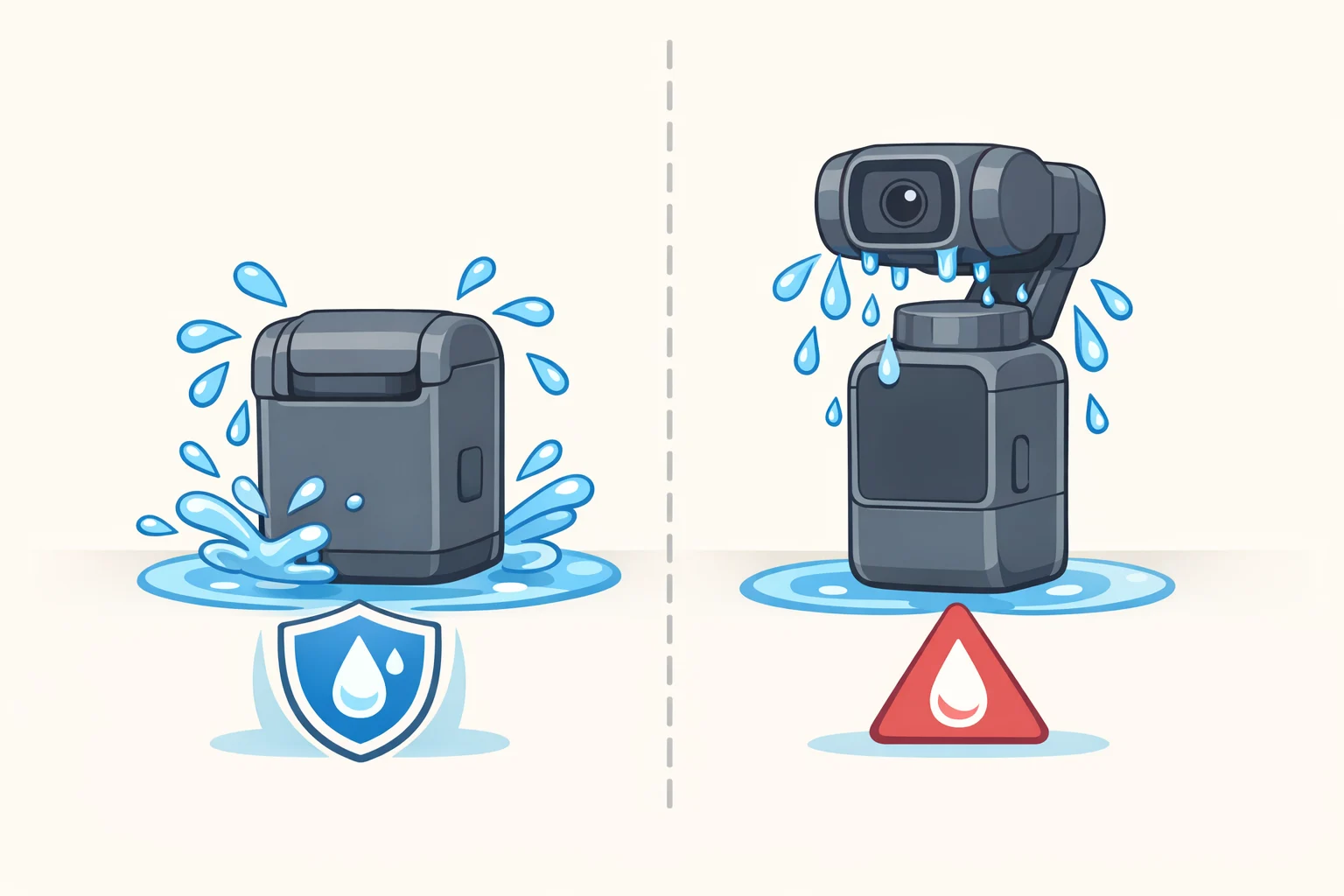
The moving arm comes with a trade-off. Honor rates the phone at IP54 for dust and water resistance, but only when the camera is fully stowed. The company told WIRED not to expect the same protection with the gimbal deployed, warning that users "might not want to risk" filming in the rain with the arm extended, WIRED reported.
Honor has tried to sell the phone as more than a camera gadget, calling it "an active physical companion" in its own materials, Honor said. Earlier demos leaned into that framing harder. At MWC, the arm tracked head movements and, Honor claimed, could sense a song's mood and move to the beat, Android Police reported. An Honor representative told The Verge at the same event that the phone could be "a real companion, humanlike," pointing to its ability to perceive sound, track motion, and respond through physical movement rather than screens alone, The Verge reported. The Verge's own verdict on the pitch, delivered in the headline of its hands-on piece, was blunter: "a bad robot, interesting camera, maybe a friend," The Verge reported.
Is the Honor Robot Phone available outside China?

For now, no. The Robot Phone remains a China exclusive, and Honor has not announced availability, pricing, or a timeline for other markets, WIRED reported.
An Android Police report from five months ago had pointed to a launch window in the second half of 2027, Android Police reported. The Verge's reporting from the same month, along with Honor's own August announcement, put the commercial launch in 2026 instead, The Verge reported and Honor said. The earlier 2027 estimate looks to have simply been overtaken by a faster rollout than initially expected, rather than reflecting any official schedule change.
One detail worth watching if the phone does travel: Honor runs Google's Gemini assistant on its phones outside China, and WIRED raised the possibility that an international Robot Phone could eventually pair the gimbal's physical controls with Gemini Live, WIRED reported. That's speculation on WIRED's part, not anything Honor has confirmed, and there's no indication yet that an international version is even planned.
What comes next
The Robot Phone is real, pre-orderable, and headed for retail shelves in China on August 18. Whether the gimbal survives months of daily folding and unfolding, and whether Honor ever brings a version of this phone west, are questions this week's launch didn't answer. The stabilization and tracking hold up in early hands-on testing; what happens after a few thousand deployment cycles is something only time, and eventually independent reviewers, will settle.