Smartwatch calorie burn accuracy: what lab testing reveals
The workout ends, the watch buzzes, and a number appears: 500 calories burned. That figure feels authoritative enough to shape what happens next, whether it's a second helping at dinner or skipping dessert altogether. A study out of Florida International University suggests that confidence is misplaced.
Smartwatch calorie burn accuracy, in plain terms, is a measure of how close the number on your wrist comes to what your body actually burned during exercise. The FIU research, published in PLOS One about two months ago and detailed in EurekAlert's coverage three weeks ago, tested four specific devices during one activity: a controlled recumbent-cycling session. Within that scope, researchers found calorie-estimate errors commonly landing in the 15% to 25% range, with the worst-performing device climbing far higher once every reading was counted (PLOS One). Jason Kostrna, the study's lead author and an FIU associate professor of kinesiology and exercise science, doesn't soften the verdict: "You can't treat the calories burned number it gives you as an accurate number, because it's not" (EurekAlert).
The errors weren't scattered randomly. Three of the four brands tested skewed toward overestimating how much a person burned on average, with Garmin off by 68.6 kcal per session, Samsung by 56.8 kcal, and Apple, the most accurate of the group, by 21.6 kcal (PLOS One). The size of the error also tracked something else: body fat. Across every device tested, the higher a participant's body-fat percentage, the further off the calorie estimate ran, on average (PLOS One).
What follows is a look at how these devices actually calculate a calorie number, why that process breaks down, who's most exposed to the error, and what to do with the figure once it lands on the screen.
Smartwatch calorie burn accuracy: how accurate are the estimates?
Video of the Day
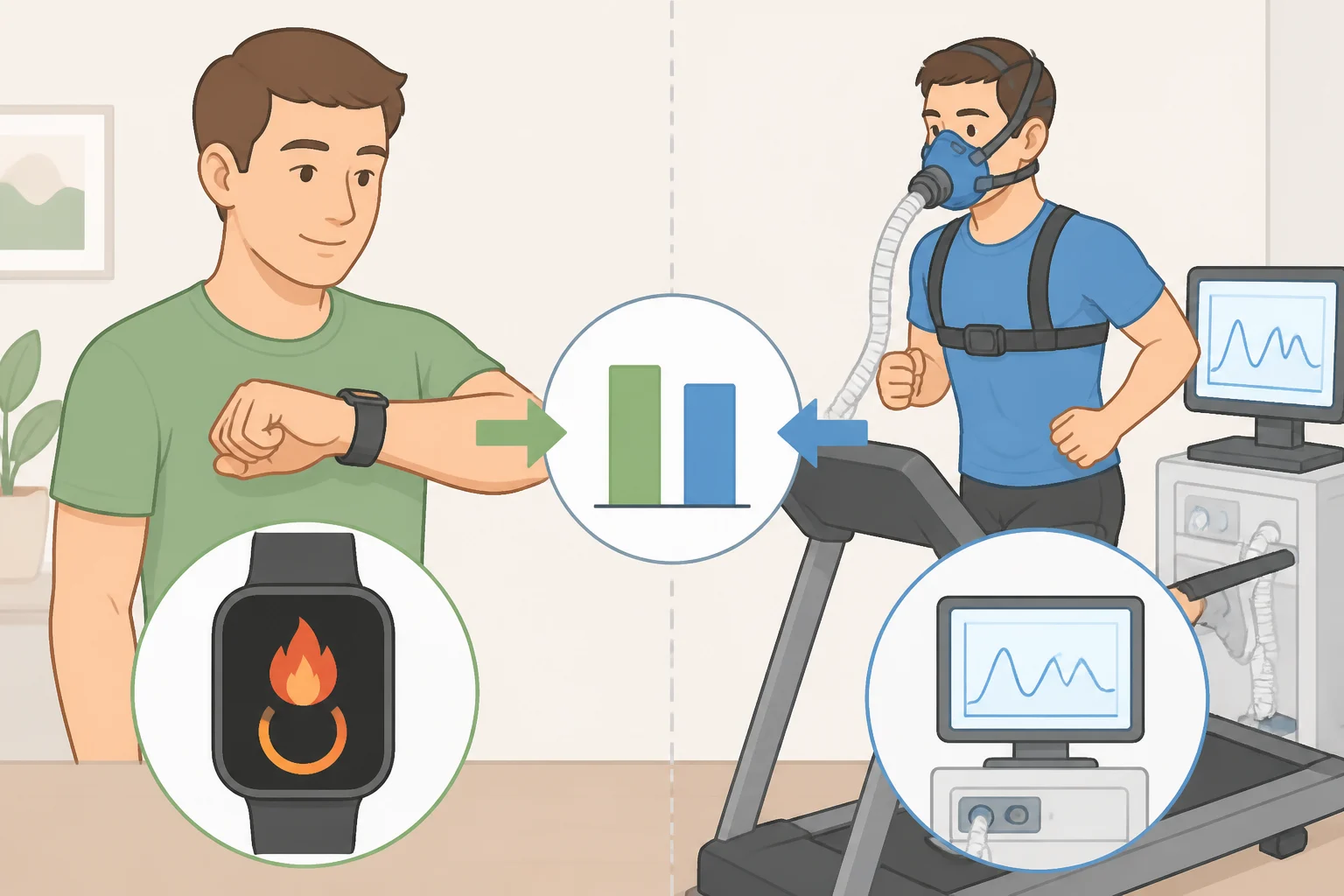
The FIU study put four popular devices through a controlled test. Researchers had 58 adults ride a recumbent bike through a workout that alternated between moderate and vigorous intensity, with each participant wearing one of four trackers: an Apple Watch Series 8, Fitbit Sense 2, Samsung Galaxy Watch 5, or Garmin Forerunner 955 (EurekAlert). The device readings were compared with output from a COSMED K5 metabolic analyzer, the kind of laboratory equipment used in clinical exercise-physiology settings to measure true energy use (EurekAlert; PLOS One).
To make the error concrete: a watch reporting 500 calories burned could realistically reflect a real burn closer to 350 (EurekAlert). Repeated over several workouts, even a session-level gap like that could meaningfully skew a weekly estimate.
The FIU findings aren't an outlier. A 2022 review of wearable-tracker research surveyed the broader field and found a similar shortfall: one study of five wrist-worn devices tested against respiratory gas analysis measured average errors above 10% for most devices, a threshold researchers class as high (PMC review).
The direction of the error isn't even consistent from one study to the next. That same review found wide disparity in findings, largely because of differences in the devices tested, the populations studied, and how each experiment was designed (PMC review). What stays constant is that the calorie figure, whichever way it leans, doesn't reliably match a lab reference, which is why brand rankings matter less than they seem to.
Video of the Day
Why do fitness trackers overestimate calories burned?

The mechanical distinction explains most of the trouble: heart rate is measured, calories are modeled. A smartwatch reads the pulse optically, through light sensors pressed against skin, and that reading is genuinely direct. The calorie figure is produced differently. It is generated by a proprietary model that combines heart-rate data with user and activity information, then estimates energy expenditure from that combination.
That split shows up in the broader research too. Wearable devices tend to score well on reliability, meaning they produce consistent numbers, but poorly on validity, meaning those numbers don't always match what's actually happening inside the body (PMC review). The sensor is doing its job; the math built on top of it is where confidence breaks down.
How badly that math drifts also depends on the exercise itself. The same body of research found error "waxes or wanes" depending on activity type, intensity, and setting, which helps explain why a steady bike ride and a set of deadlifts can produce very different levels of trustworthiness from an identical watch (PMC review).
Think of the heart-rate sensor as a thermometer, a direct physical reading of something real. The calorie figure is closer to a weather forecast built from that reading plus a stack of assumptions about the person wearing it. Forecasts can be useful. They can also be wrong in ways a raw temperature reading never is.
Part of the problem is that nobody outside these companies can check the model's homework. Much of the underlying algorithm work isn't publicly available and hasn't been validated in high-quality studies, according to that same review (PMC review). Kostrna put it plainly: "When the companies are developing those algorithms, we don't know where the test data is coming from" (EurekAlert).
Why body fat changes the accuracy of your calorie count
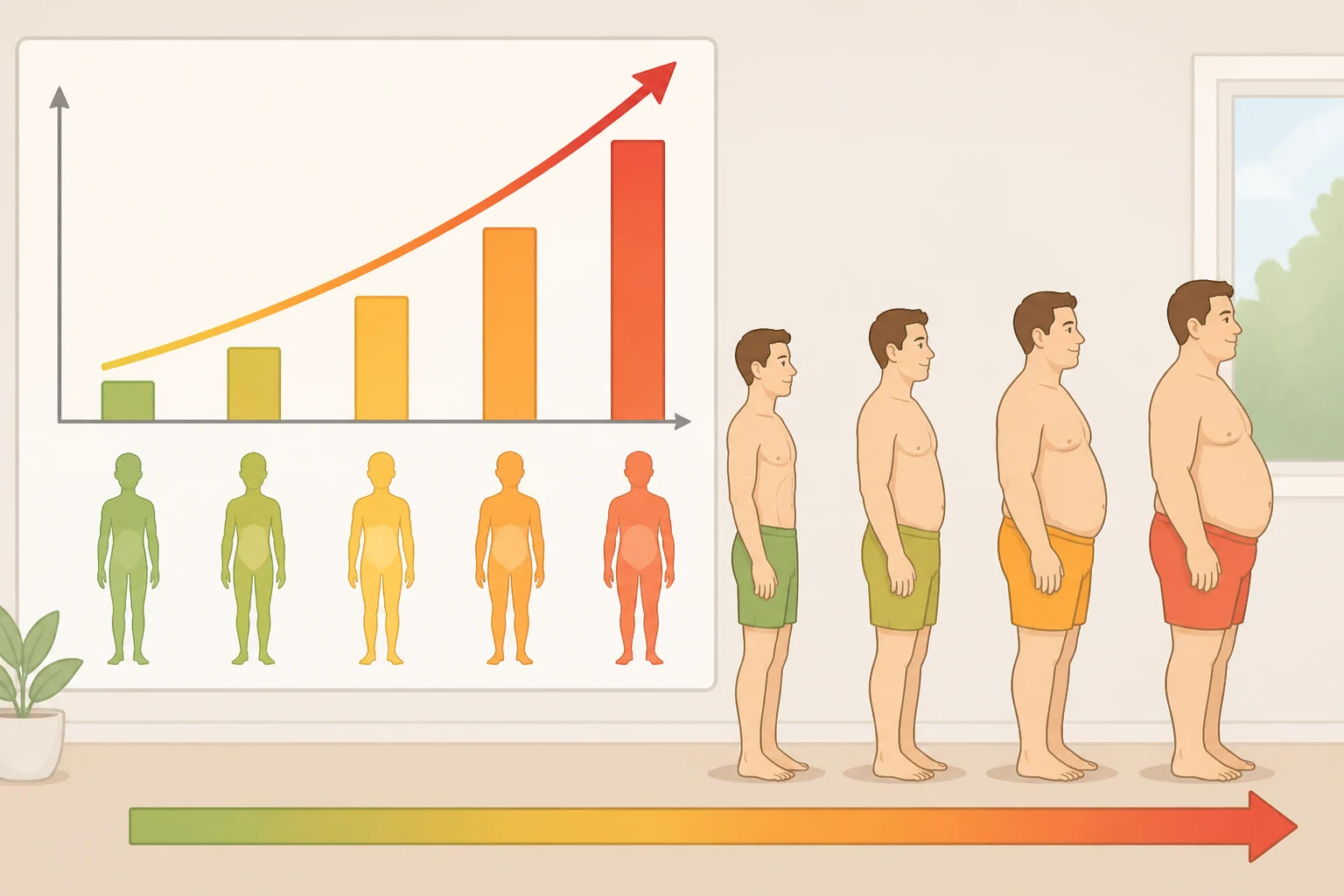
The most consequential result in the FIU data isn't the brand comparison. It's the interaction between body composition and error. Statistical modeling showed calorie-estimation error increasing significantly as body-fat percentage rose, and that pattern held across all four brands tested (PLOS One).
Worth being precise about what was measured: the calories burned specifically during that cycling session, known in the research as physical activity energy expenditure, or PAEE, not someone's total daily energy burn including rest and digestion. So the finding says something exact about workout-tracking accuracy, not about a full day's calorie count.
The sample's mean BMI was 29.73, though that average doesn't establish exactly how the result applies to any individual with a higher body-fat percentage (PLOS One).
Why the error grows with body fat isn't fully settled. Kostrna's team doesn't have a confirmed mechanism, though his working theory points to training data: companies may not have validated their formulas across a full range of body compositions before shipping them (EurekAlert). His warning for anyone leaning on these numbers is direct: "You could be hundreds of calories off each week and easily end up in a calorie surplus when you think you're in a calorie deficit."
One caveat deserves equal weight. The study also tested whether skin tone affected accuracy and found no strong main effect (PLOS One). But the sample skewed heavily toward Fitzpatrick skin types III and IV, with only four participants at type V and none at the lightest or darkest ends of the scale. That question stays open, not resolved.
Which smartwatch is most accurate for calorie tracking?
Judged strictly on this cycling protocol, Apple Watch calorie burn accuracy came out ahead of the other three brands, with the smallest average bias at 21.6 kcal per session, compared with 68.6 kcal for Garmin and 56.8 kcal for Samsung (PLOS One). Those are averages, not guarantees. Individual readings varied widely around each of those numbers, so a single Apple Watch session could still land well off the mark even though its typical bias was smallest.
Fitbit is the device that resists a tidy ranking, and the researchers themselves say the jury is still out on it (EurekAlert). Its average bias looked best of all, close to zero, but that number was misleading. About 13% of Fitbit's readings were wildly implausible; the study documented seven estimates that came in above 450% of the lab reference, and separate reporting on the same research described sessions where Fitbit logged a single calorie for an entire workout or produced no reading at all (PLOS One; EurekAlert). Researchers filtered those glitches out to calculate the clean average bias near zero. Once the outliers are counted back in, Fitbit's real bias jumps to 128.6 kcal, the worst of any device in the study (PLOS One).
None of this should be read as a permanent verdict. The test covered one workout type (recumbent cycling), four specific models, and a relatively young sample averaging 23 years old (PLOS One). The results may not generalize to newer hardware, other exercises, or other populations. Kostrna's team is now studying how these watches perform during traditional strength training, a workout style the current results don't cover at all (EurekAlert).
What to actually do with the number on your wrist

None of this means the watch belongs in a drawer. It means the calorie tile deserves a different kind of trust than most people give it.
The researchers' own advice is to treat the number as a ceiling rather than a precise measurement, and round down accordingly (EurekAlert). Because accuracy worsened as body fat increased, people using wearables for weight management may want to build in additional margin (EurekAlert). At the same time, Kostrna cautions against overcorrecting by slashing food intake to compensate; the body still needs fuel to recover and train consistently (EurekAlert).
For calorie tracking accuracy for weight loss specifically, the researchers point to metrics they suggest treating as contextual signals rather than gospel: heart rate and time spent in different heart-rate zones, tracked over weeks rather than judged by any single session (EurekAlert). Kostrna's own framing captures the spirit of that approach: "Track your own trends over time. And if tracking helps, enjoy it. If it becomes too much, don't fixate on it. Focus on how you're feeling and use data to get a little better over time" (EurekAlert).
Kostrna sees a silver lining in putting findings like these out into the open: "That's why I think it's beneficial for the companies to see this type of data, so they can refine their products over time" (EurekAlert). His strength-training research, along with the scrutiny that studies like this one invite, could eventually push manufacturers toward more transparent algorithms validated across a wider range of body types. Until then, the wrist display is still worth glancing at. Just don't mistake the number for math you can bank on.