AI Kidnapping Scam Explained: How to Protect Your Family
A mother in Arizona picks up her phone and hears her daughter's voice. The girl is crying, saying "bad men" have her. The voice is indistinguishable from her daughter's. It is entirely fabricated an AI-generated clone, deployed in the opening seconds of a call designed to trigger panic before a single rational thought can form.
This is the AI kidnapping scam, and it is operational right now. In a separate incident documented in the same congressional testimony submitted by the Consumer Federation of America this week, a victim received a call that appeared to come from her daughter's own phone number. She wired $1,500 in bail money before she had any reason to question it.
This piece explains what the scam is, how it's constructed step by step, what to do in the first minute if one reaches you, and how to prepare your family before it does. The crime isn't new. FBI Chicago documented virtual kidnapping scams going back at least two decades. What AI voice cloning changed is the first few seconds of the call, and those seconds are where the scam lives or dies.
What a virtual kidnapping scam is
Video of the Day
No one is actually taken. A caller claims to have a family member in danger and demands ransom fast enough that the target can't stop to verify anything. The scam's power has always depended on keeping the victim in a state of panic, off-balance and moving too fast to think. According to FBI Chicago, scammers historically searched social media for international travelers, then called family members back home, banking on the child being unreachable during the critical window.
The traditional version relied on generic screaming in the background, maybe an unconvincing voice, and the parent's own terror filling in the gaps. The brain under acute stress is not a good skeptic. It reaches for the most frightening available explanation and holds it. Scammers built an entire extortion playbook around that neurological reality.
AI voice cloning removes the gap. Software trained on a short audio sample of someone's voice can generate new speech in that voice a vocal deepfake. The CFA testimony notes that modern cloning tools can replicate speech from just a few seconds of source audio. The IC3 warned last month that AI-generated audio has advanced to the point where it is often difficult to identify as synthetic. When the voice on the line sounds exactly like your child, there's no gap for skepticism to enter.
AI is a prop, not the operator. A human runs the call. The cloned voice is the hook that makes the first seconds feel undeniable. Everything after that the pressure, the isolation, the demand for immediate payment is the same extortion playbook that predates generative AI by two decades.
Video of the Day
How the AI kidnapping scam works, step by step
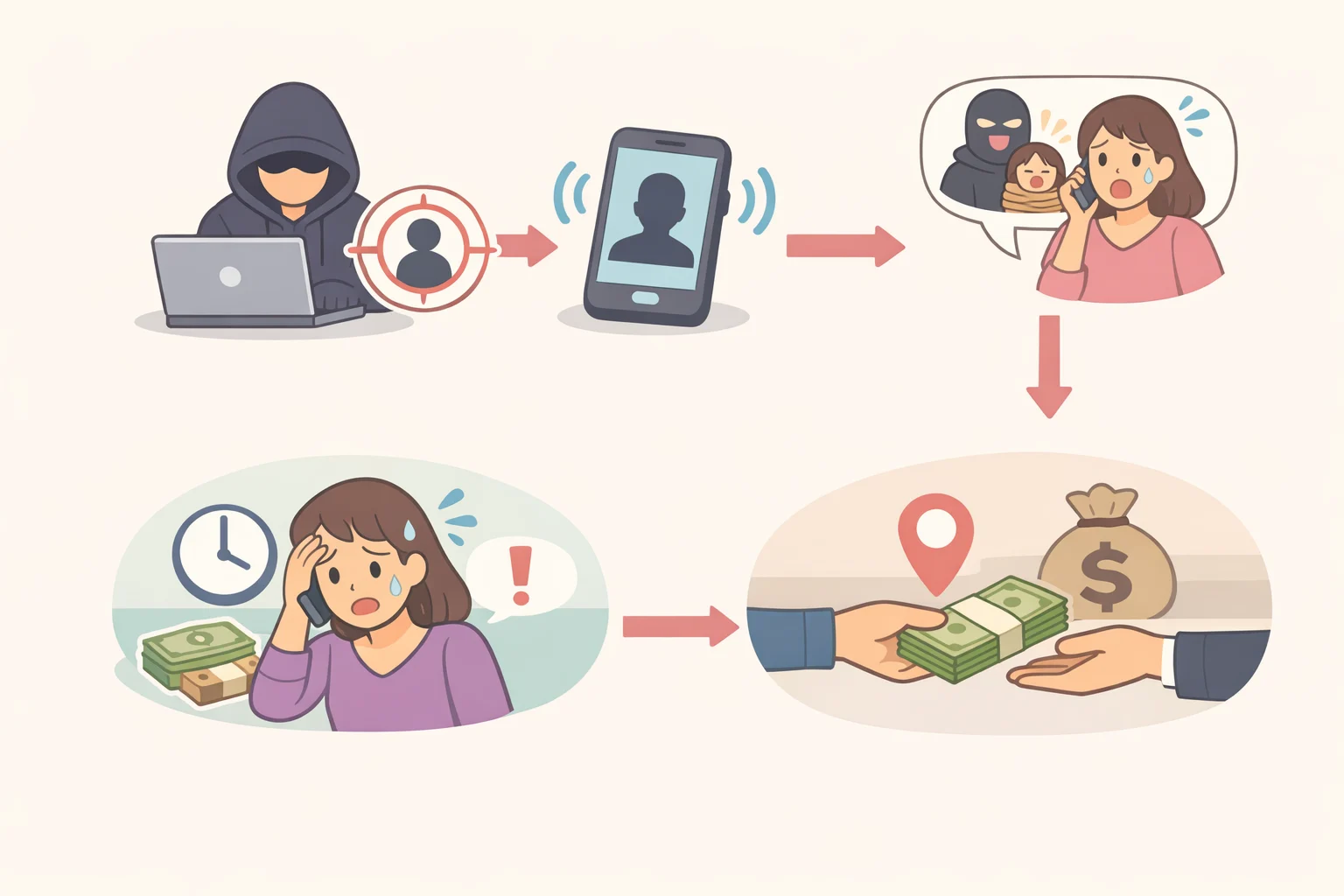
Step 1: Selecting a target. Scammers mine public social media for intelligence: a child's name, a parent's contact information, posts showing the child is traveling or away from home. FBI Chicago described this targeting approach explicitly travelers are especially exposed because both the child's absence and the family's anxiety about it are visible online.
Step 2: Acquiring the voice. Any public audio of the target speaking for a few seconds can be enough source material a TikTok, a YouTube video, a birthday post. Consumer Reports tested six major voice-cloning products earlier this year and found researchers could generate a convincing clone from publicly available audio in four of them. Those four ElevenLabs, Speechify, PlayHT, and Lovo required only a checkbox self-attestation that the user had the legal right to clone the voice. No technical verification. No identity check.
Step 3: Deploying the fake audio. These tools are cheap. The CFA testimony notes that some platforms charge as little as $5 per month. The scammer plays the cloned distress clip at the start of the call the child crying, saying they're in danger before the parent has had a moment to collect themselves. The call is engineered to compress the time between the first shocking seconds and the moment money moves.
Step 4: Controlling the call. Once panic is established, the caller works to maintain it. They keep the parent on the line, prevent any contact with the child, pose as cartel members or corrupt law enforcement to raise the stakes, and run multiple successive calls to sustain pressure. FBI El Paso documented the consistent pattern: callers block verification, demand immediate payment, and warn explicitly against contacting police. Notably, scammers are often unable to answer basic questions about the person they claim to be holding what they look like, what they drive because they're working from a social media profile, not a real hostage.
Step 5: Collecting payment before the illusion breaks. Wire transfers, peer-to-peer apps, and cryptocurrency are the preferred payment methods, chosen specifically because they're difficult or impossible to reverse. Demands are sometimes split into several smaller transfers to avoid triggering fraud alerts. FBI El Paso found that families typically send thousands of dollars before reaching out to law enforcement by which point the money is gone.
The scam's whole architecture is built around one goal: get payment before the parent does the one thing that would end it, which is call the child directly.
What to do during an AI voice cloning scam call
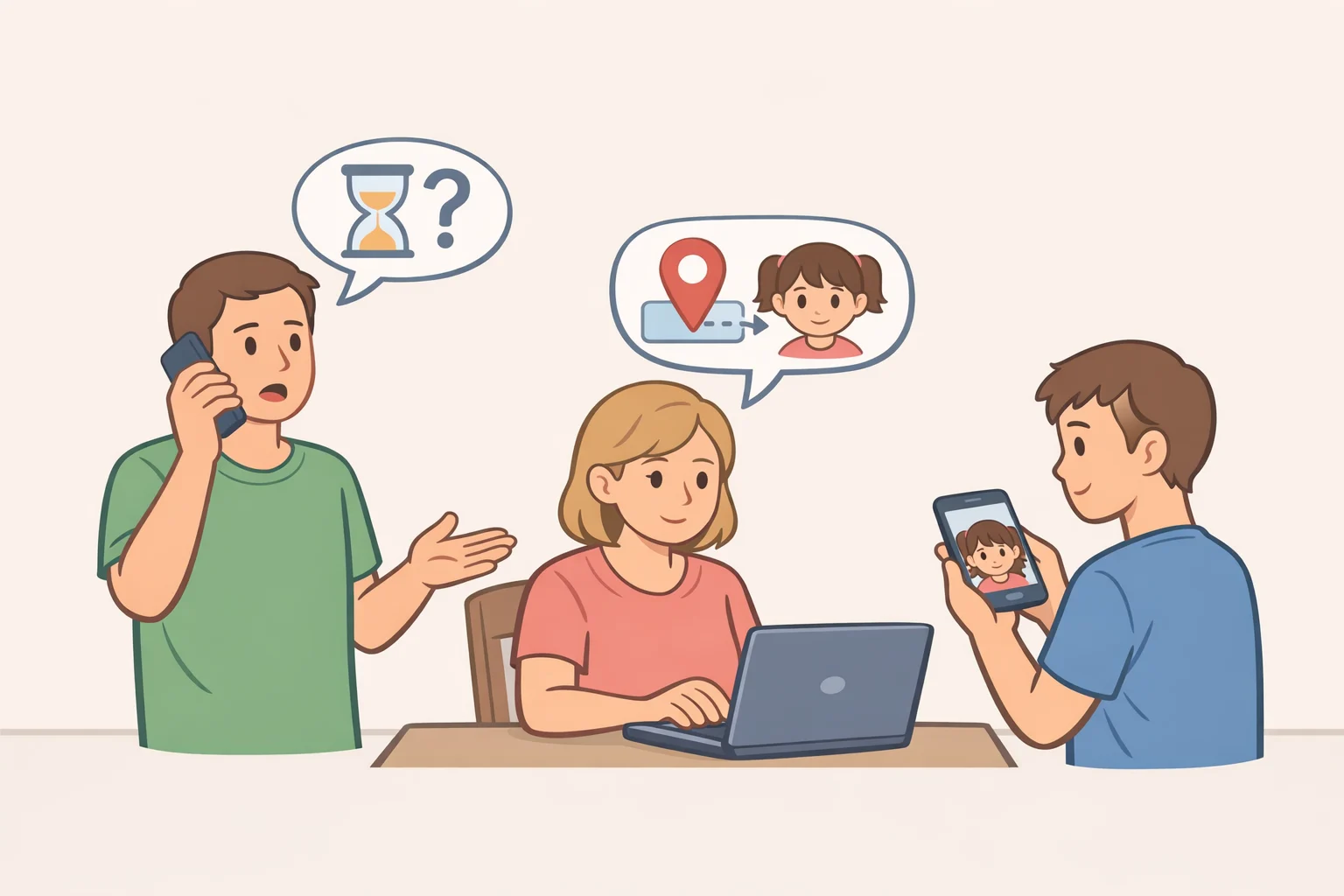
The single most important thing is to slow down. The scam depends on speed. Panic is the mechanism. FBI El Paso advises staying on the line while buying time tell the caller you're writing down the demands, that you need a few minutes to get things moving. This is not compliance. It's a delay tactic, and it works because time is the only thing that breaks the scam.
While stalling, have someone else a partner, a neighbor, anyone nearby call or text the child directly from a different phone. According to FBI El Paso, trying to reach the supposed victim by phone, text, or social media while the scammer call is still active is explicit guidance, not an afterthought. That call may quickly resolve the situation.
Ask for proof of life. Request to speak directly with the person being held. Ask a question only your child could answer. A refusal or deflection is a strong warning sign FBI Chicago notes that scammers are consistently unable to answer basic descriptive questions about the person they claim to have. If the caller won't let you speak to your child, ask them to describe what your child looks like, or what they drive. A scammer working from a social media profile can't answer those questions reliably.
Don't give the caller any more information about your family. Whatever you volunteer can be used to make the story more convincing.
Don't send money. Once it's gone via wire transfer, crypto, or a payment app, recovery is highly unlikely.
What if the call might actually be real?
This is the right question, and it has a practical answer: the steps above are compatible with a genuine emergency. Slowing down, trying to reach your child from another line, calling 911 simultaneously none of these put a real hostage at risk. They are what any competent response looks like. If you genuinely cannot reach your child and cannot confirm their safety, call 911 immediately and tell the dispatcher what you know. FBI Chicago asks anyone who believes they may be targeted to call 911 and request FBI notification. Treating the call seriously and refusing to comply blindly are the same instruction.
How to prepare your family before a call comes
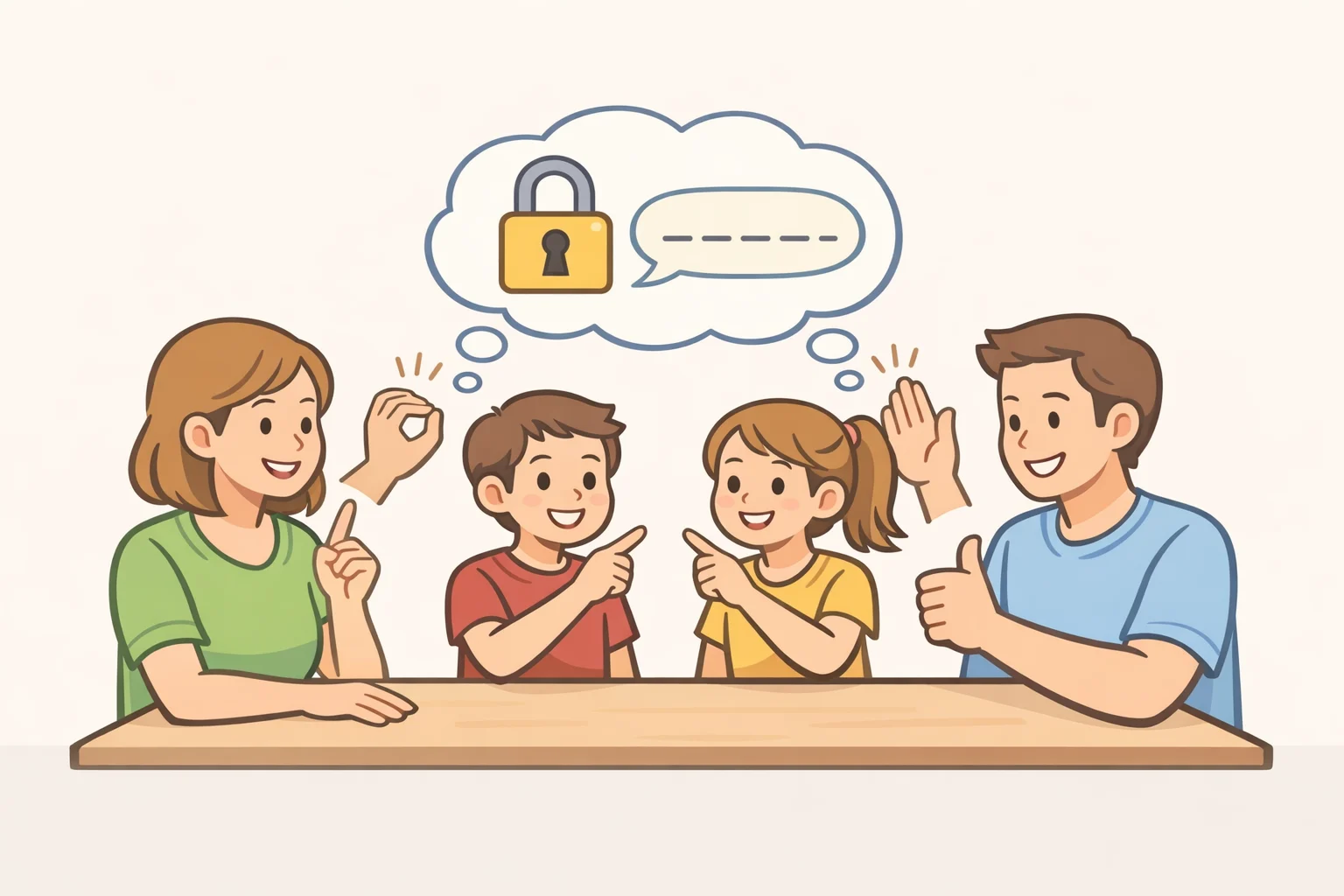
Set up a family safe word. FBI Chicago recommends this specifically: a code word that any family member could be asked to provide in an emergency, and that no scammer working from a social media profile could guess. It takes a five-minute conversation to establish. If the voice on a distress call can't produce it, you have your answer.
Limit public audio of your children. Scammers need only a few seconds of source material. This doesn't mean deleting your family's social media presence, but it's worth adjusting privacy settings on accounts where children appear and being deliberate about what goes public.
Tell your family this scam exists. FBI Chicago specifically recommends discussing virtual kidnapping before any travel. A child who knows about this scam and knows the family safe word is a harder target. The conversation takes ten minutes. The safe word is one of the simplest protections families can put in place today.
Why this is still easy to pull off
Voice-cloning platforms have weak safeguards, and that's partly a product design decision, not a technical limitation. Consumer Reports found that four of the six products it tested ElevenLabs, Speechify, PlayHT, and Lovo required only a name and email address to create an account, with no technical verification before cloning someone's voice. Two products, Descript and Resemble AI, built in more meaningful friction. The gap between those approaches reflects a choice, not an impossibility.
AI moderation filters are inconsistently applied. The CFA testimony makes the point concretely: directly prompting a tool to write a phishing message targeting vulnerable people triggers a refusal, but rephrasing the same request as a routine "urgent money transfer" often does not. The tools have filters; the filters don't hold under light pressure.
The regulatory environment isn't keeping pace. The Telephone Consumer Protection Act the primary consumer protection statute governing voice calls was written in 1991. The CFA testimony notes that the FCC has flagged 2,411 voice service providers for potential removal from the Robocall Mitigation Database, but enforcement has been delayed. Consumer Reports, in its assessment earlier this year, called on companies to confirm speaker consent before cloning a voice, watermark AI-generated audio, and build guardrails against phrases commonly used in fraud. The CFA's congressional testimony this week called for meaningful consequences across the call chain and expanded authority for enforcement agencies to act. These proposals are before Congress and regulators; none are guaranteed to move quickly.
Internet crime losses reached $16 billion in 2024, a 33% increase from the year before, per FBI data cited in the CFA testimony. As FBI San Francisco warned two years ago, AI augments the speed and scale of attacks it doesn't change the countermeasure. Verify before you comply. The platform safeguards will improve eventually. The family safe word works right now.
Where to report it
Report any scam contact to local law enforcement and to the FBI's Internet Crime Complaint Center at ic3.gov. Include as much detail as possible call time, number, payment method requested, and any audio if captured. Reporting is how law enforcement tracks patterns and builds cases.