Car Parts to Replace at 30,000 Miles vs. What to Skip
At 30,000 miles, the short answer to what needs replacing is: fewer things than most shops suggest. The four car parts to replace at 30,000 miles that have the strongest support across authoritative sources are the engine air filter, cabin air filter, brake fluid, and fuel filter. That last one depends on whether your vehicle actually has a serviceable one. Spark plugs, tires, and the battery are inspection items at this mileage for most modern cars, not automatic swaps.
Before anything else: pull out the owner's manual or check the maintenance minder display. Per Blue Star Brothers, the rule is to follow whichever source calls for service first. This guide gives you a framework for that conversation. The manual is still the authority.
What a 30,000-mile service should include before the replacement decisions
Video of the Day
A well-run 30K visit generates condition data first. The inspections tell you whether the replacements are actually warranted.
Blue Star Brothers describes a thorough 30K service as including brake inspection with pad and rotor measurements, a brake fluid moisture test, tire rotation and balance, a battery and charging system test, cooling system inspection covering hose condition and coolant protection levels, and a full module scan for codes even when the check-engine light is off. AAA Oregon/Idaho adds that the brake system check should happen at least annually and at 30K, that means measurements, not a visual pass.
Tire rotation is a separate cadence. Kelley Blue Book puts it at roughly every 7,500 miles, so a vehicle at 30K should have been through several rotations already. If it hasn't, that's a gap in the maintenance history.
These inspections produce the data that should drive every replacement decision below. A moisture test on the brake fluid tells you whether a flush is warranted. A conductance test on the battery tells you whether it's aging out. The odometer reading alone doesn't tell you either of those things.
Video of the Day
Car parts to replace at 30,000 miles: what actually belongs on the list
Engine air filter and cabin air filter
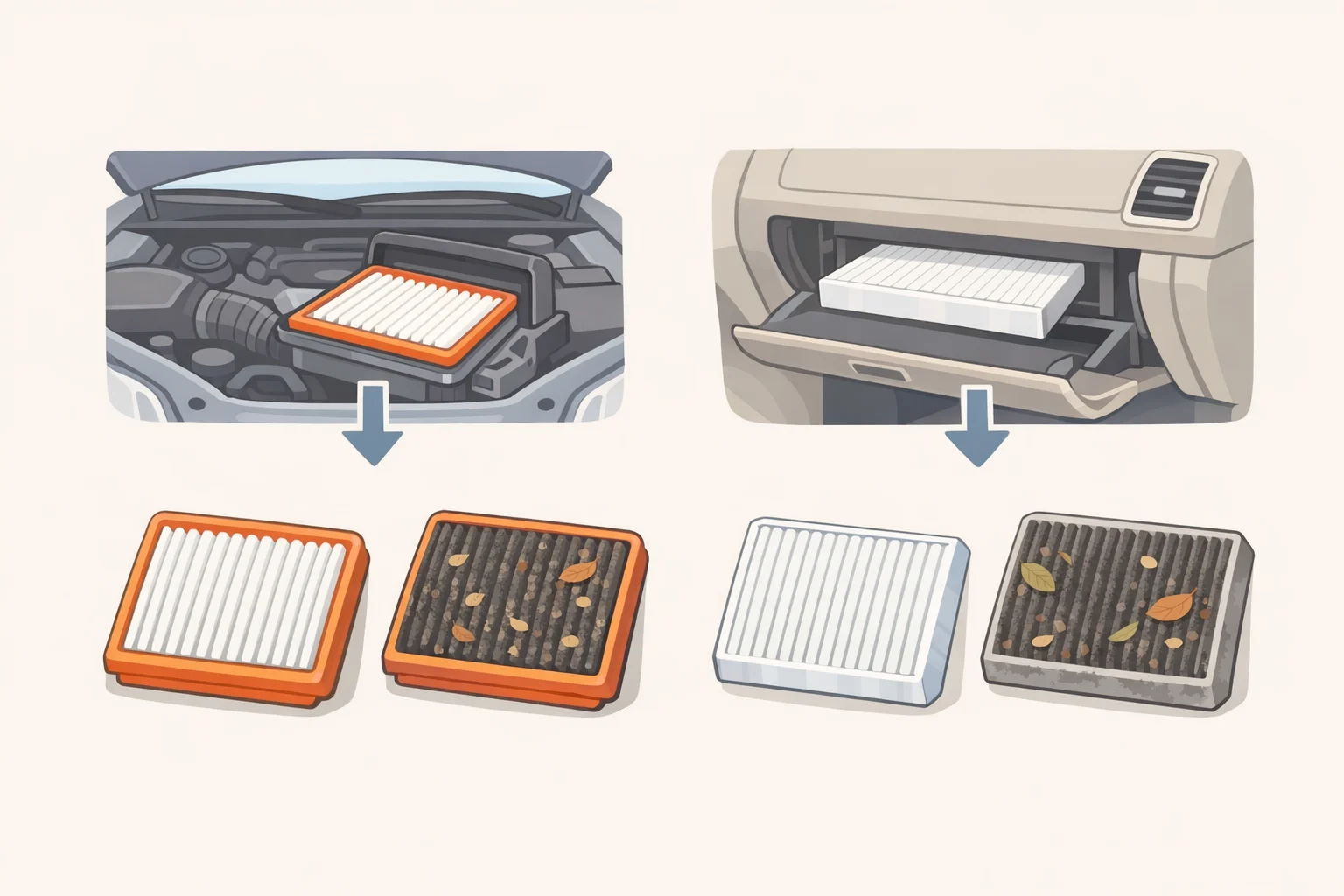
These are the clearest cases. Both are consistently recommended at this interval across sources and well-supported regardless of make or model.
The engine air filter sits under the hood next to the engine, per AAA Oregon/Idaho. A clogged one restricts airflow, reduces power output, and raises fuel consumption, as Blue Star Brothers notes. The cabin air filter, typically located under the dashboard or behind the glove box, cleans air entering the passenger compartment. Neglect it long enough and the blower motor overworks and windows fog faster in cold or humid conditions, effects documented by both Blue Star Brothers and AAA Oregon/Idaho.
Both filters degrade faster in city driving and on dusty roads, according to Blue Star Brothers. Ask to see both filters before authorizing replacement. They're among the easiest services to perform yourself and among the lowest-cost items a shop can add without solid justification.
Brake fluid
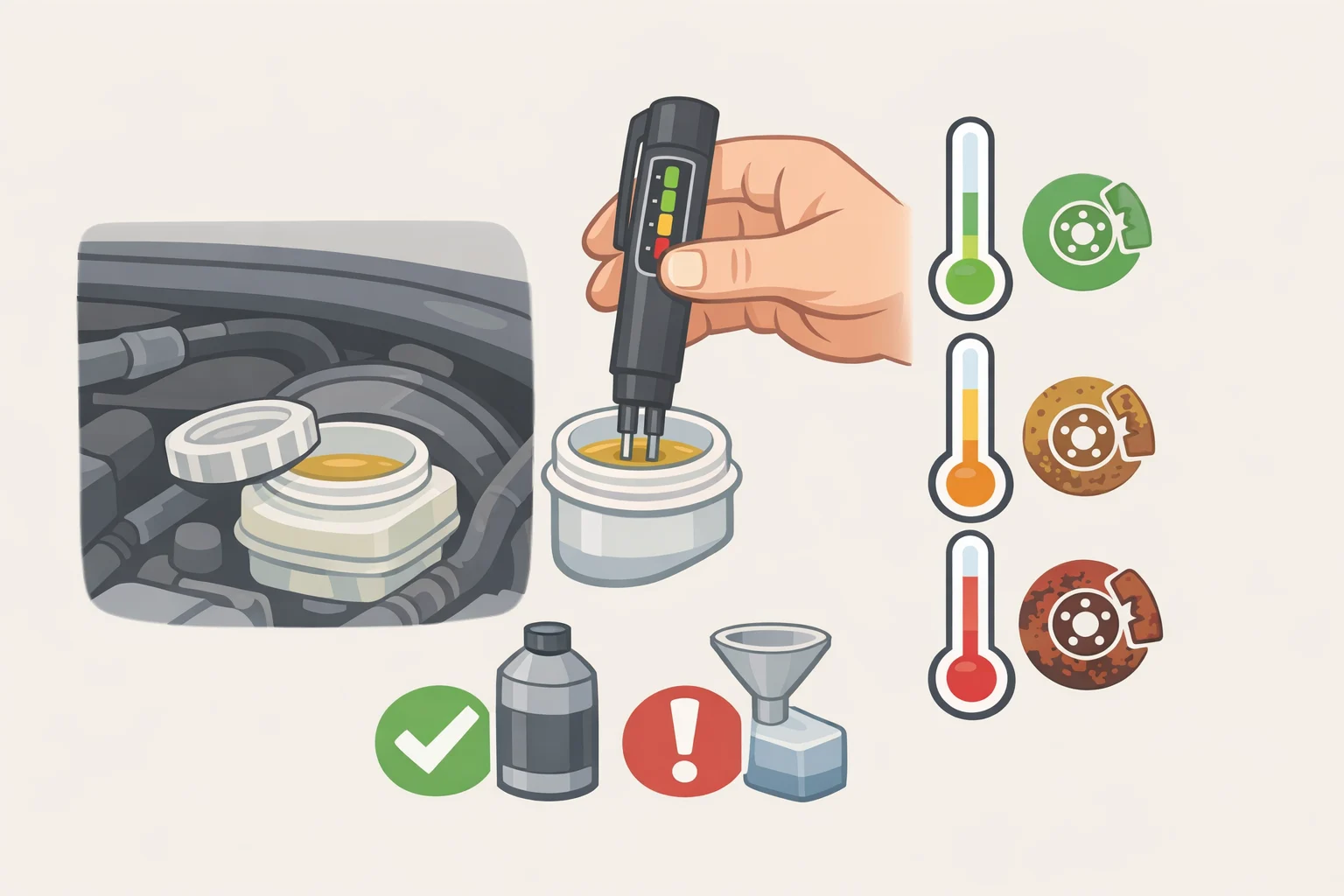
This is the item most drivers skip and most service advisors don't explain well enough. By the time brake performance degrades noticeably, internal damage is already spreading.
Kelley Blue Book places brake fluid replacement at 30,000-mile intervals as a standard recommendation. Many manufacturers also specify replacement every two to three years, which puts a large share of vehicles in the replacement window at 30K on time-based grounds alone, per Blue Star Brothers. A vehicle driven lightly that reaches 30,000 miles over four or five years may need a flush based on age, regardless of mileage.
The mechanism is specific. Brake fluid is hygroscopic: it absorbs atmospheric moisture even inside a sealed system. That moisture lowers the fluid's boiling point and promotes corrosion inside the calipers and ABS modulator valves. Blue Star Brothers is direct about where that leads: skip the flush long enough and a routine fluid exchange becomes a four-figure caliper or ABS repair.
Ask for the moisture test result before approving a flush. Let the result guide the decision. This isn't a service most drivers should handle themselves.
On brake pads: replacement is driven by condition, not mileage. AAA Oregon/Idaho recommends a full brake system inspection at least annually, with pad frequency adjusted to driving habits. When pads do need replacing, expect $100–$300 per axle. At 30K, inspect rather than automatically replace.
Fuel filter
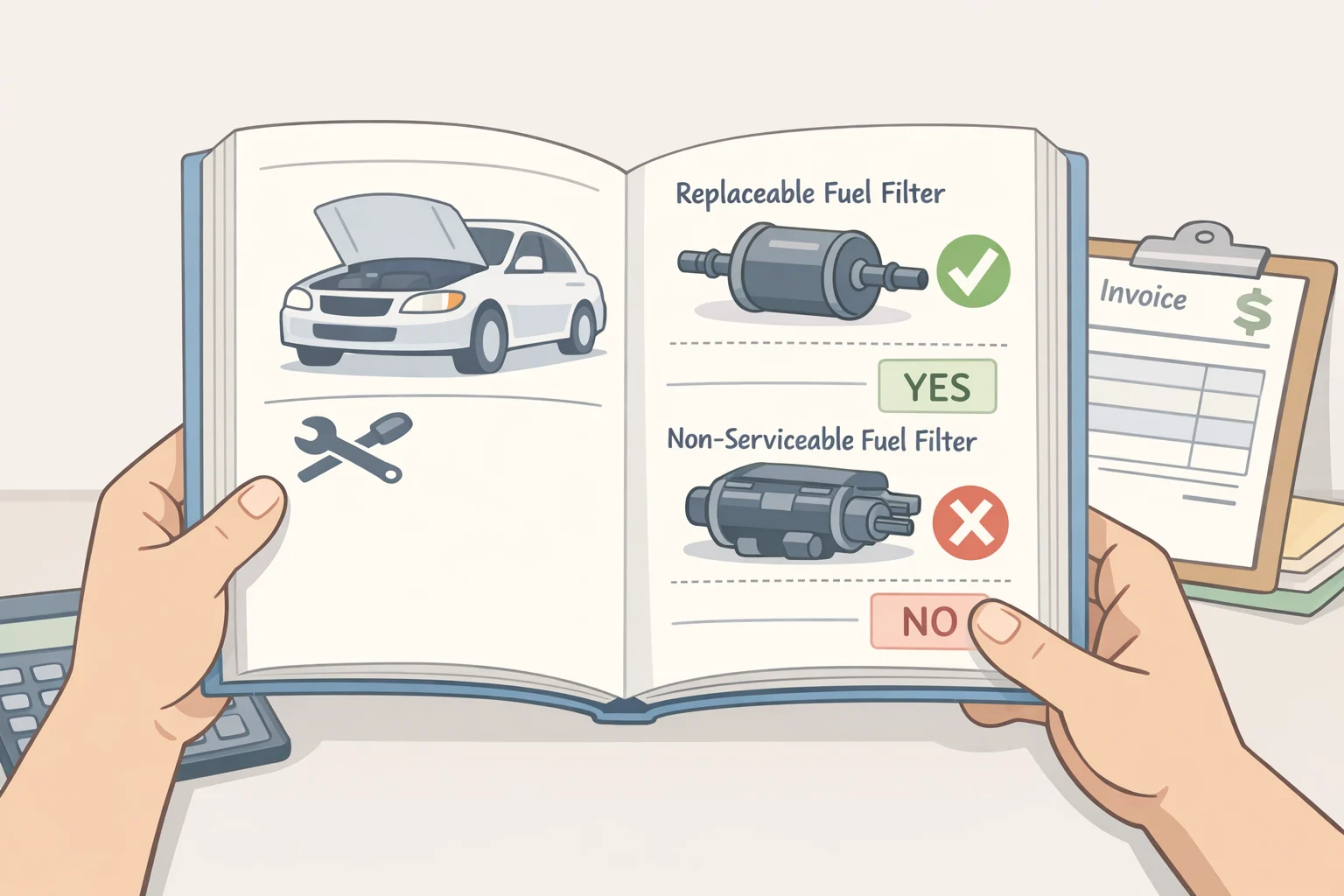
AAA Oregon/Idaho recommends fuel filter replacement at approximately 30,000-mile intervals to maintain fuel flow to the injectors. A restricted filter can cause hesitation under acceleration, rough idling, and hard starting.
The critical question is whether your vehicle has a serviceable filter at all. Check the owner's manual before this service goes on the invoice. If it lists a standalone fuel filter with a defined replacement interval, add it to the 30K visit. If there's no mention of a serviceable filter, or the manual designates it a lifetime component, there's no maintenance basis for the charge. Confirm first, then decide.
What to inspect at 30,000 miles, not replace
Spark plugs
Modern iridium plugs are rated to run 60,000–120,000 miles, per Blue Star Brothers. Consumer Reports places the spark plug service category in that same range. Annual inspection is the right call, per AAA Oregon/Idaho. Replacing plugs at 30K discards parts that still have most of their service life remaining.
Tires
Replacement is triggered by tread depth below 2/32 of an inch or by age, not by the odometer, according to AAA Oregon/Idaho. Check the DOT date codes: tires six to ten years old warrant assessment even if tread looks adequate, per Blue Star Brothers. Rotation and replacement are not the same service. Conflating them is a reliable upsell tactic.
Battery
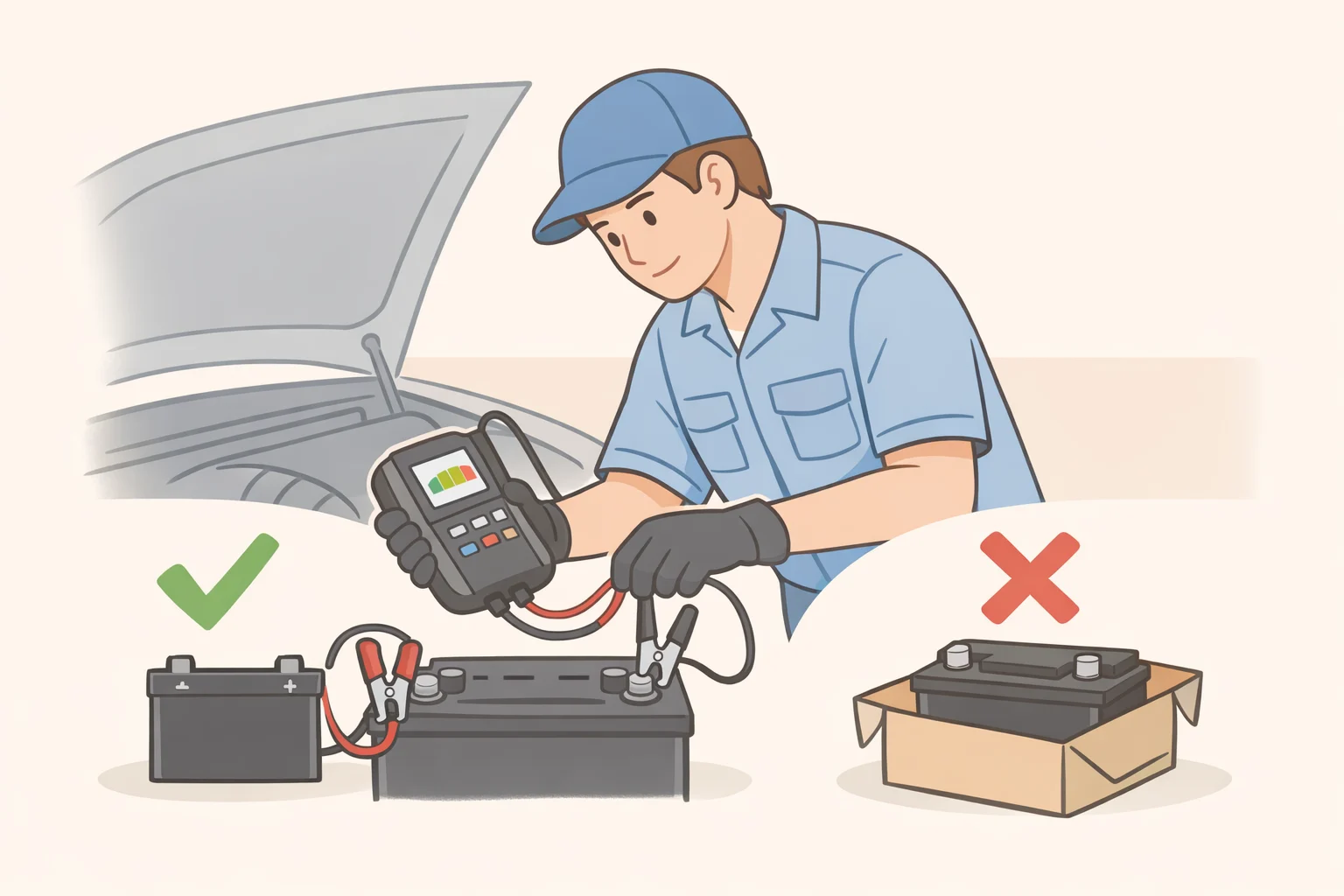
Batteries typically last three to five years and should be replaced at the five-year mark regardless of mileage, per AAA Oregon/Idaho. At 30,000 miles, the right step is a conductance or load test. Blue Star Brothers notes that many batteries age out by three to five years regardless of miles logged. Age and test results matter more than the odometer.
Coolant
AAA Oregon/Idaho and Kelley Blue Book both cite a two-year or 30,000-mile replacement rule, but that guidance applies to older vehicles. Modern long-life coolants typically carry well past 30K by mileage, per Blue Star Brothers. On most current vehicles, the right 30K action is a cooling system inspection covering hoses, clamps, and freeze and boil protection levels. A flush follows only when that test shows degradation.
How to approve a 30,000-mile service checklist without getting oversold
Consumer Reports puts the cost of this tier of service at $500–$950. That's reasonable for a visit done right. The gap between a well-executed 30K service and a padded estimate comes down to knowing which items are condition-based and which are mileage-triggered.
Run through this before signing anything:
- Manual first. If the owner's manual or maintenance minder doesn't call for a service at this interval, ask why it's on the estimate.
- Severe-use schedule. Frequent short trips, stop-and-go traffic, towing, dusty roads, or rideshare duty compress most intervals. Blue Star Brothers is clear: if driving conditions qualify as severe, apply that schedule proactively, without waiting for the OLM to prompt it.
- Test before replacing. Brake fluid, battery, and coolant should be replaced based on test results. Ask for the result before approving any of these.
- Inspect-not-replace items. Spark plugs, tires, and battery at 30K are inspection items unless condition or testing indicates otherwise. Preemptive replacement without evidence is spending money for no return.
- Fuel filter check. Confirm your vehicle has a serviceable fuel filter listed in the manual before that line item stays on the estimate.
One thing worth knowing: under the Magnuson-Moss Warranty Act, manufacturers cannot require dealer service or branded parts to preserve the warranty. Any qualified shop works, provided you use correctly specified fluids and parts and keep the receipts, per Blue Star Brothers.
What 30,000 miles is actually telling you
The milestone isn't primarily a replacement event. It's a condition-assessment event that happens to trigger a handful of well-supported replacements. Engine air filter, cabin air filter, and brake fluid belong on most invoices. Fuel filter belongs on some. Everything else is an inspection first, with replacements following only when the evidence supports them.
A thorough 30K visit costs less than most of the repairs it prevents, as Blue Star Brothers puts it plainly. Spend the money where the evidence points. That same logic still applies at 60,000 miles.