Apps to find cheapest gas near me: 3 steps that save money
The best apps to find cheapest gas near me take about 60 seconds to check and can shave real money off every fill-up. Not because national prices are brutal right now they aren't but because the gap between the cheapest and most expensive station in your zip code is wider than most drivers expect.
Here's the context: regular-grade gasoline averaged $3.10 per gallon nationally in 2025, down $0.21 from 2024 and the third consecutive year of decline, per the U.S. Energy Information Administration. That's a useful headline number. It tells you nothing about what you'll pay at the two stations bracketing your commute.
The same EIA data shows why: 2025 annual averages ranged from $2.39 per gallon on the Gulf Coast to $4.32 on the West Coast. Regional differences stem from state fuel specifications, local taxes, and supply chain structure not just crude oil swings. That spread compresses into your neighborhood. A peer-reviewed spatial analysis of 121 stations in Mississauga, Ontario using crowdsourced GasBuddy data collected three times daily over 30 days found persistent high-price and low-price clusters across the city, with station-to-station gaps holding even within the same metro area. U.S. cities follow the same pattern.
By the end of this guide, you'll have a repeatable three-part routine: use a gas station price comparison app to find the lowest posted price nearby, check whether a warehouse club undercuts it, then layer on a cashback app at whatever station you've chosen. Three steps. Under 90 seconds per fill-up once you've set everything up.
What you'll need before starting: A smartphone with location permissions enabled. A GasBuddy or AAA app account (both free). Optionally: a warehouse club membership and a cashback app (Upside or Checkout 51).
Step 1: Use a gas station price comparison app to find cheapest gas prices nearby
Video of the Day
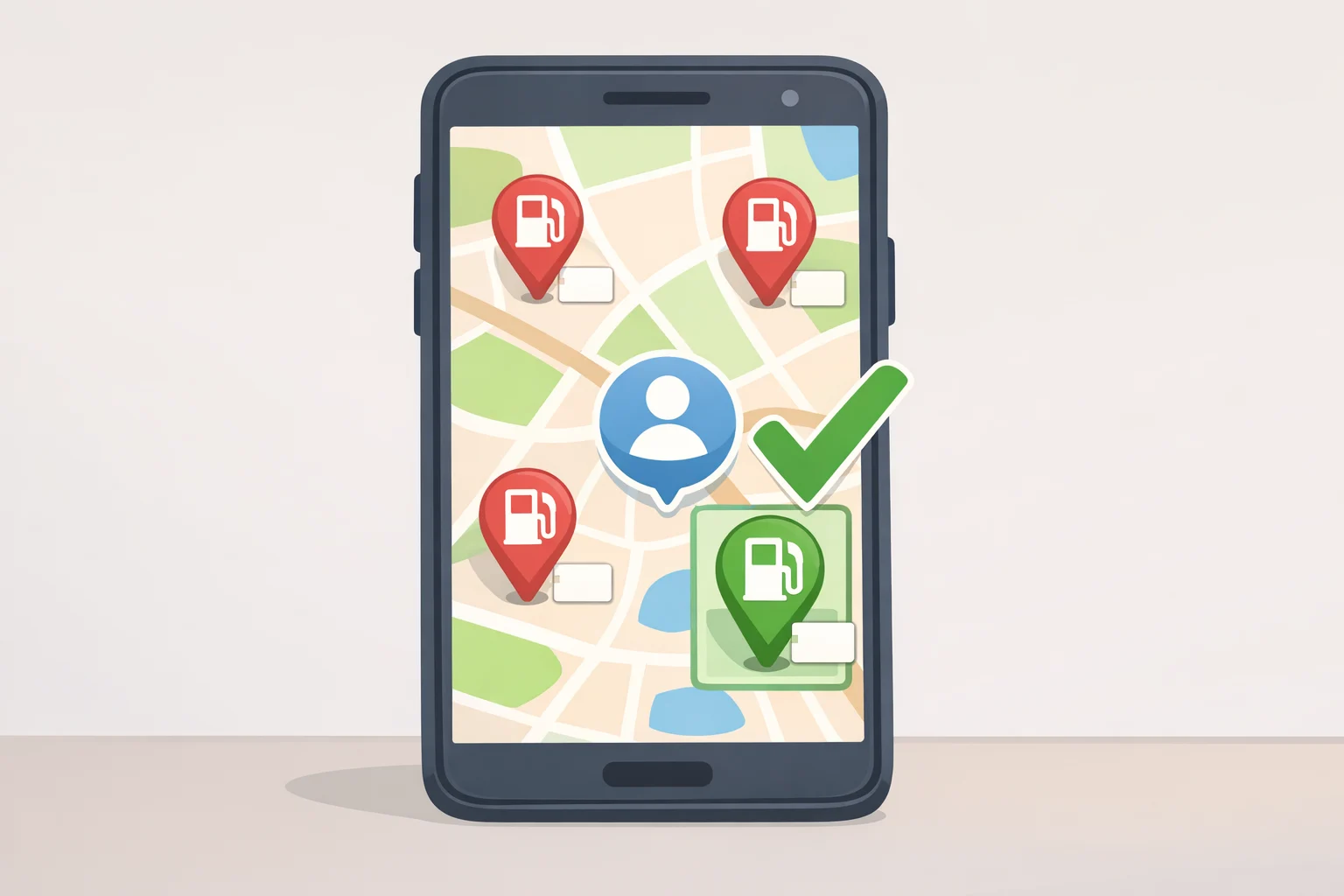
Gas price comparison apps pull crowdsourced reports from stations around you and display them on a map. Checking takes about 60 seconds and sets the ceiling on what you should be willing to pay before leaving the driveway.
1. Download GasBuddy (free, iOS and Android). It carries the largest crowdsourced price database in North America and is the straightforward choice for most drivers. The AAA app is a solid alternative: guest users can check local gas prices and find EV charging stations without creating an account, per NerdWallet though that feature rundown dates to 2022, so verify current options in-app. The practical distinction: GasBuddy covers more stations; the AAA app is more useful when planning a route than when you just need a fill-up.
2. Open the app, allow location access, and scan the map. Don't just tap the first result. Look at two or three stations within a reasonable detour. A station half a mile off your normal route at $0.15 less per gallon saves $1.80 on a 12-gallon fill-up. Worth knowing before you pull in somewhere out of habit.
3. Check the timestamp on each price. Crowdsourced data is only as fresh as the last person who updated it. A price reported 16 hours ago may or may not reflect what's on the sign right now individual stations can reprice multiple times per day, as the Mississauga spatial study documented. If the cheapest station's last update was yesterday, treat it as directional, not guaranteed.
4. Note your target station's posted price. You'll use it in Step 2 to decide whether a warehouse club does better.
After this step, you know the lowest posted price within a practical radius and whether that station is on or off your route. That's the only input you need before the next decision.
Video of the Day
Step 2: Check whether a warehouse club undercuts your target price
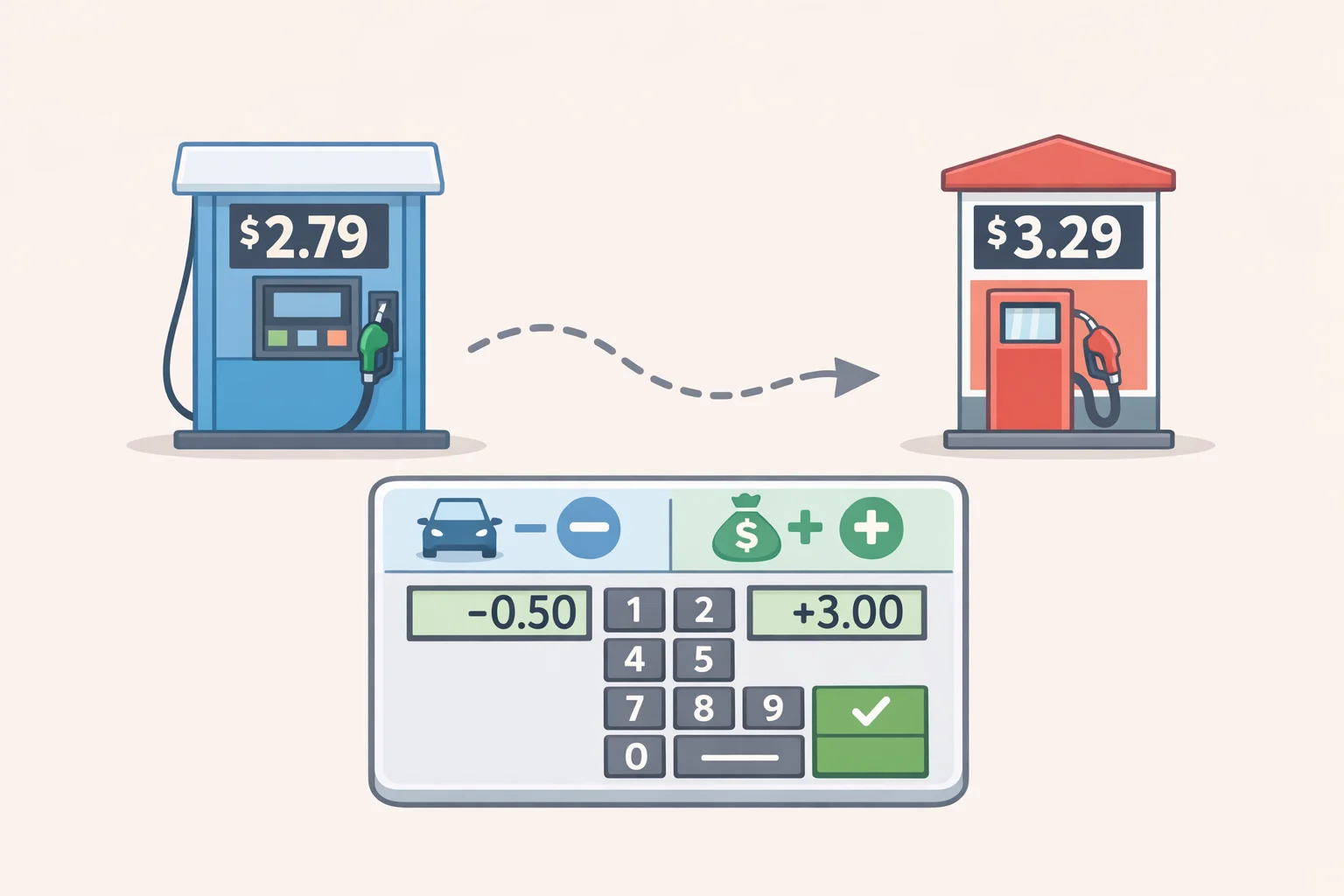
If you have a Costco or Sam's Club membership and a location is reasonably close, check its pump price before committing to the station from Step 1.
1. See if your app shows the warehouse club station. GasBuddy includes many Costco and Sam's Club fuel stations, but coverage isn't universal. If the location doesn't appear, check the retailer's own app or website for the current price.
2. Compare that price to your Step 1 target. Warehouse club fuel typically runs 5 to 25 cents per gallon cheaper than nearby stations, according to GasBuddy's head of petroleum analysis Patrick De Haan, as reported by NewsNation earlier this year. De Haan also noted that when market prices climb, warehouse clubs hold their prices down longer than branded stations. The reason is structural: these retailers accept a thinner margin on fuel because the pump brings members through the door, where higher-margin purchases make up the difference.
3. Run the detour math before deciding. At 15 cents per gallon on a 12-gallon fill-up, you save $1.80. If the warehouse club is three miles off your route and your car gets 28 miles per gallon, you'll burn roughly 0.2 gallons getting there and back call it $0.62 at current prices, for a net gain of just over a dollar. The margin narrows fast with longer detours or bad traffic. If you're already planning a warehouse run, the math disappears entirely: fill up on the way out.
4. Factor in pump lines. Warehouse club stations are often busy, particularly on weekends. A long wait eats into the financial case for the trip. If you're going in anyway and the line is moving, it costs nothing extra. If you're making a special trip and the line is backed up, the savings probably don't justify it.
Who this step is for: Members who live or work near a warehouse location. If you don't have a membership, skip this step. The annual fee takes months of gas savings to recoup if fuel is the only reason you're joining.
Stacking opportunity: Costco and Sam's Club co-branded credit cards can return up to 5% cashback on gas purchases up to an annual spending cap, per NerdWallet. Use one at the pump if you carry it.
Step 3: Add a cashback app to recover more at whatever station you choose
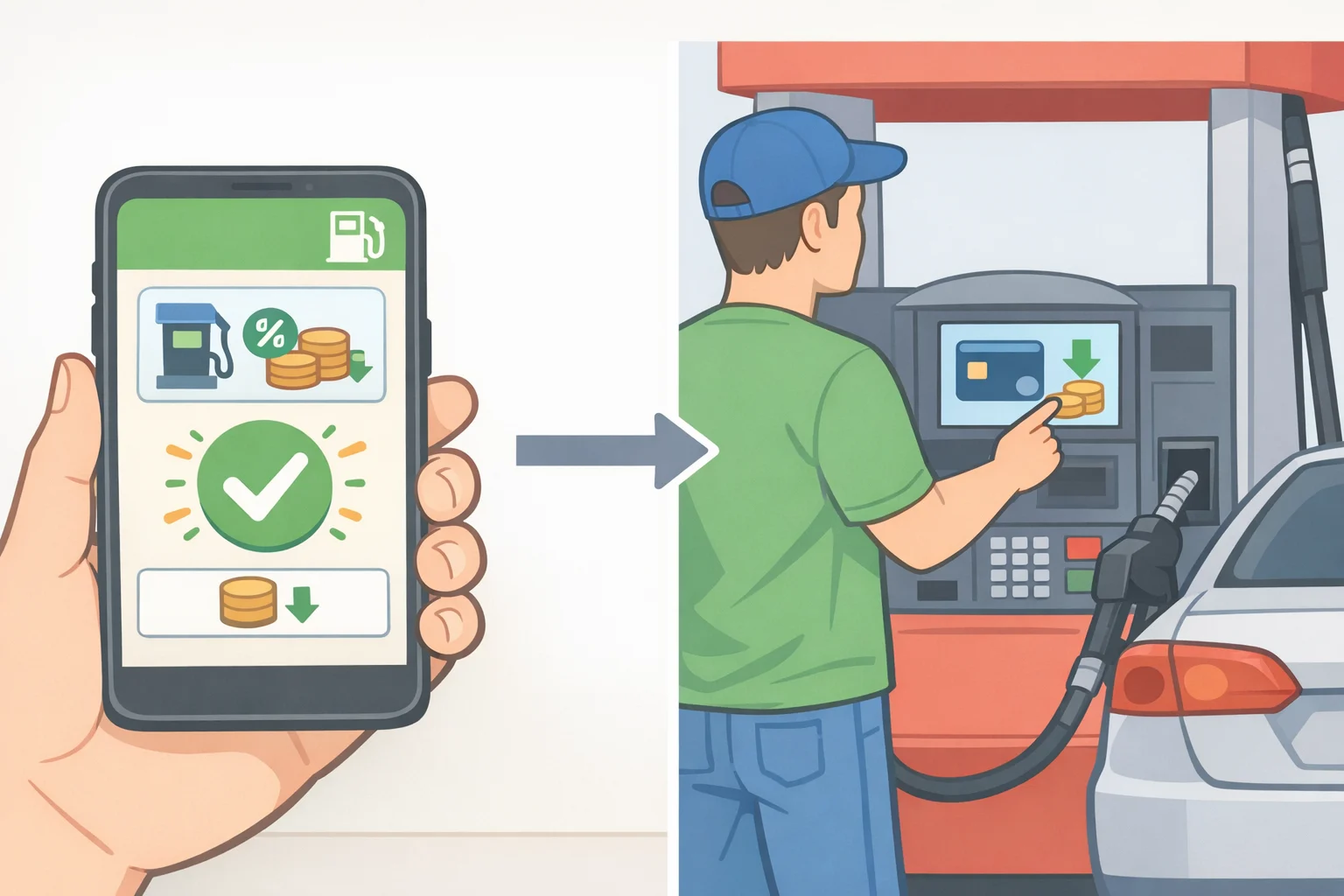
Once you know where you're filling up, check for a cashback offer at that station. Apps like Upside and Checkout 51 return money on purchases at participating stations on top of the posted price they stack with whatever savings you've already found, not instead of them.
1. Check Upside (free). Before you leave, open the app and look for active offers at your target station or nearby alternatives. Claim the offer in-app, then fill up paying with any credit or debit card. Cashback withdrawals under $15 incur a $1 fee, according to NerdWallet, so let balances accumulate before cashing out.
2. If Upside has no offer at your station, check Checkout 51. Its process has more steps: claim the offer, fill up within a four-hour window, then upload your receipt within 20 hours. Rebates can reach 25 cents per gallon at participating stations, per NerdWallet, though everyday offers tend to be smaller. Checkout 51 requires a $20 minimum balance before cashing out, and the payout arrives by check.
3. Don't let cashback offers override your price comparison. A 10-cent rebate at a station that's 20 cents more expensive than your Step 1 target is a net loss. Use these apps to improve on a station you've already chosen on price, not to rationalize skipping the comparison.
Know before you commit: Checkout 51's receipt-upload requirement adds friction that compounds at low fill-up frequency. For drivers who fill up weekly, rebates accumulate into something worthwhile over a few months. For someone filling up twice a month, the time cost of managing uploads may not pencil out. Upside's automatic cashback is lower-effort and a better fit for occasional drivers.
A note on brand loyalty apps: BPme Rewards (BP and Amoco stations) automatically saves 5 cents per gallon, rising to 15 cents with a BP co-branded credit card, per NerdWallet. Fuel Forward does the same for Phillips 66, Conoco, and 76 stations. Both are worth running passively if you already favor those chains. Neither is worth choosing a more expensive station to use.
Which approach fits your situation
The three-step method works for most drivers. The emphasis shifts depending on how much you drive and what's already in your wallet.
- Most drivers: Run a price comparison app before every fill-up, check the warehouse club if you have a membership and it's on your route, and run Upside in the background. Setup takes under 20 minutes the first time; after that, the whole routine runs in under 90 seconds per fill-up.
- Warehouse club members who shop regularly: The club pump price plus a co-branded credit card will beat most alternatives most of the time. The comparison app becomes a sanity check rather than the primary decision tool.
- Low-mileage drivers: Price comparison apps have no real downside and pay off quickly. Skip Checkout 51's receipt-upload workflow it's friction you'll eventually abandon. Upside is lower-maintenance and still adds up.
- Chain loyalists: A brand loyalty app running passively is fine. Run a comparison first. A 5-cent loyalty discount doesn't help if the station is already 20 cents above the cheapest option nearby.
The EIA data makes one thing plain: even as national averages fell through 2025, the regional spread held near $2 per gallon. Local variation within metro areas follows the same logic, just compressed. AAA reported that December 2025 was the cheapest month at the pump since 2020, with the national average hitting $2.89. Prices are down from the 2022 spike, but they move, and local gaps persist regardless of where the national average sits. The comparison habit costs almost nothing to build. For high-mileage drivers, large tanks, or anyone who already passes a warehouse club on the daily commute, it pays off on virtually every fill-up. For lower-mileage drivers, the price comparison step alone 60 seconds, no receipt uploads, no membership required is the minimum worthwhile habit.