LG Evo C6 Review: Two Different TVs, One Name
The single most important fact about the LG Evo C6 review cycle is not a brightness figure or a gaming spec. It is this: the C6 name covers two meaningfully different televisions. Get that distinction wrong and every other purchasing consideration is built on the wrong foundation.
The 42- through 65-inch models use LG's OLED EX panel, the same core technology that powered the C5. The 77- and 83-inch "C6H" models use LG's Primary RGB Tandem OLED, a panel architecture normally reserved for the flagship G-series. Same branding. Different product.
That split determines whether the C6 represents a genuine upgrade, a sideways move, or a case where last year's model is the smarter buy. This review is structured around that question, with explicit labels throughout for when findings apply to the standard C6 (65-inch and under) versus the C6H (77-inch and above).
Before the specs: what panel you get depends on which size you buy
Video of the Day
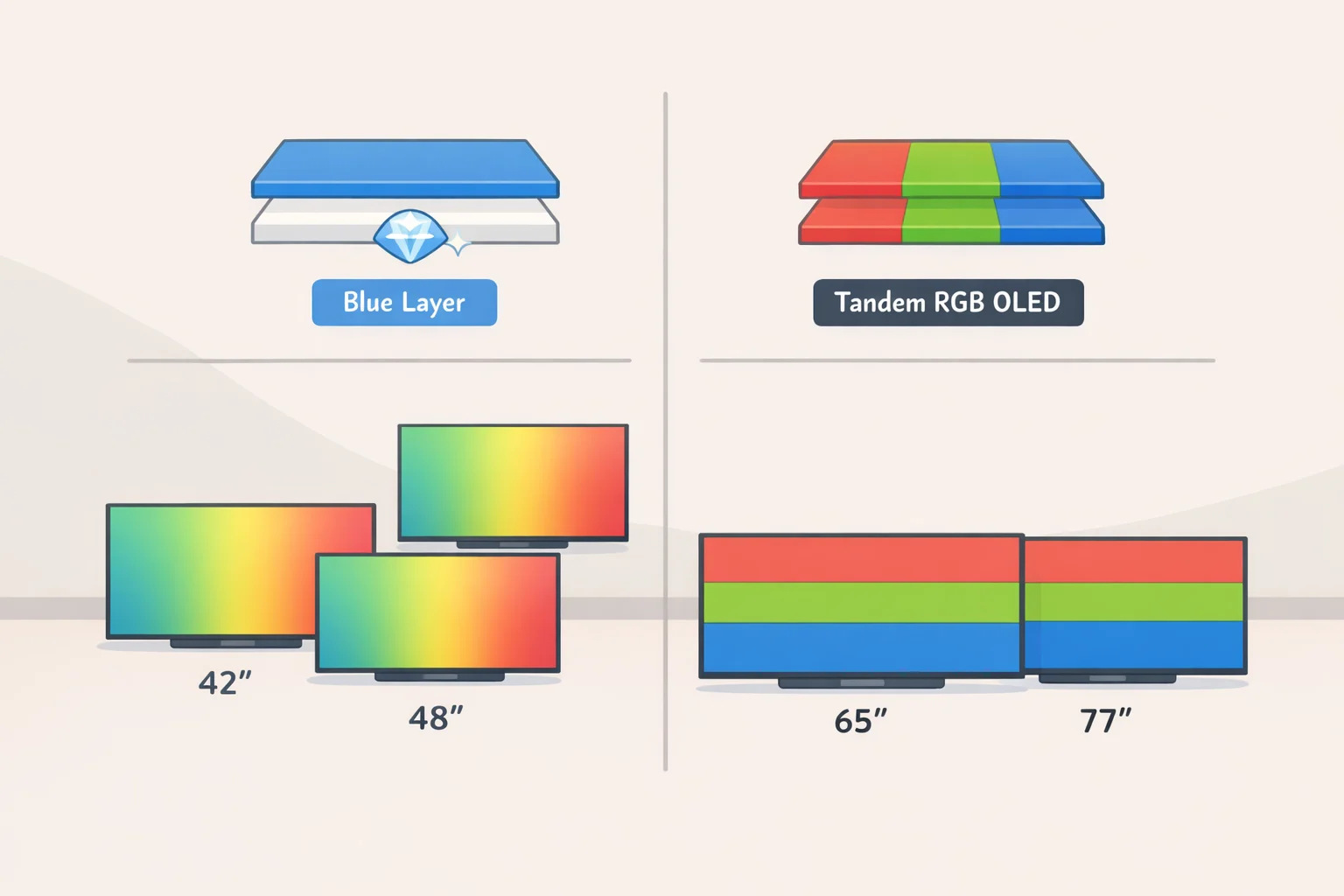
The panel difference is not fine print. It is the structural fact around which everything else turns, and it is easy to miss without reading spec sheets carefully.
The 42-, 48-, 55-, and 65-inch C6 models all use LG's OLED EX panel, the same fundamental technology that has powered the C-series for prior generations. The 77- and 83-inch models use LG's Primary RGB Tandem OLED, which stacks emissive layers to achieve materially higher peak brightness, and carries the same core architecture found in the flagship G-series, per Expert Reviews earlier this summer. LG also reserves its new "Hyper Radiant Colour" processing exclusively for the 77-inch and above models. The standard C6 does not receive this feature regardless of settings, as Expert Reviews confirmed. Accessing the Tandem OLED panel in the C6H requires stepping to 77-inch or larger configurations, priced at $3,700 and above in the US, per My Pit Shop.
The panel difference appears only in spec-sheet fine print, if at all. A shopper comparing the two sizes on a retailer page will encounter similar marketing language, comparable feature lists, and the same processor listed for both.
One practical note before any measurements: the C6 ships in Energy Saving picture mode by default, which prioritizes power consumption over image quality and significantly undersells what the panel can do. Switching to Filmmaker Mode is the baseline from which all calibrated performance should be assessed, as My Pit Shop noted earlier this summer. First impressions out of the box will not reflect actual capability.
Video of the Day
LG Evo C6 brightness: modest gains on the 65-inch, more compelling on the C6H
Picture quality on the standard C6 (65-inch and under): excellent, not transformed
For buyers evaluating the 42- to 65-inch C6, the picture quality story is one of real but measured improvement over the C5. Not a generational leap.
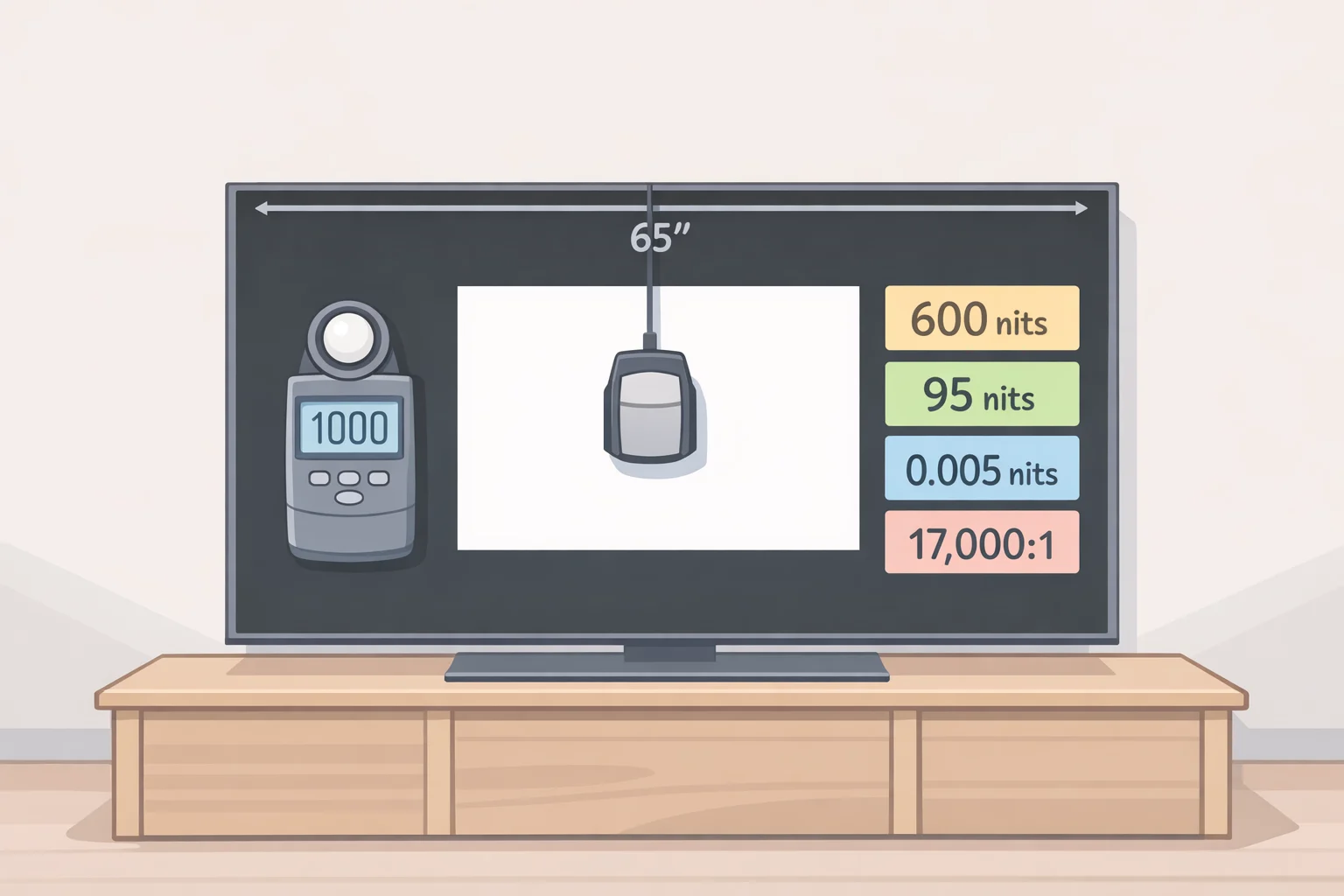
PCMag Australia measured the 65-inch unit at 1,015 nits on an 18% HDR window and 1,552 nits on a 10% window in Filmmaker Mode. The C5 measured 944 nits and 1,269 nits respectively under comparable test conditions, though note that PCMag's C5 figure used an 8% window rather than 18% for that first measurement. For broader context, the LG G6 reached approximately 1,566 nits on the 18% window in the same test, and the Samsung S95H measured 1,634 nits. Color accuracy in Filmmaker Mode is strong: 99% DCI-P3 gamut coverage with a color Delta E of around 1.2 in SDR, well below the threshold of 3 where errors become perceptible to the naked eye, per both Expert Reviews and My Pit Shop. OLED's pixel-level dimming delivers essentially infinite contrast, achieving true black by powering off individual pixels, a fundamental advantage over LCD-based alternatives at this price, as Popular Mechanics noted this month.
The brightness gains are perceptible in direct comparison with the C5, but reviewers who tested both describe the improvement as incremental. Popular Mechanics put it plainly: the 65-inch unit was "just a tad brighter than the C5, not enough to make a material difference in most viewing conditions."
Two caveats deserve attention. On glare: Popular Mechanics flagged that the C6 falls short of the Samsung S95H in mitigating direct sunlight, while Expert Reviews separately noted the C6's reflection handling as a weakness that narrowly cost it a Best Buy badge. Direct sunlight can make already-dark scenes difficult to watch, an inherent limitation of this panel generation at standard sizes. Buyers with windows facing the screen should weigh this before committing.
On format support: the C6 handles Dolby Vision, HDR10, and HLG, but not HDR10+, the competing dynamic metadata standard used by Amazon Video and certain streaming services. Most premium streaming content runs through Dolby Vision, so the practical gap is limited today. Both Popular Mechanics and Expert Reviews argue that supporting both standards should be a baseline expectation on a premium TV a decade into HDR. The C6 also omits an ATSC 3.0 tuner, meaning no next-generation over-the-air broadcasts in 1080p or 4K, which is relevant for cord-cutters in markets where those signals are already live, per PCMag Australia.
What changes on the C6H (77-inch and up)
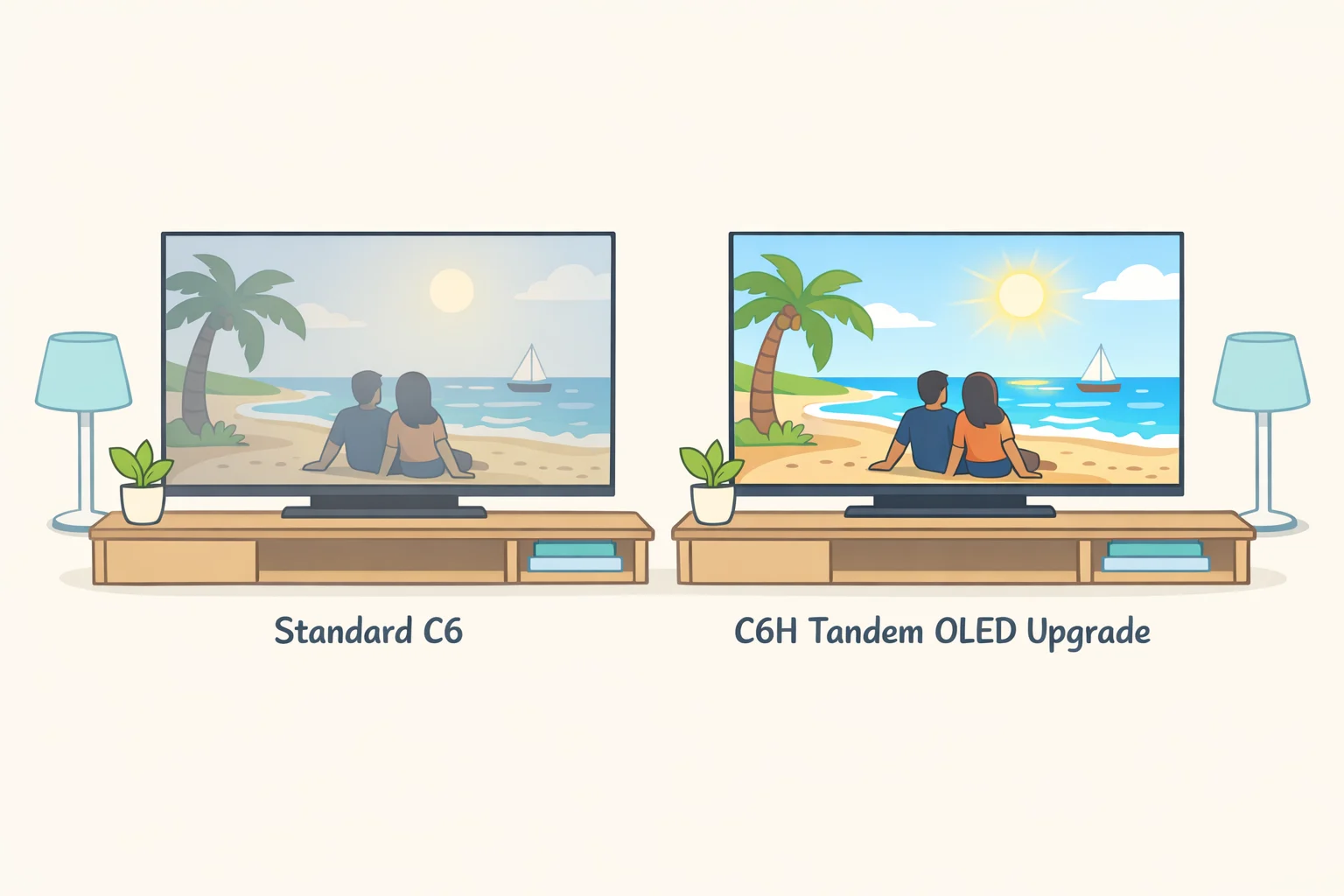
The 77- and 83-inch C6H is where the upgrade story gains traction. The Tandem OLED panel stacks multiple emissive layers to achieve materially higher peak brightness, delivering noticeably better performance in brighter rooms, per Popular Mechanics. LG normally reserves this panel architecture for its pricier G-series; the C6H marks the first time it has appeared at this price tier.
The C6H also receives LG's "Hyper Radiant Colour" processing, which is withheld from the standard C6 sizes entirely, as Expert Reviews confirmed. The combination of Tandem OLED brightness and that processing makes the C6H a qualitatively different television for bright-room viewing, not just a larger version of the standard C6.
Popular Mechanics concluded that the Tandem OLED panel improvement is significant enough at the 77-inch C6H to consider spending the extra approximately $900 over a comparable C5, whereas that same reviewer recommended against the C6 upgrade at smaller sizes given the price gap. At 77 inches, the C5 comparison weakens considerably because the panel difference is substantive rather than incremental.
LG Evo C6 gaming performance: the strongest and most consistent case
If the upgrade case is mixed for movies at standard sizes, it is much clearer for gaming. Across every outlet that reviewed the C6, gaming draws the most unambiguous praise.
Input lag measured 12.8ms at 4K/60Hz and 4.6ms at 1080p/120Hz in Game Mode, both under a single frame at their respective frame rates, per PCMag Australia. Expert Reviews measured 12.9ms in Game Optimiser mode and 9.2ms with Boost mode engaged, among the lowest figures recorded on any current display. All four HDMI ports are full-specification HDMI 2.1, supporting VRR up to 165Hz, raised from the C5's 144Hz ceiling, plus ALLM, Nvidia G-Sync, AMD FreeSync Premium, HGiG, and Dolby Vision for Gaming, per Expert Reviews and PCMag Australia. My Pit Shop gave gaming performance 9.5 out of 10, with real-world PS5 testing confirming the spec-sheet numbers in actual use.
The 165Hz VRR ceiling is the hardware upgrade most relevant to PC gamers. Current-generation consoles cap out at 120Hz, so that ceiling changes nothing for PS5 or Xbox Series X owners. They keep all the same excellent lag figures and full HDMI 2.1 feature set, just without new functionality from the VRR bump. For PC gamers running higher-refresh hardware, it is a genuine improvement.
Gaming is also where panel-tier differences matter least. The lag numbers, HDMI feature set, and VRR support are consistent across all C6 sizes. A buyer choosing between the 65-inch C6 and the 77-inch C6H on gaming grounds should base that decision on brightness and viewing-environment needs, not on whether gaming performance will suffer at the standard size.
Built-in access to Nvidia GeForce Now and Xbox Game Pass via webOS 26 also means a wireless controller and a subscription are enough to run current titles without a dedicated console, per Popular Mechanics.
Ownership caveats: the issues that don't show up in spec sheets
Several C6 limitations are specific enough to affect real purchasing decisions but easy to overlook in marketing materials.
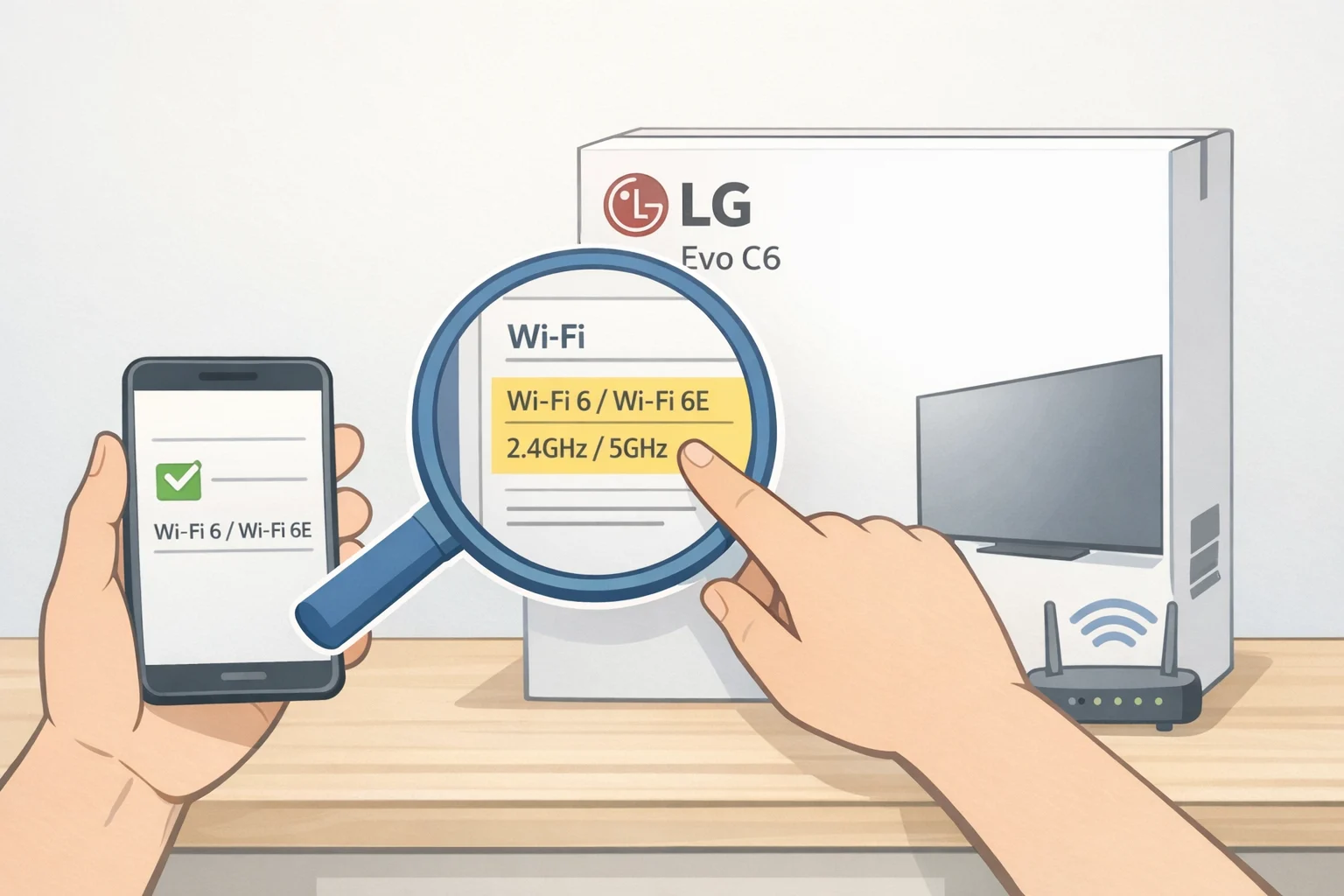
The Wi-Fi situation requires buyer-specific verification. PCMag Australia's US unit shipped with Wi-Fi 5, a step back from the C5's Wi-Fi 6E, which the reviewer described as a "strange downgrade." Expert Reviews's UK spec sheet lists Wi-Fi 6E for the same model. The most plausible explanation is a regional variant difference. FlatpanelsHD noted that Wi-Fi 5 appears "in some regions" even on the flagship G6 line, though that inference from a separate product review carries some uncertainty. US buyers should confirm wireless spec before purchasing.
One reported but unconfirmed concern: My Pit Shop found that declining LG's terms of service during setup rendered all built-in streaming apps, including Netflix, YouTube, and Disney+, inaccessible despite appearing on the home screen. This was not corroborated by other outlets in the same review cycle and should be treated as reported rather than established. It is flagged here because the behavior, if accurate, represents a meaningful distinction: a television where access to features you paid for is conditional on ongoing consent to data terms. For a product priced above $1,700 at entry-level sizes, that is worth knowing before purchase.
Audio reviews diverge, and the spread is wide enough to warrant caution. Popular Mechanics found the built-in sound "surprisingly crisp and powerful" for a panel this thin. My Pit Shop rated audio 4.5 out of 10 and recommended factoring a soundbar into the purchase budget from the outset. The 40W 2.2-channel configuration is confirmed across reviewers, per Expert Reviews. The disagreement is in subjective quality assessment. Given the spread of opinion, treating a soundbar as a likely additional cost is the more conservative planning assumption.
On software longevity: LG's webOS platform carries a five-year update commitment. FlatpanelsHD highlighted this in its G6 review covering the same webOS 26 platform, which the C6 runs. That commitment matters for long-term ownership value on a television expected to last a decade.
The buying decision: a size-tier framework
Standard C6 (55-inch or 65-inch, OLED EX panel)
- Best case: the C5 is no longer available or meaningfully discounted in your region. The C6 is a very good OLED, accurate out of the box, strong for gaming, and well-priced relative to flagship alternatives.
- Weaker case: the C5 is available at $500 to $700 below the C6 at your preferred size. That gap was confirmed as of this month by Popular Mechanics. Both Popular Mechanics and My Pit Shop independently concluded that a discounted C5 is the smarter financial decision for most buyers at those sizes.
- UK buyers: the 65-inch C6 listed at £2,600 but was already selling for £2,080 at major retailers by mid-2026, per Expert Reviews. Street prices are moving toward a more defensible premium. Waiting for further drops, or buying a discounted C5, remains the stronger play.
C6H (77-inch or 83-inch, Primary RGB Tandem OLED panel)
This is where the C6 upgrade story holds. The Tandem OLED panel delivers materially higher brightness and improved performance in brighter rooms, technology LG has not previously offered at this price tier. Popular Mechanics concluded the extra approximately $900 premium over a 77-inch C5 can be justified specifically because of the panel upgrade. US pricing for the 77-inch C6H starts at $3,700, per My Pit Shop. For buyers in the market for a 77-inch or larger OLED, the C6H is the version of this lineup where paying current prices over the C5 actually makes sense.
What the LG Evo C6 actually delivers
The C6 is not a disappointing television by any measure. Accurate color, excellent contrast, and gaming specs that reviewers across multiple outlets called the best in class at this price. PCMag Australia named it the best midrange OLED of 2026, and that designation holds on pure performance terms.
The complication is that "best midrange OLED" and "best buy right now" are different designations. At 55 and 65 inches, brightness gains over the C5 are modest, several feature gaps persist, no HDR10+, no ATSC 3.0, and a Wi-Fi situation that requires regional verification, and the discounted C5 remains a serious alternative the C6 at full price struggles to beat on value alone. At 77 inches and above, those objections largely dissolve.
Three clean takeaways by buyer type:
- 55- or 65-inch buyers new to OLED: check C5 availability and pricing first. If the gap is $500 or more, the C5 is likely the right call unless C6 prices have dropped further.
- 55- or 65-inch buyers upgrading from a C5: the improvements are incremental enough that the upgrade is hard to defend at current pricing. No single feature the C6 adds materially changes the daily experience of someone already satisfied with a C5.
- 77-inch and above buyers: the C6H is where "best value OLED" applies without qualification. Wait for C6 prices to fall further at smaller sizes. At 77 inches, buy now.