Car Parts to Replace at 60,000 Miles: What to Check First
Search for car parts to replace at 60,000 miles and most results hand you a tidy list of five items, as if every vehicle hits the same wall at the same odometer reading. That premise doesn't survive contact with an actual owner's manual. Automatic transmission fluid alone spans a 30,000 to 60,000-mile window under normal driving, dropping to 15,000 to 30,000 miles under towing or stop-and-go traffic, according to Bumper's severe-duty maintenance research published earlier this year. A third-party reproduction of one Kia model's schedule lists transmission fluid due at 56,000 miles but transfer-case and differential fluid at 72,000 miles on the same car (Auto User Guide, 2024). Same vehicle, same mileage range, two fluids running on two different clocks.
This guide treats 60,000 miles as a checkup point, not a shopping list. It walks through the five maintenance categories most worth reviewing at this mileage, drivetrain fluids, brake fluid, spark plugs, engine oil, and brake pads and rotors, and shows how to work out, for your specific car, whether each is due, worth measuring, or fine to leave alone. Along the way there's a short secondary list worth a glance during the same visit: coolant, air filter, battery, and tires.
Start with your driving category, not a fixed mileage
Video of the Day
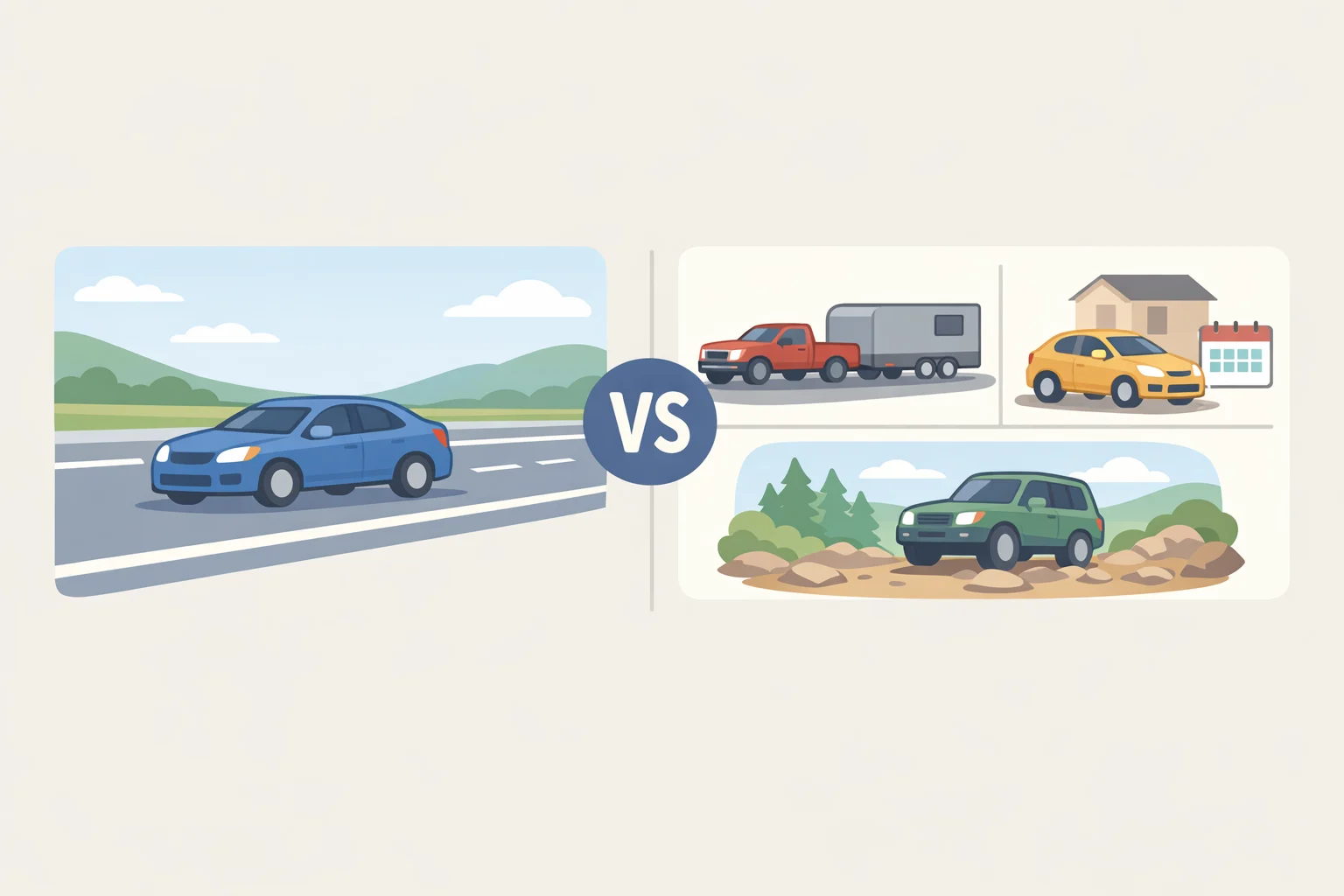
Manufacturers generally define "severe duty" as short trips under five miles, frequent towing, extreme heat or cold, stop-and-go traffic, and dusty or off-road driving, per Bumper. Short hops matter more than most drivers assume: an engine that never fully warms up leaves combustion moisture and acids sitting in the oil instead of burning off, which accelerates wear regardless of total mileage (Bumper). Towing does something similar to transmission fluid, running temperatures high enough that the fluid degrades roughly twice as fast as it would in normal use (Bumper).
The stakes of getting this wrong show up clearly in real schedules. A third-party reproduction of Ford's F-150 severe-service schedule calls for spark plugs and transfer-case fluid at exactly 60,000 miles (Auto User Guide, last year), while the Kia example above spaces two similar drivetrain services 16,000 miles apart. Neither number transfers to an unrelated vehicle. Pull your own manual's severe-use table if it has one, and write down every line item scheduled between 45,000 and 70,000 miles under the column that actually matches how you drive. That list is what turns the next section from guesswork into a plan.
Video of the Day
Build a 60,000-mile maintenance checklist you can actually use
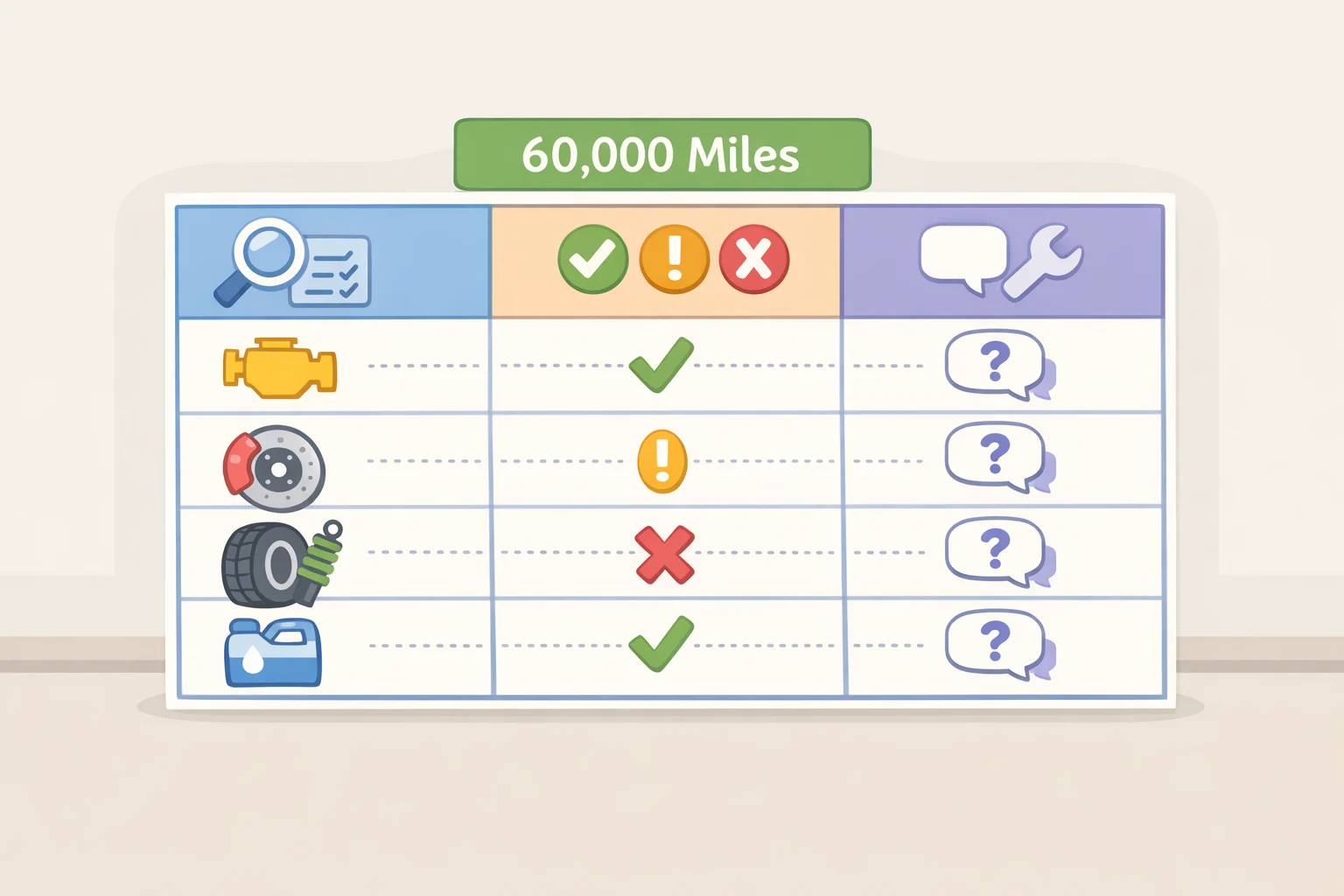
A useful 60,000-mile maintenance checklist doesn't hand out verdicts. It flags what needs checking and what would settle the question. Here's a working version for the five categories covered in this guide:
| Category | Likely status at 60,000 miles | What determines it | What to ask the shop |
|---|---|---|---|
| Drivetrain fluids (transmission, transfer case, differential) | Could be due or years away | Your manual's normal vs. severe-duty interval; towing shortens it substantially | Full flush or drain-and-fill? Does "lifetime fill" apply here, and what does that actually mean for this transmission? |
| Brake fluid | Often overdue if there's no documented flush | Manual's specific interval; some schedules call for a flush well before 60,000 miles | When was it last flushed? Can the fluid be tested rather than assumed? |
| Spark plugs | Could be due, or good for another 40,000 miles | Plug type (standard vs. long-life) and any performance symptoms | What plug type is installed, and what's the manufacturer interval for it? |
| Engine oil | Ongoing service, not a milestone | Oil-life monitor, driving conditions, oil condition | Is the oil-life monitor being followed, or a flat mileage number regardless of how the car's driven? |
| Brake pads and rotors | Depends entirely on measurement | Pad thickness, rotor thickness and condition, driving style | Pad thickness in millimeters? Rotor thickness against minimum spec? Any scoring or pulsation? |
Treat this as the starting point for a conversation with a technician, not a final answer. If there's no service history at 60,000 miles, don't assume every item is still original, and don't authorize replacing all five just because the paper trail is thin. Verify oil, brake fluid, transmission fluid, and spark plugs first: those four are where a missing history changes the picture most.
Drivetrain fluids: transmission, transfer case, and differential
Transmission fluid runs 30,000 to 60,000 miles under normal use and 15,000 to 30,000 under severe conditions, with towing roughly halving the standard interval (Bumper). Differential and transfer-case fluid on AWD and 4WD vehicles follow the same 30,000 to 60,000 versus 15,000 to 30,000 pattern (Bumper).
Treat the Kia and Ford figures above as illustrations of how sharply real schedules diverge, not numbers to borrow for a different vehicle. Your owner's manual is the only source that should settle an actual replacement. Bumper's own maintenance table flags some transmissions as "lifetime fill" but attaches a caveat to that label (Bumper), which is worth remembering: don't take "lifetime fill" at face value without asking what it means for your specific transmission. When you talk to a shop, ask directly whether the service due is a full flush or a drain-and-fill, and whether lifetime fill genuinely applies here.
Brake fluid and spark plugs: same mileage marker, different odds of being due
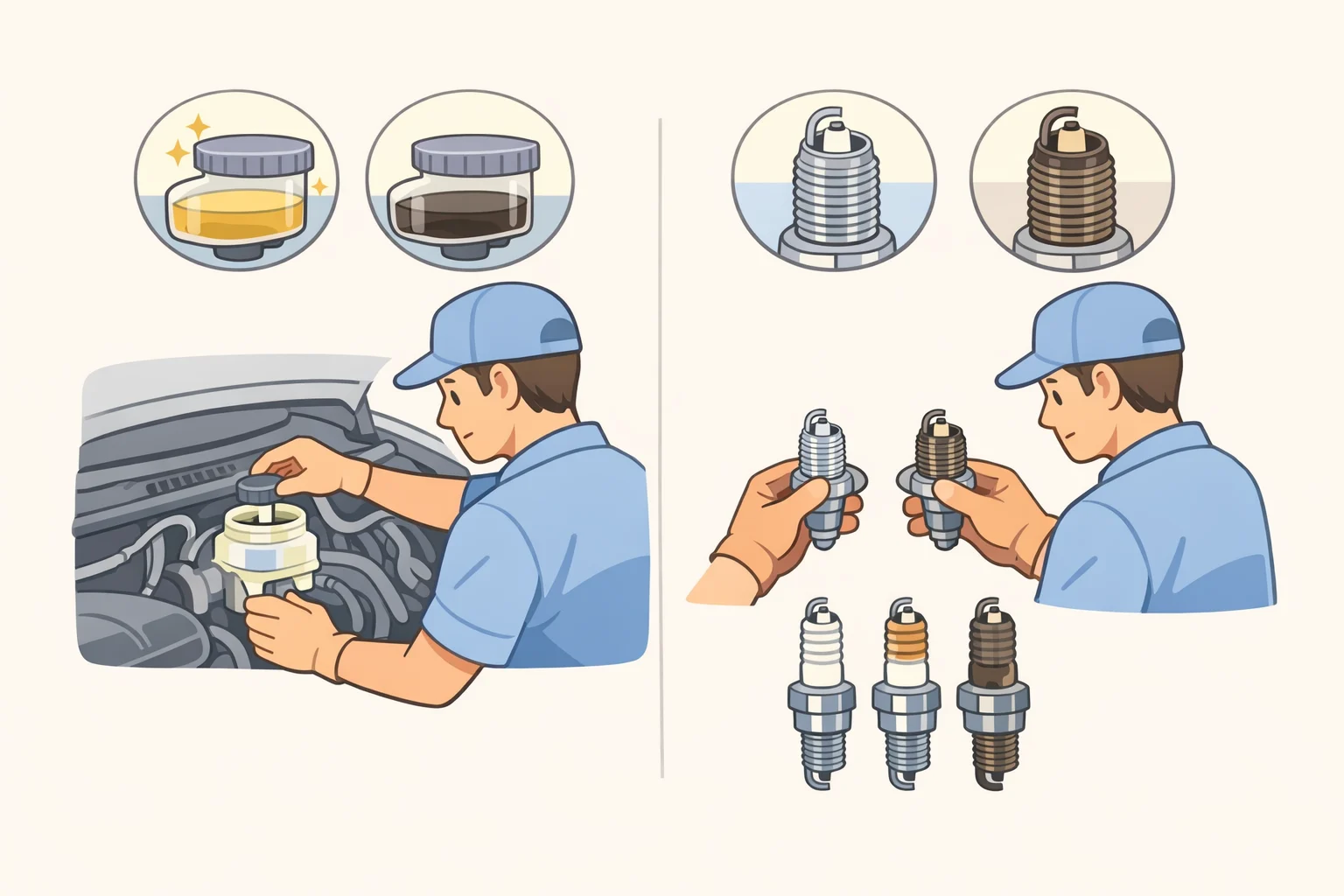
Brake fluid, per a third-party reproduction of a Kia schedule, calls for inspection every 8,000 miles or 12 months and full replacement every 48,000 miles or 48 months (Auto User Guide, 2024). On a schedule like that, brake fluid would already be past its interval before 60,000 miles if there's no record of a flush. The right move when history is unclear isn't to assume replacement is automatically due; it's to check the manual's specific interval, look for any documented flush, and have the fluid tested if neither confirms recent service.
Spark plugs are far less predictable. Long-life plugs commonly last 60,000 to 100,000 miles (Bumper), while AAA's general guidance points closer to 30,000 miles (AAA Oregon/Idaho, earlier this year). The same third-party Kia page lists both a 48,000-mile schedule entry and a 60,000 to 100,000-mile FAQ answer on one page (Auto User Guide, 2024), which reads more like a quirk of that particular reproduction than evidence that Kia itself contradicts its own manual. Replace spark plugs on your manual's plug-type interval. If something feels off before that mileage arrives, a rough idle, hesitation, or a noticeable drop in fuel economy, that's reason enough to have them checked regardless of the odometer.
Engine oil: a recurring service, not a 60,000-mile milestone
Oil changes don't line up with a mileage checkpoint the way the other four items can. They're a service that's been happening throughout the car's life, not a one-time event tied to 60,000 miles. AAA cites a common range of 5,000 to 7,500 miles (AAA Oregon/Idaho), while Bumper cites 7,500 to 10,000 miles for full synthetic under normal use, or whatever the oil-life monitor says, dropping to roughly 3,000 to 5,000 miles under severe conditions (Bumper).
Most modern oil-life monitors already factor in driving conditions and will call for earlier changes if they detect short-trip patterns (Bumper). Trust it over a generic mileage rule if your car has one. AAA suggests treating dark, gritty oil as a signal to consider a change, whatever the odometer reads (AAA Oregon/Idaho). Without a monitor, default to the shorter end of the range if most of your driving is short trips or stop-and-go. The point of checking oil at 60,000 miles isn't treating it as a milestone; it's confirming you haven't quietly drifted past due on a car with unclear history.
Brake pads and rotors: measure, don't estimate by mileage
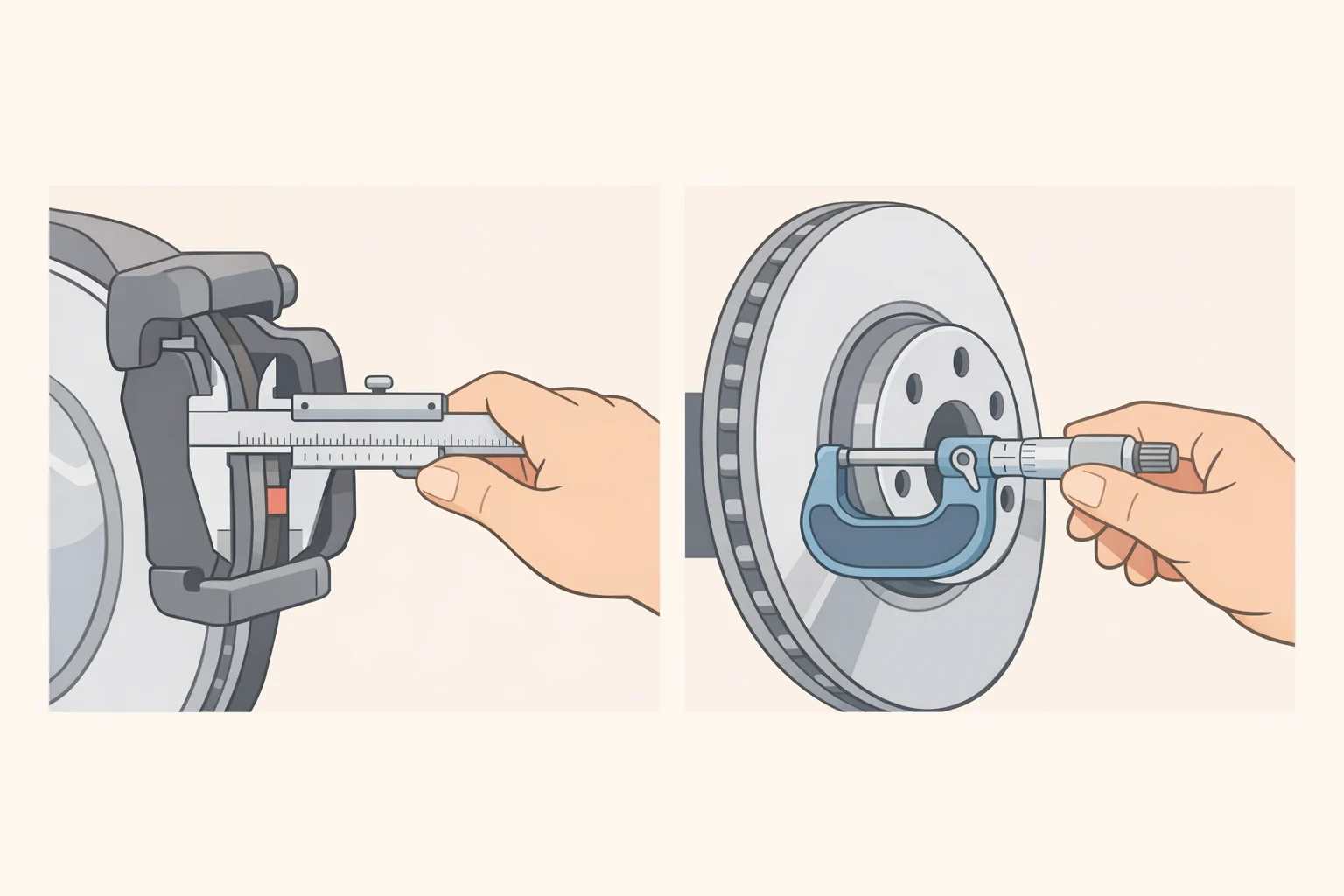
Pad life ranges roughly 30,000 to 70,000 miles depending on driving style, with towing and mountain driving shortening that considerably (Bumper). Replacement runs about $100 to $300 per axle when it's genuinely due (AAA Oregon/Idaho).
After a long tow or a steep mountain descent, it's worth inspecting pads directly rather than waiting for the next scheduled service; a pulsing brake pedal is a common sign of rotor warping from that kind of load (Bumper). Mileage alone won't catch this. This is a measured call, not a scheduled one: ask the shop for pad thickness in millimeters, whether wear is even side-to-side, rotor thickness against the minimum spec, and rotor surface condition. "Brakes look fine" isn't an answer on its own; thin pads or scored rotors justify replacement even if the car still feels normal on the road.
Also worth a quick check: coolant and air filter
Coolant is a good example of why a generic mileage number breaks down fast. AAA recommends replacement every two years or 30,000 miles, with flushing every 30,000 to 60,000 miles (AAA Oregon/Idaho); Bumper cites five years or 100,000 miles under normal use (Bumper); a third-party Kia schedule sets the first replacement at 120,000 miles or 120 months (Auto User Guide, 2024). These aren't competing answers to the same question; they're different coolant formulations and manufacturer designs with genuinely different service lives. Check your manual for the coolant type and interval before touching it.
Engine air filter intervals normally run 15,000 to 30,000 miles, shortening to 10,000 to 15,000 miles, or inspection at every service, in dusty or off-road conditions (Bumper). AAA recommends annual replacement of engine and cabin filters regardless of mileage (AAA Oregon/Idaho). By 60,000 miles it's likely already been swapped once or twice; still worth a look if you drive somewhere dusty.
Battery and tires: age matters more than mileage
Neither of these belongs in the mileage-based list, because mileage alone doesn't tell you their age. Batteries typically last three to five years and should be tested twice yearly starting at year three, with replacement recommended by year five to avoid an unexpected failure (AAA Oregon/Idaho). Tires need replacement at six to ten years of age or 2/32-inch tread depth, whichever comes first (AAA Oregon/Idaho).
A car that's covered 60,000 miles in three years of highway commuting is in a very different position than one that's covered the same distance over eight years of light use. Check battery voltage and tire date codes or tread depth against their own clocks, not the odometer's.
What to bring to your next appointment
The pattern across every source here is consistent: intervals for components with the same name depend on the vehicle, the powertrain, the specific fluid or part, the car's age, and how it's actually driven. That's why a fixed five-part replacement list doesn't hold up once you check it against a real owner's manual, and why the manual, not a generic guide, has to settle each call.
If there's no service history at 60,000 miles, verify oil, brake fluid, transmission fluid, and spark plugs first, since those are the four where an unknown past changes the most. Bring your year, make, model, engine, and drivetrain to the appointment, along with current mileage, any known severe-use conditions, and the exact line items your manual lists between 45,000 and 70,000 miles. Walk in with that, and you'll know which services to approve and which ones deserve a second look before you sign off.