Milwaukee M18 Lunch Warmer: Specs, Price, and Prep Time
Milwaukee Tool has announced a Packout-compatible lunch warmer, model 0811-20, that runs on the company's M18 battery platform, according to ToolGuyd's report published four weeks ago. The device takes two hours to bring food up to temperature no matter which of its three heat settings gets used, followed by a 30-minute keep-warm period, per the same report. That schedule makes the Milwaukee M18 lunch warmer a tool for planning a meal hours in advance, not something to reach for during a short break.
ToolGuyd reports a $199 price for the warmer, though that figure doesn't include a battery or charger, both sold separately. Milwaukee says a single M18 5Ah battery can heat up to two meals, according to ToolGuyd's report, a detail that shifts the effective cost depending on whether a buyer already owns Milwaukee's battery platform.
This coverage draws entirely on ToolGuyd's reporting of Milwaukee's announcement. No official Milwaukee product listing or confirmed release date appears in the available reporting, and it's unclear whether Milwaukee designates $199 as MSRP or an introductory price.
Milwaukee 0811-20 lunch warmer: specs and design
Video of the Day
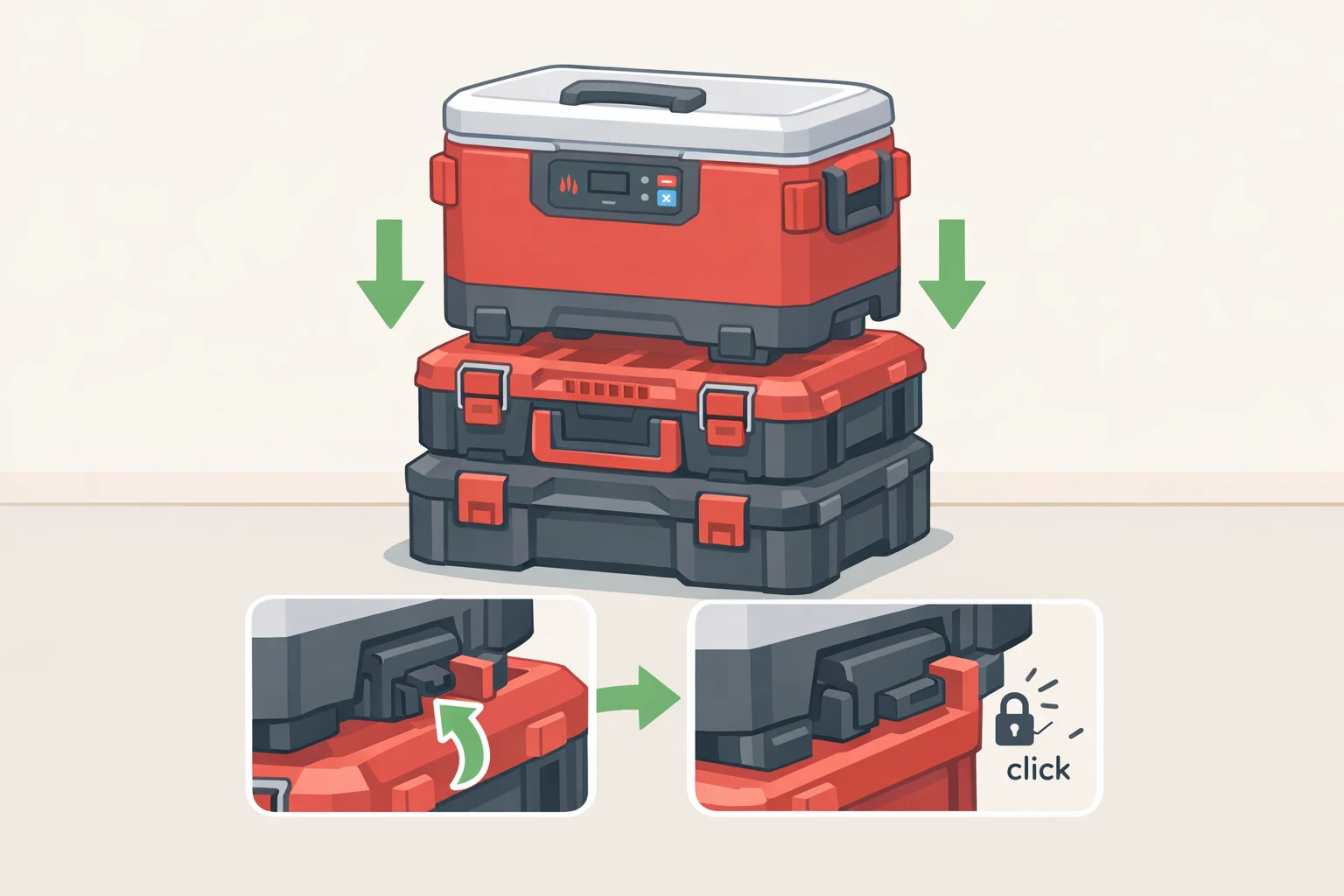
The 0811-20 is Packout-compatible, according to ToolGuyd's report, meaning it attaches to Milwaukee's modular jobsite storage system. That compatibility is the feature most clearly setting it apart from a standard plug-in warmer; the available reporting doesn't specify how it's meant to be carried between uses.
Milwaukee rates the unit IP54 for dust and water resistance, and it weighs 3.83 pounds without a battery attached, according to ToolGuyd's report. The company also says the design lets it run on a variety of surfaces, per the same report, though the available reporting doesn't specify which surfaces qualify or note any temperature or clearance limits while it's operating.
Total weight with a battery attached isn't included in the available reporting either, which matters for anyone weighing whether it's worth adding to a Packout stack alongside other tools.
Video of the Day
How the M18 jobsite lunch warmer heats food
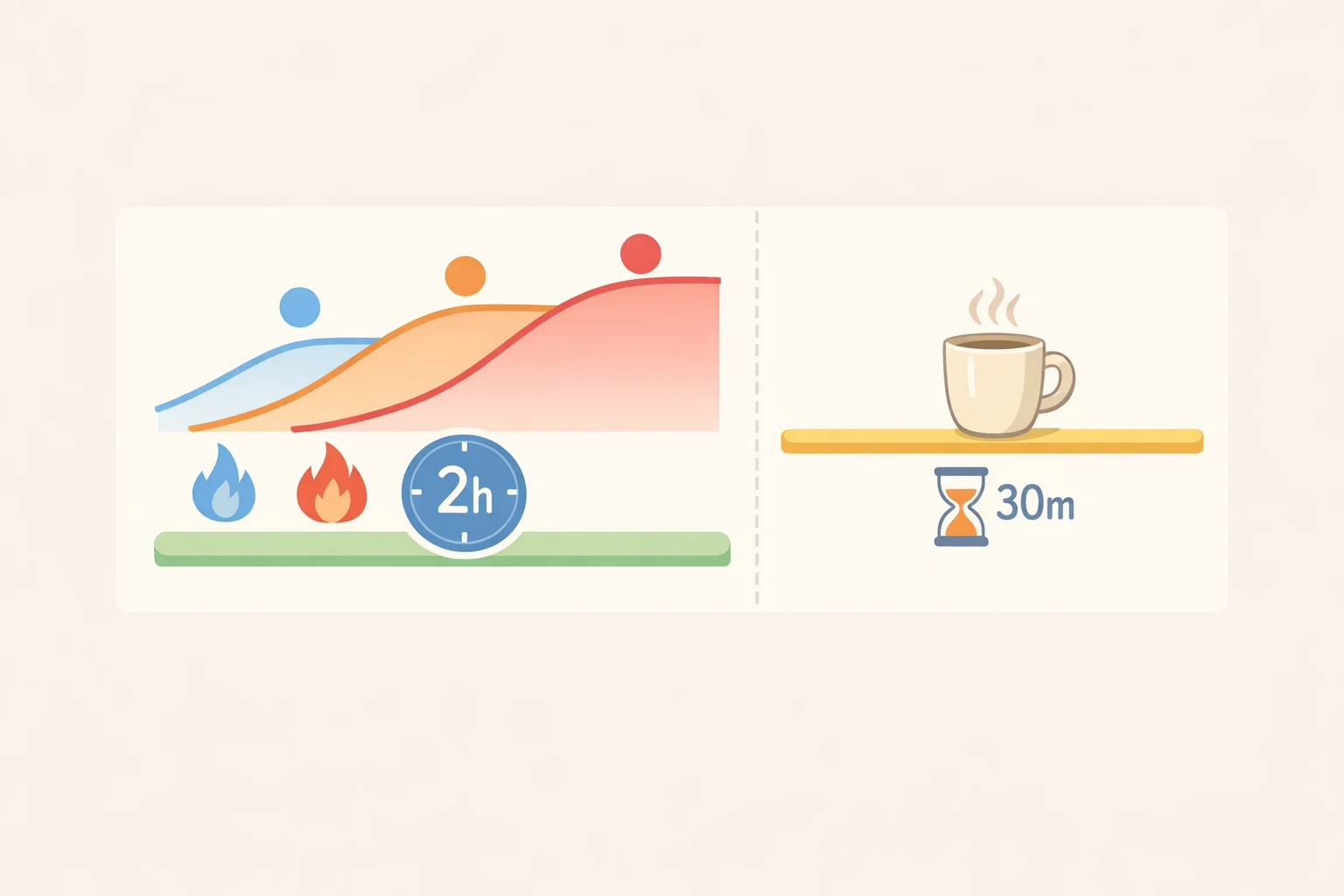
The warmer heats food between 165°F and 205°F across three settings: low, medium, and high, according to ToolGuyd's report. Milwaukee recommends medium for most meals and reserves high specifically for soups and stews, per the same report.
The heating cycle runs two hours regardless of setting, according to ToolGuyd's report. Milwaukee's stated reasoning, relayed by ToolGuyd, is that the two-hour window "ensures full reheat of all food types, environments, and heat settings while minimizing burning." That's a company explanation for the design choice, not an independently verified food-safety result, and nothing in the available reporting confirms actual internal food temperatures reached during testing.
Selecting high doesn't shorten the wait. A 30-minute keep-warm period follows the heating cycle, supported by foam insulation, according to ToolGuyd's report, which gives some cushion if a break gets pushed back.
Combined, that's a maximum reported window of two and a half hours from the start of heating through the end of keep-warm, based on those two figures. It isn't a requirement that food sit that long before eating, just the outer edge of what the cycle covers.
The reported two-hour cycle makes the product ill-suited for anyone who needs food heated during a short break, based on the specs Milwaukee has released. It works on a different schedule: load the container, start the cycle, and let it run in the background while the workday continues around it.
Battery math for the Milwaukee battery-powered lunch warmer
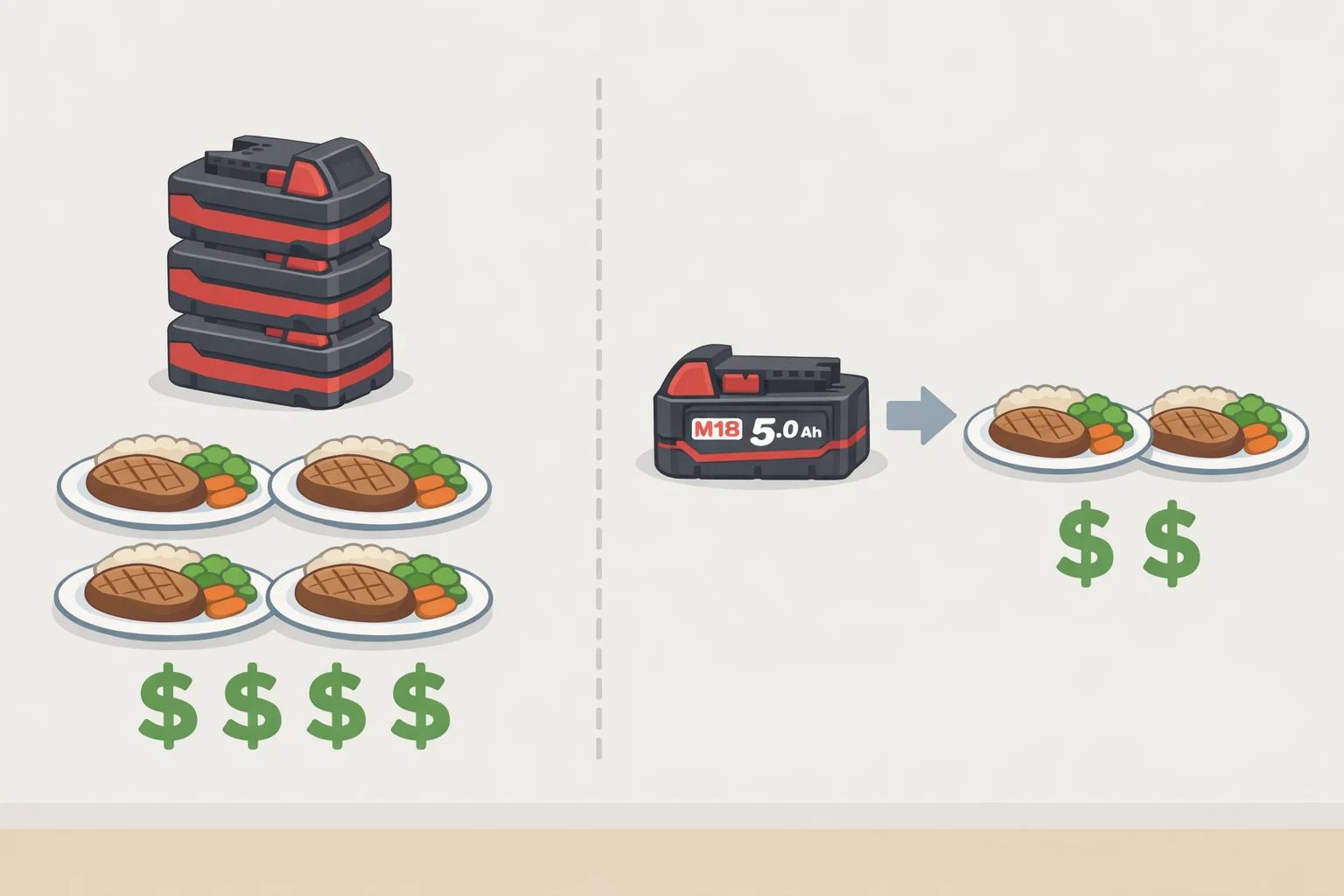
Milwaukee says one M18 5Ah battery can heat up to two meals, according to ToolGuyd's report. The available reporting doesn't include the test conditions behind that figure, so how food volume or ambient temperature affects it isn't established.
Still, the distinction is worth flagging. "Up to two meals per battery" is a different math problem than "one battery per meal," and it changes how much battery capacity a two-person crew actually needs to bring to a site.
The warmer ships with two containers and costs $199, but the battery and charger are sold separately, according to ToolGuyd's report. For someone who already carries M18 tools and batteries, that's an incremental purchase.
For someone starting a battery platform from nothing, the real cost of getting the warmer running climbs well past the sticker price, since a compatible battery and charger have to be bought alongside it.
The reusable container system
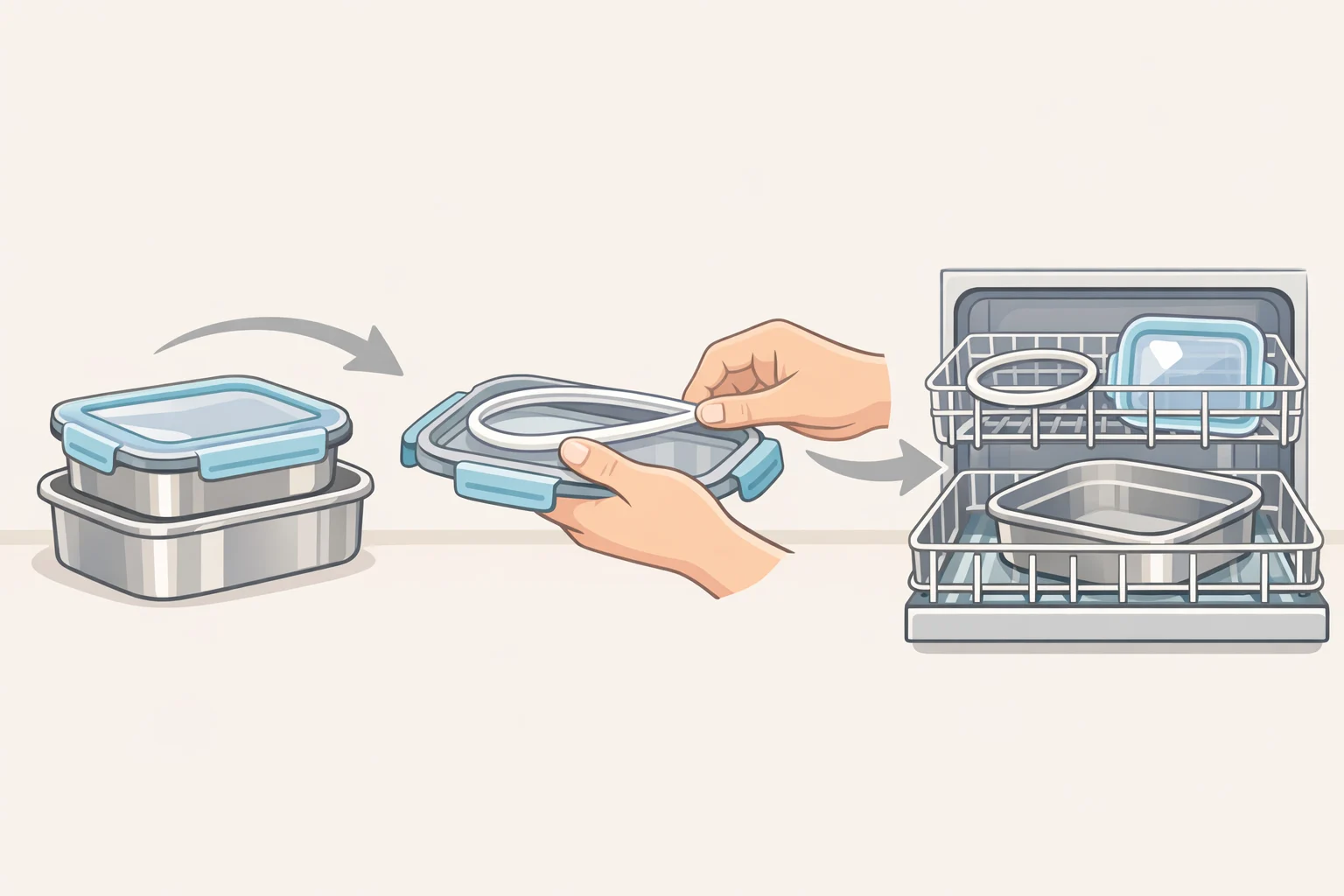
The warmer ships with two stainless-steel containers, each fitted with a leakproof lid and holding 4.75 cups, or 1,125 milliliters, according to ToolGuyd's report.
The containers are dishwasher safe, but only if the rubber gasket seal is removed first, according to ToolGuyd's report, an easy step to forget when rinsing off gear at the end of a shift.
Milwaukee also sells a three-pack of additional containers for $79, according to ToolGuyd's report. Given the two-hour cycle, extra containers let someone prep several meals in advance without buying a second warmer, an option the reported heating time makes more useful than it might otherwise be.
What's confirmed, and what's still unverified
The specifications reported so far, the 165°F to 205°F range, the two-hour cycle, the 30-minute keep-warm period, the two-meals-per-battery estimate, and all listed pricing, come from Milwaukee's own statements as relayed by ToolGuyd. No independent testing is cited in the available report.
That leaves several open questions: how real-world heat-up performance compares to the stated range, whether the two-meals-per-battery estimate holds across different food types and portion sizes, and how the containers and gasket seal hold up over repeated dishwasher cycles. None of that has been tested outside Milwaukee's own claims, at least based on what's publicly available right now.
What is confirmed is the broader move. Milwaukee has added a scheduled food-warming device to its M18 battery lineup, a category the company hasn't previously occupied. Whether it proves useful on jobsites or ends up a niche accessory will likely depend on details still missing from the public record, starting with independent testing and an official product listing.