Car Window Sticking to Weather Stripping: Causes & Fixes
A car window sticking to weather stripping can come from four different problems: ice, dry or dirty tracks, a software calibration hiccup, or a motor and regulator on their way out. Which one applies determines what you do next, and forcing the switch before you've figured out which is how a minor problem turns into a real repair.
Cold is a common trigger. Freezing temperatures can bond glass directly to the rubber door seal, and the right first move is patience rather than force, according to Tesla DIY Repair, which published guidance on the issue five months ago. Grime causes plenty of sticking too: factory track lubrication dries out over years of seasonal exposure, and once it does, tracks catch and windows get sluggish, TheCarBuzz reported six months ago. Either way, forcing a stuck window through repeated switch presses is listed among the causes of motor and regulator failure, per the same report.
This guide covers how to unstick a car window from weather stripping without cracking the glass or damaging the motor, starting with a quick way to sort your window into the right category, then specific steps for thawing, cleaning, and lubricating it, plus the signs that mean the problem isn't the seal at all.
Match the symptom to the fix
Video of the Day
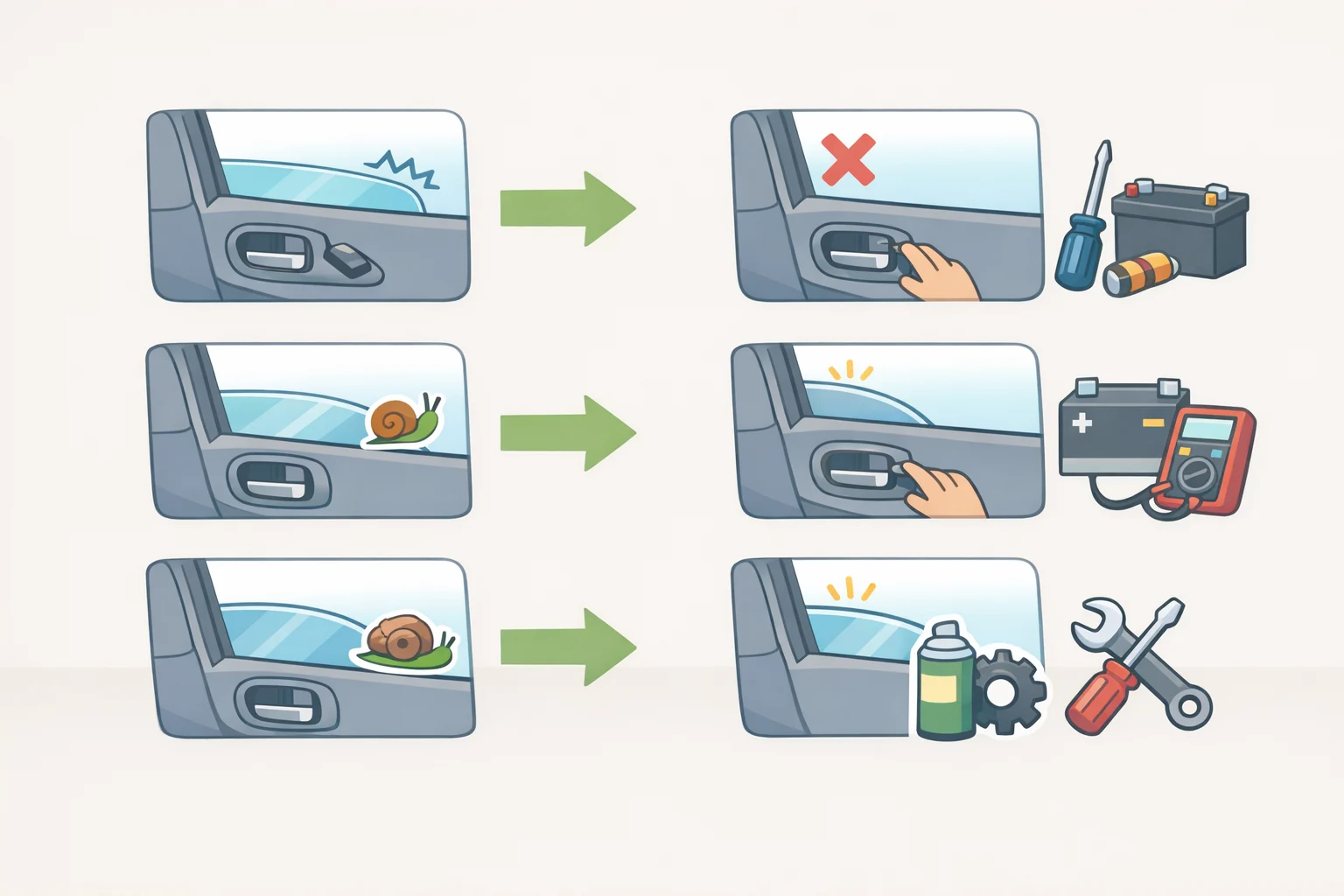
| Symptom | Possible cause | First move |
|---|---|---|
| Visible ice or frost on the glass or seal; window won't move at all | Frozen to the seal | Thaw it first, don't lean on the switch |
| Window moves slowly but evenly, with resistance and no odd sounds | Dry or dirty tracks and weatherstripping, a reasonable first suspect | Clean and condition |
| Window auto-reverses, stalls before closing, or leaves a gap with nothing in the way | Possible calibration drift, mainly on auto-up/anti-pinch systems | Check the reset procedure for your specific vehicle |
| Window moves unevenly, tilts, stutters, or makes grinding or popping noises | Track misalignment or regulator failure | Stop and get it inspected |
| Motor hums or grinds but the glass doesn't move, or the motor is silent | Regulator problem (humming) or electrical fault (silence) | Stop and get it inspected |
A window that binds can come from ice, dry or dirty tracks, miscalibration, or a hardware fault, and each needs a different response, Tesla DIY Repair notes. On the mechanical side, a motor that hums or grinds without moving the glass usually points to the regulator, while dead silence points to something electrical: a fuse, a switch, or corroded wiring, according to T1A Auto, which covered the distinction seven months ago. The same source lists a handful of signs that rule out a simple seal fix altogether: a loud pop or grinding sound, glass that tilts as it travels, or glass that suddenly drops into the door. Any of those means the fix belongs to a mechanic, not a spray can, and the section below explains why.
Video of the Day
A window frozen to the seal: thaw it, don't force it
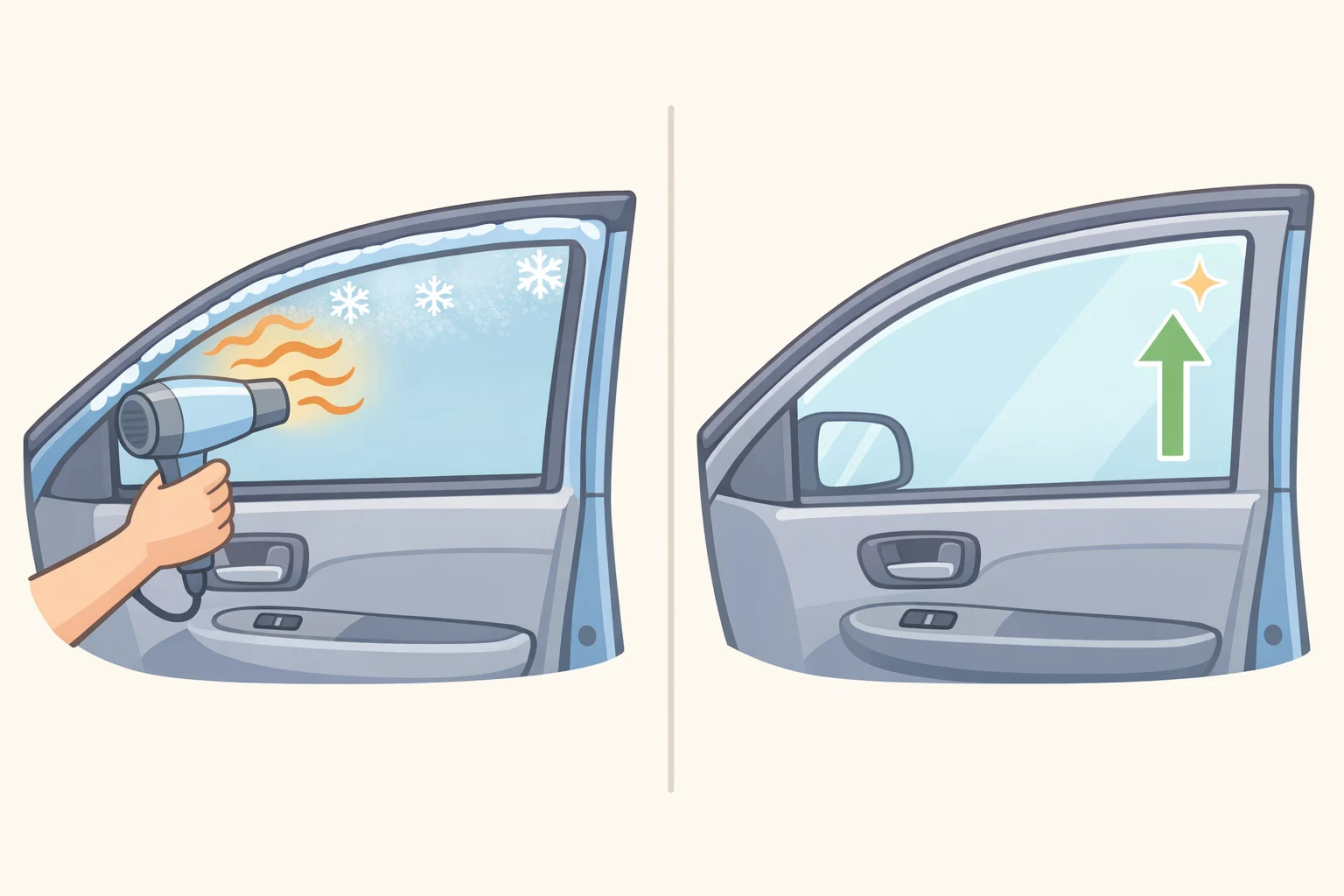
If the window is visibly bonded to the seal, cold weather is the likely cause, and it's rarely the glass itself that's damaged. Rubber seals trap moisture, and in freezing temperatures that moisture can bond the glass to the door frame, Tesla DIY Repair explains. The fix isn't to keep hitting the switch. Continuing to force a frozen window is one of the specific causes TheCarBuzz lists for motor and regulator failure, and AAA's broader winter rule, developed mainly around frozen car doors and locks rather than window channels specifically, applies here too: don't yank or force something that's frozen, since it strains hardware without freeing anything (AAA, last winter).
Here's the sequence:
- Stop operating the switch. Repeated presses against ice shorten the motor's life rather than clearing the glass.
- Warm the seal, not just the glass. Run the cabin heat or move the car somewhere warmer for 5 to 10 minutes and let the seal thaw on its own (Tesla DIY Repair, five months ago).
- If ice remains, use a deicing product labeled for automotive rubber seals, or keep warming the vehicle rather than reaching for water. If you do use warm water anywhere on the car, keep it well short of boiling; a sharp temperature swing on cold glass can crack it, a caution AAA raises generally for frozen doors and locks (AAA, last winter). AAA's own vinegar-and-water recipe, three parts vinegar to one part water, is documented for doors and locks, not window seals, so treat it as a door remedy rather than something to try on the glass channel.
- Once the window frees up, dry the channel with a cloth before testing it.
- Apply a silicone-based lubricant to the seal afterward to cut the odds of it refreezing (Tesla DIY Repair, five months ago).
One thing to skip entirely: pushing or applying pressure to the glass to break a frozen bond. That's a technique described for frozen doors, not window panels, and trying it on glass risks cracking or dislodging it instead of freeing it.
How to fix a sticking car window seal
When the glass moves slowly but stays straight and quiet, dry rubber and dirty tracks are reasonable first suspects. Factory track lubrication dries out and collects grime over roughly 5 to 10 years of seasonal exposure, which is why sticking shows up on older cars even without a hint of ice (TheCarBuzz, six months ago). Separately, ultraviolet light and airborne chemicals dry out weatherstrip rubber and strip away its pliability over time, which is why a lot of "sticky" seals are simply dried out rather than actually damaged (Counterman, last year).
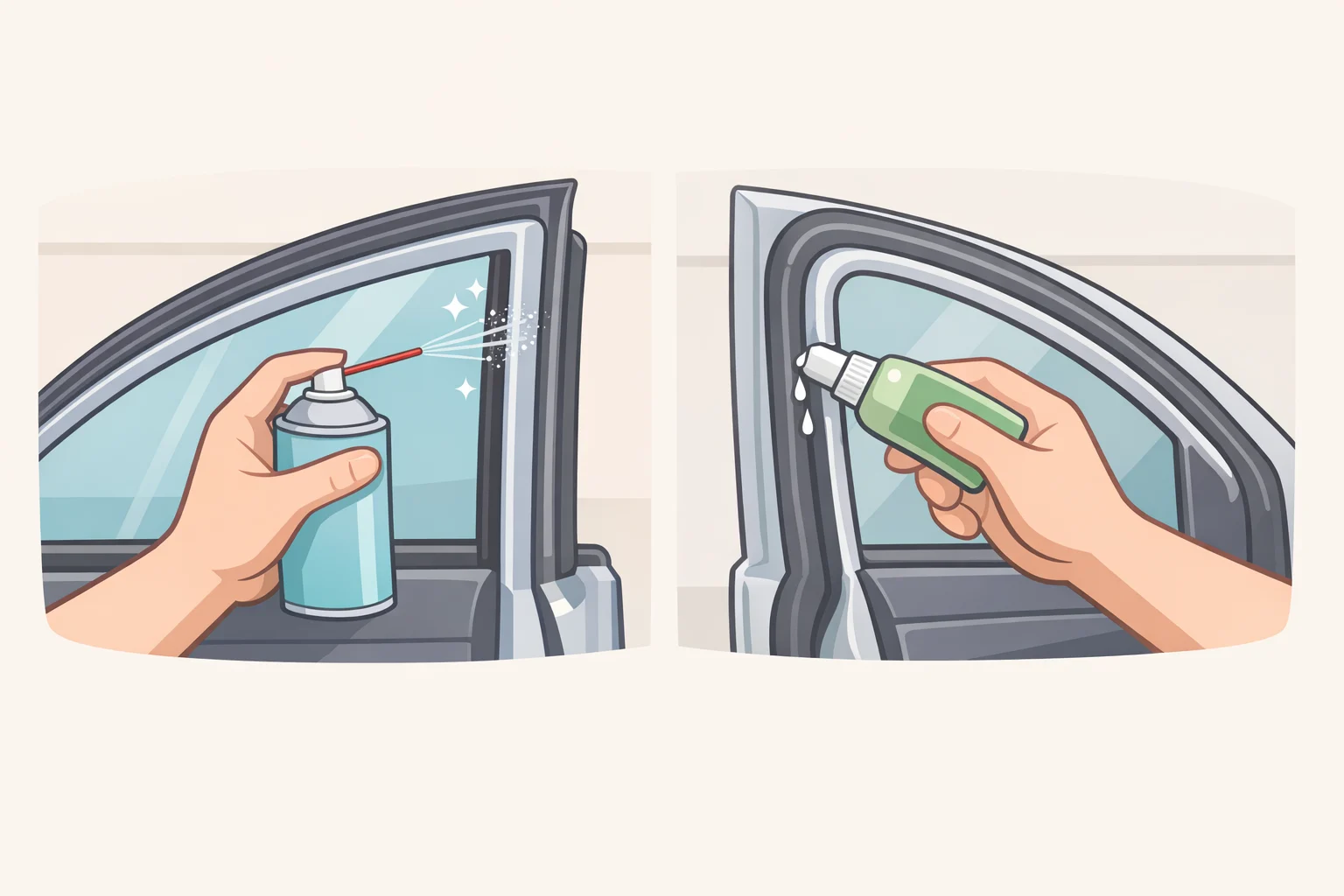
The vertical run channel, where the glass slides inside the door and is often lined with felt, needs a different product than the rubber weatherstripping that seals the door's perimeter. Track lubricant belongs in the channel; rubber conditioner belongs on the perimeter seal. Picking the right car window weather stripping lubricant, and keeping it in the right spot, matters as much as applying it in the first place.
- If the window moves, lower it partway to expose the run channel and wipe out loose dirt with a microfiber cloth, avoiding pushing grit deeper into a felt-lined channel. If it doesn't move at all, work with what's accessible: clean the visible seal and the channel opening with the glass up, and don't force it down. Stop right away if the glass tilts, drops, grinds, or binds in one spot while you're working; that's a mechanical problem, not a friction one, and the next section covers what to do about it.
- Clean the perimeter weatherstripping with mild soap and water, then dry it fully.
- Inspect both the seal and the felt channel material for cracks or tears before applying anything.
- Apply a silicone-based lubricant sparingly inside the vertical run channel, a light coating rather than a soaking, since excess product just attracts more dirt (Counterman, last year).
- Apply a rubber conditioner to the perimeter seal, kept separate from the track product.
- Cycle the window up and down a few times to work the product in, then check for smoother movement.
- Repeat this every 3 to 6 months, and again after car washes, since trapped water in the tracks can cause the same kind of sticking as dry rubber (Tesla DIY Repair, five months ago).
Skip WD-40 on tracks or seals. It attracts dust and can degrade rubber over time, and a silicone-based product does the same job without the downside (Tesla DIY Repair, five months ago). That's different from AAA's advice that lubricant sprays work well on frozen door locks; that guidance is about locks, not window channels, and doesn't carry over (AAA, last winter).
If the weatherstripping is brittle or cracked rather than simply dry, conditioner won't bring it back. At that point replacement is the actual fix, and it's a manageable DIY job once the old strip and its adhesive are cleaned off the channel (Counterman, last year).
When it isn't the weather stripping: calibration and mechanical failure
On Tesla vehicles with auto-up and anti-pinch windows, a window that reverses on its own or won't fully seat can be a calibration problem rather than a physical obstruction, according to Tesla DIY Repair, a third-party Tesla-focused site rather than Tesla's own documentation. Its described fix: hold the switch until the window stalls on its own, which the site says typically takes 3 to 8 seconds rather than a fixed count. The same source lists dirty tracks, worn seals, and temperature swings among the things that can knock calibration off, which is one more reason the cleaning routine above sometimes clears up an auto-reverse complaint without any reset at all.
Reset procedures vary by make and model. T1A Auto describes one generic version for other vehicles: run the window fully down, hold the switch for about five seconds after it stops, then repeat going up. Because this procedure isn't standardized across brands, checking the owner's manual is the reliable move on anything other than a Tesla.
Some symptoms have nothing to do with software or seals. A motor that runs without moving the glass, a window that's crooked or has dropped into the door, or grinding and popping sounds all point to a regulator, motor, or wiring problem that lubricant can't fix (T1A Auto, seven months ago). Part of the reason these parts fail in the first place is location: the motor and regulator sit inside the dark, moisture-prone environment of the door, which makes them susceptible to wear (TheCarBuzz, six months ago).
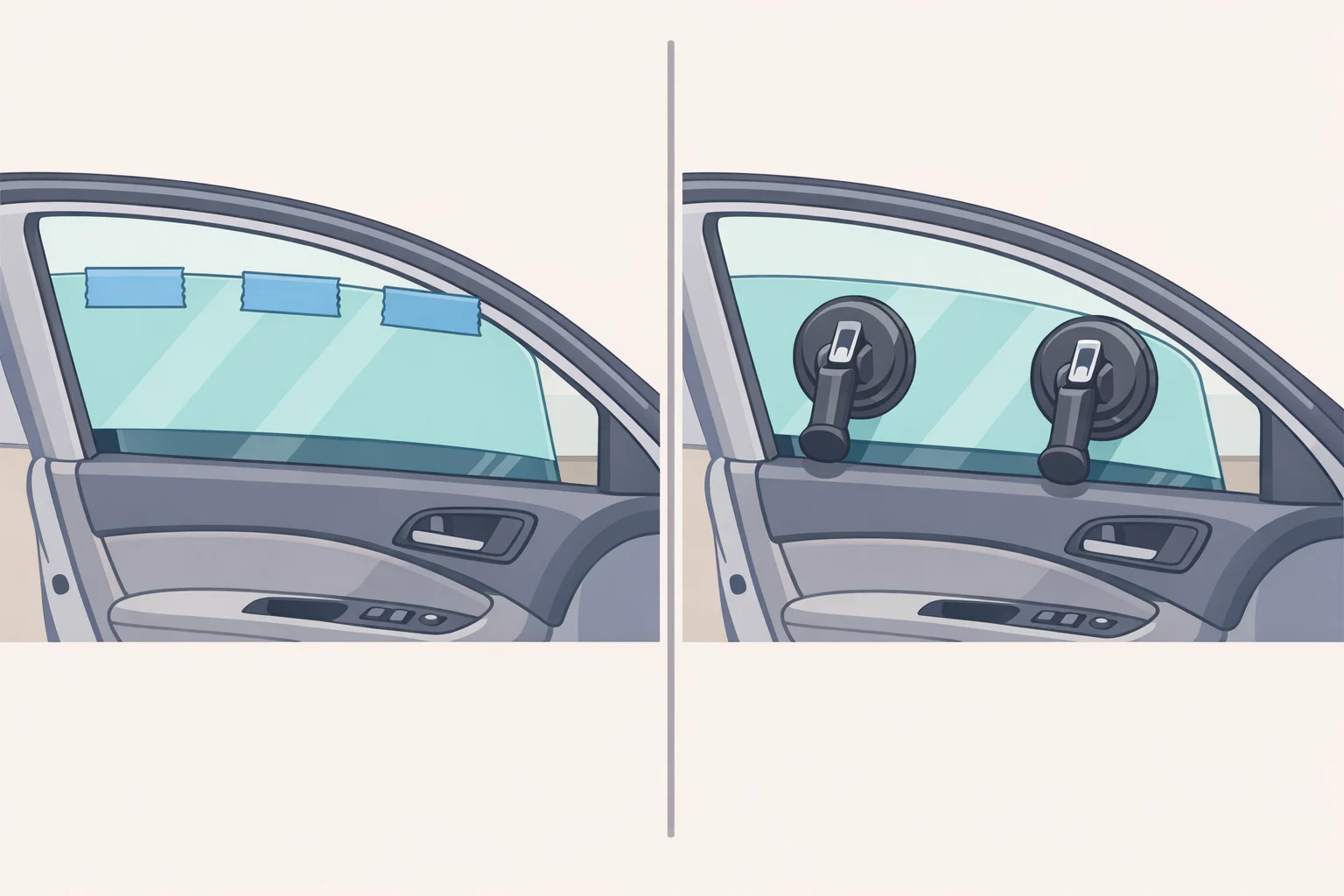
If the window is stuck open or has already dropped, stop operating the switch immediately. If the glass has dropped into the door, secure it before doing anything else: crisscross strong painter's tape over the top of the door frame, or use suction-cup handles to hold the glass in place so it can't fall while your hands are near the opening (T1A Auto, seven months ago). Cover any exposed gap with tape or plastic sheeting to keep weather out; leaving a window open for long stretches is also a security risk, since it gives easy access to the car's interior (TheCarBuzz, six months ago). Don't remove the door panel unless you already understand the vehicle's wiring and airbag layout; disconnecting the battery's negative terminal first prevents shorting a component or accidentally triggering a side airbag (T1A Auto, seven months ago). Get it to a shop soon rather than driving around exposed.
Keeping it from sticking again
The two simplest cases are a window frozen to the seal and one slowed by dry rubber and grimy tracks. Both respond to patience and cleaning rather than force.
Treat the cleaning and conditioning routine as seasonal maintenance rather than an emergency fix. Run through it before winter sets in and again after car washes, since trapped water in the tracks causes the same kind of sticking that dry rubber does (Tesla DIY Repair, five months ago). If a window is still tilting, dropping, or grinding after all that, stop reaching for the lubricant. That's the point where a mechanic needs to look at the regulator and motor instead (T1A Auto, seven months ago).