FCC Robot Vacuum Ban: What It Means for Roomba Owners
If you own a robot vacuum, you can keep using it. That's the least confusing fact about the FCC robot vacuum ban, though it's not the only one worth knowing, since the rule also raises real questions about security updates further down the road. What the FCC actually did is close the door on new foreign-made robotic devices getting the government certification they need to enter the U.S. market, unless the manufacturer secures a specific exemption.
The story took a stranger turn within a day of the filing landing: a regulatory action framed around national security also reaches into the ordinary vacuum parked in your hallway closet (IDC, yesterday). Despite the shorthand "FCC Roomba ban" circulating online, this isn't a rule aimed at one company. iRobot's machines fall under the same functional definition as everything else on the market, foreign or domestic.
On July 28, 2026, the FCC added "foreign-produced advanced robotic devices" to its Covered List, the roster of technology categories the agency has flagged as a national security risk (Baker McKenzie, 4 days ago). The FCC confirmed directly to PCWorld that the new rule covers robot vacuums and robotic lawn mowers, not just the humanoid and quadruped robots the language seems to target (PCWorld, earlier this month).
What follows is the actual mechanics: what gets restricted, which devices qualify as "covered," why officials say the restriction is necessary, and what happens the next time a new robot vacuum shows up in your shopping cart.
Are robot vacuums banned in the US?
Video of the Day
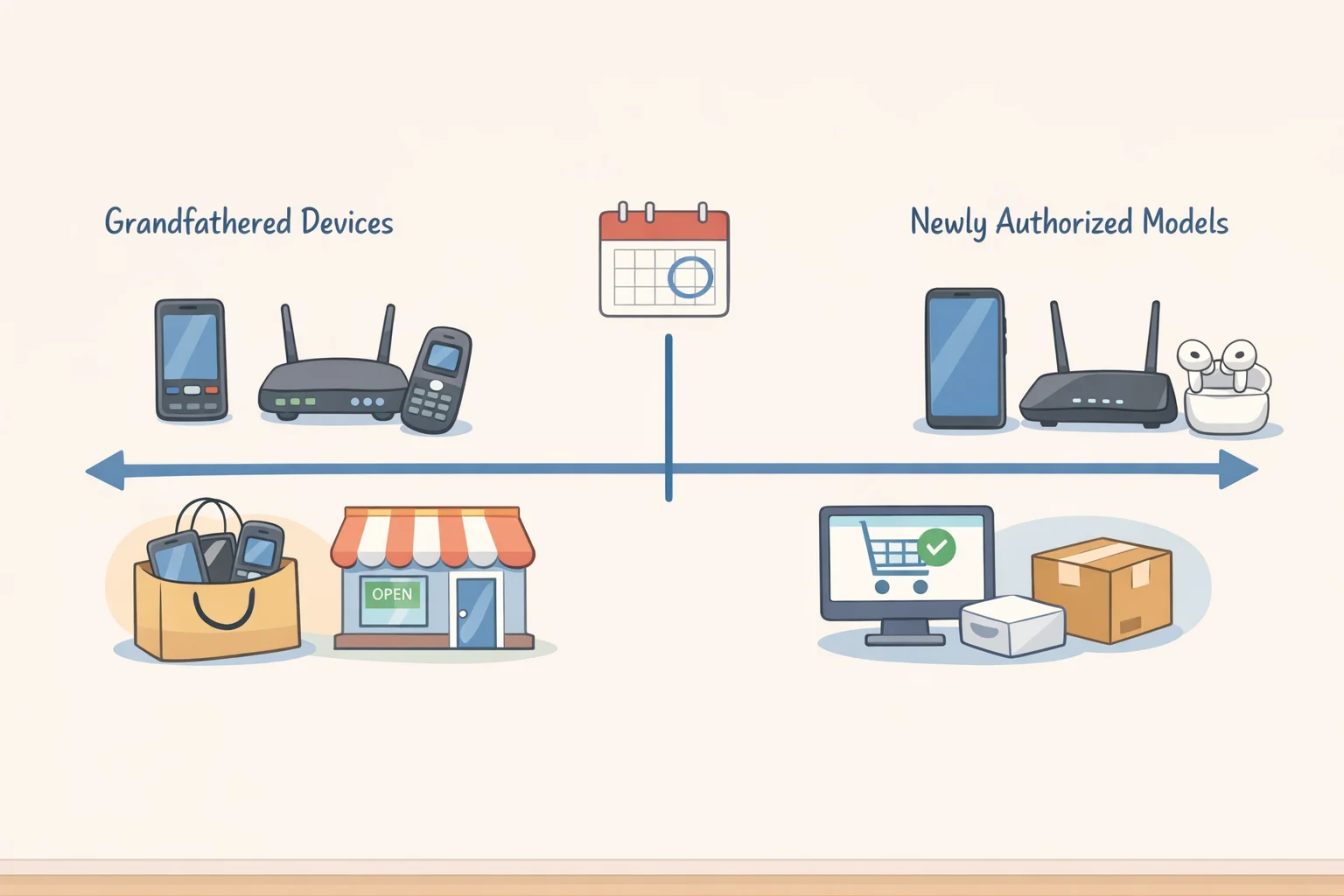
Not in any way that touches what's currently running on your floor. The restriction blocks new equipment authorizations, and the rule explicitly doesn't apply to any model the FCC authorized before July 28, 2026 (Baker McKenzie, 4 days ago).
The FCC told PCWorld in writing that the action doesn't affect a consumer's continued use of a device already purchased, and doesn't stop retailers from continuing to sell, import, or market models that cleared the agency's authorization process before the cutoff (PCWorld, earlier this month).
Three separate clocks are running here, and mixing them up is where most of the online panic comes from:
- A robot vacuum already in someone's home: fully grandfathered in, exempt from the rule entirely (PCWorld, earlier this month).
- A model the FCC authorized before July 28, 2026: still eligible for continued sale and import, so what's on store shelves right now isn't affected (Consumer Reports, late July).
- A new, foreign-produced model that hasn't yet received FCC authorization: this is the one actually blocked. Without authorization, it generally can't be lawfully imported, marketed, or sold in the U.S. unless the manufacturer secures Conditional Approval or the product otherwise qualifies as domestic (Baker McKenzie, 4 days ago).
Anyone curious about a specific model can check for themselves. Every certified device carries an FCC ID, usually printed on a label on the underside of the unit or its charging dock, and that ID can be looked up to confirm the device cleared authorization (Consumer Reports, late July).
Video of the Day
Which devices count under the FCC Covered List for robotic devices?
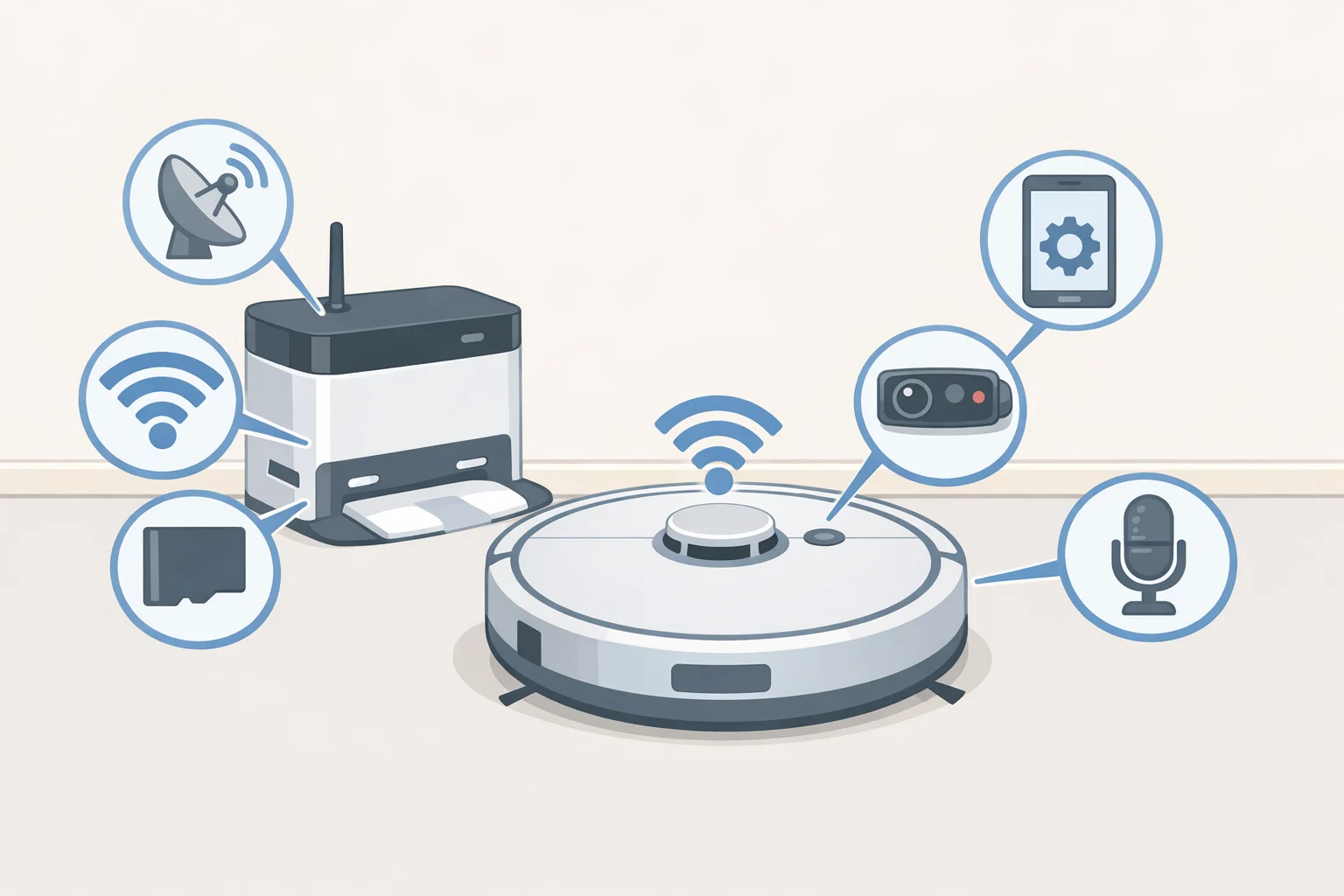
The FCC's language sounds like it was written with a humanoid robot in mind, but the actual definition runs on function, not appearance. A covered "advanced robotic device" has to move along the ground, operate at a distance based on commands or sensor data, and weigh more than 4.4 pounds, a figure that includes its charging or ground station where one exists (Baker McKenzie, 4 days ago).
It also needs an environmental sensor, network connectivity of at least 200 kilobits per second in either direction, and software that governs its navigation, movement, or data collection, according to the same rule text.
That checklist can describe many robot vacuums on the market today. The FCC confirmed as much directly to PCWorld: the rule covers robot vacuums, vacuum-mop combos, and robotic lawn mowers alongside more futuristic hardware (PCWorld, earlier this month).
Whether a device counts as "foreign-produced" has nothing to do with where a company is headquartered. A product only avoids that label if it clears the government's domestic end product test: manufactured in the U.S., with domestic component cost exceeding 65 percent of the total (Consumer Reports, late July). The test focuses on production and component costs rather than the company's headquarters, which is why a foreign-headquartered brand assembling in America could qualify, and why an American brand manufacturing overseas might not.
Why the government says the FCC robot vacuum ban is necessary
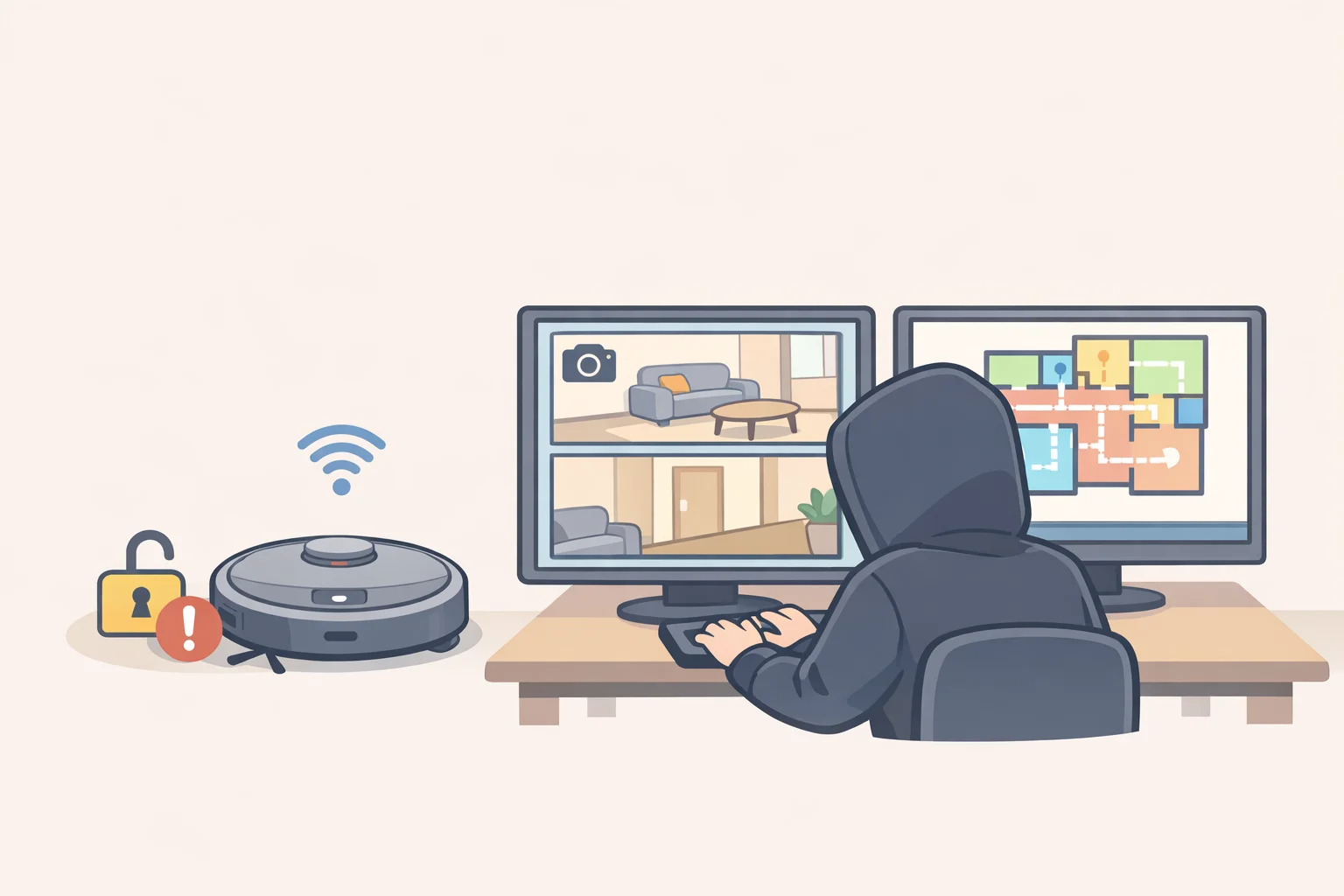
The rationale traces back to a pair of National Security Determinations that an interagency body convened by the White House delivered to the FCC, concluding that advanced robotic devices pose what the government calls an unacceptable risk to national security or personal safety (Baker McKenzie, 4 days ago).
Officials worry that connected robots, robot vacuums included, could gather sensitive information such as home layouts and camera footage, and that a poorly secured device could be exploited for remote access (PCWorld, earlier this month). Because so many robot vacuums now depend on an internet connection and cloud services just to function, the government says they could introduce cybersecurity risks a corded vacuum never posed (PCWorld, earlier this month).
There's a supply chain angle too. Officials have raised concerns about the U.S. becoming overly dependent on overseas manufacturers for the robots and connected devices of the future, arguing that a disruption to those supply chains could create problems down the road (PCWorld, earlier this month).
The concern makes more sense once you look at what a modern premium vacuum actually contains. Many now ship with cameras, LiDAR sensors, and cloud-connected AI that recognizes objects on the floor, features that put them closer to a small mobile robot than a traditional appliance (PCWorld, earlier this month).
Consumer Reports, which has found cyber vulnerabilities in vacuums it has tested, argues the FCC's paperwork doesn't match that risk. Its testing lead Stewart notes that the questionnaire manufacturers fill out to seek Conditional Approval never asks about encryption, authentication, or what happens to a user's data after an account is deleted or the device is sold (Consumer Reports, late July). In Stewart's view, an origin-based import restriction and an actual product security standard are two different tools, and this rule leans hard on the former while leaving the latter mostly untouched.
Can you still buy a robot vacuum in the US? What happens next
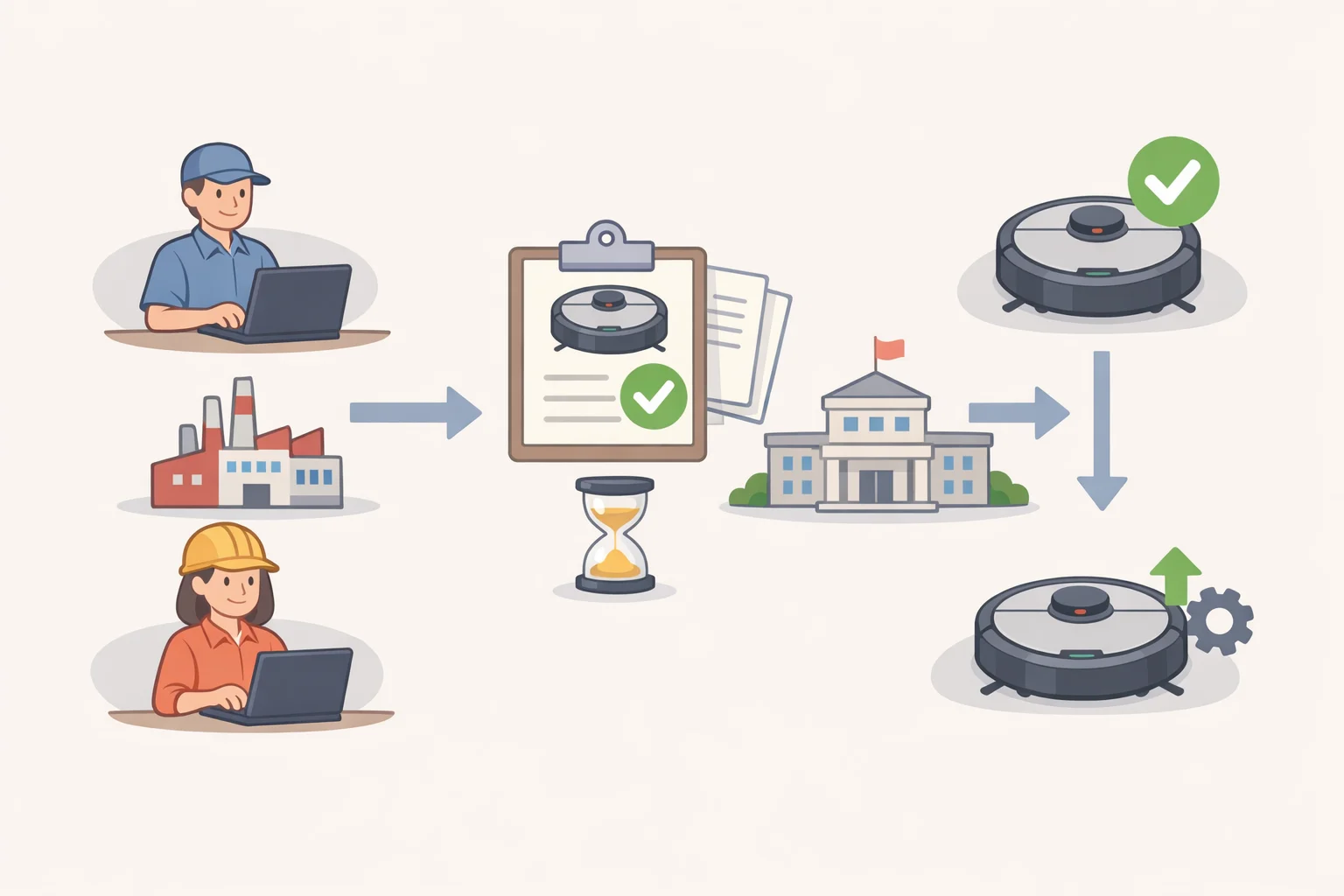
Manufacturers of new, not-yet-authorized models aren't necessarily locked out permanently. The rule includes a Conditional Approval pathway that can exempt a specific product, or an entire class of products, from the Covered List so it can still clear FCC authorization (Baker McKenzie, 4 days ago). For robotics specifically, that review sits with the Department of War rather than the FCC alone, and it remains unclear how many foreign manufacturers will actually get through it (Baker McKenzie, 4 days ago; PCWorld, earlier this month).
A companion FCC ruling lets already-authorized robots keep receiving software and firmware updates that mitigate consumer harm, and that permission is guaranteed at least through January 1, 2029 (Baker McKenzie, 4 days ago). Consumer Reports warns that once that window closes, owners of older foreign-made models could lose access to updates that patch security flaws, though nothing in the rule says support will definitely stop on that exact date (Consumer Reports, late July).
Manufacturers are responding in different ways. Eufy says its current U.S. lineup is unaffected and will keep receiving updates and support. Matic says it chose U.S. assembly for its robots already and plans to manufacture in America under the FCC's guidelines. iRobot says it's aware of the action and is working with the agency to understand its implementation and potential impact (Consumer Reports, late July).
Market researcher IDC has modeled a worst-case scenario for what a stalled pipeline of new foreign devices could mean for the industry, and the numbers aren't trivial. On IDC's published baseline, U.S. robotics revenue growth compounds around 13 percent annually through 2030; in the restriction scenario IDC modeled, that cools to 9 percent, a gap that adds up to more than $6 billion in foregone U.S. robotics revenue between 2026 and 2030, with 2030 alone accounting for over $2 billion of that modeled shortfall (IDC, yesterday).
In IDC's scenario, humanoid robotics, the category the restriction was ostensibly designed to address, absorbs the deepest cut of all: a shortfall reaching 58 percent below baseline by 2030, which IDC attributes to how heavily American builders still depend on Chinese-made core components (IDC, yesterday). China currently supplies an estimated 82 percent of global humanoid shipments, per the same analysis (IDC, yesterday).
Household cleaning robots fare better in the same model, since already-certified vacuums can keep shipping new units rather than simply drawing down existing inventory (IDC, yesterday). Worth remembering: this is one analyst firm's worst-case scenario, not a confirmed forecast.
The takeaway
None of this requires action from someone who already owns a robot vacuum. Continued use was never on the table, and any model the FCC authorized before July 28, 2026, remains legal to sell and import going forward (Baker McKenzie, 4 days ago).
Shoppers eyeing a new purchase have one real distinction to track: whether a model already carries FCC authorization or is a brand-new foreign-produced launch still waiting on approval. The functional definition is broad enough to sweep in ordinary vacuums, mops, and lawn mowers right alongside humanoids, and "foreign-produced" hinges on where a device is built and what its parts cost, not which country a company calls home (Baker McKenzie, 4 days ago).
IDC frames the rule as a certification chokepoint rather than an outright wall: it stops new foreign-made models from clearing authorization but leaves already-approved product lines running (IDC, yesterday). The open questions sit further out: whether Conditional Approval becomes a workable path for major brands, whether update support for older devices actually lapses once January 1, 2029 arrives, and whether IDC's slower-growth scenario holds up once it collides with real supply chains.
This robotics rule isn't a one-off. It follows the FCC's addition of foreign-made drones to the Covered List on December 22, 2025, and foreign-made consumer routers on March 23, 2026, part of a broader pattern of origin-based restrictions on connected devices (Baker McKenzie, 4 days ago). The next real test arrives when the first wave of manufacturers actually files for Conditional Approval and finds out how that exemption works in practice.