Disadvantages of Portable Air Conditioners: 5 Key Drawbacks
Buy a portable air conditioner and you're buying into one of the stranger quirks in home appliances: a cooling machine that exhausts some of the air it has just cooled, forcing warm replacement air into the room it's supposed to be cooling. That's the core issue behind most disadvantages of portable air conditioners, and it explains why Consumer Reports has tested more than two dozen models without a single one earning a recommendation, even though portables account for almost 20% of the room air conditioner market (Consumer Reports).
New Scientist calls it a serious design flaw, and notes there's no label required to tell buyers it exists (New Scientist). Less dramatically put, it's a real limitation baked into the machine, not fine print a shopper missed. In Consumer Reports' lab tests, portable units needed at least 20 minutes to drop a test room from 90°F to 85°F, while the best window units cooled a room by 10°F in about 15 minutes (Consumer Reports). CR's advice is blunt: treat a portable air conditioner as a last resort, not a convenient stand-in for a window unit (Consumer Reports).
The design flaw explains why these units cool slowly and cost more to run. It doesn't explain everything else wrong with them. The weight, the floor space, and some of the noise are separate problems layered on top, and the sections below sort out which is which before getting into how to buy a portable AC wisely if a window unit truly isn't an option.
1. The single-hose design fights its own cooling
Video of the Day
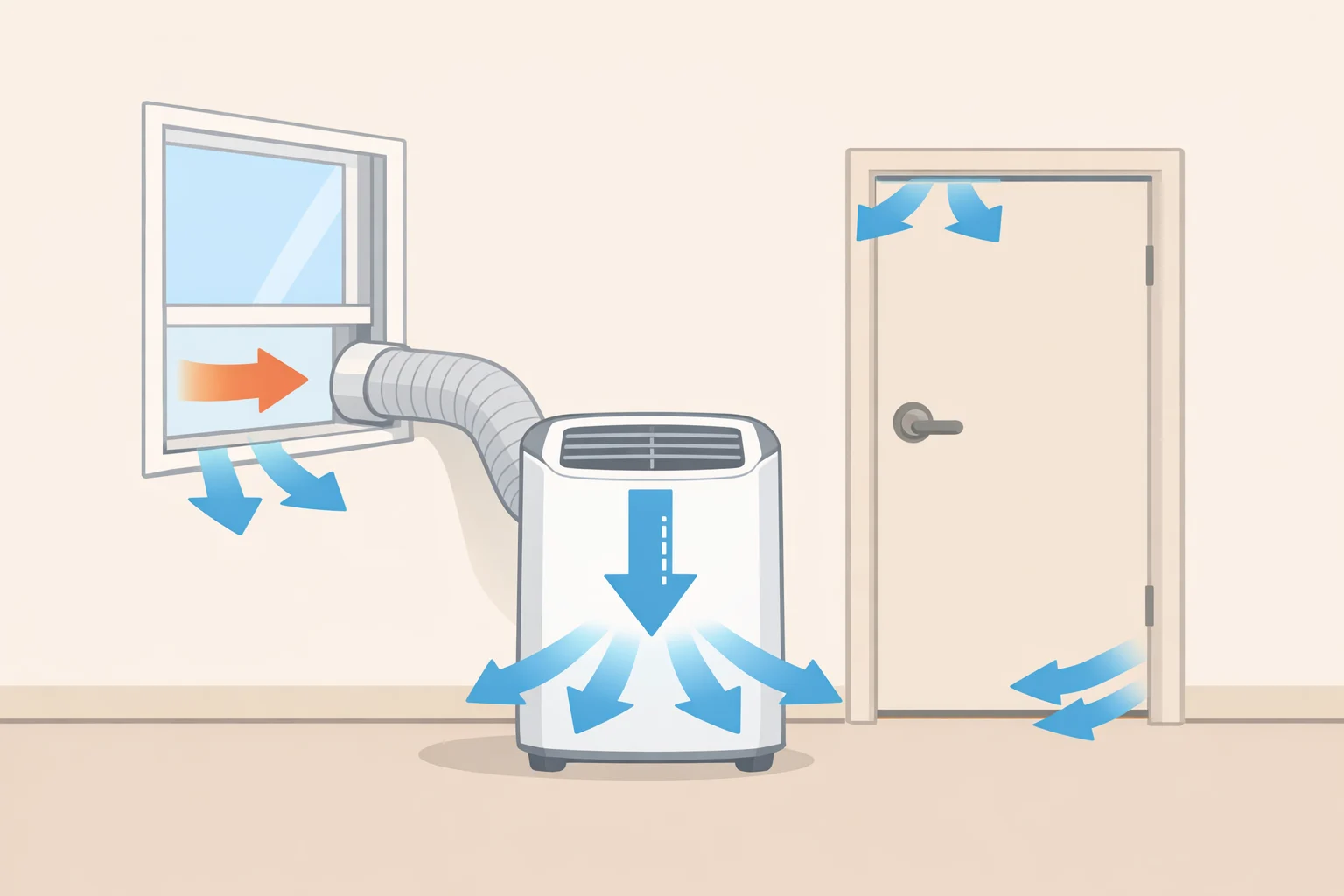
Most portable air conditioners sold today use a single-hose design, which HVAC Base estimates accounts for roughly 85% of the market (HVAC Base). A single-hose unit pulls air from inside the room to cool its own internal components, then pushes that heated air outside through the hose. Consumer Reports and New Scientist both describe the same knock-on effect: exhausting room air creates negative pressure, and the room pulls replacement air through gaps, from nearby rooms, or through an open window elsewhere in the home (Consumer Reports; New Scientist).
New Scientist compares the effect to adding mud back into laundry detergent: the unit spends part of every cycle undoing its own work (New Scientist). HVAC Base, an industry site rather than a lab, estimates the resulting capacity loss at 10% to 30%, worse in windy conditions or poorly sealed rooms, since wind pressure on the outside of a building forces even more unconditioned air through the gaps (HVAC Base). Treat that range as an estimate rather than a guaranteed figure for any specific unit.
That single mechanical choice explains most of the cooling and energy complaints covered next. It doesn't explain the weight, floor-space demands, or all of the noise covered later in this piece; those are separate issues that show up regardless of which hose design a buyer picks.
Video of the Day
2. Higher energy use and real operating costs
Because a single-hose unit keeps re-cooling the same warm air it just let back in, its compressor runs longer to hold a room at temperature, and that drives up electricity use (New Scientist). That's a big part of why portable air conditioners are inefficient compared to window units doing the same job. Consumer Reports' buying guide confirms the pattern in plainer terms: portable models generally use more energy than similarly sized window units, the opposite of what "portable and simple" implies (Consumer Reports).
HVAC Base ran the numbers on that trade-off, and the result is worth treating as a model calculation rather than a universal outcome, since the payback depends on climate, electricity rates, and how often the unit actually runs. In one worked example, a dual-hose unit carried a roughly $130 premium over a comparable single-hose model. The same source puts annual savings from switching to dual-hose at $40 to $80 in hot climates, though a narrower model comparison in the same report landed closer to $40 to $65, which pushes the payback window to somewhere between two and just over three years depending on which figure applies (HVAC Base). HVAC Base also offers a simpler rule of thumb: for occasional use under 30 days a year, the cheaper single-hose model is still the better financial call (HVAC Base).
Portable AC energy efficiency matters most to someone running the unit all summer long. For a few scattered weeks of use, the higher upfront cost of a dual-hose unit may never be recovered in savings, at least by HVAC Base's own estimate.
3. Capacity and efficiency labels are easy to misread
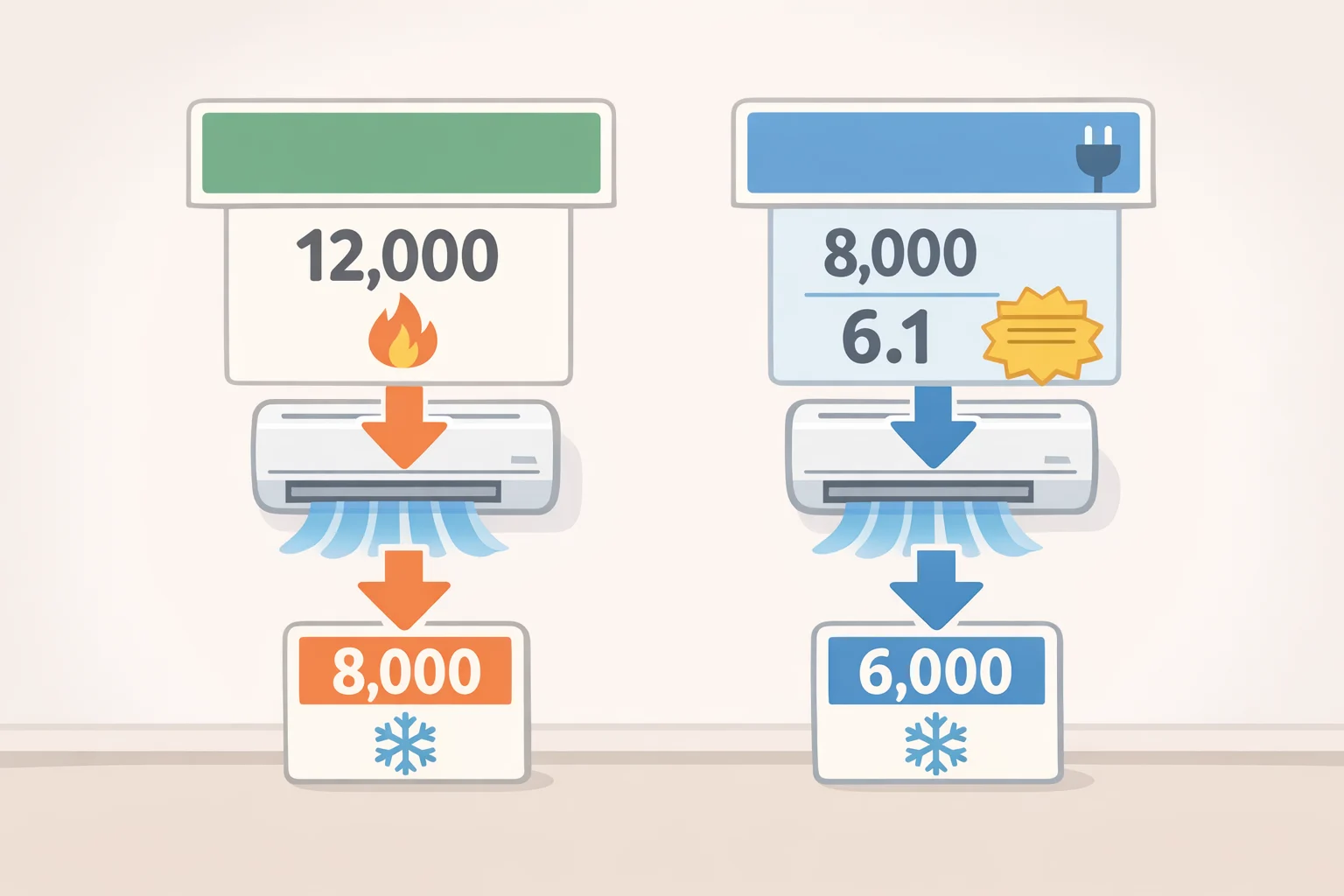
Shoppers comparing portable air conditioners run into three different numbers, and they don't mean the same thing. The older BTU rating, based on a testing method from the American Society of Heating, Refrigerating and Air-Conditioning Engineers, describes raw cooling capacity under lab conditions. The newer Seasonally Adjusted Cooling Capacity (SACC) and Combined Energy Efficiency Ratio (CEER) are meant to account for the hot air pulled back into the room and the heat that leaks off the exhaust hose itself, factors the older rating doesn't account for (New Scientist).
Consumer Reports offers a concrete before-and-after: a portable model once marketed at 14,000 BTU under the old ASHRAE standard can carry a DOE-rated SACC closer to 10,000 BTU under current methodology, the same machine tested a different way (Consumer Reports). New Scientist notes SACC figures typically run a third or more below the older, unadjusted number still printed in marketing copy, so two units with near-identical headline BTU claims may perform very differently in a real room (New Scientist). HVAC Base points to the DOE's test procedure, known as 10 CFR 430 Appendix CC, as the mechanism meant to account for this infiltration penalty (HVAC Base).
None of this is a minor labeling technicality. A buyer who shops by the bigger, older-style BTU number alone can easily end up with a unit that has less tested, seasonally adjusted capacity than the headline number suggests.
4. Noise and floor-space demands
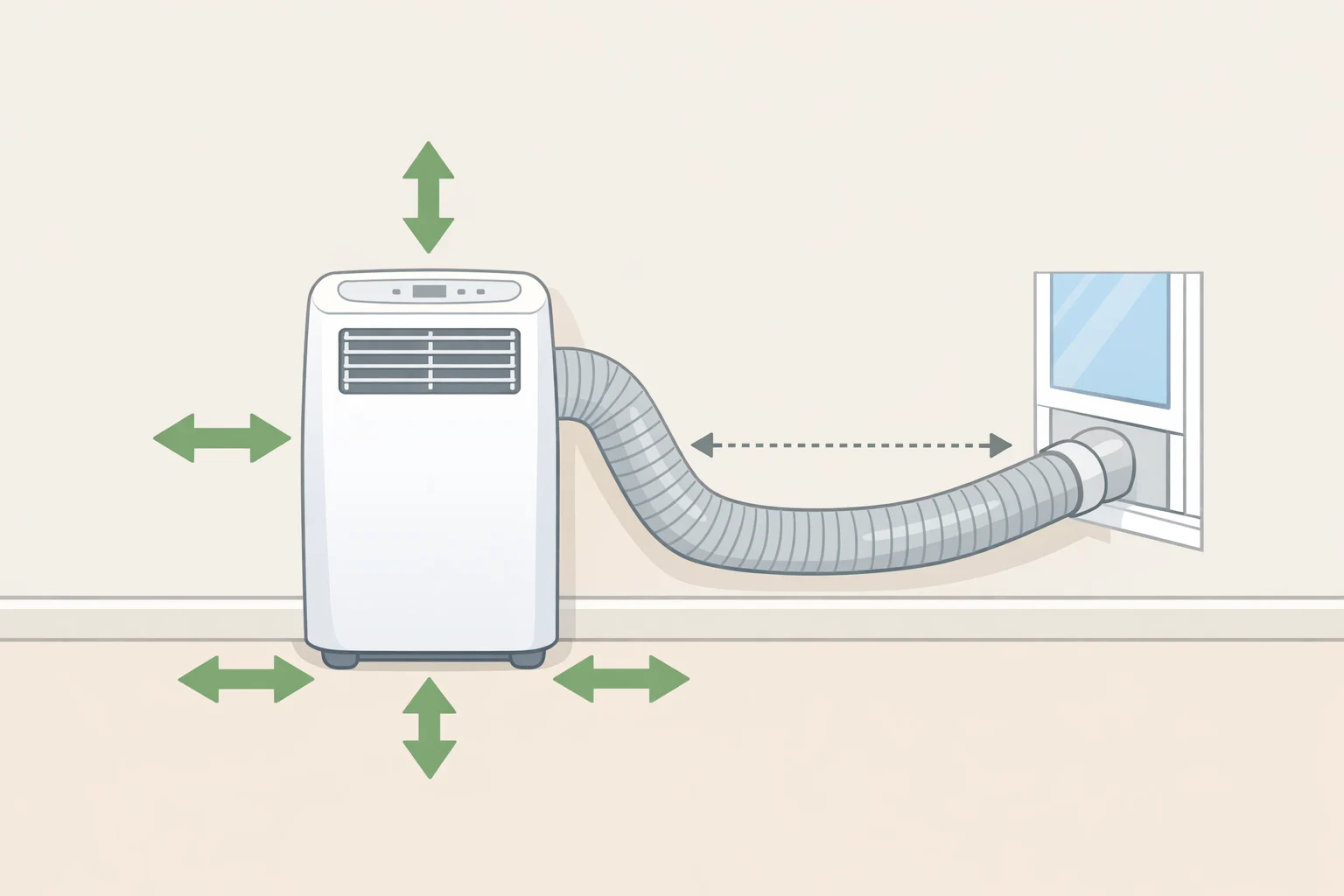
A portable air conditioner keeps its mechanical parts inside the room instead of hanging them outside a window, and that arrangement makes it noisier than a window-mounted unit doing the same job (Consumer Reports). Floor space matters too: the exhaust hose runs 5 to 7 feet, and the unit needs roughly 2 feet of clearance from walls or furniture to work as designed, a real constraint in a small bedroom or studio apartment (Consumer Reports).
Consumer Reports notes that retailers see many portable units returned each season by dissatisfied customers, though the company doesn't specify which complaint drives most of those returns (Consumer Reports). The source doesn't break returns down by cause, so the figure can't establish whether noise, space, weak cooling, or something else drove them.
5. Limited real-world mobility
Most units weigh 50 to 80 pounds or more, and rolling that much weight over carpet, thresholds, or stairs limits the practical meaning of "portable" (Consumer Reports). Consumer Reports puts the practical outcome plainly: once the hose is connected to a window kit, many owners won't want to move the unit again (Consumer Reports).
"Portable" ends up describing how the unit ships and how it's set up on day one, not how it's actually used for the rest of the season.
Dual-hose vs. single-hose portable air conditioner: how to choose
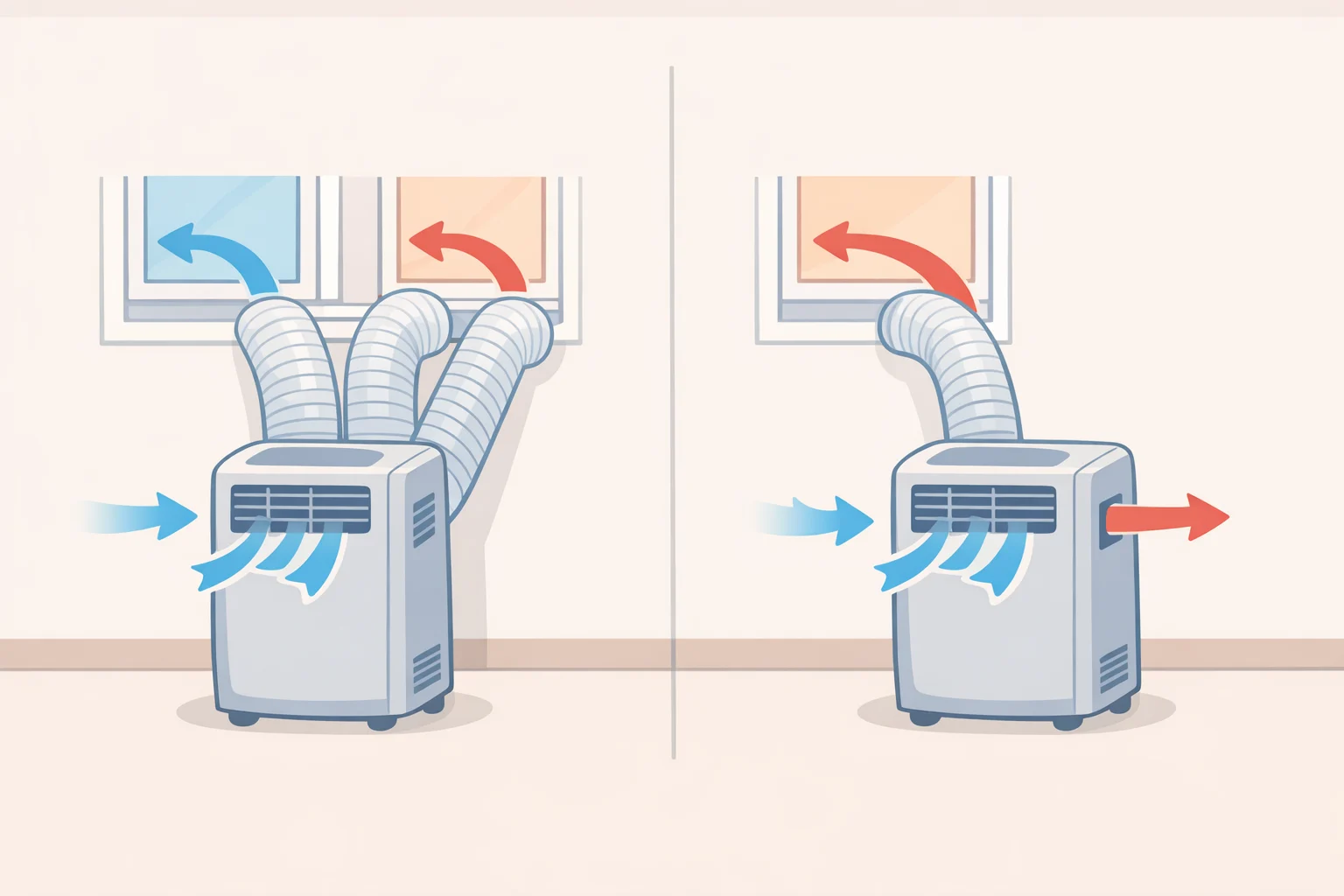
Dual-hose isn't a sixth downside so much as a fix for the specific problem in downside one. Instead of pulling room air to cool its condenser, a dual-hose unit draws outside air through its own dedicated intake hose, which sidesteps the negative pressure behind the weaker cooling and higher energy use described above (Consumer Reports; HVAC Base). It doesn't touch the weight, price, or footprint problems; running two hoses instead of one generally means more setup, not less. New Scientist adds a further caveat: dual-hose units are still less efficient than split-system air conditioners, the kind with a separate outdoor compressor unit (New Scientist).
The upgrade brings its own friction. "Consumers find dealing with the two ducts difficult and often don't have the space to vent two ducts out of the room," says Chris Michael of the cooling company Meaco, which is part of why dual-hose units are hard to find in the UK (New Scientist).
Buyers sometimes assume a single-hose unit can be upgraded later. Mostly, it can't: the internal airflow design differs between the two types, not just the hose count, so a retrofit isn't a simple parts swap (HVAC Base). GE sells a conversion kit for some of its single-hose models and advertises that it can increase cooling power threefold for those specific units (New Scientist). That's a manufacturer's claim tied to compatible GE models, not a universal fix, so compatibility needs checking before buying, not assuming.
Wildfire smoke is one scenario where the hose choice matters beyond comfort. Negative pressure in a single-hose unit can, in principle, pull outdoor air, and any smoke in it, into a closed-up room, which is why HVAC Base recommends dual-hose setups in smoke-prone areas (HVAC Base). A dual-hose intake fitted with a MERV-13 or higher filter can reduce particulates coming through that hose, according to the same source, though filter compatibility and added airflow resistance vary by unit, and not every dual-hose model can safely take a thicker filter without straining the fan (HVAC Base). None of this turns the air conditioner into an air purifier.
Weighing all of this before buying comes down to a short checklist:
- Can a window unit fit here at all? If so, it's often cheaper and more effective than portable models in general (Consumer Reports).
- Single-hose or dual-hose? Dual-hose avoids the negative-pressure problem at the cost of price, weight, and a more involved setup.
- What do the SACC and CEER numbers say, not just the headline BTU figure on the box?
- Is there at least 2 feet between the unit and any walls or furniture that could block its airflow (Consumer Reports)?
- Is the window kit sealed well? HVAC Base's own estimate for dual-hose owners: a $10 roll of foam tape over the gaps the stock bracket misses may improve performance by 5% to 10% (HVAC Base).
A window unit remains the cheaper, more effective option whenever the window and lease allow it. Where a portable is unavoidable, dual-hose earns its extra cost and setup for anyone running the AC most of the season in a hot climate, while a single-hose model stays the reasonable, cheaper pick for occasional or short-term cooling, so long as the buyer checks the SACC and CEER numbers rather than the bigger BTU figure printed on the box. New Scientist's own commentary goes further still, arguing that labeling in the UK and EU should reflect real heatwave performance and even floating a ban on single-hose sales outright, a reform argument rather than a rule already on the books (New Scientist).