How many lumens for an EDC flashlight? A guide by carry style
Ask how many lumens for an EDC flashlight you need, and the honest answer is a range, not a single number. For most pocket EDC users, 300 to 1,000 lumens is a sensible starting point. Keychain lights get by fine on 100 to 300 lumens, and higher output makes more sense for outdoor, trade, or vehicle use than for anything riding in a pocket. These bands come from buying guides, not a universal engineering standard, but they're a solid place to start before layering in specifics.
The spread gets wider once you look at what's actually for sale. Drop Beacon's own product lineup runs from a 200 to 300-lumen keychain light at one end to a 5,000 to 6,500-lumen model it calls, without much apparent irony, "showmanship" gear at the other (Drop Beacon, three months ago).
Lumen ratings only measure total light output. They say nothing about how concentrated the beam is, how long the light holds that output, or whether it will survive a drop onto pavement. Closing that gap means matching a starting lumen range to how you carry the light, then adjusting for the handful of things a lumen number can't capture on its own.
A quick decision framework
Video of the Day
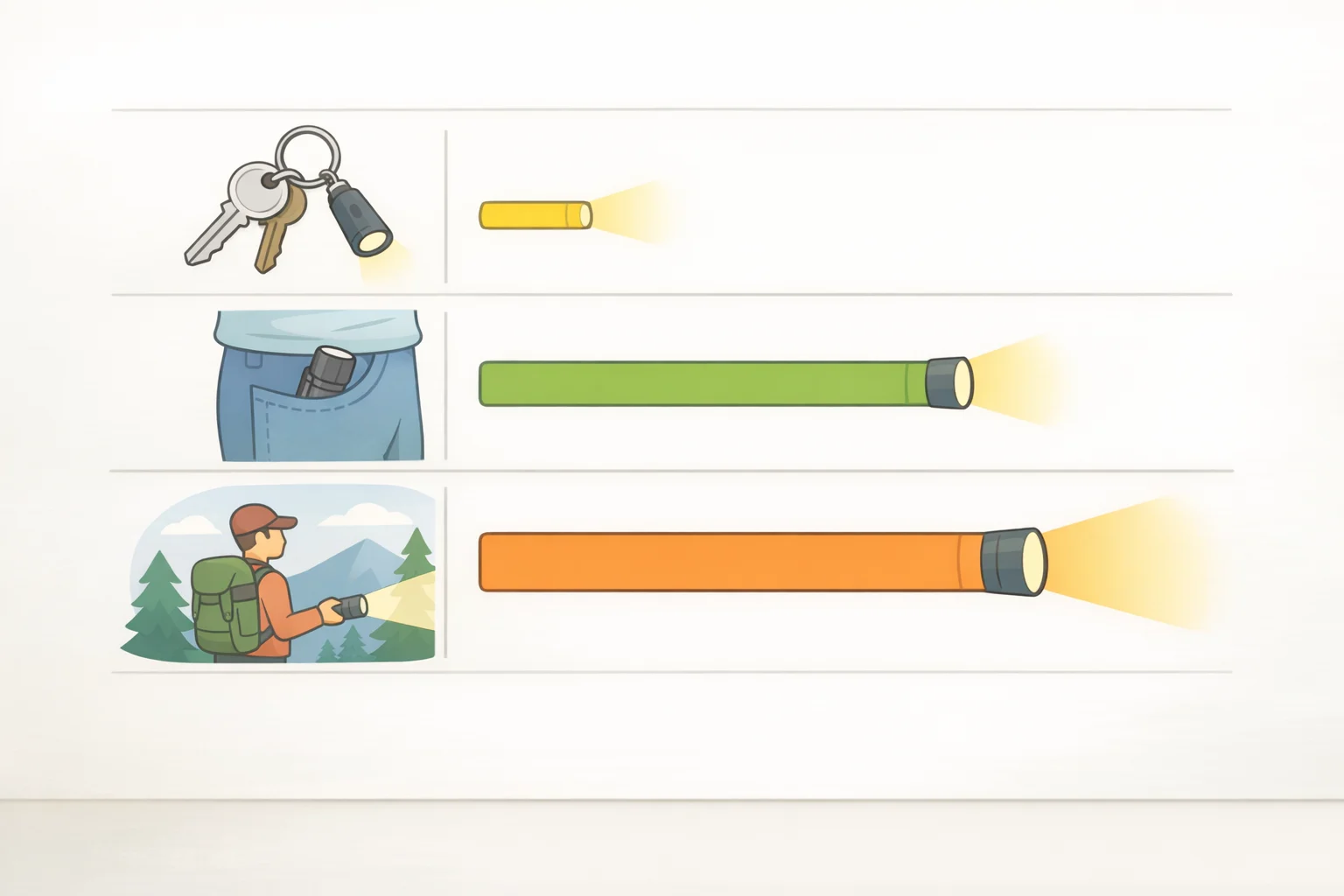
Before getting into carry styles, here's the shortest version of the answer:
- Keychain or wallet: 100 to 300 lumens, for finding things and quick close-range tasks.
- General pocket EDC: 300 to 1,000 lumens, with 500 to 1,000 lumens as the higher-output end many carriers settle on.
- Outdoor, trade, or vehicle use: choose based on sustained output and beam pattern rather than a single lumen target; there's no universal cutoff once you're outside routine daily tasks.
Olight's own use-case chart backs the wide version of this range, listing everyday carry generally at 100 to 1,000 lumens, with 300 to 1,000 lumens as its narrower recommended sweet spot inside that band (Olight, three months ago). The rest of this guide explains why the bands overlap, and what else, besides lumens, decides whether a flashlight is any good.
Video of the Day
The best lumen range for an everyday carry flashlight, by carry type
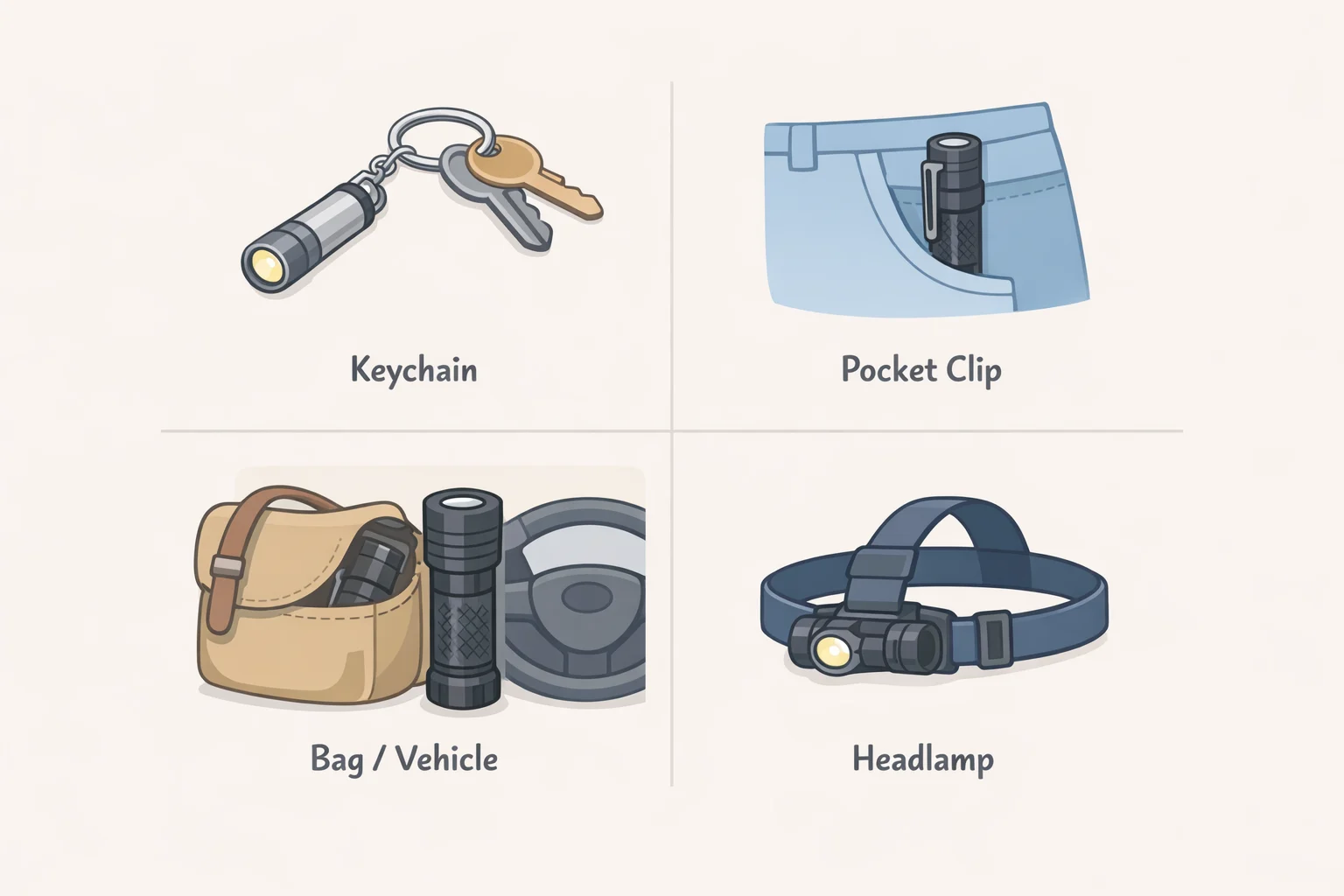
"EDC" covers a keychain fob and a contractor's belt light with equal legitimacy, which is part of why the recommended ranges look inconsistent at first glance. What follows are overlapping starting points pulled from retailer and manufacturer guidance, meant to be nudged up or down based on the tasks you actually run into.
| Carry type | Starting lumen range | Typical tasks | What to prioritize |
|---|---|---|---|
| Keychain or wallet (sub-3-inch) | 100 to 300 lumens | Finding things in a bag, quick glances in the dark | Size and always-on-you portability |
| Pocket or clip EDC (3 to 4-inch) | 300 to 1,000 lumens | Parking lots, under-desk work, walking to the car at night | Sustained output, rechargeable battery |
| Bag or vehicle carry (4 to 6-inch) | Often 1,000-plus, task-dependent | Extended outdoor use, trade or contractor work | Sustained-output capacity, durable build |
| Headlamp or hands-free | Varies, often paired with a handheld | Hiking, tasks that need both hands | Hands-free fit, backup handheld light |
Urban EDC puts the general keychain and everyday-task range at 100 to 300 lumens (Urban EDC, earlier this year). Drop Beacon narrows in on specific keychain products, like the Olight i3T EOS or Streamlight MicroStream USB, that land at 200 to 300 lumens in a sub-3-inch body, and separately notes that anything under 200 lumens is really built for digging through a bag rather than lighting a task (Drop Beacon). Read 200 to 300 lumens as a practical product example inside the wider 100 to 300 band, not a stricter minimum.
Pocket and clip lights are where the guidance converges most cleanly. Olight calls 300 to 1,000 lumens the sweet spot for EDC, prioritizing a balanced beam and dependable runtime over the peak number. Drop Beacon lands on the same band and adds detail underneath it: 200 to 500 lumens covers roughly 90 percent of what it calls "daily friction," things like parking lots and rummaging through a bag, while many carriers settle around 500 to 1,000 lumens as the practical sweet spot. For someone walking to a car alone at night, Drop Beacon's example pairs 1,000 to 1,300-lumen pocket lights with USB-C charging.
Bag or vehicle carry is a different animal, and even that tier splits depending on the task. Drop Beacon recommends 4 to 6-inch lights for this format specifically when sustained output matters, pointing to contractor and trade-worker examples like the Fenix PD35 V3.0 or Olight Marauder Mini at 1,000 to 1,500 lumens with swappable batteries. Urban EDC, meanwhile, puts general outdoor and emergency use lower, at 300 to 600 lumens, and adds that output beyond that range is rarely necessary for daily carry without a specific professional need (Urban EDC). The gap between those numbers isn't a contradiction so much as a reflection of how demanding the task is: hiking and contract trade work simply aren't the same job.
Headlamps solve a different problem entirely: keeping both hands free. Drop Beacon's hiker example pairs a Nitecore HA11 headlamp with a separate Fenix PD25R handheld rather than expecting one device to do both jobs. Across all four rows, the overlap is the point. Matching the tier to how you actually carry the light gets you further than hunting for one number that works everywhere.
Peak lumens vs. sustained output
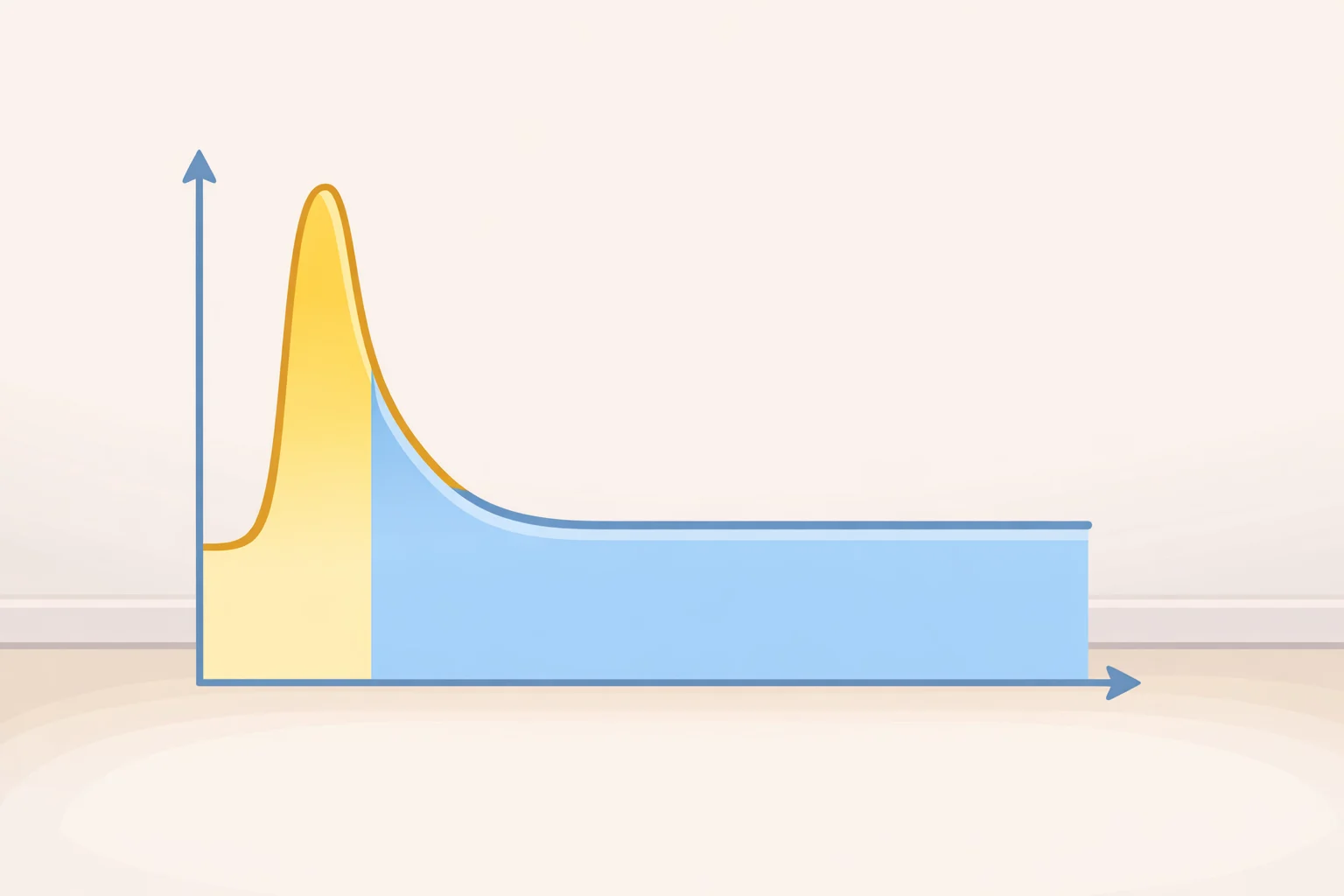
The number on the box describes peak output, and peak output may only last briefly. Drop Beacon says some lights begin thermal throttling within about 90 seconds at peak output, a characterization from the retailer's own testing rather than an independently verified benchmark. A turbo-mode rating works a bit like a car's top speed: an accurate figure, rarely used on the actual commute, and not the one that tells you whether the car suits your driving.
When a manufacturer's runtime chart lists both a peak figure and a regulated, stepped-down figure, that second number describes what the light will actually feel like once it settles, not during the first burst. Perception doesn't track the spec sheet either. Urban EDC notes that brightness doesn't scale linearly, and a 500-lumen light won't look dramatically brighter than a 300-lumen one standing next to it (Urban EDC). That gap between what the box promises and what the eye actually notices is part of why Drop Beacon calls anything above 3,000 lumens mostly showmanship for buyers without tactical or professional needs.
Beam shape, tint, and battery: what lumens alone don't tell you
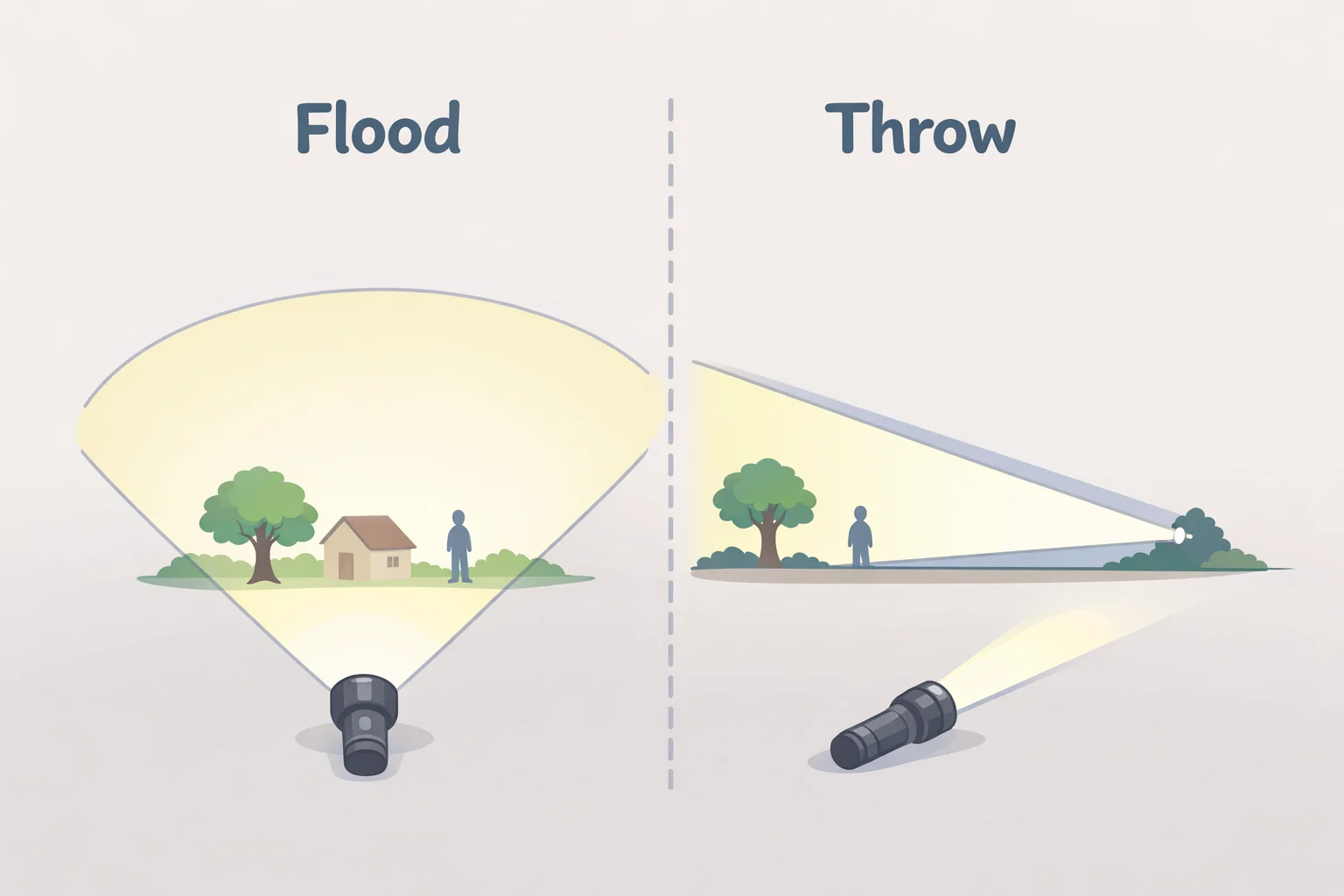
Total output is only part of the picture. Weapon-light guidance treats a separate measurement, candela, as the number that describes beam concentration, how tightly focused a light is and how far it throws, since identifying a target at distance calls for a different candela range than close-quarters lighting (Gold Trigger, earlier this year). That distinction doesn't map onto ordinary EDC shopping directly, but the underlying idea does: two lights rated at the same lumens can behave very differently depending on how the beam is shaped, one flooding a wide area, the other punching a narrower, farther-reaching beam at identical total output. Urban EDC's advice to weigh beam quality, color rendering (a measure of how true colors look under the light, known as CRI), and tint alongside raw lumens follows the same logic.
Battery type also affects whether a light holds useful output, not just how convenient it is to recharge. Drop Beacon describes USB-C rechargeable models as the modern default for EDC, since they charge from a cable most people already own. The trade-off: a depleted light is unusable until you find an outlet. Lights built around swappable cells, sizes like 18650, 21700, or 16340, trade some of that convenience for the flexibility of carrying a spare. Drop Beacon's guidance flags cold-weather reliability and long-term storage, such as an emergency kit that might sit untouched for years, as the two main reasons to consider disposable batteries instead.
Reliability beats mode count. Drop Beacon makes the point plainly: three dependable settings usually beat seven you have to cycle through in the dark to find the one you actually want. Olight's research points the same direction from the buyer's side, noting that most users gravitate toward compact, rechargeable lights with a practical pocket clip inside the 300 to 1,000-lumen band, rather than chasing higher tiers for their own sake.
Buying without chasing the biggest number
These ranges are buying-guide recommendations, not a physics requirement, and they're deliberately loose for that reason. If you're unsure where to start, a sensible default is a compact 300 to 1,000-lumen light with a low mode, a stable medium mode, a useful clip, and a runtime chart that shows how quickly turbo steps down to something sustainable.
Drop Beacon frames the wider trend bluntly: marketing has trained buyers to want 6,000-plus lumens, while the practical reality is that runtime at that output is too short to matter for daily use. Sustained output, beam shape, tint, and battery type say more about how a light behaves in a pocket than the number printed on the packaging. Check the runtime chart before the lumen count, and the rest of the decision gets a lot simpler.