First American 150 MPH Motorcycle: What Buell 1125R Means
Ask most people which American factory built the first motorcycle capable of 150 mph, and they'll guess Harley-Davidson or Indian. Both guesses are wrong. The credited machine is the 2007 Buell 1125R: SlashGear credits the production 1125R with a claimed 151-mph top speed, making it, by the available record, the first American 150 mph motorcycle sold as a production model rather than built as a one-off speed machine.
There's a complication baked into that claim. Buell never wore a Harley-Davidson badge, but by 2007 it operated as a Harley-Davidson subsidiary, according to SlashGear. "Not Harley-branded" and "not Harley-owned" are two different statements, and the gap between them runs through the rest of this piece.
Even the tighter phrasing needs a caveat. The defensible claim isn't "first American motorcycle to hit 150 mph." Glenn Curtiss, a New York native, rode a self-built machine to 136.26 mph at Ormond Beach, Florida, in 1907 (Rider Magazine), decades before Buell existed, though still short of 150 mph. What's defensible is narrower: the 1125R appears to be the first American-brand production motorcycle reported to exceed 150 mph. That distinction, production status crossed with brand origin, is what the rest of this piece works through.
Was the Buell 1125R the first American factory motorcycle to reach 150 mph?
Video of the Day
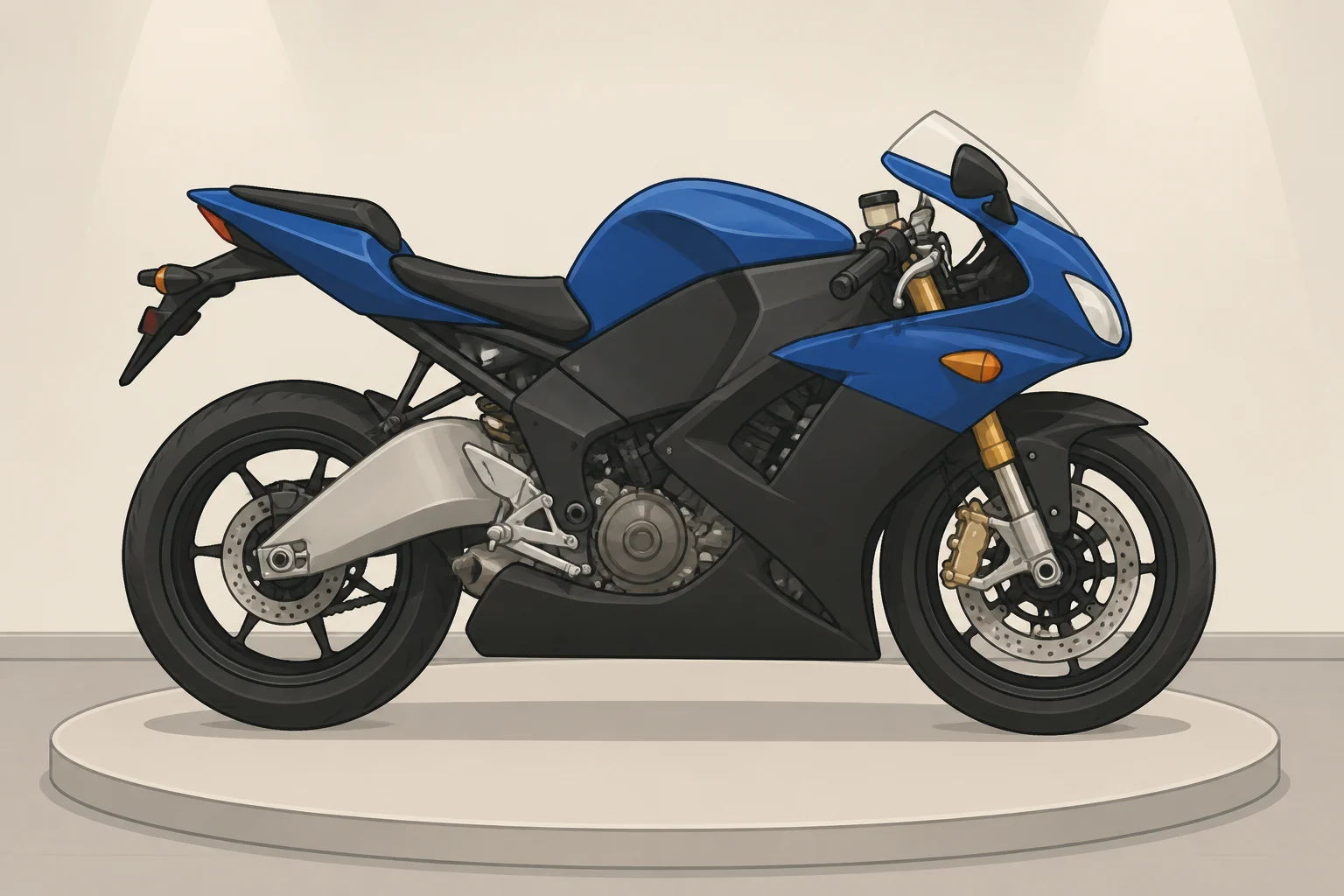
The 1125R launched in 2007 with a 1,125cc V-twin. SlashGear credits it with a claimed 151-mph top speed, the same Buell 1125R 151 mph figure now repeated across spec sheets and enthusiast forums. That number comes from a single source rather than an independently verified period road test, worth remembering before treating it as settled fact.
The tightest challenge to "first production motorcycle over 150 mph" doesn't come from inside the US. SlashGear identifies the 1948 Vincent Black Lightning as the first production motorcycle to reach 150 mph. Only 31 were built, and by SlashGear's account, the bike was designed primarily to break speed records rather than serve as a standard retail model. It's also a British machine, so it doesn't compete for the American title. It's simply a reminder that "first production motorcycle over 150 mph" and "first American production motorcycle over 150 mph" are two separate claims, easy to conflate but not the same thing.
On Indian and Harley: Indian has sold motorcycles since 1902, but available reporting doesn't credit either company with an earlier retail model confirmed above 150 mph (SlashGear). That rests on one contemporary account rather than an exhaustive survey of every period spec sheet, so treat it as the best current answer rather than a closed case.
"American factory motorcycle," as used here, means a production model sold under an American brand, not a one-off record machine like Curtiss's and not, as with the Vincent, a foreign brand's limited run. Buell fits that narrower description: an American-founded company selling the 1125R as a production model, according to SlashGear's reporting.
Video of the Day
The long gap between an American speed record and an American speed retail motorcycle
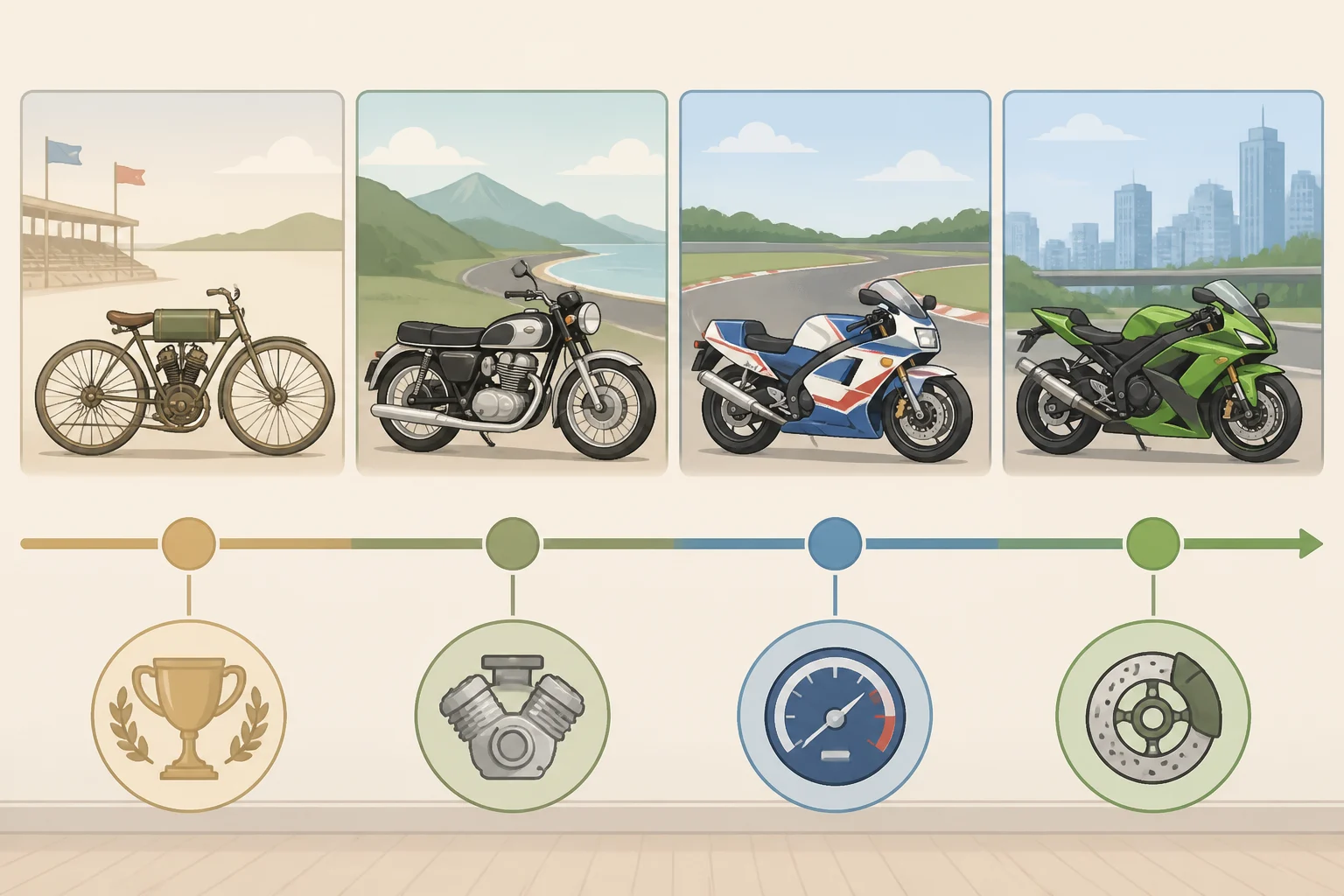
Glenn Curtiss, riding a machine of his own design and powered by a V-8 originally built for a dirigible, reached 136.26 mph at Ormond Beach, Florida, in 1907, a record that held for 23 years (Rider Magazine). That was a raw engineering exercise. Nobody could walk into a shop and order Curtiss's motorcycle, and even then, he fell short of 150 mph.
The real gap worth explaining runs from Curtiss's 1907 record to the 1984 arrival of Japanese sport bikes, a span of 77 years, and then a further 23 years to the 1125R's 2007 launch (SlashGear; Rider Magazine).
Some of that long middle stretch comes down to strategy. SlashGear's account attributes part of the delay to American manufacturers building their lineups around cruisers, engineered for torque and rider comfort rather than outright speed. Suzuki's GSX1100ES and Kawasaki's Ninja both launched in 1984, bikes SlashGear treats as the start of a dedicated American sport-bike market. The source confirms the launch and that category shift, not a documented 150 mph figure for either bike, so the claim here is about what buyers could suddenly get, not a specific speed benchmark those two machines hit.
Curtiss chased records. American manufacturers, on this account, built for a different kind of rider entirely. It took a small sport-bike specialist, operating partly inside Harley's own balance sheet, to close the distance between the two.
Buell 1125R top speed: the engineering behind 151 mph
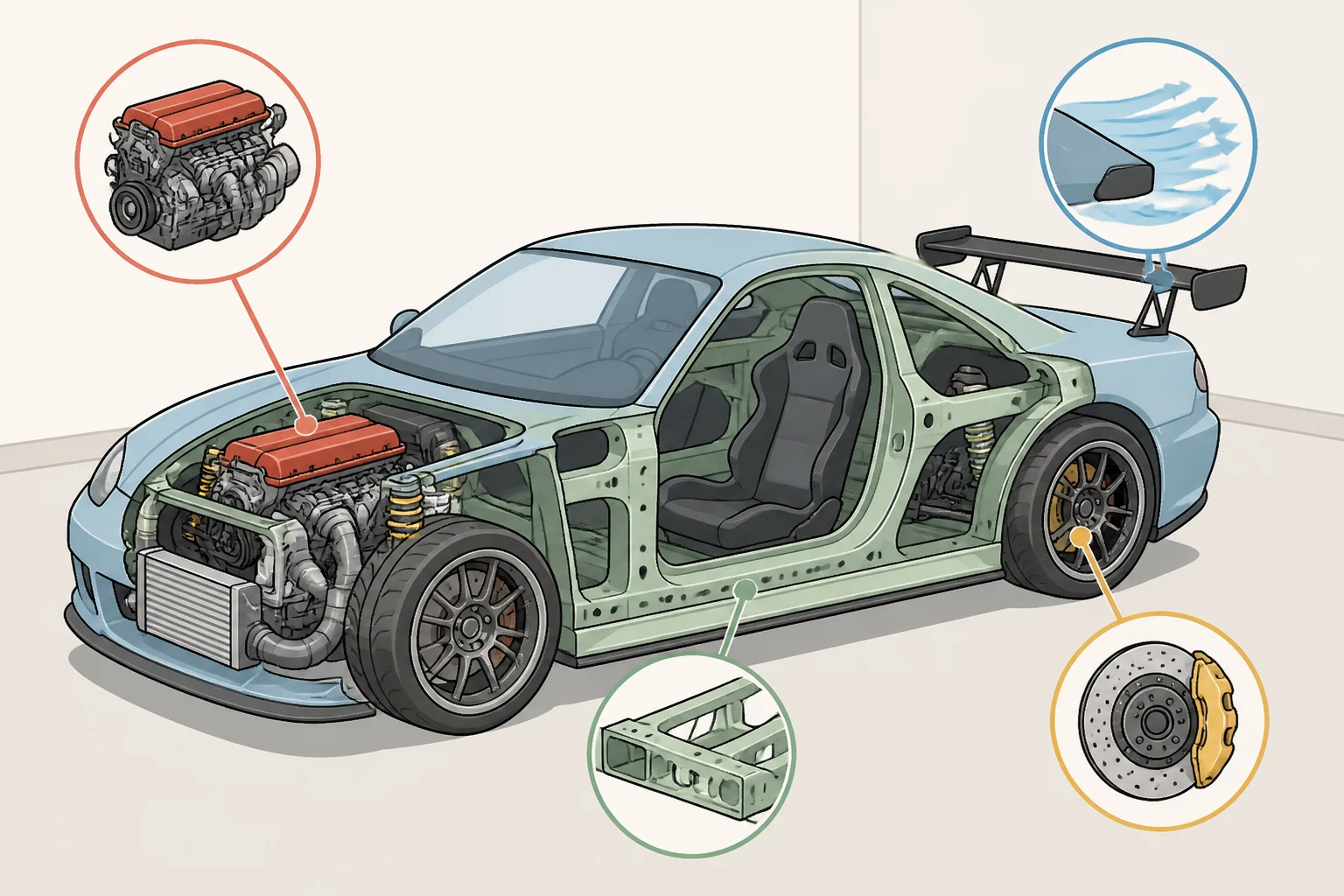
Power. The 1125R introduced Buell's first liquid-cooled engine, the 1,125cc DOHC V-twin known as the Helicon, rated at 146 hp at 9,800 rpm, a sharp break from the air-cooled engines in every earlier Buell model (SlashGear). SlashGear reports the bike ran an 11-second standing quarter-mile on its way to that 151-mph top speed.
Weight. Buell's signature engineering trait carried over: the Intuitive Response Chassis doubled as the fuel reservoir, and the swingarm carried engine oil (SlashGear). The goal, per SlashGear, was to make every part perform as many jobs as possible, since fewer separate components meant less overall weight. The exhaust was mounted low under the engine for the same reason, to keep the bike's weight as low as possible (SlashGear).
Aerodynamics. Buell also applied computational fluid dynamics, a computer simulation method for modeling how air moves around a shape, to design the front fairing and radiator cowling, part of what SlashGear describes as cutting-edge aerodynamic technology built into the bike (SlashGear). The available reporting doesn't quantify how much drag that shaved off. The point stands regardless: aerodynamics were treated as their own engineering problem, not an afterthought bolted onto a finished chassis.
Stopping. An eight-piston front brake, adapted from Buell's race program, gave the 1125R braking hardware built for a bike now capable of 151 mph (SlashGear). How it performed against period rivals isn't something the available reporting measures. It's a capability upgrade, not a factor in how the bike reached top speed.
Power, weight, aerodynamics, and braking: four separate engineering jobs, addressed individually and then folded into a single motorcycle. That's a different design philosophy than the cruiser-first approach that had defined most American motorcycles for decades.
Buell 1125R history: the Harley-Davidson connection
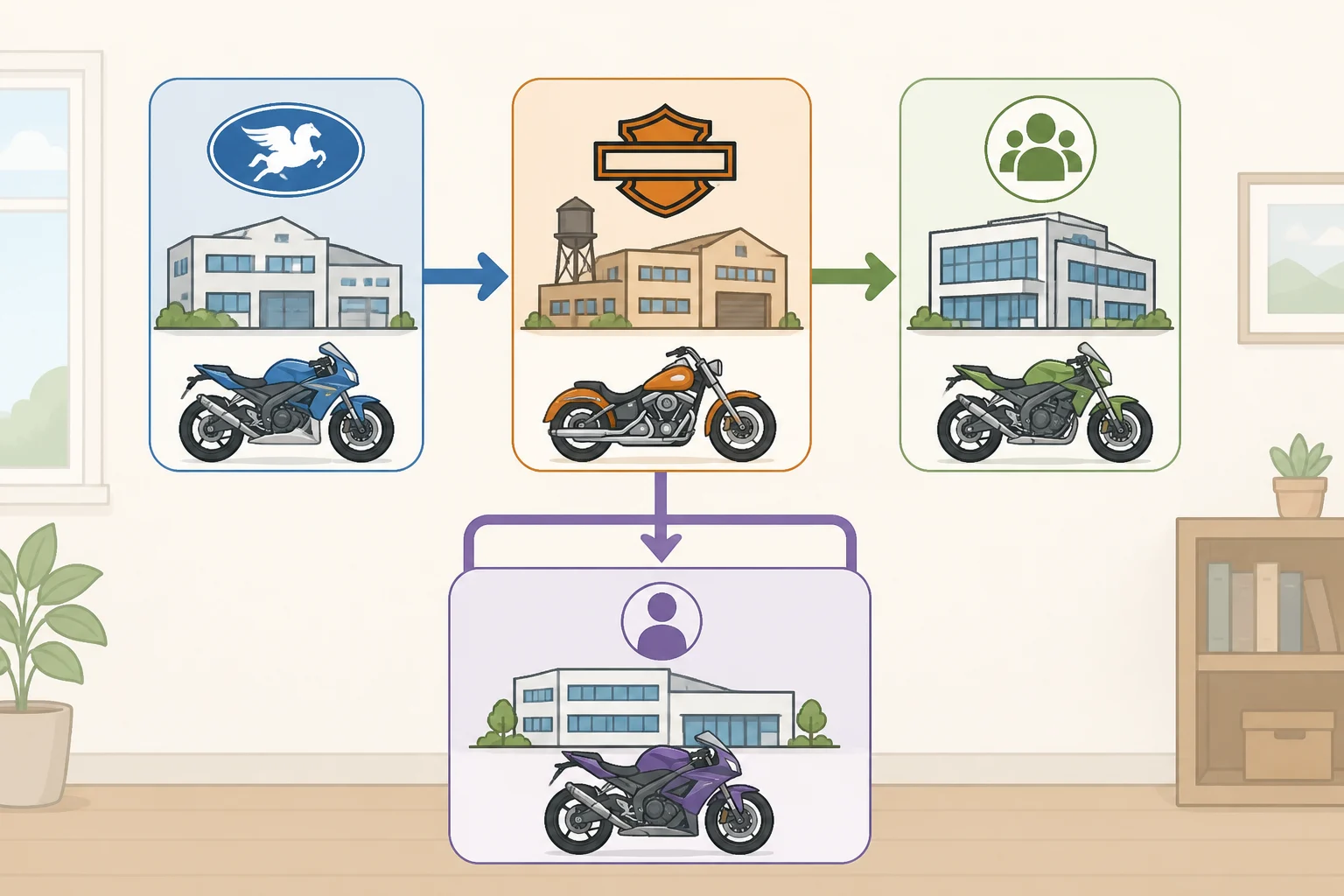
Erik Buell was a Harley-Davidson engineer who left the company in 1983 to chase his own racing ambitions and founded Buell under his own name (SlashGear).
A decade later, in 1993, Harley-Davidson bought a 49% stake in Buell, reportedly hoping to reach younger riders (SlashGear). That's a minority stake, not full ownership.
By the time the 1125R launched in 2007, SlashGear described Buell as a Harley-Davidson subsidiary. The available reporting doesn't specify when or how Harley's stake grew from that 49% position to a controlling one, so "subsidiary" is the best description the record supports, not a documented ownership timeline.
Whatever the exact mechanics, Harley-Davidson owned Buell, in some form, when the 1125R hit its reported top speed. Harley's own financial troubles in 2008 pulled Buell into the fallout, and the subsidiary was shuttered in 2009, two years after the 1125R reached showrooms (SlashGear).
Erik Buell didn't stop building motorcycles when Harley closed the subsidiary. He formed Erik Buell Racing afterward, continuing to build race-specific machines under his own name (SlashGear). The company changed hands more than once in the years that followed: Hero MotoCorp took a minority stake in 2013, Liquid Asset Partners bought the company two years later, and EBR Motorcycles revived the Buell name in 2021, building bikes in the US with some parts sourced from Europe and Asia (SlashGear). Erik Buell also launched an electric motorcycle venture called Fuell in 2019 with French financiers; SlashGear's reporting notes it filed for Chapter 7 bankruptcy in 2024 but appears to be taking orders again. None of that changes where the 1125R sits in the record books, but it shows the engineering instinct behind it kept finding new outlets long after 2009.
The 1125R remains the best-supported claim to being an American-brand production motorcycle reported to cross 150 mph, not a proven, independently tested record, but the strongest claim the available reporting can back. Curtiss got there first as an American, on a one-off machine, and fell just short of 150 mph in 1907. The Vincent got there first as a production motorcycle, but it's British, so it never competed for the American title in the first place.
What makes the 1125R worth remembering isn't the number by itself. It's that a small, independent-minded sport-bike specialist, running a platform unlike anything else Buell had ever built, got there using its own liquid-cooled engine, a mass-centralized chassis, and race-derived brakes, an engineering approach that outlived the company itself and kept resurfacing under new owners for more than a decade afterward.