Why people are not upgrading smartwatches, explained
Global smartwatch shipments fell 4% year over year in the second quarter of 2026, the category's first decline in a year (Counterpoint Research, earlier this month). That single number has set off a round of hand-wringing about a maturing gadget category running out of gas. But why people are not upgrading smartwatches turns out to be a more layered question than a shipment chart can answer on its own.
Counterpoint Research, which tracks the numbers, points to two distinct causes rather than one blanket explanation. Cheap, feature-limited watches are struggling because their owners see little payoff in trading up to a slightly newer version of the same limited device. Premium buyers, meanwhile, are deliberately pausing purchases while they wait to see what's coming next (Counterpoint Research, earlier this month). That second group hasn't soured on smartwatches. They're timing a purchase, which is a different problem entirely.
There's a longer-term signal behind the quarterly noise, too. A peer-reviewed survey of wearable device owners published last year found that current users keep their devices for a median of 18 months, more than double the 7 months reported in a comparable survey from 2016 (JMIR, published last year). That's a wearables-wide finding rather than one specific to smartwatches, and it compares two separate groups of survey respondents rather than tracking the same people over time. Still, it points in the same direction as the shipment data: people are holding onto what they have.
What follows is an attempt to pull those threads apart: what's actually slowing replacement, where real dissatisfaction fits into that picture, and what would have to change to make an annual upgrade feel worth it again.
Smartwatch shipments are falling, but the numbers hide a split market
Video of the Day
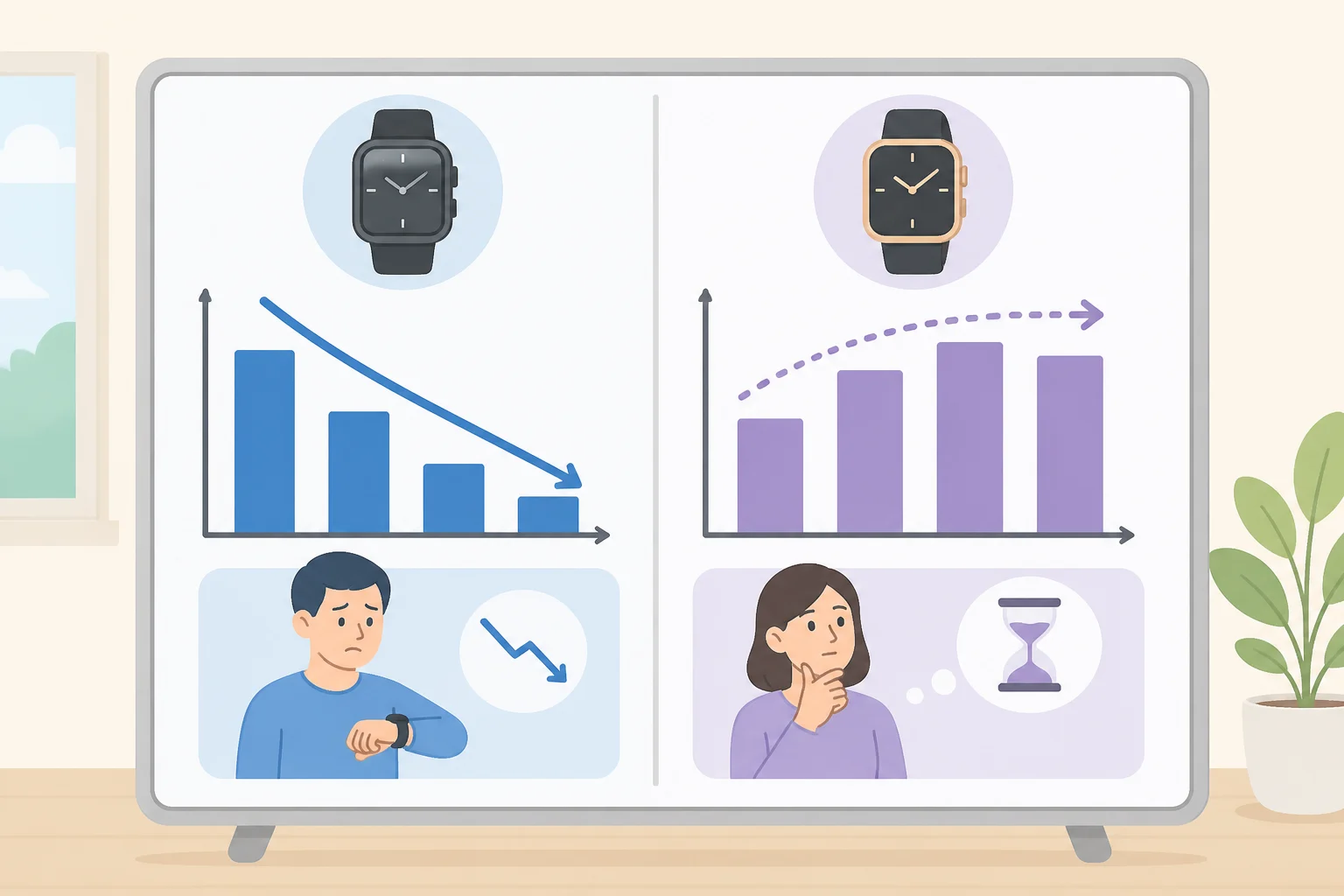
Start with the plain numbers. Shipments dropped 4% year over year in Q2 2026, Counterpoint projects only about 1% growth for the full year, and the firm's longer forecast calls for a 3% compound annual growth rate through 2030 (Counterpoint Research, earlier this month). None of those are collapse numbers. They're stagnation numbers, and stagnation is a different story than an outright smartwatch market decline.
The two causes Counterpoint identifies pull in opposite directions when it comes to what they mean for the category's health. The basic-watch segment is shrinking because low-cost devices offer limited monitoring capabilities that don't improve enough from one generation to the next to justify replacing something that still works (Counterpoint Research, earlier this month). Premium buyers, by contrast, are holding off for a reason that has nothing to do with dissatisfaction: they're waiting on upcoming launches, which is the kind of delay that resolves itself the moment those launches happen (Counterpoint Research, earlier this month).
Treat the first cause as structural and the second as timing. Conflating them makes the whole market look sicker than it is.
Regional detail complicates the "slowdown" framing further. China posted a record 38% share of global shipments and grew 7% year over year, a run driven partly by strong domestic demand for Huawei and Imoo devices and partly by a national consumer electronics subsidy program (Counterpoint Research, earlier this month). Huawei itself reached a record 22% global share, with China supplying roughly 80% of its volume. Apple, meanwhile, posted the fastest year-over-year growth of any of the top five brands, and that growth traces almost entirely to one thing: the Apple Watch Series 11 and Watch SE 3, which together accounted for more than 80% of Apple's shipments during the quarter (Counterpoint Research, earlier this month).
A global decline can mask real pockets of growth underneath it. The honest read on Q2 2026 isn't a category in retreat everywhere at once. It's a market where cheap devices have stopped giving people a reason to switch, while a handful of premium refreshes still move real volume when they land, and the overall smartwatch upgrade cycle keeps stretching as a result.
Video of the Day
Why people are not upgrading smartwatches: good enough stopped feeling exciting
Strip away the regional detail and the core explanation for the basic-segment slump is straightforward. Limited monitoring capabilities on cheap devices aren't advancing quickly enough from one model year to the next to make replacement feel necessary, which is Counterpoint's own framing for why that segment keeps shrinking (Counterpoint Research, earlier this month). A slightly brighter screen or a marginally faster chip doesn't move anyone off a watch that already does the job.
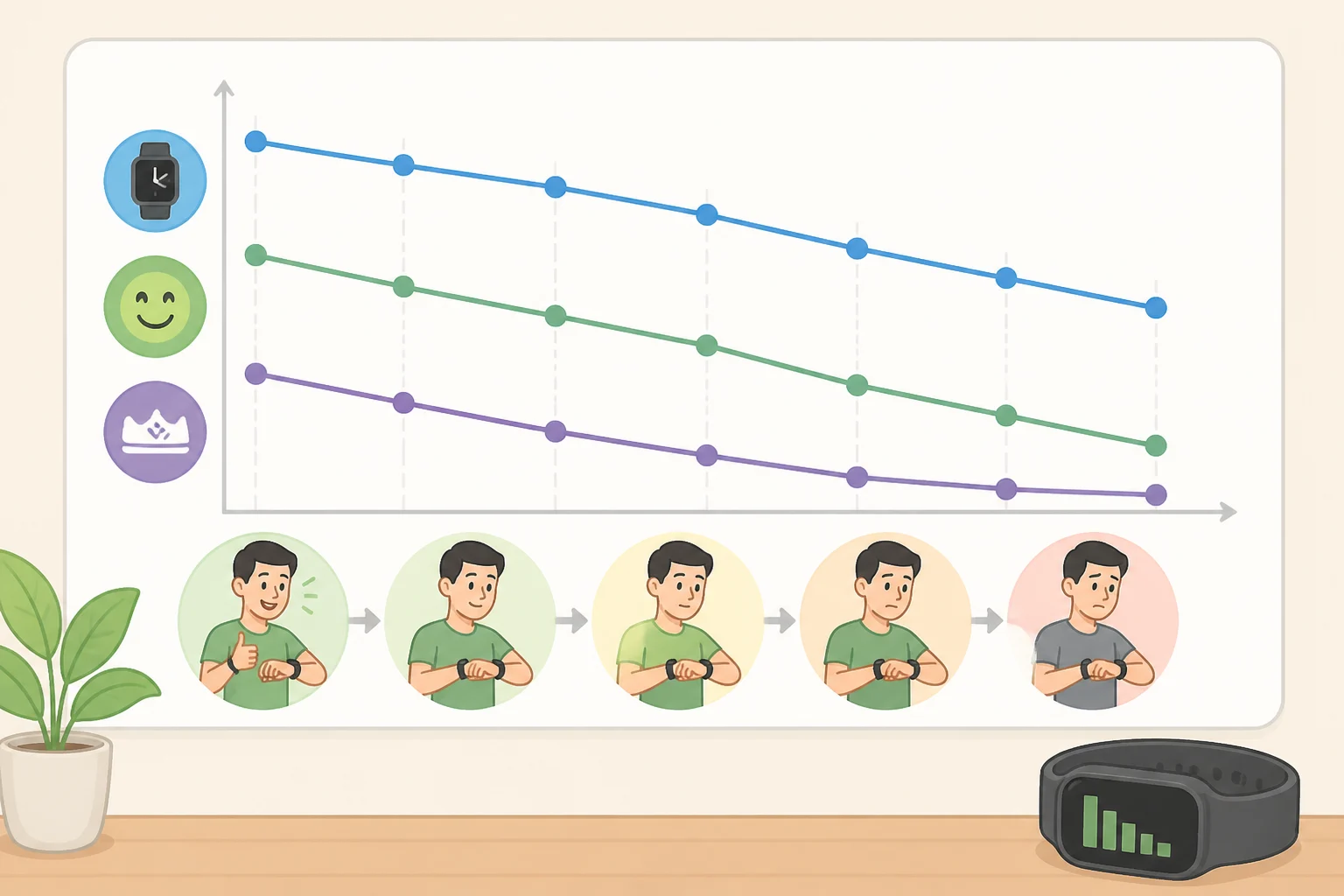
The JMIR survey data adds texture to that picture, and it's worth sitting with the numbers rather than skimming past them. Median usage duration climbed from 7 months in the 2016 survey to 18 months in 2023, and when current owners were asked how long they planned to keep using their device, "indefinitely" was the single most common answer (JMIR, published last year). Longer retention looks, on its face, like a category people have grown to trust.
Except that's not quite what the same data shows. Overall positive experience among wearable users dropped from 89% in 2016 to 68% in 2023. Even the feature that made the category famous took a hit: the share of users who found step counting genuinely useful fell from 94.5% to 65.9% over the same stretch (JMIR, published last year). People are keeping their devices for twice as long while liking them noticeably less.
That combination is the real story, and it's more precise than saying smartwatches have simply gotten good enough that nobody needs a new one. People are not upgrading because nothing currently on shelves clears the bar of being different enough to justify the cost and hassle of switching, not because their existing device delights them. Those are two different claims, and only one of them is supported by what the data actually shows.
Three separate dynamics are getting blended together in most coverage of the slowdown, and it's worth naming them individually. Premium buyers delaying purchases ahead of launches is a timing effect that will unwind on its own. Weak demand for cheap devices with stagnant monitoring features is a structural problem tied to how little those devices improve year over year. And rising technical complaints among people who already own a device is a friction problem that has nothing to do with either of the first two. Treating all three as one undifferentiated "slowdown" flattens a more interesting picture.
The real test for whether new smartwatches are worth upgrading to
So when does replacing an otherwise functional watch actually make sense? The JMIR data offers a useful starting point, because it tracks what actually ends people's relationship with a device rather than what they say they'd prefer in the abstract.
Among former wearable users, the leading reason for quitting the category altogether was a broken device, cited by 33%, ahead of general dissatisfaction at 25% and a cluster of reasons, including a lost device, difficulty understanding it, and technical problems, each around 17% (JMIR, published last year). Current users' complaints hint at where tomorrow's breakage comes from: short battery life topped the list at 21%, followed by technical issues at 19% and general wear and tear at 18% (JMIR, published last year).
A separate framework for thinking about upgrade timing, built around similar logic, lays out three scenarios where replacing a working watch actually makes sense: when a new sensor or health feature would directly change how someone manages a specific condition, when switching phone platforms, say from Android to iPhone, makes the current watch a poor match for the new phone, and when the watch has suffered outright physical damage (Smartwatch Guru, earlier this month). That framework is useful as a way of organizing the decision, though its specific battery-degradation percentages and replacement-cycle-length figures trace back to unnamed reviewers and a secondary, uncited reference to Counterpoint, so they're left out here.
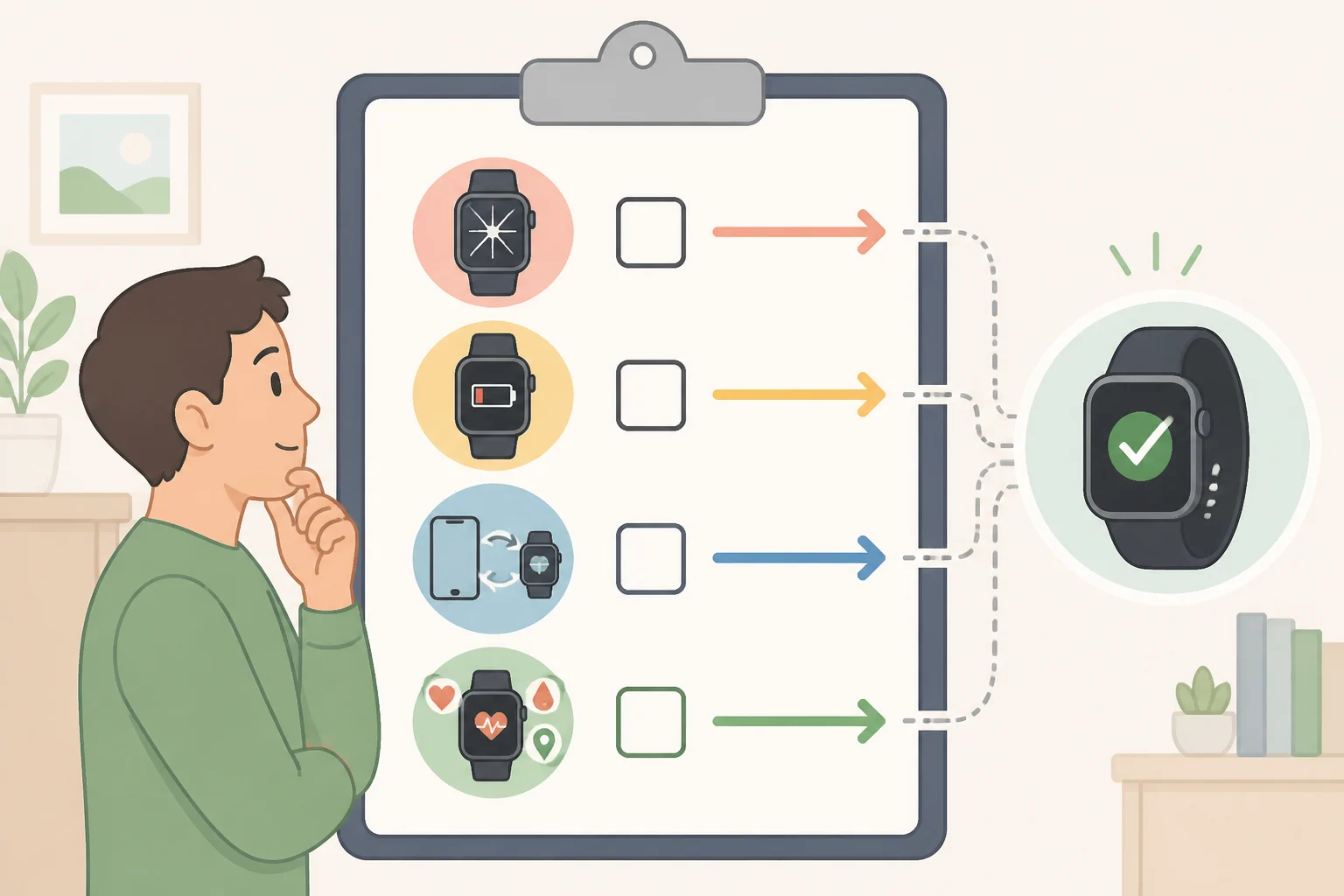
Put those pieces together and a reasonably tight test emerges for whether new smartwatches are worth upgrading to in any given case:
- The current watch has broken or suffered physical damage.
- Battery performance has degraded enough to disrupt daily use.
- A phone-platform switch has made the current watch incompatible.
- A new sensor delivers a health capability the owner genuinely needs, not just one that's nice to have.
Notice what's absent from that list: a new model number, a marginally better screen, or a chip that benchmarks faster. None of those show up as reasons people actually stop using a device or switch away from one, according to the survey data. They show up in marketing copy, which is a different thing entirely.
What would actually get people upgrading again
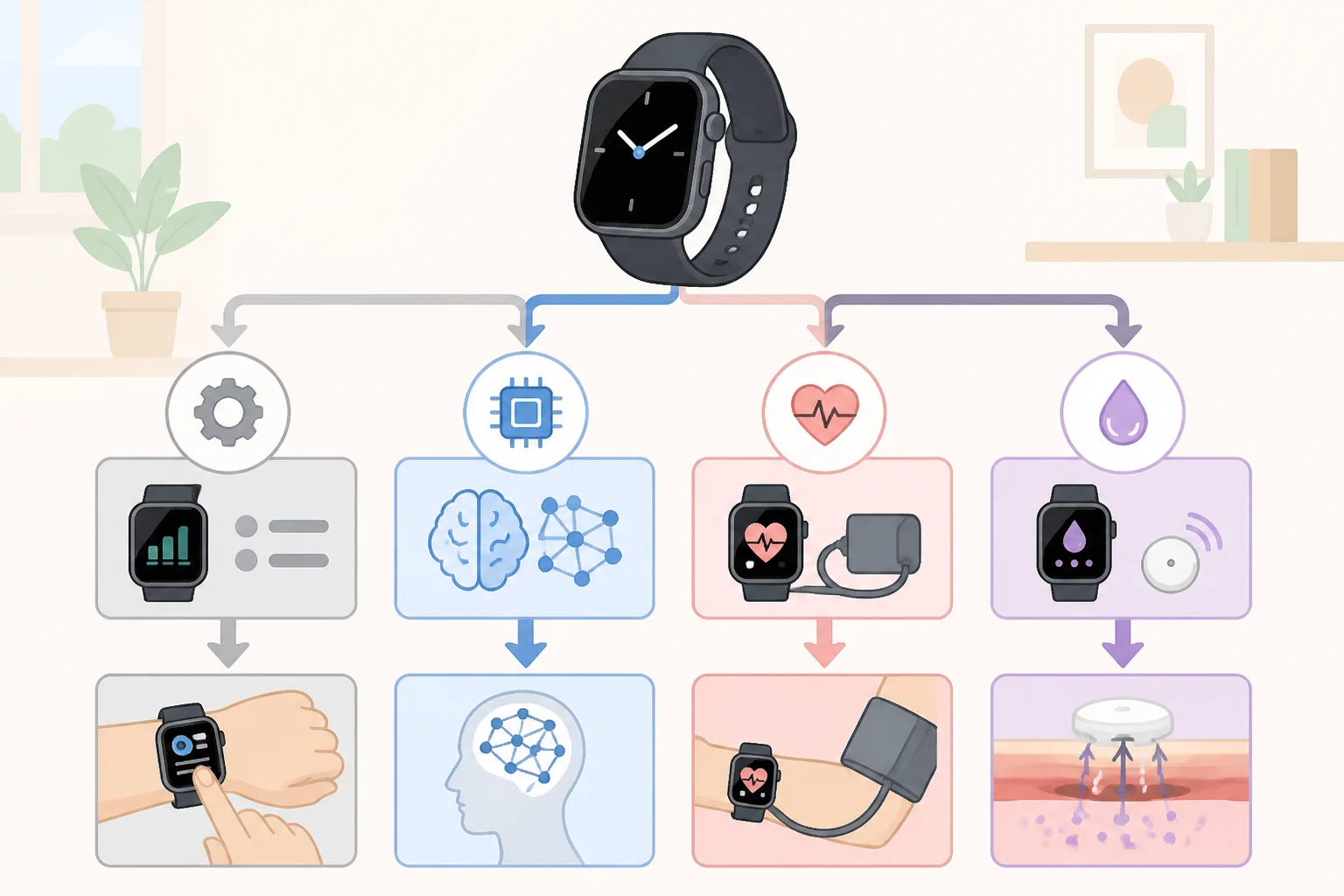
Counterpoint's own long-range forecast bets on something more ambitious than incremental refinement to get shipment growth back above the current trickle. Research Director Mohit Agrawal named the specific features underpinning the firm's 3% CAGR forecast through 2030: "Edge AI in smartwatches, blood pressure tracking and the race towards non-invasive blood glucose monitoring give consumers a reason to upgrade. That is what underpins our 3% CAGR through 2030" (Counterpoint Research, earlier this month).
What separates those three features from a routine annual refresh is worth spelling out. Incremental hardware polish, a faster processor or a brighter display, rarely moves someone off a watch that still works. Reliable blood pressure tracking, or eventually non-invasive glucose monitoring, is different in kind: it's a capability the watch already on someone's wrist simply cannot do, not a faster version of something it already does.
That distinction matters because it lines up with why people bought into the category in the first place. Improving health, monitoring activity, and enhancing fitness remain the top three reasons people use wearables at all, cited by 50%, 47%, and 38% of respondents respectively (JMIR, published last year). A genuine health breakthrough would speak directly to the category's founding pitch rather than to some peripheral convenience feature nobody asked for.
Notice the hedge built into Agrawal's own wording, too. Blood pressure tracking and glucose monitoring are described as part of "the race towards" a working product, language that signals a direction of travel rather than a finished feature already sitting on shelves. That's worth taking at face value: these read as research priorities pointing toward a future product, not something a reader can walk into a store and buy this week. Believing the marketing pitch before a feature actually ships, works in a given region, and clears any relevant regulatory bar is how buyers end up disappointed by a roadmap rather than a real device.
Until one of those capabilities lands on a watch that's actually for sale, the pressure to upgrade stays where it currently sits: on a working device with a battery that's still holding up.
The bigger picture on smartwatch shipments falling
Put the pieces together and the smartwatch market looks less like a category losing its audience and more like one running into the limits of its own hardware refresh cycle. A quarter of falling shipments alongside a barely-there full-year growth forecast points toward a maturing product line, not a dying one. That maturity carries real friction with it, and the drop in how positively wearable owners rate their overall experience says something honest about how the category's day-to-day usefulness has actually landed with the people using it.
The practical upgrade triggers worth acting on are functional, not cosmetic: a broken device, a battery that no longer gets through the day, a phone-platform switch that breaks compatibility, or a new sensor that solves an actual health need. A new model number on its own has never been one of them.
The next real wave of growth depends on manufacturers clearing a considerably higher bar than a faster chip or a slightly better screen: features that do something a current watch genuinely cannot, shipping on a device people can actually buy, in a region where they can actually use it. Until that happens, holding onto a watch that still works isn't stubbornness. It's a reasonable response to a category that has, for now, run out of small reasons to switch.