Why AI Headphones With Cameras Are Really Smart Glasses
Scroll through any gadget roundup this year and you'll see the phrase "AI headphones with cameras" tossed around like it describes a real, purchasable object. It doesn't, at least not yet. Every device actually announced or shipping under that banner is a pair of glasses, not a pair of earbuds. That distinction sounds like pedantry until you realize it changes what these products can see, what they can record, and who ends up exposed when the technology works exactly as designed.
Google says its first audio glasses, screen-free devices that answer questions through voice alone, are set to arrive later this fall, with display-equipped glasses to follow after that (Google, earlier this year). Samsung has already shipped something adjacent: the Galaxy XR, a full mixed-reality headset rather than eyewear, which launched last October as the first product built on the Android XR platform Samsung co-developed with Google and Qualcomm (Samsung, last year). Android XR itself is designed to stretch across "headsets, glasses and everything in between," with Google's Gemini assistant built in from the start (Google, last year).
None of that is earbuds. What follows is an attempt to sort what's actually shipping from what's still a promise, why cameras keep landing on faces instead of ears, and what privacy questions this hardware raises that current law only half-answers.
Why "AI headphones with cameras" are actually smart glasses
Video of the Day
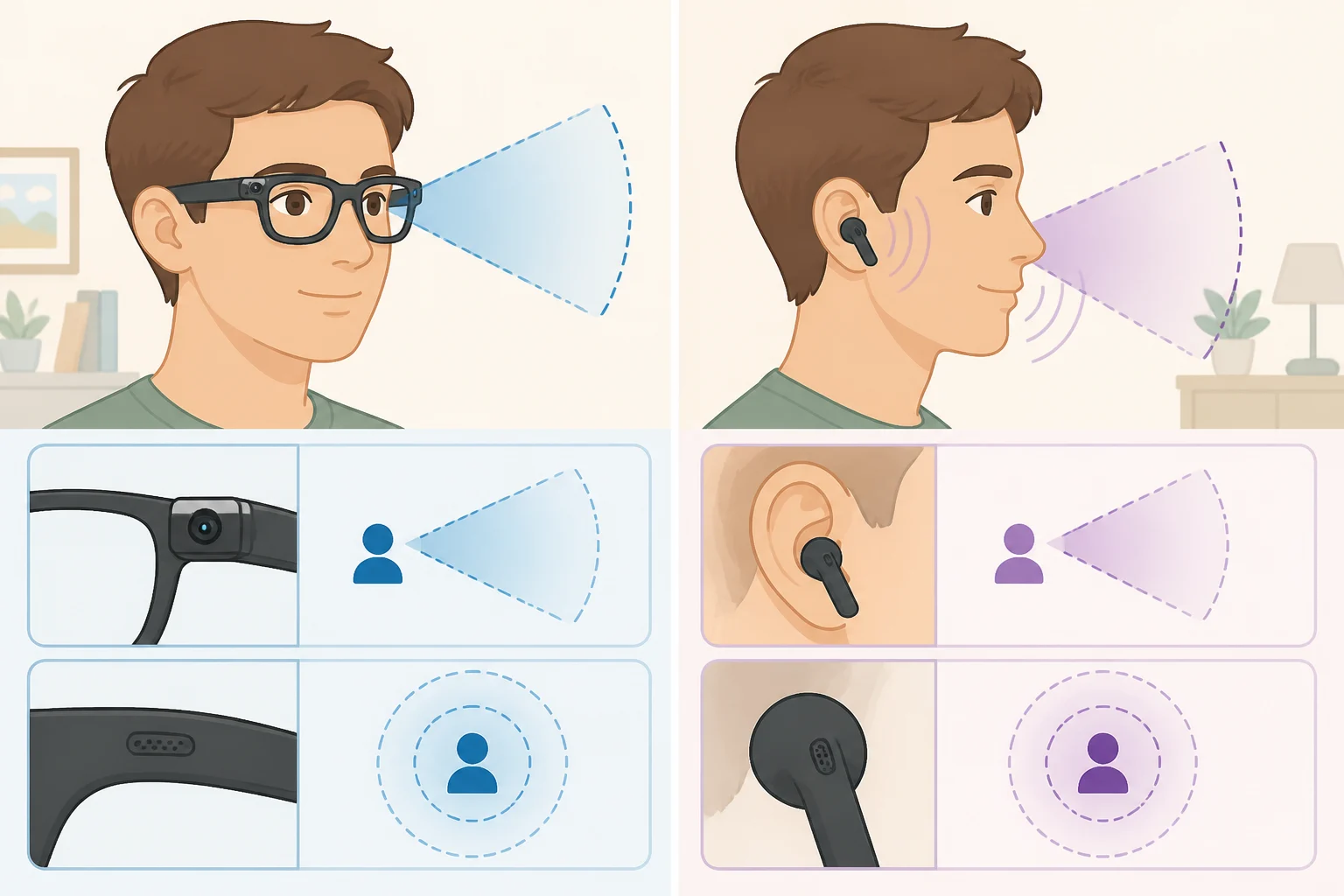
Start with what's missing from the record: none of the Google and Samsung announcements reviewed here describes camera-equipped earbuds. The "AI headphones with cameras" label appears to be shorthand people have grafted onto a wave of camera-and-microphone eyewear, not a description of an actual audio-only product with a lens bolted on.
Google draws a clean line between two categories of what it calls intelligent eyewear. Audio glasses offer spoken help with no screen at all. Display glasses add an in-lens screen for things like turn-by-turn navigation or live translation captions. Audio glasses are the ones launching first, later this fall, with display glasses coming afterward (Google, earlier this year).
The logic behind putting sensors on a face rather than in an ear canal seems fairly intuitive: a camera mounted on glasses sits at eye level, seeing roughly what the wearer sees, while a microphone near the mouth picks up speech directly. Earbuds simply don't offer that vantage point. Google hasn't stated this reasoning outright, but its own description of the hardware, "equipped with a camera, microphones and speakers," matches that logic closely (Google, last year).
Google has demonstrated what this buys a user in practice: asking Gemini about a restaurant while walking past it, getting spoken turn-by-turn directions, snapping and editing photos, and translating spoken conversation in real time with audio that matches the speaker's tone (Google, earlier this year). None of that requires a screen. All of it requires a camera pointed at the world and a microphone pointed at a mouth, which is precisely the configuration glasses provide and headphones don't.
Video of the Day
How the sensing and assistant model actually works
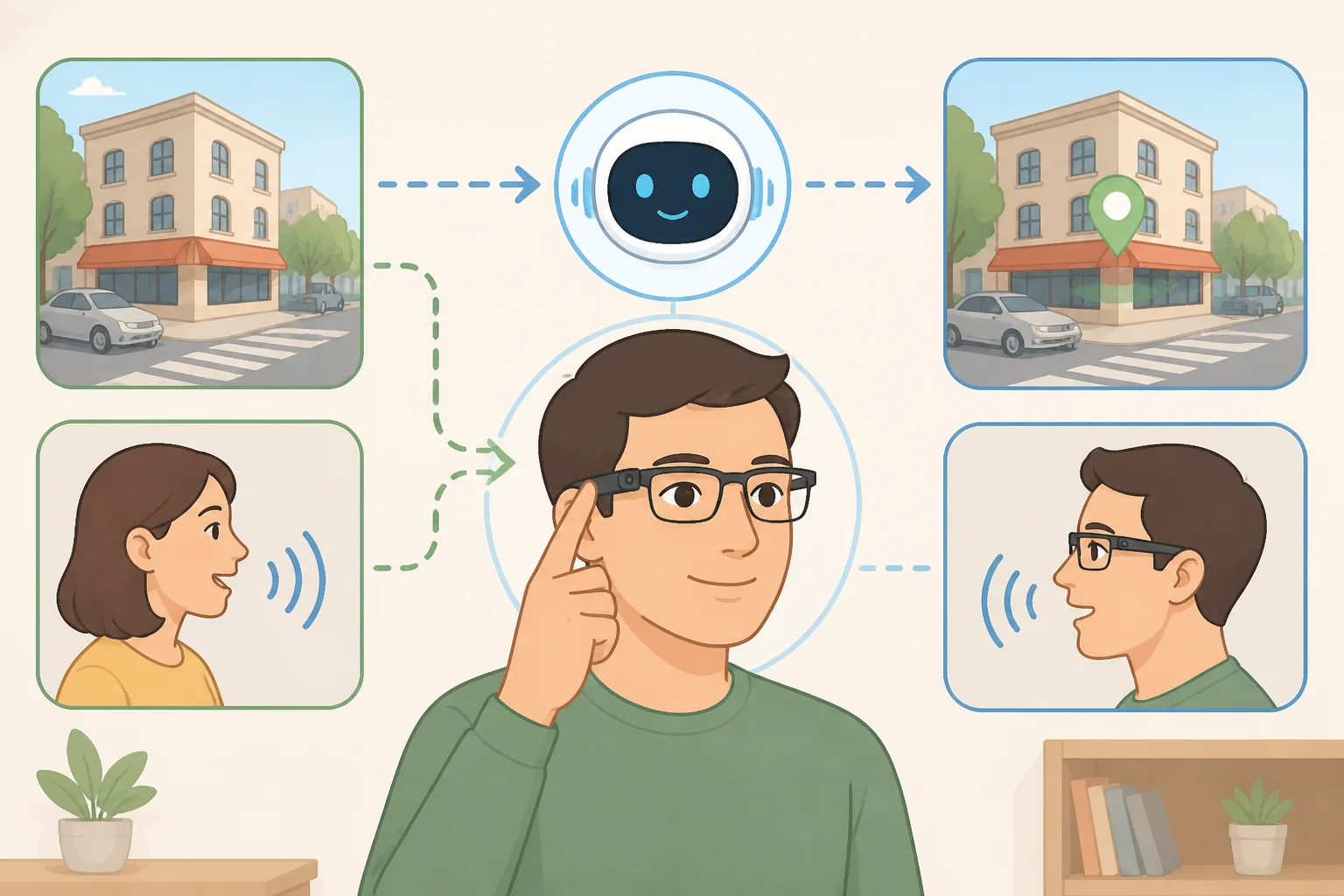
Set aside Meta for a moment, since no Meta product announcement appears in the research behind this piece, and focus on the two platforms with public technical detail: Google's Android XR glasses and Samsung's Galaxy XR headset. Both pair cameras, microphones and speakers with Gemini, so the assistant can respond to what it sees and hears rather than only to typed or spoken commands (Google, last year).
Samsung describes this as system-level integration in the Galaxy XR headset. Gemini uses voice, vision and gesture together, and the company frames the result as less like a tool waiting for instructions and more like a companion that "understands what users see and hear," responding in ways meant to feel conversational rather than command-driven (Samsung, last year). That's Samsung's own characterization of its headset, not an independent verification of how naturally the assistant actually behaves.
On the glasses side, the interaction is built to be minimal by design. Users say "Hey Google" or tap the frame, and the goal is to keep hands free and attention on the physical world instead of a screen (Google, earlier this year). It's worth being precise about scope here: Samsung's Galaxy XR is a headset built for immersive video and games, not a pair of glasses, and Meta's competing hardware runs on its own Meta AI system rather than Gemini. The overlap between these two product lines is Gemini as a shared assistant layer, not a single unified device category.
The wearability trade-off behind smart glasses with AI cameras
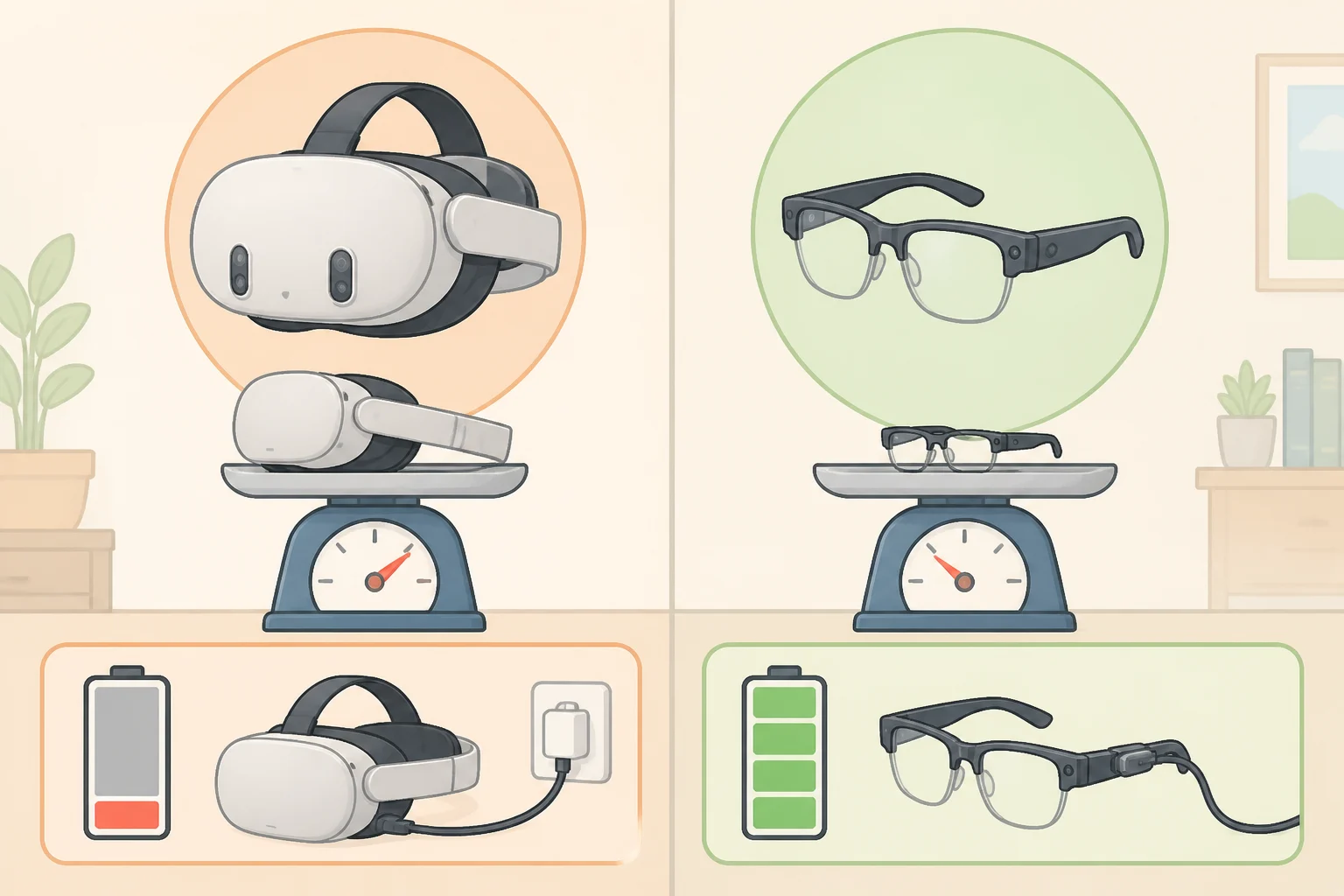
Google treats comfort as a functional requirement rather than a design nicety, arguing that audio glasses can only deliver useful all-day help if they're stylish and comfortable enough to actually wear all day. That's the stated reason it partnered with eyewear brands Gentle Monster and Warby Parker on its first designs, rather than building a standalone frame from scratch (Google, earlier this year). The glasses are also built to pair with both Android and iOS phones, a deliberate choice to widen the addressable market past a single operating system (Google, earlier this year).
Compare that to the Galaxy XR headset, which weighs 545 grams on its own plus a separate 302-gram battery pack, and which Samsung says delivers roughly two hours of general use or 2.5 hours of video playback before it needs recharging (Samsung, last year). Those are Samsung's own stated figures, not independently tested battery benchmarks, but the gap in form factor speaks for itself. A headset that weighs the better part of two pounds and needs recharging within a couple of hours is not something anyone wears to the grocery store.
That contrast illustrates the bet each format is making. Lightweight, screen-free glasses trade raw capability for wearability, betting that a device indistinguishable from ordinary eyewear is more likely to become a daily habit than one that announces itself as tech gear. Headsets trade wearability for immersion, chasing a different use case entirely: extended sessions of video, gaming or virtual work rather than errands and commutes. Glasses look like the more plausible route to habitual, everyday AI use precisely because they can pass as something you'd already be wearing. That's also exactly what makes them harder for the people around the wearer to notice.
AI audio wearables privacy concerns nobody has fully solved
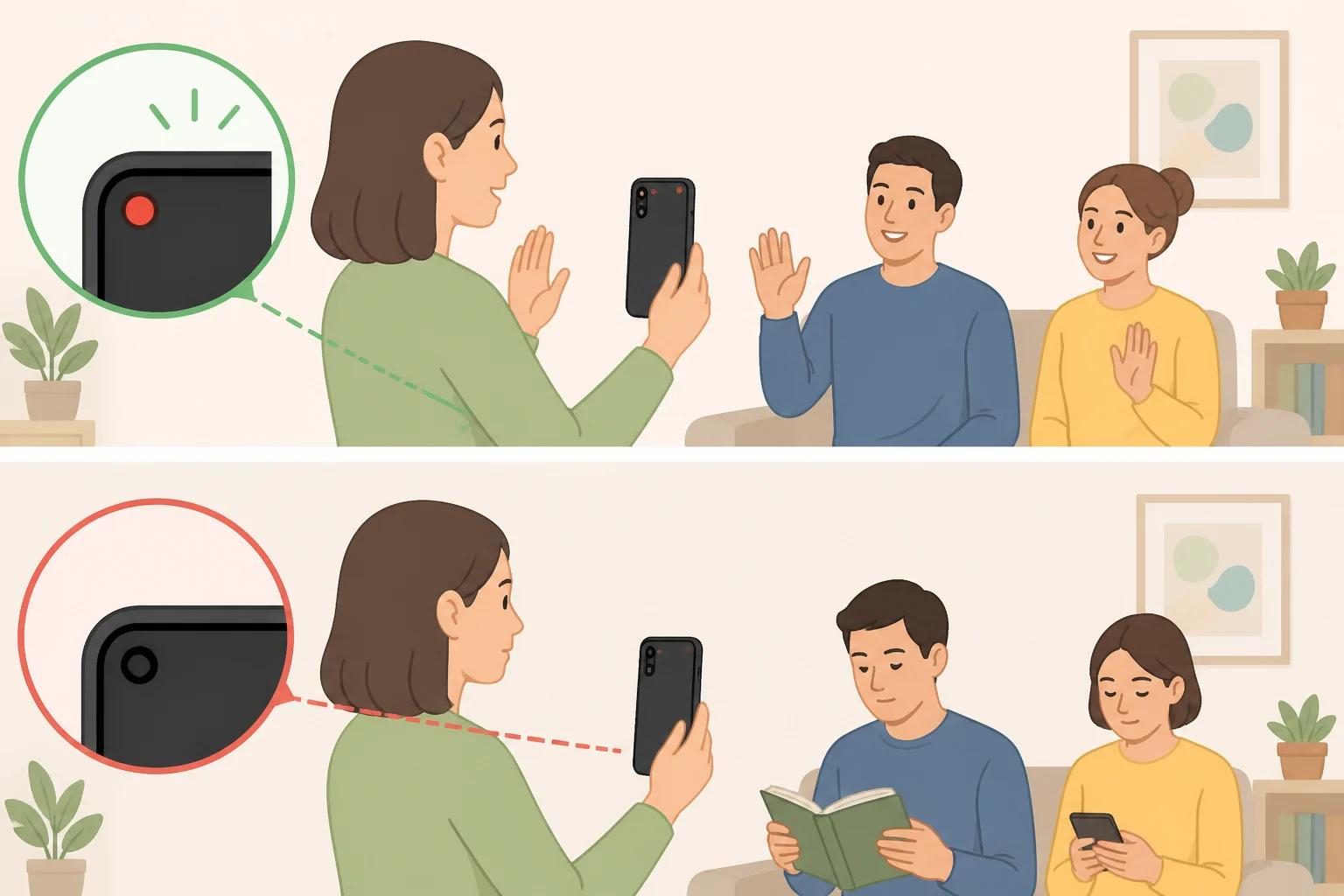
That last point is where the category runs into trouble. Meta's camera glasses, which have shipped and drawn scrutiny well ahead of Google's, look like ordinary eyewear apart from a small, easily overlooked light that indicates active recording (Northeastern, three months ago). EFF privacy litigation director Adam Schwartz put it bluntly: Meta's glasses do have a recording indicator, but "people might not see it or know what it means" (Northeastern, three months ago). Reporting cited in that same coverage also points to a growing market for tools that disable the light entirely, which would defeat the one visible safeguard bystanders currently have.
Scale is part of why this matters. The companion app required to operate Meta's glasses has been downloaded more than 50 million times (Northeastern, three months ago). That's tens of millions of cameras potentially pointed at strangers who never agreed to be recorded, with an indicator light that a chunk of those people apparently either can't see or don't recognize.
The deeper concern goes past casual recording. WIRED reporting summarized in that coverage found that Meta's app had at one point contained code capable of generating a facial "faceprint," a unique biometric signature built from footage the glasses captured, which would then alert the wearer if it recognized someone (Northeastern, three months ago). Meta removed the code after the report and told WIRED that no final decision had been made and that the feature did not exist (Northeastern, three months ago). That's Meta's own account of an unreleased capability, not confirmation that any shipped product does this, and there is nothing in Google's or Samsung's announcements suggesting either company has built anything comparable.
Northeastern cybersecurity researcher Aanjhan Ranganathan called the removal "good," but he and Schwartz both describe why the underlying capability worries them more than any single feature. Ranganathan said identifying biometric data collected through smart glasses could turn a stranger into someone with "a full dossier" on you, eroding the assumption that walking through public space grants a baseline of anonymity (Northeastern, three months ago). Schwartz went further: "Putting cameras into glasses is an inherent privacy threat, and putting face recognition on the camera and the glasses is an intolerable escalation of that privacy threat" (Northeastern, three months ago).
Legal precedent for that concern already exists, just not tied to glasses specifically. Illinois requires consent before biometric data can be collected, and Meta paid a $650 million settlement in 2020 over a facial-recognition photo-tagging feature that ran afoul of that law. Texas, with a similar statute on the books since 2009, won a $1.4 billion settlement against Meta over the same feature in 2024 (Northeastern, three months ago). Those cases involved photo-tagging on Facebook, not glasses, but they establish that regulators are willing to punish unauthorized biometric collection at scale, which is precisely the capability camera glasses introduce into daily public life.
Government interest in the same underlying technology adds another layer. The Department of Homeland Security has requested $7.5 million to develop its own smart glasses for facial recognition, while a separate bill, the ICE Out of Our Faces Act, would ban ICE and Customs and Border Protection from using face recognition technology altogether. That bill has not moved since it was referred to a Senate committee in February (Northeastern, three months ago).
Legislative responses so far tend to focus on the hardware itself rather than what it can do. A Pennsylvania lawmaker proposed rules this year requiring smart glasses buyers to be informed about the state's recording consent laws, along with visual recording indicators that wearers would be barred from disabling (Northeastern, three months ago). Ranganathan called that approach "sensible." Schwartz argues it doesn't go far enough, saying the more durable fix would regulate facial-recognition software itself, addressing what the device does rather than what it looks like (Northeastern, three months ago). "There are not enough limitations on what the companies are doing with that data," he said (Northeastern, three months ago).
That's the tension every camera-equipped glasses maker now inherits, Google included. Google says it has begun gathering feedback from trusted testers specifically to build something that respects the privacy of wearers and bystanders alike (Google, last year). Nothing in the available record suggests Google has built anything resembling Meta's reported faceprint feature. But the regulatory gap Schwartz describes doesn't disappear just because one company says the right things during testing; a rule that targets visible lights and disclosure requirements still leaves the underlying sensing and biometric capability largely untouched, and that gap applies to whoever ships next.
What to watch before this becomes routine
The realistic near-term picture: screen-free audio glasses from Google's eyewear partners arriving later this fall, offering voice-based Gemini help with no display and, based on everything Google has said publicly, no camera-driven facial-recognition feature (Google, earlier this year). Display glasses with in-lens screens remain further out, and any face-recognition capability on Google's hardware remains unconfirmed rather than ruled out; Google's announcements reviewed here simply don't describe one.
Anyone weighing whether to buy into this category has a short, practical checklist worth running through first: how the recording indicator behaves and whether it can be switched off, how long the company retains visual and audio data, whether there's any stated policy on facial recognition, and what protection exists for the bystander standing next to someone wearing the glasses, who never opted into anything (Northeastern, three months ago).
Expect the "AI headphones" framing to keep pointing back at eyewear rather than earbuds as more companies enter the category, and expect privacy scrutiny to intensify alongside it. More cameras ending up on more faces, with recording indicators and biometric policy still trailing well behind the hardware itself, is not a comfortable combination. It's also, on the current evidence, exactly where this is headed.