How to Spot AI Scams: Red Flags That Actually Matter
Knowing how to spot AI scams no longer means squinting at a pixelated video or listening for a robotic voice. That approach is already obsolete. The FBI's Internet Crime Complaint Center received more than one million fraud complaints last year, nearly 3,000 per day, and for the first time in its nearly 25-year history dedicated an entire section of its annual report to artificial intelligence. Those AI-flagged cases alone cost Americans close to $893 million (FBI). That's a new reporting category, not the full scope of AI's role in fraud.
What AI actually changes is the friction that used to get scammers caught. Foreign criminal actors now use AI translation tools to eliminate the grammatical errors that once made phishing messages easy to dismiss, and to produce convincing photos for private conversations (FBI Jacksonville). Polished prose and realistic images are now cheap to fake. Treating them as proof of legitimacy is a losing strategy. The behavioral playbook underneath, though, hasn't changed. As the FBI's Financial Crimes Section put it plainly: red flags tend to be consistent from scam type to scam type, even as the technology keeps evolving (FBI video). This guide teaches you to recognize those flags across phone calls, dating apps, social media, and messaging platforms.
Step 1: Understand what AI actually changes and what it doesn't
Video of the Day
AI doesn't introduce new scam psychology. Urgency, fake authority, and implausible investment returns are decades old. What it removes is the imperfection that used to expose scammers: clunky translation, stock photos that fail a reverse-image search, voices that sound slightly off. Scammers now deploy voice-cloned audio, fabricated identity documents, and deepfake videos depicting real people, including public figures and people the target knows personally (FBI).
The upgrade is realism, not reinvention. A voice clone can deliver an emergency call in a grandson's voice. A fake profile can sustain weeks of fluent, culturally appropriate conversation. Fake investment platforms may display fabricated account-growth dashboards that look convincing right up until a victim tries to withdraw, at which point the operators vanish (DFPI). Some of these platforms don't actually use AI at all; they simply claim to, because the word alone lends a sheen of credibility.
People expect to catch a jittery deepfake scam warning sign, a robotic voice, obvious spelling errors. What actually works is noticing that you're being pressured to act immediately, asked to keep something secret, told to pay through an unusual channel, or promised returns no legitimate investment offers. Stop trying to out-detect the technology. Start detecting the pressure underneath it.
Video of the Day
Step 2: AI scam red flags that matter more than deepfake tells
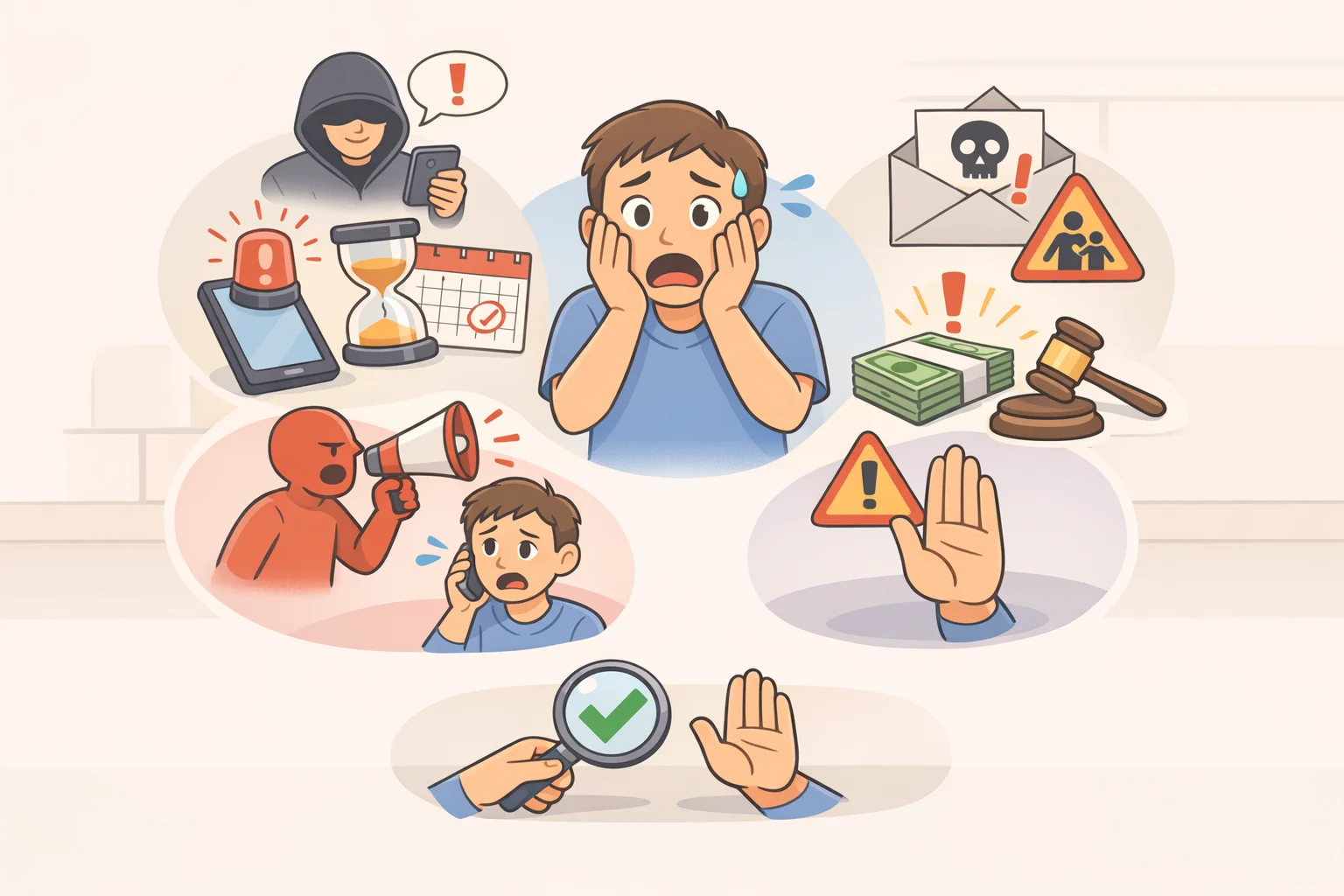
These appear across every platform. Spot one and slow down. Spot two and stop entirely.
Fear is the primary mechanism. Rebecca Keithley, an Assistant Section Chief in the FBI's Financial Crimes Section, identifies it as the number one red flag: what specialists call an "amygdala hijack," a fear response intense enough to push someone into acting before thinking (FBI video). Fear of arrest, fear of missing an investment window, fear for a family member's safety. The trigger varies; the goal is always the same. The moment a communication makes you feel panicked, treat that feeling as a warning, not an instruction to comply.
1. Urgency. Any demand for immediate action exists to prevent verification. "Invest now or lose the window," "pay today to avoid arrest," "your account closes in one hour" all designed to stop you from pausing long enough to check the story. Scammers need you to act before you think (FBI video).
2. Secrecy. A request to keep the interaction private, avoid telling family, or conduct a transaction off the record is a scammer eliminating the most reliable check on their story. The FTC is unambiguous: no legitimate fraud department will instruct you to keep your situation secret (FTC). That instruction alone is disqualifying.
3. Unusual payment methods. Gift cards, cryptocurrency, wire transfers, gold bars, a courier picking up cash scammers prefer these because they bypass bank oversight and are nearly impossible to reverse. No government agency, employer, or romantic interest will ask for payment in gift card codes. Hand over that code and the money is gone, untraceable by law enforcement or your financial institution (FBI video).
4. Too-good-to-be-true claims. Guaranteed returns, risk-free opportunities, AI-powered platforms promising consistent cryptocurrency profits. Investment fraud accounted for nearly 49% of all reported scam losses in 2025, with cryptocurrency complaints alone totaling more than $11 billion (FBI). That dominance explains why so many AI-driven scams, whether they start on a dating app, a social platform, or a phone call, eventually steer toward an investment pitch.
The red flag most people miss: being told to lie about a payment. If someone instructs you to send money but describe the transfer as something else a "product purchase," a "loan," a "deposit" that instruction exists specifically to block intervention. The FBI's Financial Crimes Section identifies this as a serious and distinct indicator: misrepresenting the payment prevents bank staff, family members, or anyone else from recognizing what's happening and stepping in (FBI video).
One more thing worth naming: a call that accurately states a name, address, or partial account number feels authoritative. It isn't. Scammers buy or steal personal data to deploy as credibility props (FTC). Familiarity is not verification.
Step 3: How to recognize AI scams across phone calls, apps, and social media
Each platform has its own setup. The red flags show up every time, but how they're deployed differs enough that it's worth walking through each context specifically.
Phone calls: voice cloning scams and impersonation
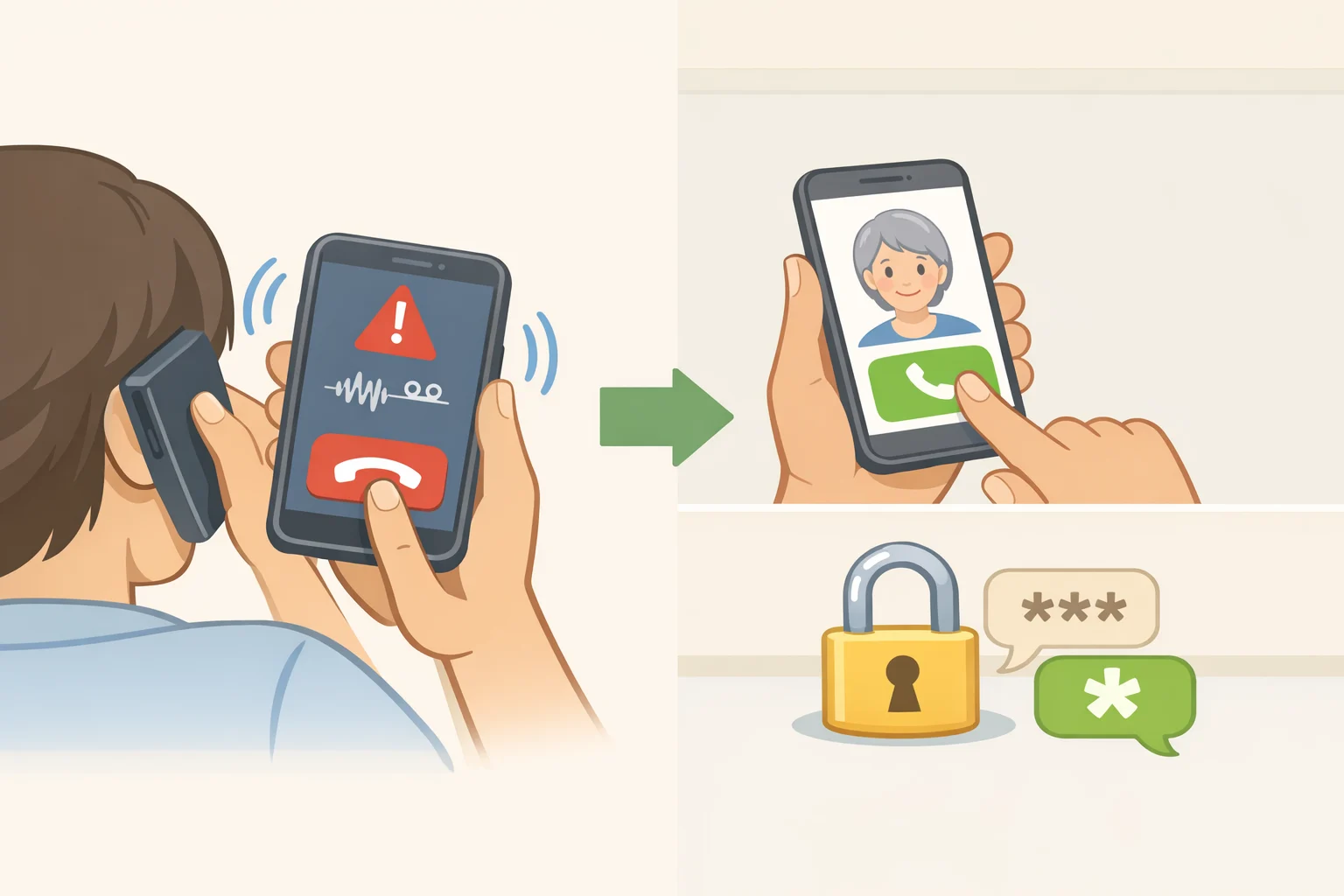
The grandparent scam arrives at full emotional intensity. There's no buildup just an immediate crisis. AI voice cloning software replicates a family member's voice and simulates an emergency: an arrest, a car accident, a hospital (DFPI). The call may last under two minutes. The pressure to act before thinking is the entire strategy.
Americans over 60 reported approximately $7.7 billion in fraud losses in 2025, up 37% from the year before (FBI), and this scam type is one reason that figure is so high. The urgency and secrecy flags arrive simultaneously someone needs help right now, payment must happen immediately, and the target is told to keep it from the rest of the family ("I don't want Mom to worry"). Payment comes via wire transfer, gift cards, or a courier. There's no implausible investment pitch here; the pressure mechanism is fear, not greed.
Hang up. Call the family member directly using a number already stored in your phone, not a number the caller provides. The DFPI recommends establishing a family code word, a shared phrase anyone can ask for to verify they're speaking to the real person (DFPI). Set that up before you need it. When looking up contact information for a bank or company, skip the search results scammers buy paid search ads to place fake numbers above legitimate ones (FTC). Use the official app or the number on the back of your card.
Dating apps and social platforms: AI-enhanced romance scams
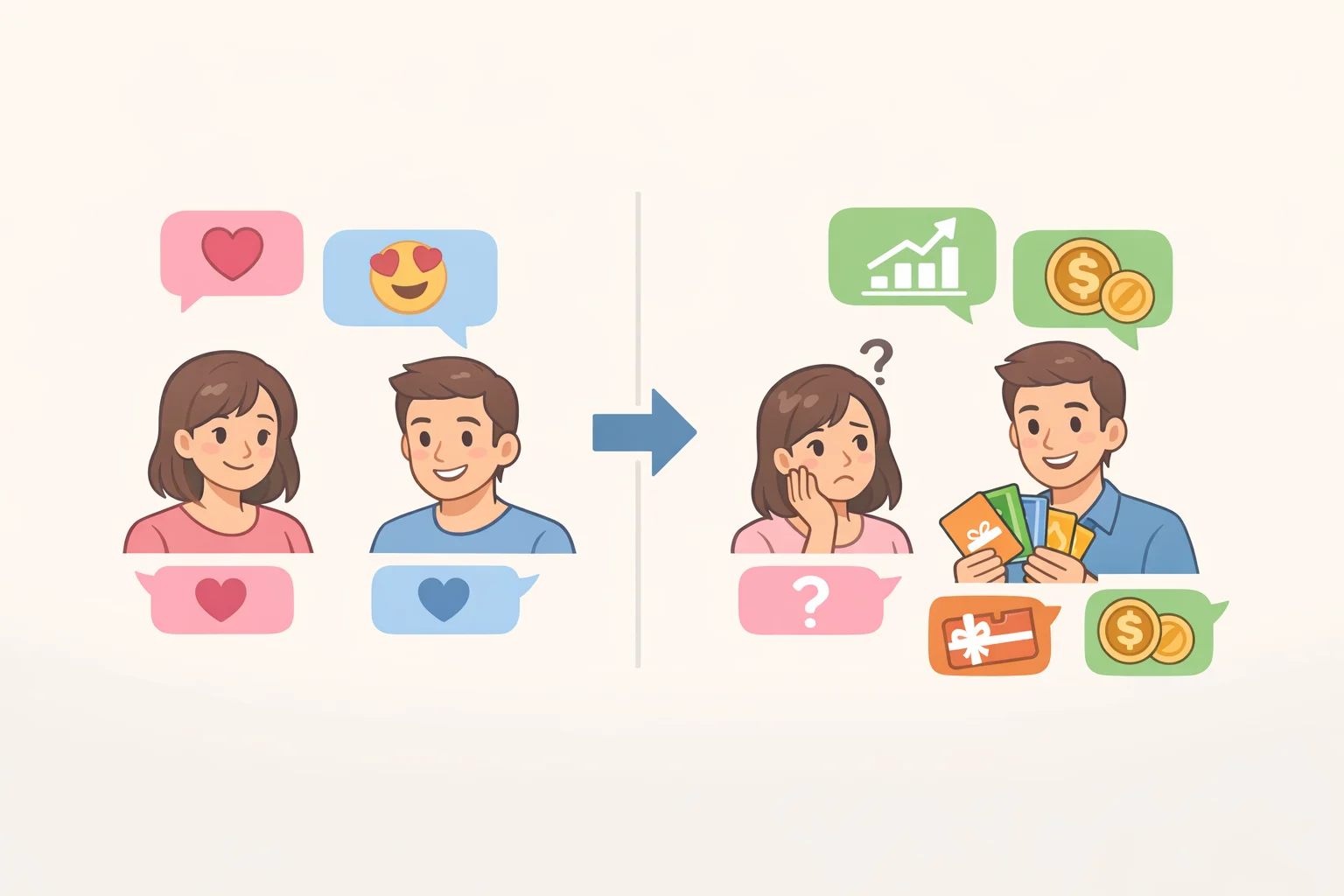
Romance scammers exploit generative AI to produce polished profiles, sustain fluent extended conversations, and generate personal-seeming photos, potentially running multiple targets simultaneously (FBI Jacksonville). The script is consistent: intense early affection, persistent excuses for never meeting in person (overseas work, travel, family obligations), and eventually a money request or an introduction to a secretive investment opportunity. Romance scammers may forbid targets from discussing these investment opportunities with friends or family the secrecy flag built directly into the pitch (FBI Jacksonville).
That investment pivot isn't incidental. It's where the largest losses accumulate, which is why romance scams and investment fraud increasingly operate as a single scheme. Confidence and romance fraud complaints and losses nationwide exceeded 2024 levels last year, and many losses go unreported (FBI Jacksonville).
Never send money, gift cards, or cryptocurrency to someone you've never met in person, regardless of how long the conversation has continued. A romantic contact who introduces an investment opportunity and asks you to keep it quiet: that combination is a near-certain indicator of fraud.
Social media: fake finfluencers, deepfakes, and manufactured authority
Social media investment promoters may use AI-generated follower counts to manufacture credibility, claim certifications they don't hold, and push fake opportunities through AI-written "news" articles designed to appear in feeds repeatedly (DFPI). That repetition is deliberate it exploits the principle that sustained exposure to the same false information can gradually manufacture belief. Deepfake videos of celebrities or public figures add borrowed legitimacy to pitches that couldn't survive independent scrutiny.
The specific dynamic to watch here is how authority gets faked. On a phone call, a scammer impersonates a known voice. On social media, they build the appearance of a track record: follower counts, testimonials, AI-written articles, and celebrity endorsements, all fabricated. The urgency shows up as limited-time offers or exclusive early access. The secrecy takes the form of private group chats with instructions not to share outside the community. Payment goes into a proprietary cryptocurrency platform.
Before engaging with any investment opportunity promoted through social media, verify the promoter through a licensed financial regulator, not through links or credentials the promoter supplies. Any offer that pays existing investors to recruit new ones is a documented pyramid-style indicator (DFPI).
Messaging apps: the recovery scam and the second-victim trap
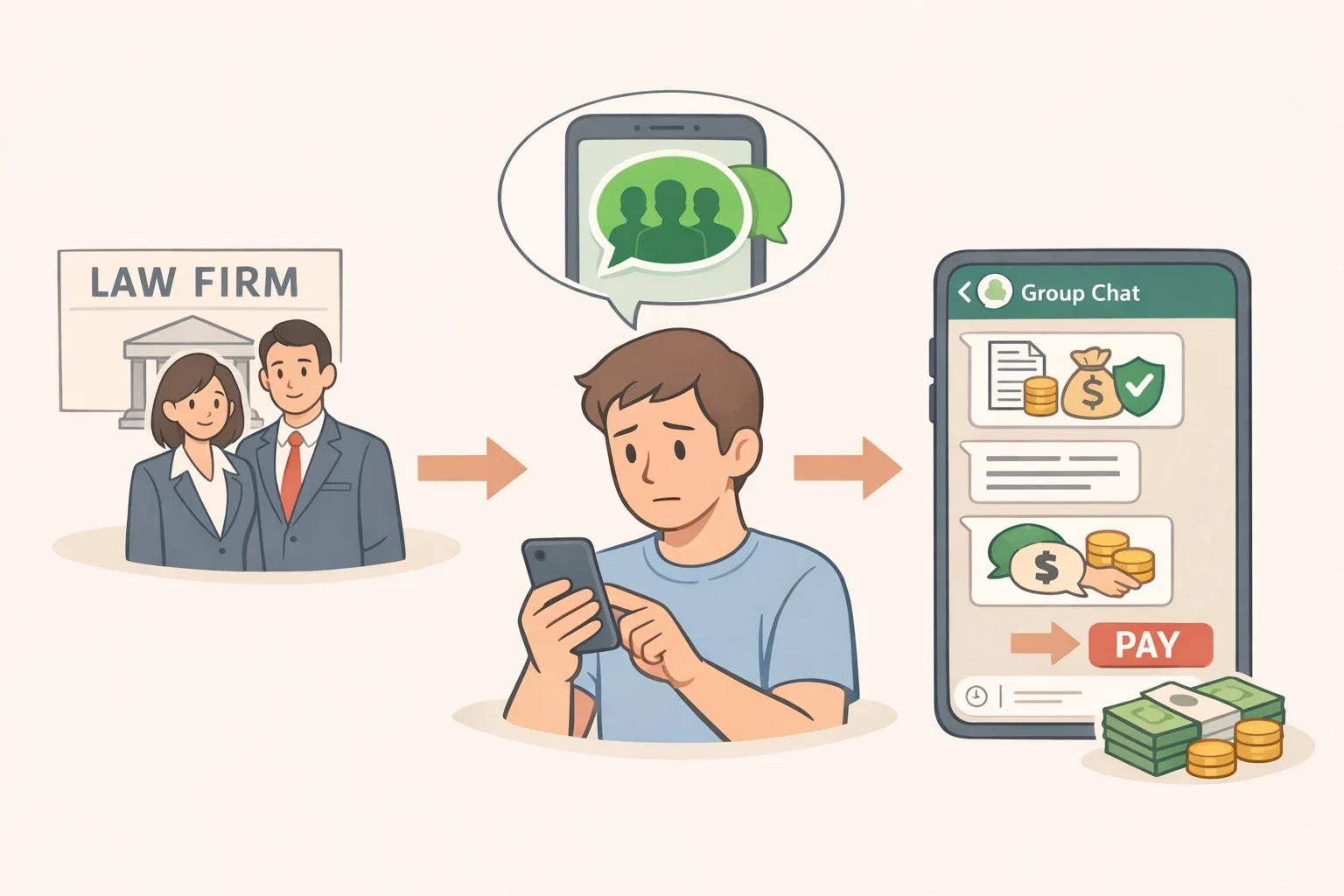
Losing money to a scam makes someone a target for a second one. Fake law firms contact prior fraud victims, particularly older adults, claiming they can recover lost cryptocurrency through "official channels" and government partnerships. These operations produce AI-generated documents on fake letterheads, impersonate real attorneys, and invent fictitious regulatory bodies (FBI). The FBI is unambiguous: there are no law firms that are officially authorized partners of U.S. government agencies. Any claim to that effect is a fabrication.
Victims get moved into private WhatsApp group chats under the pretense of legal confidentiality, then asked to pay fees in cryptocurrency or gift cards to "release" recovered funds. What makes this variant particularly effective is that it exploits the emotional state of someone already victimized the financial need, the hope of recovery, and the familiarity with the original scam's details, which the fake firm will often know precisely to seem credible.
Treat any unsolicited outreach from a "law firm" offering to recover scam losses as fraud until independently verified. Ask for credentials, request a video call, and check the firm through your state bar association, not through links the contact provides. The FBI recommends applying a "zero trust" approach: assume nothing is legitimate until confirmed through independent channels (FBI).
Step 4: What to do right now if you're being targeted or already were
If you're in the middle of it: Stop. Don't negotiate, don't try to expose the scammer, don't attempt to recover money by staying engaged. Cut contact immediately. Then physically set down the phone or step away from the screen and call someone you trust. Isolation is what scammers count on it's a structural feature of every variant covered here. Breaking it is the fastest way to interrupt the scheme (FTC).
Quick decision guide for the moment of contact:
- Unexpected urgent call claiming money or a family member is at risk: hang up, verify through the official app or a number on a statement.
- Online contact asks for money or steers toward an investment opportunity: stop, talk to someone trusted before doing anything else.
- An investment platform blocks a withdrawal: contact the bank immediately and file a report before depositing anything further.
- A "law firm" contacts you claiming it can recover lost funds: treat it as fraud until independently verified through state bar records.
If money has already moved: Contact the financial institution immediately. Speed matters some interventions are only possible within a narrow window. Document everything: names, dates, contact methods, amounts sent, and where funds were directed (FBI).
Report, even without a loss. File with the FBI's Internet Crime Complaint Center at ic3.gov and the FTC at ReportFraud.ftc.gov. Volume of reports helps law enforcement map active campaigns (FTC). A report without a financial loss still counts.
The portable checklist
Voice clones will keep getting more natural. Deepfakes will keep looking more convincing. The technology arms race is one you can't win by sharpening your eye. What you can do is learn the flags before panic sets in, so recognition becomes second nature when it matters. The FBI's Financial Crimes Section said it directly: red flags tend to be consistent from scam type to scam type, even as delivery methods evolve (FBI video). That consistency is worth building habits around.
Six checks to carry into every platform:
- Urgency? Slow down. Verify independently before acting.
- Secrecy requested? Stop. Legitimate institutions don't ask you to hide transactions.
- Unusual payment method? Refuse. Gift cards, crypto, and couriers are scammer payment rails.
- Told to misrepresent the payment? Stop immediately. That instruction exists to block anyone from helping.
- Too-good-to-be-true returns? Check credentials through a licensed regulator, not links the contact provides.
- Voice or message feels like a family emergency? Hang up, call the person directly on a saved number. Set up a family code word now, before you need it (DFPI).
Bookmark ic3.gov. Enable two-factor authentication on financial accounts. Then share this checklist with the older adults in your household losses for Americans over 60 climbed 37% last year, and a five-minute conversation is worth considerably more than that.