How to Protect Older Adults From Scams Before Money Is Lost
This guide explains exactly how business and government impersonation scams work, where they can be interrupted, and what older adults, family members, and financial institutions can each do to protect seniors from financial exploitation before a crisis call arrives.
The scale of the problem justifies the focus. Among adults 60 and older who reported losing $10,000 or more to business and government impersonation scams, reports grew more than fourfold between 2020 and 2024, from 1,790 to 8,269, according to an FTC Data Spotlight published last year. For losses above $100,000, the jump was nearly sevenfold. Combined losses in that catastrophic tier went from $55 million in 2020 to $445 million in 2024, an eightfold increase.
These aren't the most common scams targeting older adults by volume. The FTC's 2023-2024 annual report shows older adults lost more overall to investment fraud. But impersonation scams stand out for a different reason: they reliably produce single, catastrophic, irreversible losses. The FTC Data Spotlight documented victims who emptied bank accounts and liquidated retirement savings. Losses stop only when the money runs out.
That pattern, not the prevalence but the severity, is why anti-fraud guidance consistently returns to one principle: the only reliable protection is stopping the money before it moves.
Who this guide is for: Older adults who want to recognize and deflect these calls. Adult children and family members who want to help someone they're worried about. Caregivers, bank staff, and financial professionals who encounter vulnerable clients.
How these scams work: one script, three lies
Video of the Day
Understanding the mechanics isn't a detour. It's what makes the prevention steps stick. Every high-loss impersonation scam follows the same sequence: manufacture a crisis, create urgency, establish authority, then instruct the target to move money to "fix" the problem. The FTC identifies three false narratives that reliably trigger that response:
- Lie #1: Someone is using your accounts. A caller claims to be from your bank or a company like Amazon and warns of suspicious activity on your account. The implied urgency: act now or lose everything.
- Lie #2: Your identity is tied to a crime. Someone claiming to be from the Social Security Administration, the FTC, or law enforcement says your Social Security number has been linked to drug trafficking or money laundering. Your assets are at risk; cooperate immediately.
- Lie #3: Your computer has been compromised. A pop-up alert mimicking a Microsoft or Apple security warning appears on screen, with a phone number to call. When you call, you're told your accounts have been hacked.
The third pathway deserves emphasis. Adults 60 and older were more than five times as likely as adults aged 18 to 59 to report losing money to tech support scams, per the FTC's 2023-2024 annual report. The fake computer-alert scenario is not a theoretical risk.
Once any of these lies is in place, the script converges. The caller says the only solution is to move money: transfer funds, deposit cash at a Bitcoin ATM, load gift cards, or hand cash to a courier. As the FTC Data Spotlight explains, victims typically believe they are solving a real problem rather than sending money to a stranger, which is precisely why losses are limited only by available funds.
Scammers often stack these lies together. A fake Microsoft alert escalates to a fake FTC agent. Some even impersonate actual FTC staff by name. The real FTC will never demand money, threaten arrest, or direct anyone to transfer funds or hand cash to a courier, ever, according to the FTC.
Caller ID is not proof. Scammers spoof phone numbers to display your bank's real name or a government agency number. A familiar-looking caller ID means nothing.
In 2024, the initial contact for high-loss older adult victims broke down as follows: 41% started with a phone call, 15% with an online ad or pop-up, and 13% with an email, per the FTC Data Spotlight. Different channels, same destination: a live phone conversation designed to keep the target isolated and compliant until the money is gone.
Video of the Day
Older adult scam prevention tips: what to do before and during a suspicious call
Stopping these scams requires different actions at different times. The first stage is setup, things to put in place before any call arrives. The second is the in-the-moment response when something suspicious happens. Mixing them up makes both harder to follow.
Before any suspicious contact: set up your defenses
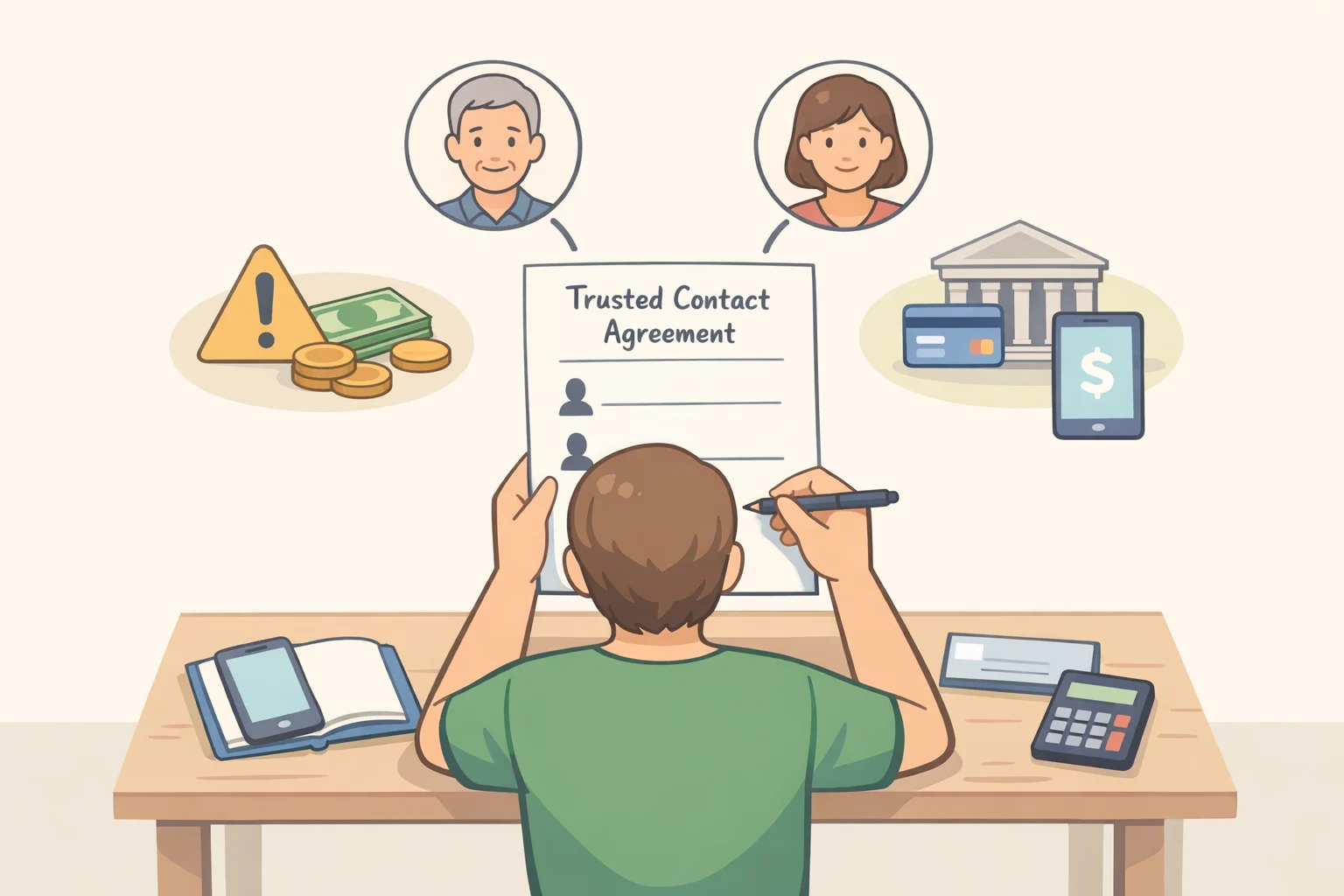
Step 1: Designate a trusted contact and make the agreement explicit.
Choose one person, a family member, close friend, or financial advisor, who you agree to call before making any large or unexpected financial transaction. The CFPB recommends building this into a long-term fraud protection plan rather than treating it as a one-time conversation. The key is agreeing in advance, so calling that person in the middle of a stressful situation feels normal rather than like admitting a mistake.
Step 2: Ask your bank whether it offers trusted-contact alerts.
Financial institutions can help prevent elder financial exploitation with alerts to trusted contacts, according to the CFPB. Not every bank offers this, so ask directly, and set it up proactively if the option exists. Don't wait for a crisis to find out.
Step 3: Enable call-blocking tools on your phone.
The FTC recommends call-blocking options to reduce the number of scam calls that reach you. These tools don't catch everything, but they lower the volume of attempts. Check with your wireless carrier or search "call blocking" on the FTC's consumer site for current options.
When a suspicious call or message arrives: what to do right now
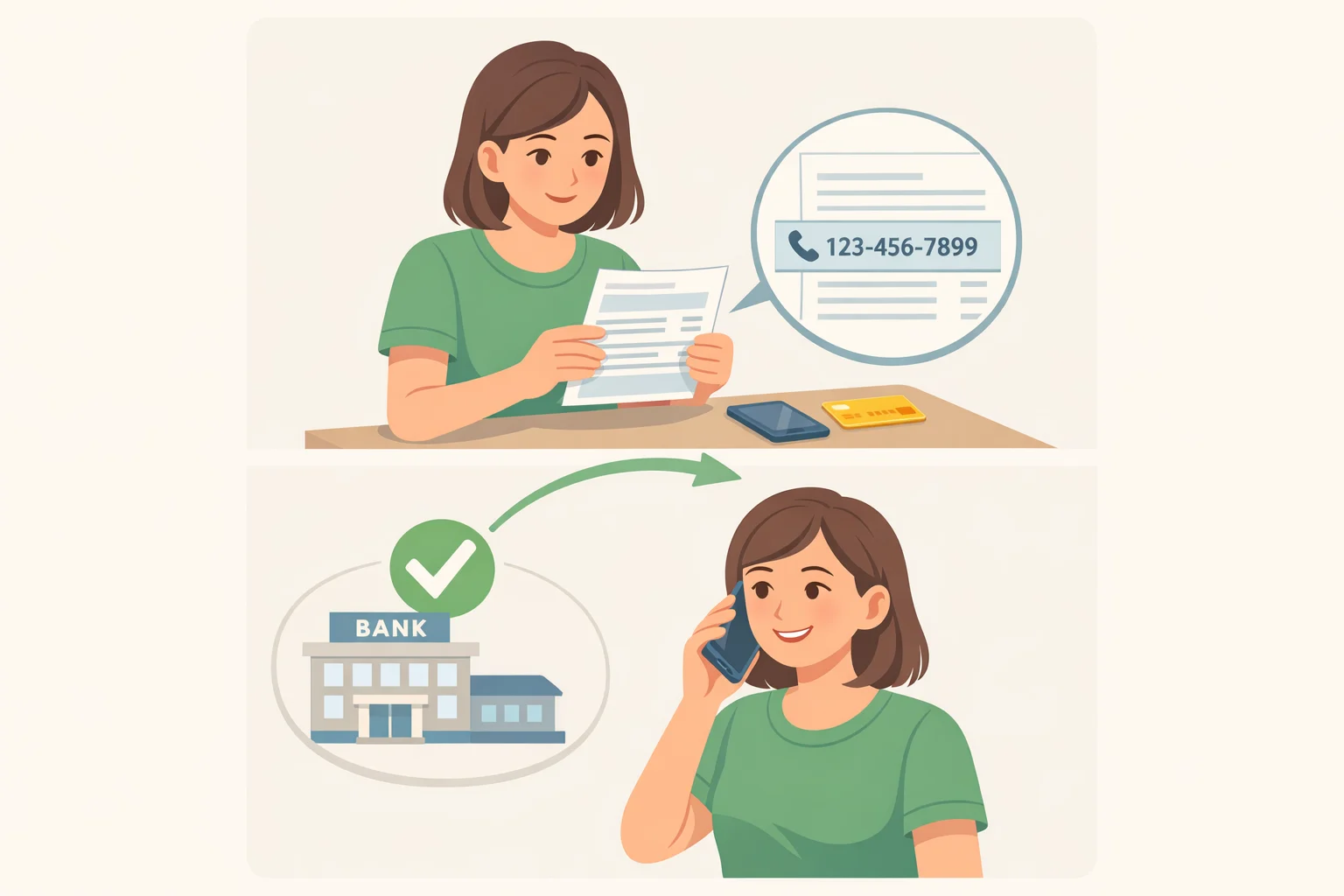
Step 4: Hang up. Do not explain, negotiate, or ask for proof.
No legitimate government agency or business will penalize you for ending a call and calling back independently. If the caller warns that hanging up will make things worse, that's the scam. The FTC Data Spotlight notes that keeping targets on the phone is a deliberate isolation tactic: a frightened person on a call for an hour is not going to reach out to anyone who might see through the lies.
Step 5: Verify using contact information you already trust.
Look up the company or agency using a source independent of the suspicious message: the number on the back of your credit card, the organization's official website found through a direct search, or a mailed statement. Do not use any phone number, website, or email address provided in the unexpected contact. Per the FTC, any contact information supplied during a suspicious call should be treated as potentially fraudulent.
Step 6: Call your trusted contact before taking any financial action.
This matters especially when the call involves claims of criminal activity, government authority, or an urgent deadline. The FTC specifically recommends this step because a second person, less frightened and not in the middle of the call, is far more likely to recognize the manipulation.
Step 7: Do not move money for any reason given on an unexpected call.
This is the rule that matters most. No bank, government agency, or legitimate business will contact you out of nowhere and tell you to transfer funds, load gift cards, deposit cash at a Bitcoin ATM, or hand cash to a courier to "protect" your money. That instruction, in any form, is the scam. In 2024, among older adults reporting high-loss impersonation scams, 33% paid via cryptocurrency, 20% via bank transfer, and 16% in cash, according to the FTC Data Spotlight. All three are effectively irreversible once sent.
What family members, caregivers, and banks can do
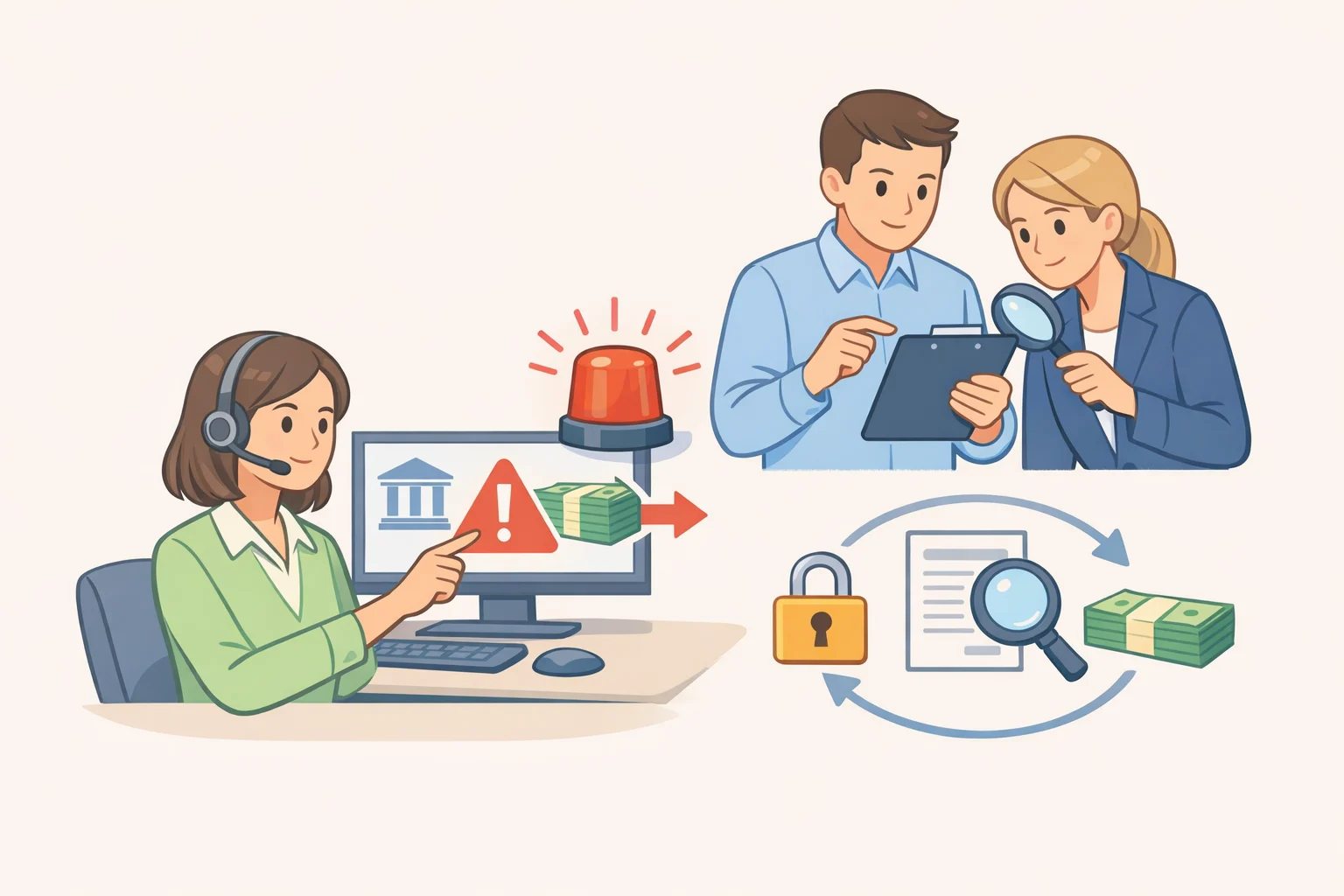
The scam's power depends on isolation. Every layer of support that exists around an older adult, family, bank, care provider, is a potential interruption point.
For family members and caregivers
Have the prevention conversation before any incident occurs. Introduce the concept of "pause before paying" as a standing household norm, not a reaction to a scare. The goal is not to remove autonomy; it's to establish a shared expectation that large or unexpected financial decisions get a second look.
That conversation becomes harder, not easier, when someone is already in the middle of a scam. If an older adult seems convinced the threat is real and resists help, don't argue about whether the caller is legitimate. Redirect: "Let's just call the bank together and confirm." That moves the action toward verification without creating conflict about who's right. The CFPB frames this kind of proactive planning as a shared protective measure families and caregivers can build into everyday routines.
For banks and financial institutions
Bank employees occupy a uniquely powerful position in this prevention chain. The CFPB explicitly identifies financial institution staff as critical frontline actors, often the first outside party to notice that something is wrong before money leaves the account. An unusual cash withdrawal, a large wire transfer to an unfamiliar account, bulk gift card purchases: these are visible elder financial abuse warning signs.
Concrete steps financial institutions can take: train staff to ask a brief, non-accusatory question when these patterns appear ("Is someone waiting for you outside?"); make trusted-contact alerts a standard account feature offered during onboarding; and designate a process for flagging and briefly delaying suspicious large transactions for follow-up. The FTC's advisory group under the Stop Senior Scams Act has been developing industry training guidance and working on fund-recovery mechanisms, particularly for bank transfers, according to the agency's 2024 annual report to Congress.
The systemic guardrails are improving, but they remain incomplete. Stopping a transfer is almost always more effective than trying to reverse one.
What to do this week
These scams succeed by compressing time, creating fear, and blocking outside input. Every measure below is designed to slow that sequence down before it reaches the money.
Set up now, before any incident:
- Name a trusted contact and tell them their role explicitly (CFPB)
- Ask your bank whether it offers trusted-contact alerts on large transactions (CFPB)
- Enable call-blocking tools through your wireless carrier (FTC)
During any suspicious call:
- Hang up; call back on a number you find independently
- Do not move money for any reason given in an unexpected call, not to "protect" it, not to "clear your name," not for any reason
- Call your trusted contact before taking any financial action
If you think someone is in an active scam right now:
- Hang up the suspicious call immediately
- Call the bank's fraud line directly using the number on the back of the card or a statement
- Contact the trusted person named in advance
- Preserve any evidence: don't close the pop-up, save any messages or emails
- Report to the FTC at ReportFraud.ftc.gov
Reporting won't recover money already sent. Most payment methods used in these scams, cryptocurrency, wire transfers, cash, are effectively irreversible, which is why scammers prefer them. But reporting contributes to enforcement data that drives investigations, and every report makes the pattern more visible.
The protection here isn't complicated. It's a trusted contact, a standing rule about unexpected calls, and a habit of slowing down before moving money. None of that requires special knowledge or technology. It just has to be in place before the phone rings.