iRobot New Roombas 2026: 5 Models, Lower Prices, and a Manual Cleaner
iRobot announced five new Roomba robot vacuums and its first-ever manually operated floor cleaner yesterday, calling it the company's most significant portfolio expansion in years. Every new robot is priced below the model it replaces and adds meaningful spec upgrades. The Roomba Electro Plus, a $399.99 cordless 5-in-1 device you push yourself, marks the harder break: a company whose founding premise was autonomous cleaning is now selling something that requires a human to operate it.
The timing matters. iRobot filed for Chapter 11 bankruptcy earlier this year and was acquired through that process by Shenzhen Picea Robotics, the Chinese manufacturer that had been building Roombas under contract for years. This launch is the first product slate under new ownership. All six products are available for pre-sale on irobot.com now, with retail availability at select stores coming later this month, per iRobot's press release.
How Picea's ownership changed what iRobot could build
Video of the Day
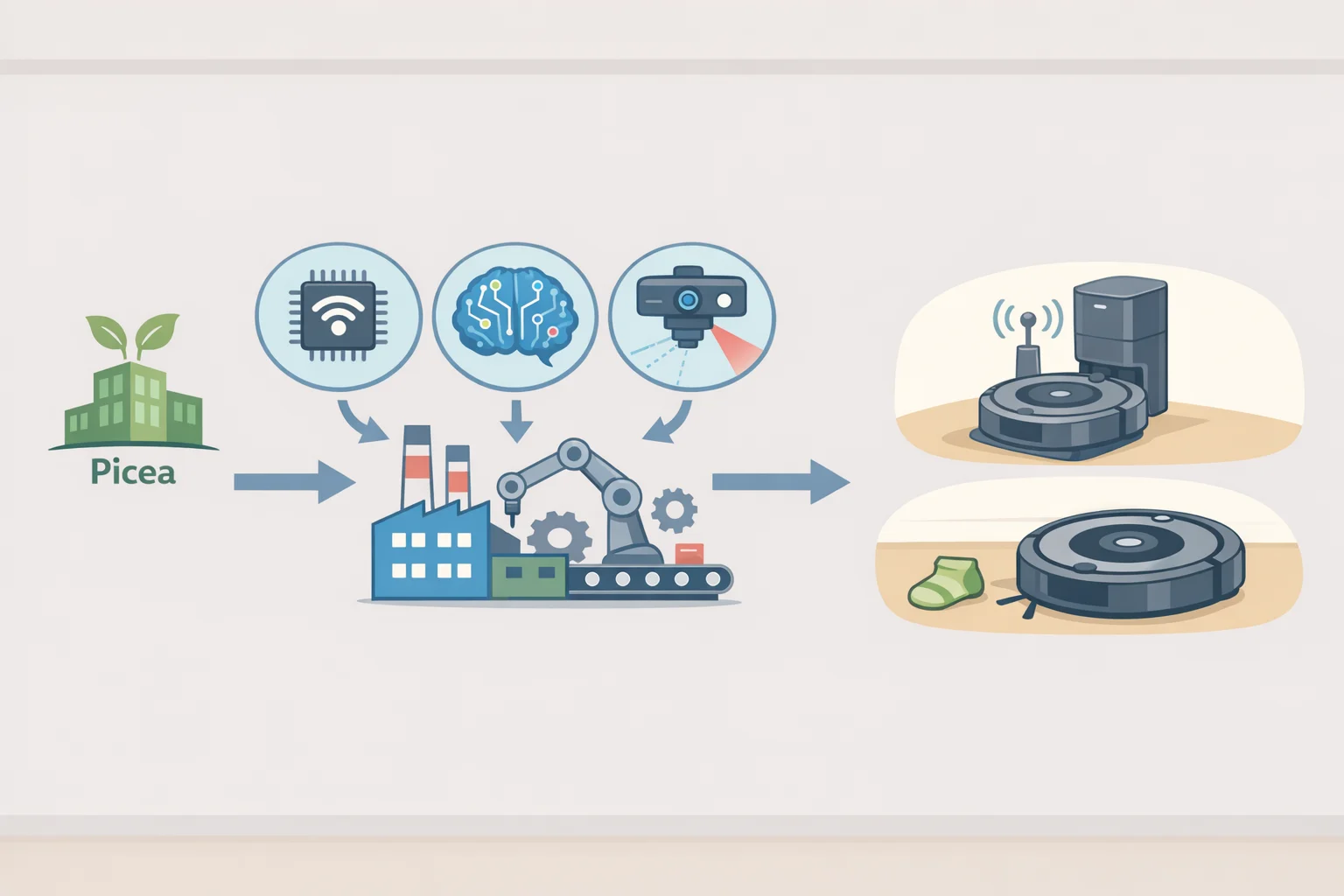
Six months ago, iRobot filed for Chapter 11 and announced a plan to sell its remaining assets to Shenzhen Picea Robotics, the Boston Globe reported. Picea had been manufacturing Roombas in China and Vietnam under contract for years before the acquisition. Tariffs on Chinese-manufactured goods were cited in iRobot's bankruptcy filing as a central cause of the collapse, with an estimated cost of $23 million in 2025 alone. "Without Picea's partnership, iRobot would cease to exist," iRobot's Szynal told the Globe at the time.
That ownership shift is directly visible in the new lineup. The electrolyzed water technology powering the Electro Plus's disinfection system came from Picea, not iRobot's own R&D, The Verge confirmed this week. The new robots include LiDAR mapping, AI obstacle avoidance, self-emptying docks, and hot-water mop washing features that have been standard in rival models from Dreame, Roborock, and Ecovacs for years.
The five new robot models are entering the North American market for the first time, per iRobot's press materials. iRobot is now competitive in part because it draws on the same manufacturing and technology ecosystem its rivals built. That's a reasonable outcome for consumers, who get better hardware at lower prices. But it complicates any straightforward narrative about Roomba recovering on its own terms.
Video of the Day
iRobot announced 5 new Roombas: lower prices, smaller bodies, more capable specs
The flagship Roomba Max 775 Combo Robot + AutoWash Dock drops to $999.99 from the prior Max 705 Combo at $1,299.99, adding 30,000Pa suction and hot-water mop washing, The Verge reported this week. The vacuum-only Max 715 Vacuum Robot + AutoEmpty Dock falls from $899.99 to $699.99, with suction climbing from 13,000Pa to 30,000Pa. Both models are priced below their predecessors while adding specific, documented upgrades.
The three Plus-series models the 415, 515, and 575 share a body 46% smaller than the generation they replace, with 9cm of clearance, enabled by a redesigned dual-LiDAR sensor configuration, according to iRobot's press release. iRobot's materials describe them as fitting under beds, sofas, and cabinets; that claim has not been independently tested.
The differences between the three Plus models follow a clear tier structure. The 575 ($799.99) includes a camera for AI-based obstacle and stain detection via SmartScrub which identifies dirty areas and scrubs them repeatedly rather than making a single pass plus an onboard water tank, hot-water mop washing, and 35mm threshold clearance, per iRobot's press materials. The 515 ($699.99) keeps the compact body and a claimed battery life of up to 295 minutes covering roughly 2,000 sq ft per charge, but has no camera, which means no AI-powered obstacle or stain detection, The Verge noted. The 415 ($599.99) replaces the older 405 and adds increased suction and anti-tangle brush technology, but lacks an onboard water tank and hot-water mop washing; heated pad drying is still present, which is a distinct function.
All specs come from manufacturer-supplied materials. No independent reviews exist yet.
The Electro Plus: iRobot as a floor-care brand, not just a robot company
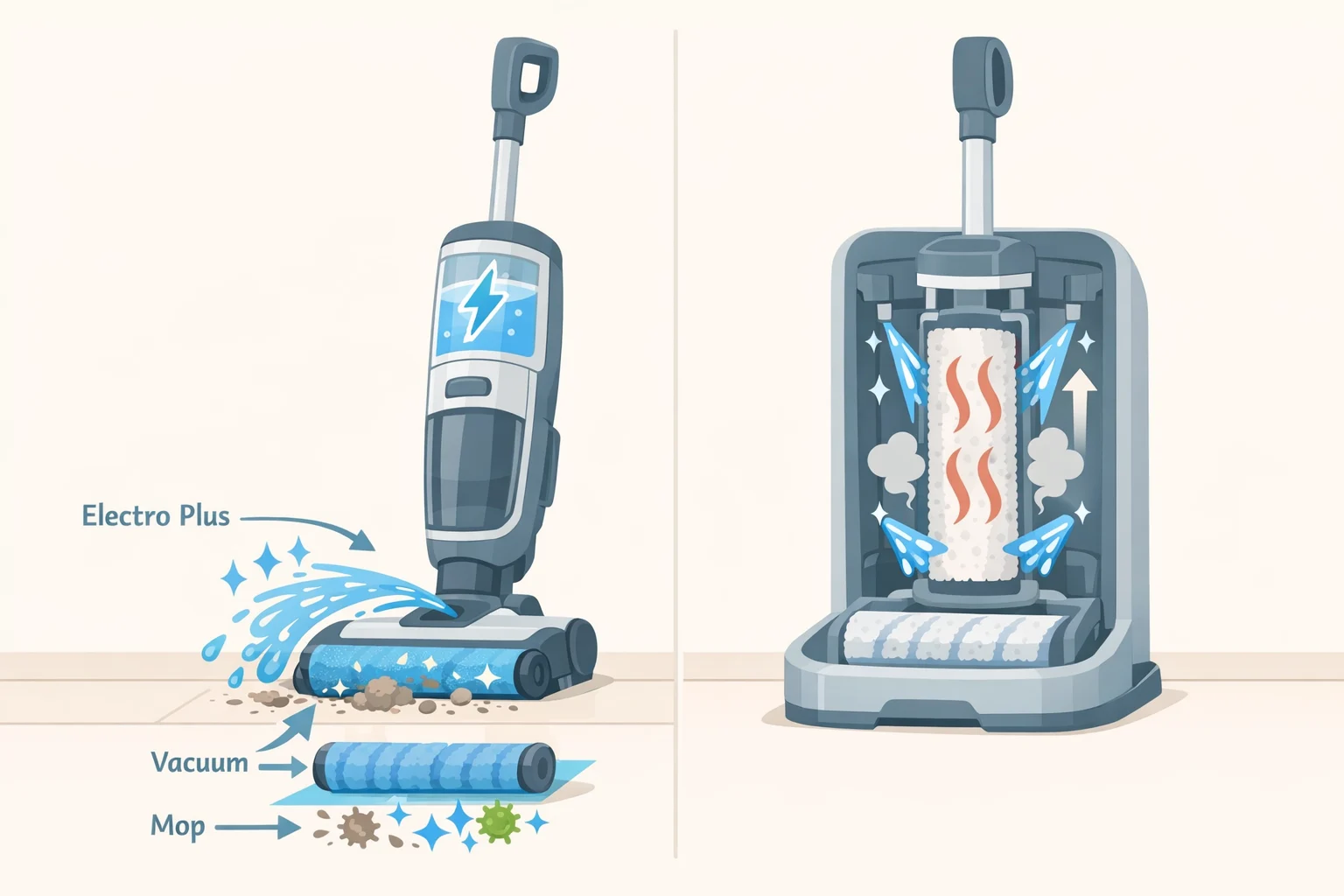
The Roomba Electro Plus is the clearest signal of what iRobot is becoming. A $399.99 cordless device that vacuums, mops, and disinfects simultaneously, it has no autonomous function whatsoever, The Verge noted. For a company whose founding premise was that floors should clean themselves, that's a notable change of direction.
The distinguishing feature is electrolyzed water: an electrical current converts naturally occurring chlorine in tap water into hypochlorous acid, eliminating the need for separate cleaning solutions. Bacterial kill-rate figures differ between sources. iRobot's official press release and Engadget both cite 99.99%; The Verge cites 99.9%. Both figures are unverified manufacturer claims pending independent testing. The "safe for kids and pets" language in iRobot's materials is based on the absence of chemical additives, not independent safety data.
On a single charge, iRobot claims 35 minutes of runtime covering up to 1,292 square feet, per Engadget. The ThermaClean dock washes and dries the roller mop automatically after use; users must manually drain and refill the water tank. The no-proprietary-solution design is genuinely differentiating in this category tap water in, no branded refills required.
The product concept is shared with manual wet-dry cleaners from Dreame and Roborock, a similarity The Verge explicitly noted. iRobot is entering a category its rivals already occupy. The underlying strategy came directly from customer feedback, according to iRobot chief engineer and VP Adam Pope: "If they have a mess that they want to clean up, maybe they want to do that quickly with this type of handheld product," Pope told The Verge. The logic is that Roombas handle scheduled whole-home cleaning while the Electro Plus handles targeted spot jobs a kitchen spill, a bathroom disinfection. It also acknowledges something iRobot hadn't previously committed to in hardware form: autonomous cleaning doesn't cover every use case.
What the launch does and doesn't tell us
The new lineup addresses the pricing, size, and category gaps that had become iRobot's core weaknesses. The Max 775 costs $300 less than the model it replaces while adding meaningful specs. The Plus-series robots are compact enough to operate in spaces the previous generation couldn't reach. The Electro Plus opens a product category iRobot had never touched. Taken together, The Verge and iRobot's press release confirm the products are real and the pricing is set.
What isn't clear yet: whether any of it translates to market recovery. iRobot held less than 10% of worldwide market share by the second quarter of 2025, per IDC data cited by the Boston Globe. There are no independent performance reviews of any new model, no comparative data against Roborock or Dreame at equivalent price points, and no consumer demand signals. Every suction figure, battery life claim, and square footage estimate in this article comes from iRobot's own materials.
The story changes when independent reviews land and retailers start stocking these in late July. Until then, this launch is a credible set of product decisions from a company that has correctly diagnosed what went wrong. Whether the market agrees is a question for the back half of the year.