Meta Smart Glasses Privacy Light Tampering Fix: What Actually Changed
Meta confirmed this week that its AI glasses will automatically disable the camera if the capture LED is covered, damaged, or destroyed, closing a specific gap that privacy researchers had flagged for months. The update means that defeating the privacy light no longer enables covert recording; it prevents recording entirely. For anyone who spends time near someone wearing these glasses, that's a concrete change to how the device behaves, though it's a narrow one.
The Electronic Frontier Foundation flagged the vulnerability in March, noting that the indicator light could be defeated with cheap hacks. Unlike pointing a phone at someone, which is socially visible, wearing glasses and glancing in someone's direction draws no attention. The LED was doing the entire job of signaling that recording was happening, with no technical enforcement behind it. The Verge reported Tuesday that the update arrived amid public backlash over the glasses.
Meta AI glasses privacy LED: what the camera disable update does
Video of the Day
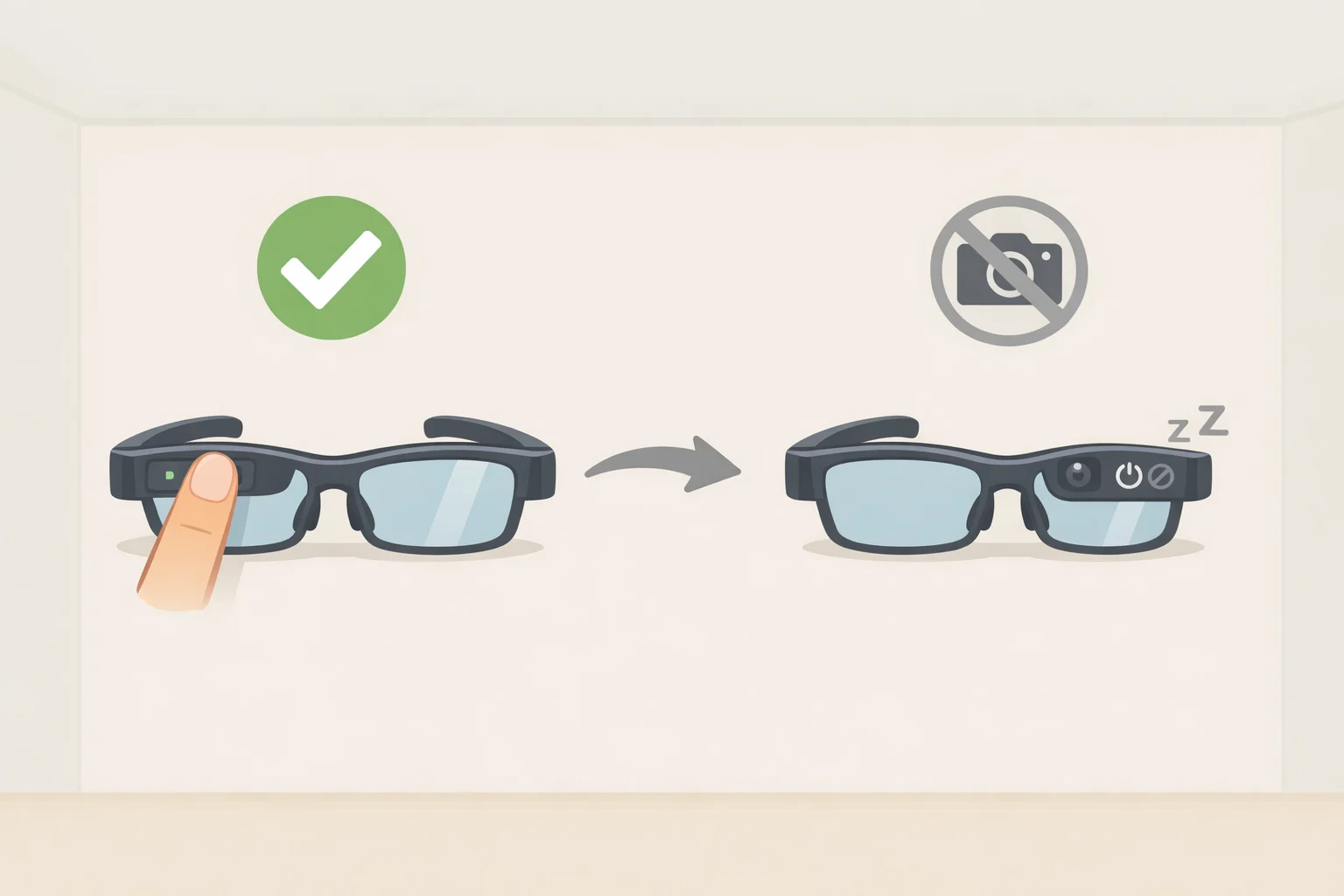
The light itself hasn't changed. What changed is whether the camera can operate without it.
On second-generation Meta AI glasses, the camera now shuts off automatically when the capture LED is detected as blocked and stays off until the obstruction clears, per Meta's FAQ. A forthcoming update adds a harder trigger: if the light is physically tampered with or destroyed, the camera is disabled outright. No photos or videos can be taken until the glasses detect the light is unblocked again.
Before this change, the LED functioned purely as a social signal. A bystander who saw it blinking could infer recording was happening; a bystander who saw it dark couldn't know whether the wearer had simply disabled it. Now, a visible, working LED is a prerequisite for the camera to capture anything. Covering it doesn't open a quiet path to recording; it closes the camera entirely.
That description comes from Meta's own FAQ. No independent technical verification of how the system performs under real-world conditions has been published.
Video of the Day
Why the fix arrived now

The timing fits a sequence worth noting plainly, without overstating what it proves.
EFF identified the defeatable LED as a structural weakness in March, specifically the vulnerability this update now addresses. The Verge reported Tuesday that the change followed public backlash. A similar sequence played out with facial recognition. According to EFF's June investigation, WIRED and EFF reported that Meta had deployed facial recognition code to millions of glasses. EFF's Threat Lab confirmed through static analysis that the code was present and active, though not yet surfaced to consumers. One researcher went further: by connecting a phone in debug mode and issuing a few commands, they added a face to the app database, and the glasses subsequently detected that face when it appeared in view. The feature functioned. It had simply not been turned on for ordinary users.
After that reporting drew widespread attention, Meta stripped the facial recognition code from its latest Meta AI app update, as EFF noted in early June. Meta had previously paid $650 million to settle a BIPA class action over facial recognition on its main platform. The glasses would have added a wearable, always-on version of the same capability.
The LED fix addresses one specific and publicly identified problem. Whether the pattern of external criticism followed by correction reflects anything about how the product is developed is not something the available reporting establishes.
What the camera disable fix doesn't change

The new safeguard makes covert recording significantly harder. It doesn't change how the glasses handle data once they're being used normally, and that's where the more persistent questions live.
AI features can't run locally on the device. When a user invokes AI features, including commands like "Hey Meta, start recording," that footage is sent to Meta for processing, according to EFF's March analysis. Users can turn off cloud media syncing in the app's privacy settings, which stops optional backup of photos and videos. But that control applies to backup storage, not to the data transfer the AI functionality itself requires. Some data sharing is configurable; the flow that makes the glasses work as an AI device is not.
Audio from Meta AI interactions is saved by default. There's no blanket opt-out: users who don't want recordings kept must delete them manually each time, EFF noted in March. Meta also reserves the right to review those interactions through automated systems or human reviewers. Separately, the camera and microphone are always enabled unless the user turns off the "Hey Meta" wake word feature entirely, per Purdue Global Law School's privacy review published earlier this year.
For bystanders, the LED enforcement closes a real gap: it's now much harder to be filmed without the recording light showing. What it doesn't touch is what Meta can do with footage captured through fully normal, indicated use, where the light is working, the wearer isn't tampering with anything, and the processing and retention practices above still apply to every interaction.
The scope of the fix is specific. Understanding it means holding two things at once: the LED is now a genuine technical control, and the broader data practices remain unchanged.
Open questions before this update can be fully evaluated

Meta has described what the tamper detection is supposed to do. Several specifics that would allow independent assessment remain unaddressed.
The mechanism itself is unverified. Meta has not disclosed whether enforcement is implemented in hardware, software, or both, per the FAQ. That distinction matters: a software-only implementation could potentially be circumvented through more sophisticated modification than a strip of tape over the LED. Meta describes the outcome; it hasn't published technical documentation showing how the system holds up under adversarial conditions.
First-generation device coverage is unresolved. Meta specifies that automatic LED-blocking detection applies "beginning with our second generation of glasses." Whether first-generation owners receive equivalent protection through a firmware update, or receive none at all, hasn't been addressed publicly.
The facial recognition question is similarly unresolved. The code was removed from the current app update, but Meta has not said whether the feature is off the product roadmap entirely or set aside while the controversy cools.
Those three gaps offer a specific and practical checklist for evaluating the rollout as it proceeds: independent testing confirming tamper detection works reliably across real-world conditions, explicit firmware commitments for first-generation devices, and a clear public statement on the future of facial recognition in the product. The LED fix is the right response to a documented, specific problem. Whether it marks a shift in how the product handles privacy by design is a different question, and nothing announced this week answers it.