Rollme AirCam Headphones with Camera Launch: Specs and Trade-Offs
Rollme launched the AirCam this week, a pair of open-ear-style headphones that pack an 8MP Sony-sensor camera, an LLM-powered AI visual assistant, and on-device real-time translation into a single device priced at $80. The Rollme AirCam headphones with camera borrow the core formula of the AI wearable category head-mounted camera, contextual AI, language features, temple controls and rebuild it in a form factor that, until now, that category hadn't tried. Whether the package actually works is a question no one can answer yet.
Everything that follows comes from a single launch-day report by GSMArena. Every performance claim should be treated as manufacturer-provided until independent testing says otherwise.
Rollme AirCam: open-ear headphones with camera, AI, and translation
Video of the Day
The AI wearable category has settled around a recognizable set of components: a head-mounted camera, an assistant that interprets what the camera sees, some form of language or translation feature, and controls positioned near the temple. The AirCam has all four, GSMArena reported Wednesday, arranged around the ears rather than across a glasses frame.
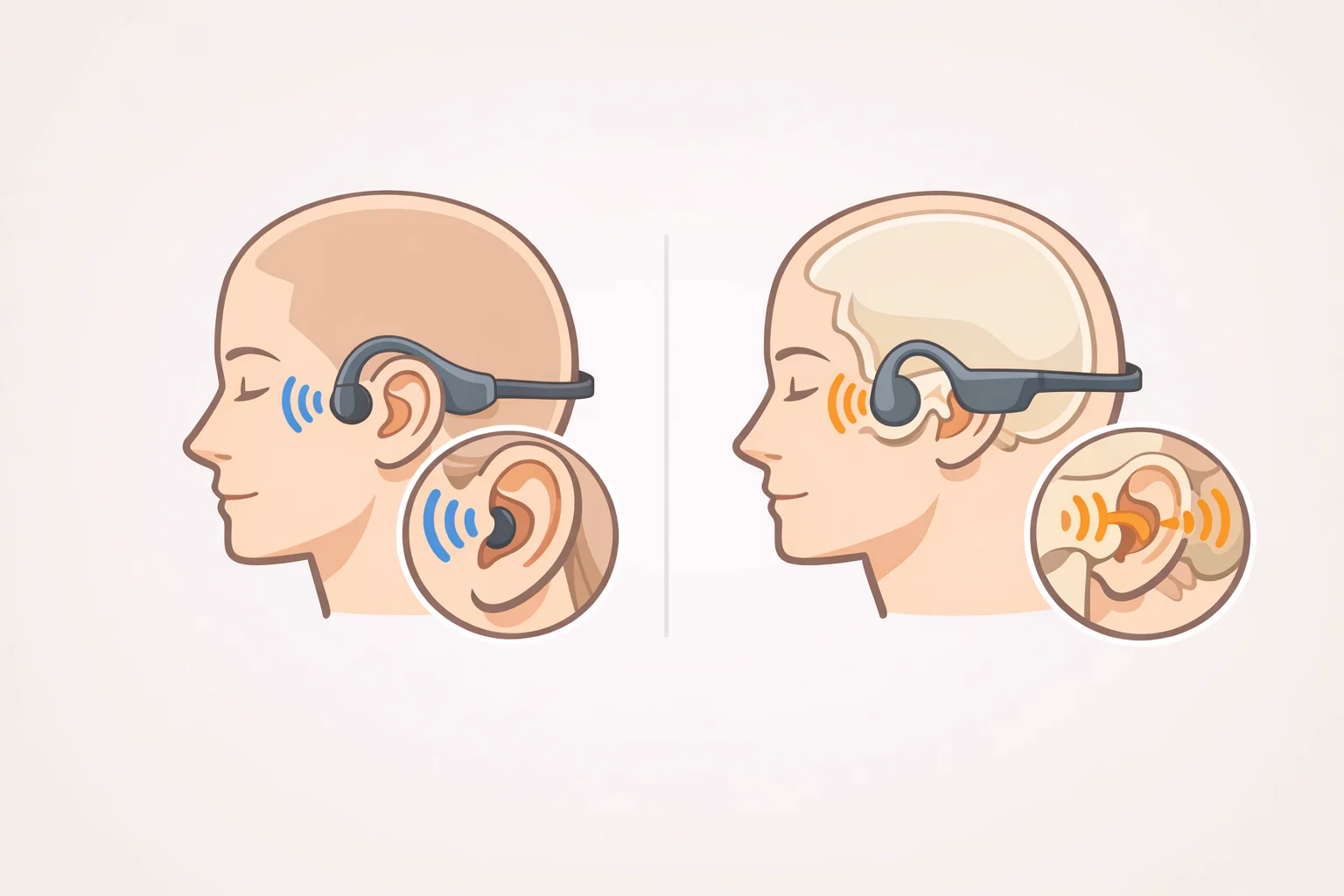
One thing the launch materials don't resolve cleanly: Rollme describes the AirCam interchangeably as open-ear headphones and bone-conduction earbuds. Those are meaningfully different designs. Open-ear headphones sit adjacent to the ear canal; bone-conduction devices bypass it entirely, transmitting sound through the skull. The distinction affects audio quality, sound leakage in public spaces, and long-session comfort. The announcement doesn't clarify which category applies, per GSMArena, which makes any audio assessment impossible before a hands-on test.
For camera placement, stability, and how the device looks while worn, the headphone-versus-glasses distinction matters too. None of that is addressed in the launch materials.
Video of the Day
Camera specs and AI features: what's claimed
The camera is an 8MP Sony sensor capable of recording video at up to 1080p and 30fps, with still photos available as well, according to GSMArena. Footage transfers to a paired smartphone over dual-band Wi-Fi 6. Those are workable numbers for the price bracket, but image quality depends on optics and processing pipeline, neither of which the announcement describes.
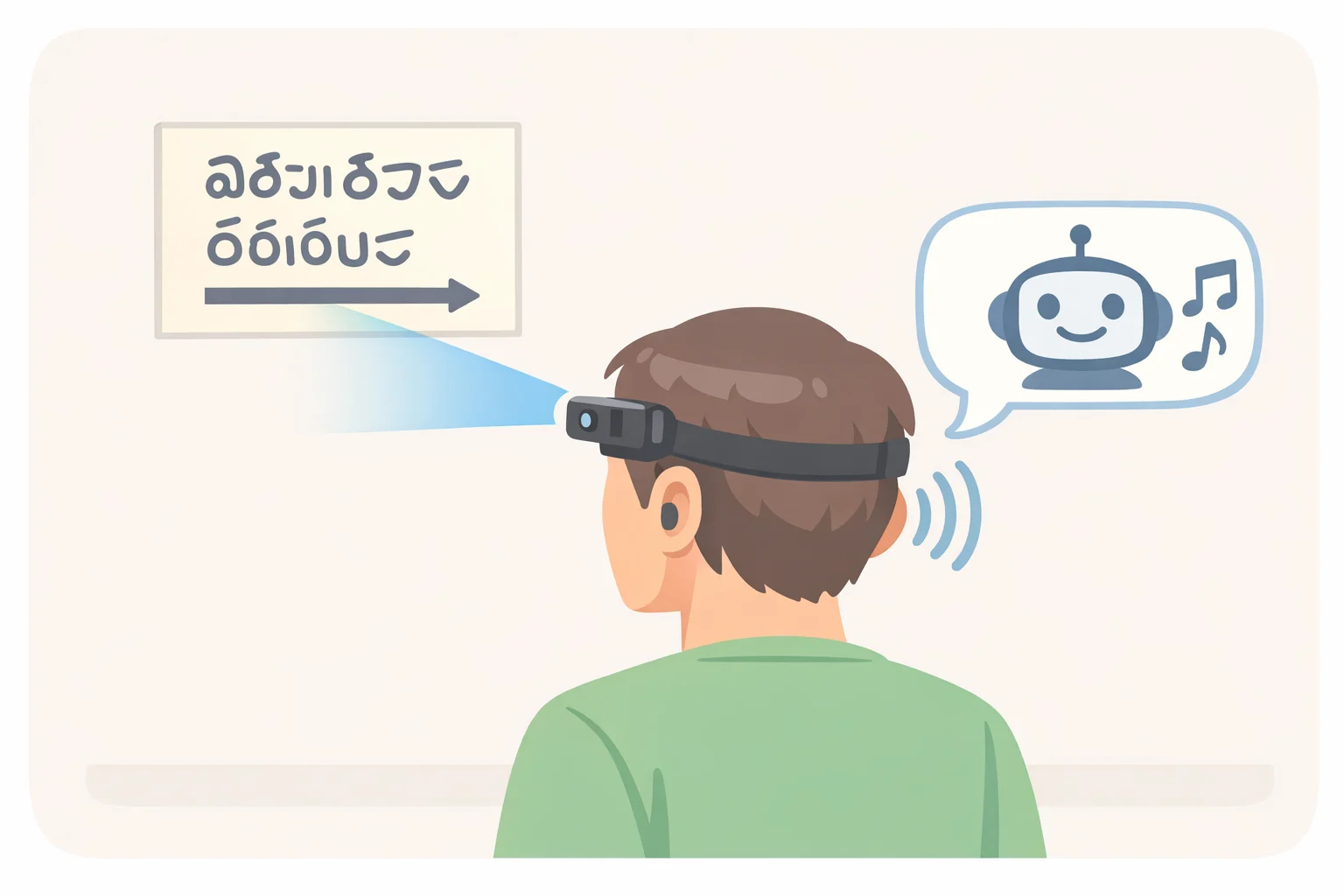
The AI layer is where the device's ambitions get more interesting, and more uncertain. The camera feeds an LLM-powered assistant that identifies surroundings and delivers contextual information through the headphones, GSMArena reported. Point your head at a foreign-language sign, a landmark, or a restaurant menu and get an audio response that's the implied use case. The device also claims on-device real-time translation, per the same report.
The tension worth flagging: "on-device" processing and LLM-based AI don't always coexist comfortably. The launch materials don't specify which LLM powers the assistant, how many languages translation covers, or how much computation runs locally versus through a connected app or cloud service, GSMArena noted. That's not a minor omission for a device positioned as a travel tool. An AI assistant that requires a reliable data connection is a different product than one that works offline.
The trade-offs the $80 Rollme AirCam price creates

Storage and recording limits are the most concrete constraints. Recordings are capped at 10 minutes to help preserve the 8GB of on-device storage, according to GSMArena. At 1080p30, even moderately compressed clips accumulate quickly. The launch materials don't specify whether footage can be deleted on-device, whether storage is expandable, or what file formats are used details that determine how practical the camera is for anything beyond short, occasional clips.
Battery life is rated at up to 10 hours of music playback from a 220mAh cell, the report notes. That number will drop with the camera recording, Wi-Fi active, and AI processing running simultaneously. No camera-active runtime figure is provided, which is the relevant metric for anyone planning to use the AirCam as more than a music player.
On the audio side, the AirCam includes 16mm drivers, dual microphones, and environmental noise cancellation for calls, per GSMArena. Controls sit on a touch-sensitive panel on the right temple. For a wearable camera, the more pressing unknowns are field of view, optical stabilization, and how much the camera drifts when the wearer turns their head none of which the launch covers.
The AirCam is available in black, orange, and white, according to GSMArena.
What independent reviews will need to establish
A few questions will determine whether this device is genuinely useful or just an interesting announcement.
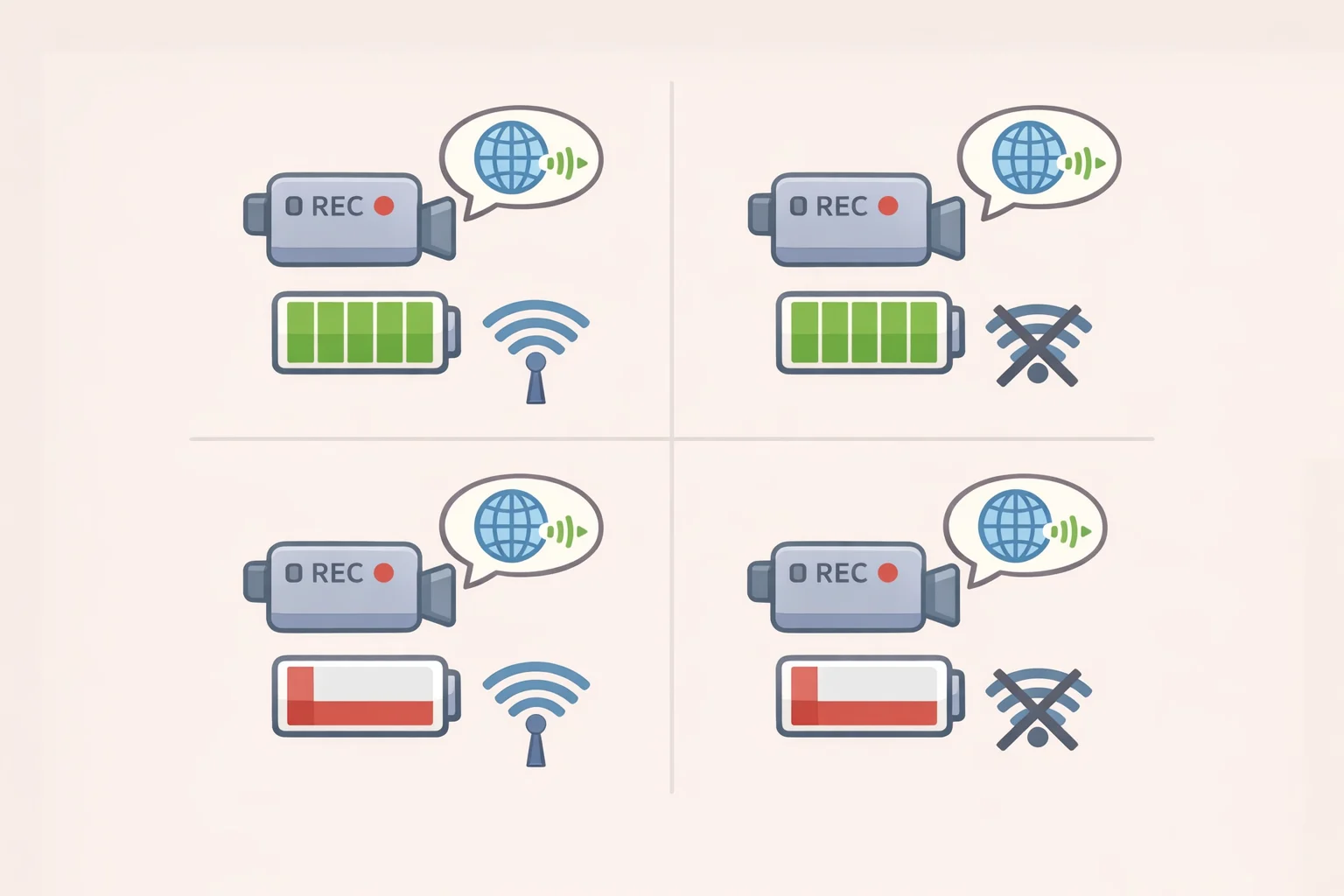
Does the camera produce stable, usable footage while walking? Is there a visible recording indicator that signals to bystanders when video is running? What does battery life actually look like under camera and AI load? Does the AI assistant require an active connection, and if so, what happens when one isn't available? How many languages does translation support?
Those answers would also clarify the AirCam's practical window. The 10-minute clip cap and unverified AI connectivity suggest a device suited to brief, situational use rather than extended recording or navigation-heavy travel. That may be fine at $80 or it may not be enough. Specs alone can't settle it.
A new container for a familiar idea
The AirCam's most notable feature isn't the camera or the AI in isolation. It's the combination, at this price point, in this form factor. A head-worn camera paired with a contextual AI assistant and real-time translation has typically lived in the smart glasses category, at considerably higher prices. Putting that bundle into headphones changes the equation in at least one notable way: headphones are socially unremarkable. Most people don't register them as recording devices. Whether that makes the AirCam a more practical wearable camera, or raises its own set of questions about conspicuity and consent, is something the industry hasn't fully worked through for this form factor.
The launch materials don't address it. An $80 device probably shouldn't be expected to. But it's the kind of question that tends to follow a camera-equipped product once it's in people's hands, and it will follow this one too.