Fiat Topolino EV price in the US: specs, street-legal limits, and who it's actually for
Fiat is now selling the Topolino in the United States, starting at $13,995 before destination charges roughly $16,500 less than the brand's next cheapest model, the 500e, InsideEVs reported this week. The first 300 units have landed and are moving to dealers, MotorTrend reported two days ago. The catch: in standard form, the Topolino tops out at 19 mph and does not meet U.S. federal requirements for street-legal operation.
That's the core tension. The price is real. What you get for it requires more explanation than most EV launches.
The Topolino is a restyled version of the Citroën Ami, a European quadricycle classified closer to an enclosed scooter than an automobile, InsideEVs notes. Measure it against a Tesla or a Nissan Leaf and the price looks like an obvious bargain. Measure it against the LSV and golf-cart alternatives it actually competes with, and the gap narrows considerably while the limitations become harder to ignore.
Fiat Topolino EV price in the US: what buyers actually pay
Video of the Day

Sources cite slightly different base figures. How-To Geek and The Verge both put the MSRP at $13,995 before destination charges. The Drive lists $13,990 plus a $990 destination fee, landing at $14,980 out the door before taxes. MotorTrend cites $14,985, a figure that appears to fold in that destination charge. One writer pricing it out in Indiana reached $16,300 before registration, per The Drive a useful reminder that sticker and out-of-pocket are different numbers.
Both available body styles carry the same price. The standard Topolino has an enclosed cabin with a panoramic sunroof; the Dolcevita swaps that for a roll-back soft top and rope doors in place of solid panels, per MotorTrend. Both seat two.
The mechanical spec is modest by any measure. A 5.4-kWh lithium-ion battery small even relative to plug-in hybrids delivers a manufacturer-claimed range of up to 46 miles, CleanTechnica reports. A full charge via 2.3 kW AC takes roughly five hours, according to MotorTrend. The vehicle measures under 100 inches long and weighs 1,073 pounds. There is a windshield defroster on the enclosed model, but no heater and no air conditioning, InsideEVs notes.
These specs don't describe a stripped-down electric car. They describe a vehicle built for short, slow, warm-weather trips and the price reflects that category, not the EV mainstream.
Video of the Day
The street-legal problem
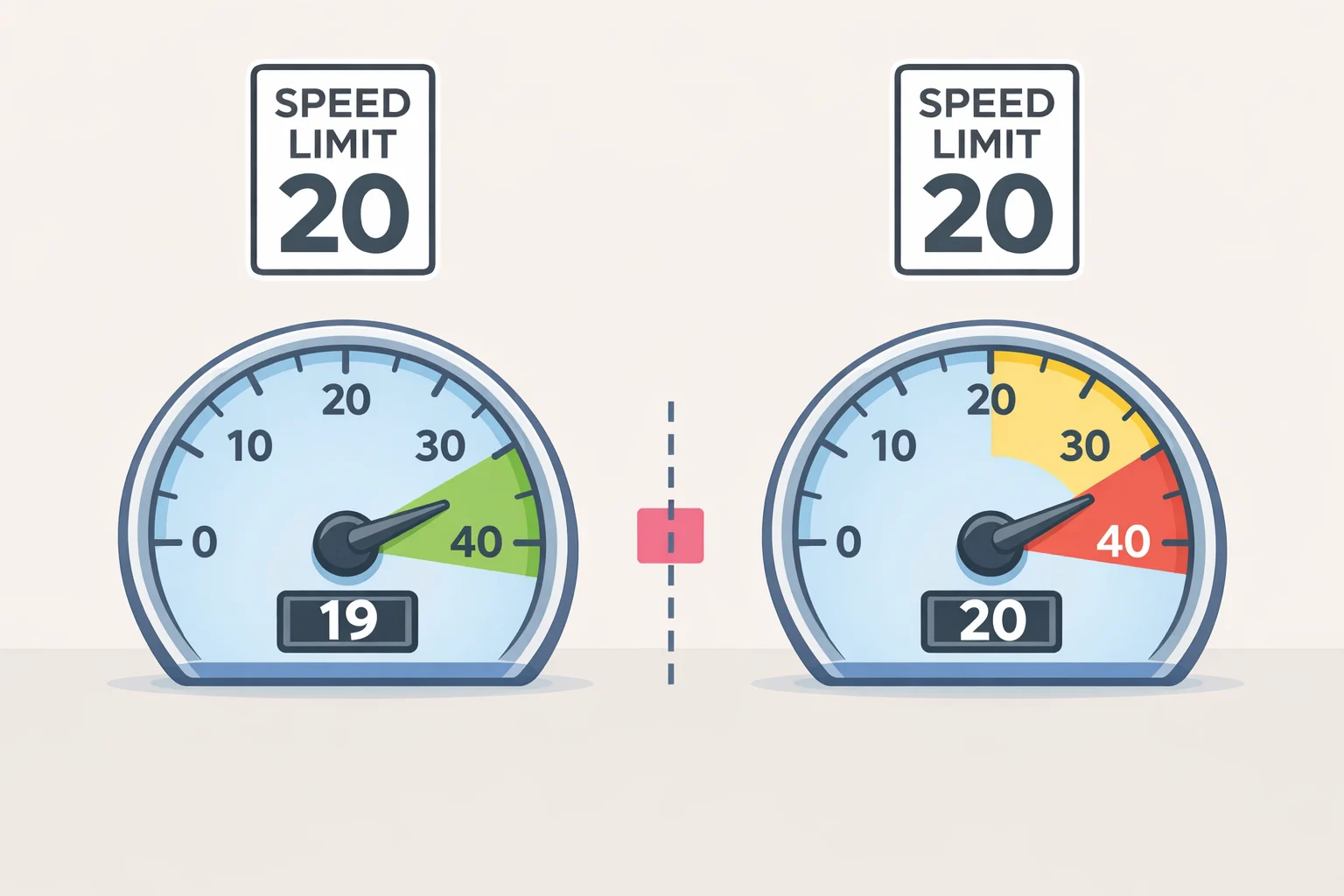
Under U.S. federal rules, a vehicle must reach at least 20 mph to qualify as a Neighborhood Electric Vehicle or Low Speed Vehicle. The Topolino's standard top speed of 19 mph falls one mile per hour short, meaning it does not currently meet those federal thresholds for public road operation, InsideEVs explains. Purchasing the vehicle is legal; operating it on public streets is a separate question that depends on federal classification and varies further by state and locality.
The fix is free and expected soon. Fiat says an LSV conversion kit will raise the top speed from 19 to 25 mph at no additional cost to existing owners, with availability targeted for end of summer 2026, per CleanTechnica and The Drive. What Fiat has not disclosed is whether the kit is dealer-installed or owner-applied a detail that matters for anyone planning logistics around that upgrade.
Once converted, the Topolino can operate on public roads with posted speed limits of 35 mph or below, CleanTechnica reports. That's meaningfully more than a standard golf cart: LSV status allows merging into neighborhood traffic and crossing intersections alongside full-size vehicles, per How-To Geek. Arterials and anything posted above 35 mph remain off-limits regardless.
Buyers ordering today will receive a vehicle they cannot legally operate on public streets until the kit arrives. For those with private property, a gated community, or a resort application, that window may be workable. For everyone else, confirming the kit's availability before ordering is the more straightforward path.
How the Topolino stacks up against its actual competition

Against full-size EVs, the Topolino is cheap. Against the LSV segment it actually sits in, the value proposition is tighter.
The Club Car Onward 4 with LSV spec starts at $14,999, hits 25 mph out of the box, and offers between 30 and 50 miles of range depending on battery selection, per MotorTrend. The E-Z-Go Liberty 4 XTL with LSV equipment starts at $15,999 for the electric version. Both seat four passengers. The Topolino seats two, costs roughly the same after destination charges, and still requires a conversion kit to match the baseline capability those competitors ship with.
Where Fiat has a genuine advantage is the enclosed cabin. Golf cart-based LSVs typically come with open bodies; the Topolino's enclosed structure is standard on both trims, and the panoramic sunroof on the base model goes further than the molded plastic roofs common in the segment, MotorTrend notes. Fiat's 320 U.S. franchised dealerships provide a service and warranty infrastructure that most LSV brands don't offer. The Topolino name itself traces back to a Fiat 500 city car launched in 1936, per How-To Geek for buyers drawn to design and heritage, that lineage is part of what they're paying for.
None of that is irrelevant. But it has to actually matter to the buyer for the trade-offs to add up.
The broader Fiat picture adds context. The brand sold over 43,000 vehicles in the U.S. in 2012 and logged roughly 1,300 in all of 2025, per The Verge. The Topolino's initial shipment of 300 units reflects what this is: a targeted bet on a specific buyer profile, not a volume comeback. A second batch is expected later this summer, per MotorTrend.
Who this vehicle fits and who it doesn't
Fiat describes the target market as coastal drives, resort communities, and private neighborhoods, per CleanTechnica. That framing is accurate. The Topolino makes sense for buyers in warm-weather environments where low-speed local roads are the primary network, who want weather protection a golf cart can't provide, and who need only two seats.
The mismatches are equally clear. Anyone whose daily roads run above 35 mph, anyone needing four seats, anyone in a climate with real winters: the Topolino's current U.S. spec doesn't address those needs. The absence of heating and air conditioning reflects how the vehicle was engineered for European mild-climate use. That's not a feature gap a future trim is promised to close it's a design parameter baked into the platform.
Order now if you have private-property use and can wait out the conversion kit. Wait if street-legal operation on day one matters. Pass entirely if your roads, climate, or seat count fall outside the LSV use case.
What Fiat is actually testing
The LSV conversion kit, expected by end of summer 2026 per The Drive, is the hinge point. Until it ships and Fiat clarifies whether owners need to schedule dealer installation or receive it automatically, the timeline carries real uncertainty. The vehicle transforms from private-property curiosity to usable neighborhood transport once that kit is in hand but that step remains unresolved.
The deeper question isn't about this first shipment. Fiat's bet is that a meaningful slice of the golf-cart buyer market will pay a comparable price for Italian design, an enclosed cabin, and a recognizable brand name. Stellantis has positioned the Topolino as a step into the micromobility space, per CleanTechnica. Whether a second and third shipment moves as quickly as the first will be the actual measure of whether that bet was right.