Sony RX10 V: What's New and Who Should Buy It in 2026
Sony has announced the RX10 V, its first superzoom camera in nearly nine years. The formula is deliberate: keep the 20.1MP one-inch sensor and 24-600mm f/2.8-4 Zeiss lens that made the RX10 IV a long-running favorite, transplant the Bionz XR processor from Sony's current mirrorless lineup, and charge $2,299 for the result. Preorders are open now, with shipping expected around August 6, PetaPixel reported today.
The price anchors the whole story. Sony discontinued the RX10 IV and used copies in good condition climbed toward $3,000, Digital Camera World reported today. At $2,299, the RX10 V sits between that inflated used-market ceiling and the RX10 IV's original $1,700 launch price a position that reflects Sony's read of exactly how much the remaining audience will pay. Three days ago, Amateur Photographer predicted any new RX10 would land beyond casual buyers and target photographers already committed to the format. At $2,299, that prediction held.
What the RX10 V shares with a nine-year-old camera
Video of the Day
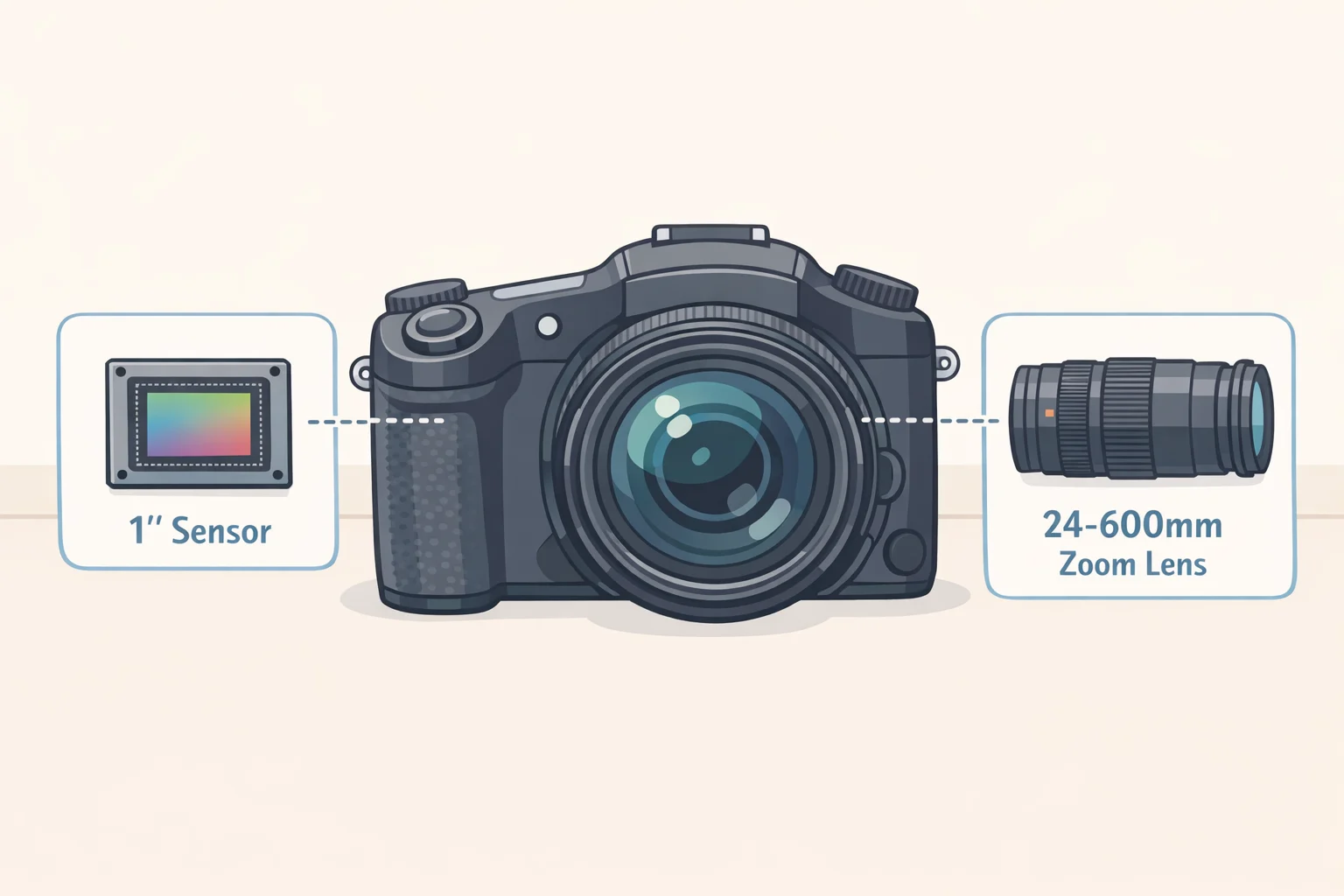
Sony kept the 20.1MP stacked Exmor RS CMOS sensor and the 24-600mm f/2.8-4 Zeiss Vario-Sonnar lens unchanged from the RX10 IV. The 24-600mm figure is the full-frame equivalent; the actual focal length runs 9.1-210mm, per PetaPixel today. The upgrade is the processor sitting on top of that stacked sensor architecture not the imaging hardware itself.
That one-inch sensor still places the RX10 V in a distinct tier above most bridge cameras. The category standard is the 1/2.3-inch chip, dramatically smaller, which powers everything from the Panasonic FZ82D to the Nikon Coolpix P1100, Amateur Photographer noted three days ago. The RX10 V's advantage over those cameras is real. Its disadvantage against modern mirrorless sensors is equally real.
Low light is where that ceiling shows. Early review findings from PetaPixel today indicate image quality degrades noticeably at ISO 800, with the camera struggling at ISO 1600 and 3200 settings that are routine on most cameras in 2026. Sony claims the Bionz XR processor improves noise reduction and color rendering versus the 2017 model, Digital Camera World reported today, but those claims have not been tested against controlled comparisons. Early review evidence and manufacturer claims are not yet reconciled on this point.
The lens brings structural tradeoffs that no firmware update touches. The aperture begins narrowing almost immediately past the wide end and locks in at f/4 by 103mm, where it stays for the remaining 500mm of zoom range, The Shortcut found today. Use the mechanical shutter at anything faster than 1/1000 sec and the aperture drops further to f/8, per PetaPixel's review today. These are the same constraints that defined the RX10 IV in 2017.
Video of the Day
Where the Sony RX10 V's Bionz XR processor makes a real difference
The meaningful upgrades are concentrated exactly where photographers who use this kind of camera feel the pain most.
Autofocus is the most significant gain. The Bionz XR processor the same chip now in the a7 V and the more recently released a7R VI, per PetaPixel today brings 575 phase-detection AF points covering roughly 71% of the frame, running 60 calculations per second, Digital Camera World reported today. Real-Time Recognition AF can track humans, animals, birds, insects, cars, trains, and planes. In hands-on testing, the system held focus on fast-moving subjects at maximum zoom while shooting through a crowd, The Shortcut observed today. For wildlife and bird photographers, that kind of tracking reliability isn't incremental.
Burst speed climbs from 24 fps to 30 fps, blackout-free, with AF/AE active, matching the burst performance of the a7R VI, Digital Camera World noted today. That speed requires the electronic shutter and, for RAW shooters, means accepting lossy compressed files, per PetaPixel today. One notable gap: Sony's other Bionz XR cameras offer Pre-Capture, which buffers frames before the shutter is fully pressed a feature built for exactly the kinds of unpredictable subjects this camera is marketed toward. Birds flushing from cover. Athletes mid-jump. The RX10 V doesn't have it, PetaPixel confirmed today.
The video gap between the IV and V is the widest of any category. The IV topped out at 4K/30p. The V shoots full-width 4K/60p, cropped 4K/120p, with 10-bit 4:2:2 All-I recording, S-Log3, S-Cinetone, LUT support, and 4K/30p live streaming something the IV never offered, PetaPixel and Digital Camera World both reported today. For a hybrid shooter who needs professional-grade video in a single travel body, this alone may justify the upgrade.
Battery life rounds out the major improvements. Sony replaced the old NP-FW50 with the NP-FZ100 used across its Alpha line, rated at 630 shots per charge more than 50% better than the previous battery, PetaPixel reported today. In 24 hours of hands-on use, roughly 100 shots including bursts consumed only 15% of a charge, The Shortcut found today. The body grows by no more than 6.3mm in any dimension and gains 16 grams over the RX10 IV negligible while adding USB-C, 5 GHz Wi-Fi, a Multi Interface Shoe, and an upgraded 3.69M-dot EVF replacing the previous 2.36M-dot panel, per PetaPixel today.
Taken together, these upgrades make the RX10 V feel like a current Sony camera rather than a 2017 model with new firmware. They don't change what the one-inch sensor can do in the dark, or what f/4 means at 600mm. Whether they justify the price depends on who's asking.
Sony RX10 V price and who this camera is actually built for
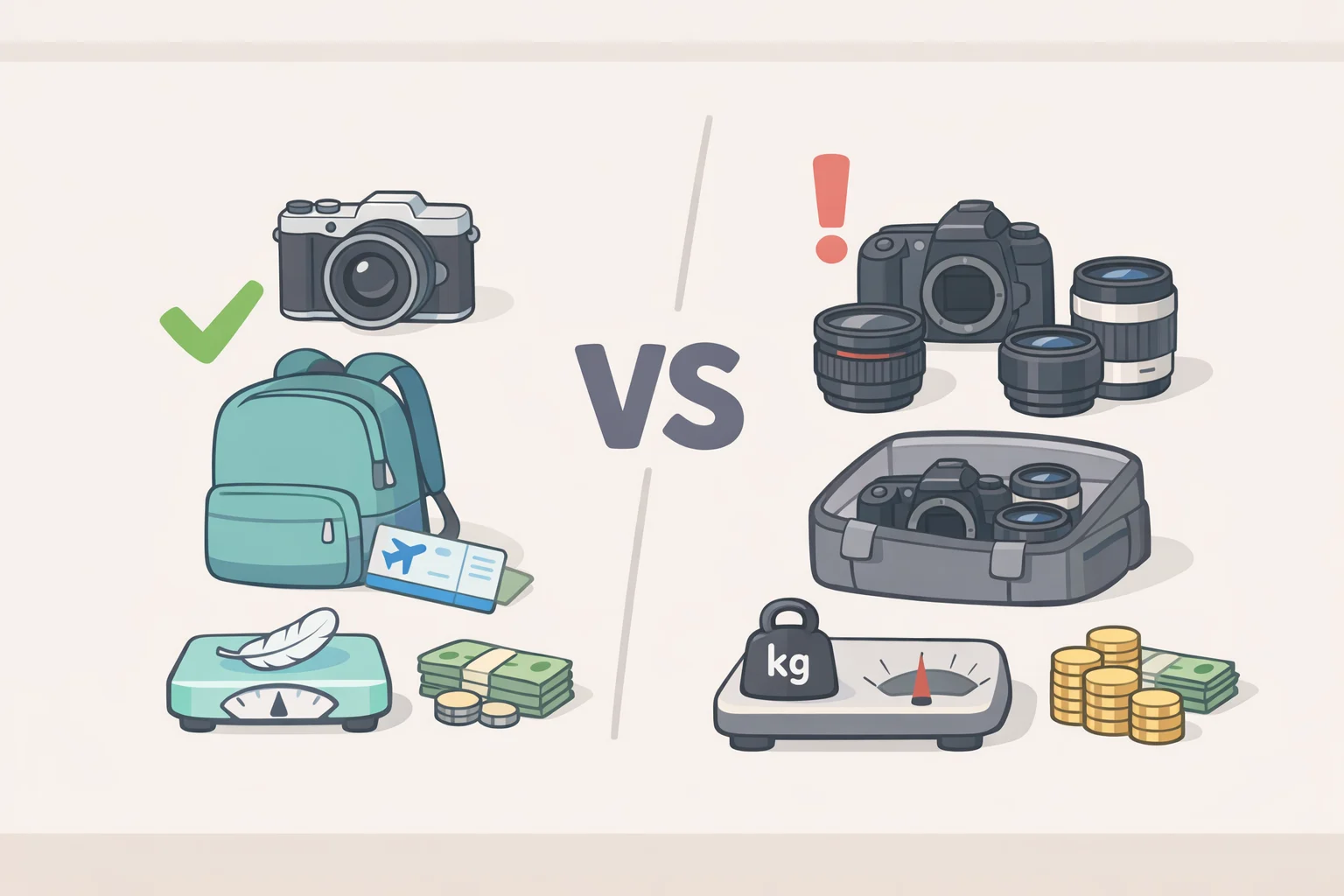
The core value proposition is convenience, not maximum performance per dollar. At 1,111 grams with battery and card, this is a heavy fixed-lens camera but that single body covers 24mm wide-angle through 600mm telephoto with macro capability included. Assembling that range with mirrorless lenses means multiple bodies, considerably more money, and substantially more pack weight, Digital Camera World noted today. The $2,299 is buying range and simplicity, not sensor performance per dollar.
The buyers for whom this makes sense are fairly specific:
- Strong fit: Travel photographers who want one body covering landscapes through distant subjects without a second bag. Wildlife and bird photographers shooting in good light who can exploit the 30 fps burst rate and telephoto reach. Hybrid shooters who need the updated video suite 4K/60p, 10-bit, S-Log3 in a single carry-on-friendly package.
- Weaker fit: Photographers who regularly shoot after dark or in mixed indoor light. Action photographers who would specifically benefit from Pre-Capture for unpredictable subjects. Anyone for whom maximum image quality per dollar is the primary criterion; at $2,299, interchangeable-lens alternatives exist, even if none of them collapse a 24-600mm range into a single body.
For travel and wildlife photographers who've been watching used RX10 IV prices approach $3,000, the RX10 V offers a straightforward answer: current-generation processing, substantially better autofocus and video, a dramatically improved battery, and a new-camera warranty, per PetaPixel and Digital Camera World today. For that buyer, the timing makes sense.
Anyone else at $2,299 should hold off. The low-light limitations flagged in early testing are real, and Sony's noise-reduction claims haven't been measured against the RX10 IV under controlled conditions, per PetaPixel's review today. Extended testing covering sustained video use, real-world wildlife scenarios, and head-to-head low-light comparisons will clarify how much of the performance story reflects genuine processor gains versus manufacturer optimism.
The broader question the RX10 V raises is whether Sony pricing a niche bridge camera at $2,299 after a nine-year gap signals a category resurgence or a calculated one-off for an underserved audience. Canon's one-inch PowerShot G3 X hasn't been updated since 2015. Whether another manufacturer follows Sony into the space or whether this is a single company satisfying a loyal holdout is something the market will answer over the next several months, as Amateur Photographer speculated three days ago.