FCC Approves Reflect Orbital Satellite While Sidelining Astronomy Concerns
The FCC on July 9 approved Reflect Orbital's Eärendil-1, a 142-kilogram sun-reflecting space mirror designed to deploy an 18-meter-square thin-film reflector in low Earth orbit and direct sunlight onto specific patches of nighttime Earth, per the formal FCC order. The approval covers one demonstration satellite and a two-year license. No commercial service was authorized.
What makes the approval consequential is not the satellite itself. It's the reasoning. The FCC concluded that concerns about optical astronomy impacts are "outside our review and authorization of the space station and are not a basis for denial of or additional conditions on Reflect Orbital's operations," as the order states. The agency reviewed spectrum use, orbital debris, and licensing mechanics. Visible-light effects, ecological impacts, and eye-safety concerns were set aside as falling outside its statutory mandate. That is not a bureaucratic failure. It is a stated jurisdictional limit, and critics say no other agency currently appears positioned to fill the gap.
Nearly 1,900 public comments opposed the application, SpaceNews reported this week, more than SpaceX's application to operate up to a million orbital data center satellites attracted.
What Eärendil-1 actually is and what it isn't
Video of the Day

Start with what the FCC approved, because both opponents and supporters have reached for the larger vision when the immediate authorization is more limited.
Eärendil-1 is a demonstration mission scheduled to launch later this year into an operating orbit of roughly 625 kilometers altitude, according to the FCC order. Its motorized, steerable reflector, described in the order as "highly specular" rather than diffuse, will direct sunlight toward ground targets for several minutes at a time, covering an area roughly five kilometers wide and requiring repointing every four minutes, per The Conversation. The two-year license covers one year of operations, after which Reflect Orbital will dispose of the satellite via uncontrolled atmospheric re-entry, using remaining propellant to lower its altitude as far as possible beforehand, per the order.
Reflect Orbital's long-term vision is considerably larger: more than 50,000 satellites by 2035 serving agricultural, emergency response, and industrial customers, The Conversation reported. The FCC's order is explicit that none of that was approved. What was authorized is spectrum use in UHF, S-, and X-bands for telemetry and data downlink to support the one-satellite test, per the order.
Most of the alarming numbers in circulation concern constellation scale, not this demo. The governance problem the approval reveals exists regardless of whether Reflect Orbital ever builds past satellite number one, but conflating the two arguments does neither any favors.
The American Astronomical Society drew the relevant distinction in its petition to deny. Most satellites create optical effects as a side effect of being in orbit. Eärendil-1 is engineered to maximize reflected light as its core function, making impacts "extremely challenging to mitigate" precisely because brightness is the point, Engadget reported. The FCC denied the petition.
Video of the Day
Why the FCC approves Reflect Orbital satellite only on spectrum grounds
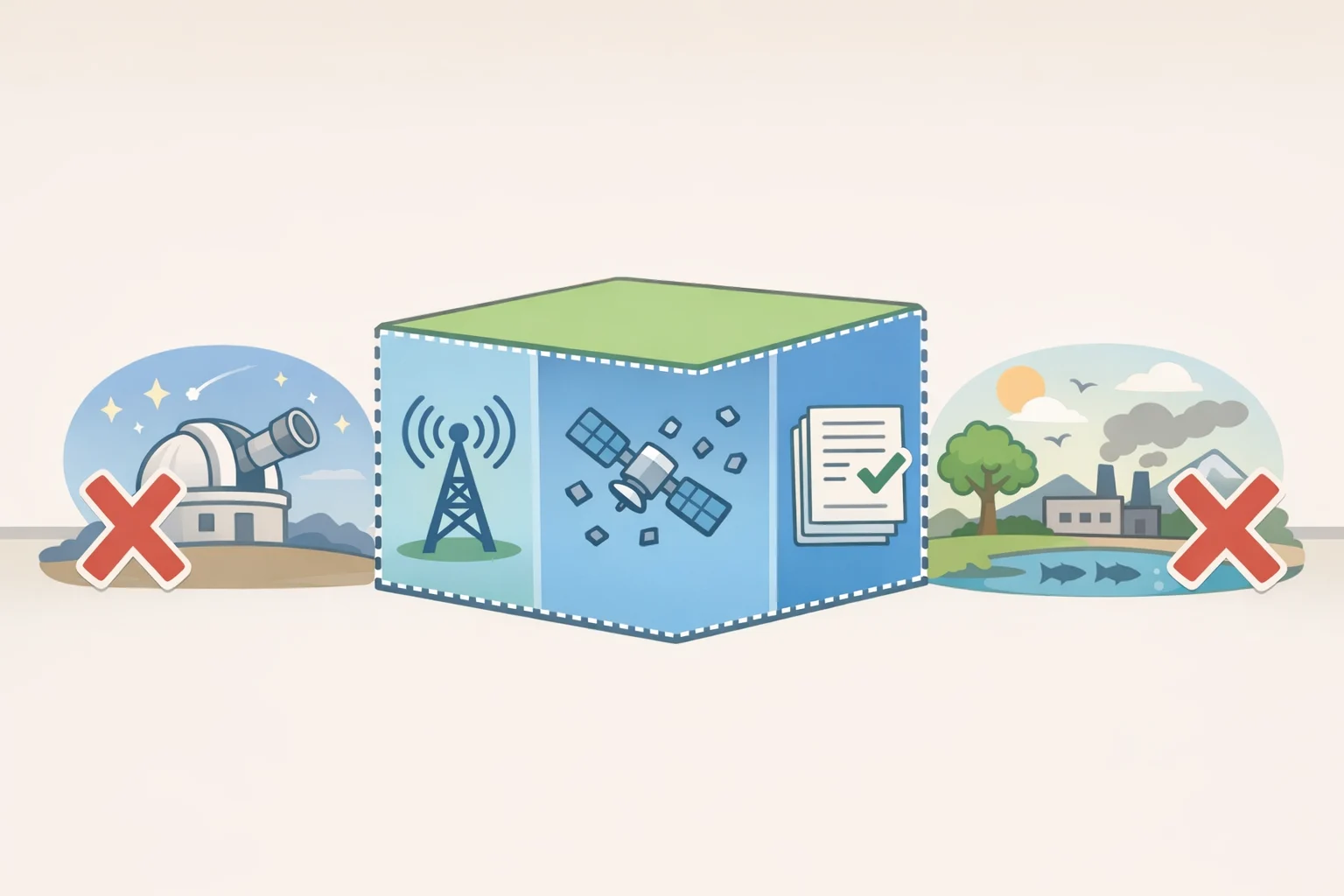
The order is more candid about its own limits than agency documents typically are.
The FCC approved the spectrum operations, found the orbital debris mitigation plan adequate, and issued a two-year license with standard bonding and certification requirements. On every question within its statutory remit, it ruled. Then it drew a line. Concerns about optical astronomy: "outside our review." Environmental harms raised by commenters: "unrelated to the Commission's role in authorizing use of radiofrequency spectrum," per the order. A formal request from the International Astronomical Union for specific operational conditions, the kind with actual enforcement teeth, was declined as "redundant" with Reflect Orbital's voluntary commitments to coordinate with astronomers.
That last point is worth unpacking. Reflect Orbital has pledged to give researchers advance notice before activating the reflector, operate only during predetermined windows, and avoid use near observatories and protected areas, Engadget reported. Those are self-imposed promises, not license conditions. The IAU wanted them binding. The FCC said no.
The agency also declined to require an environmental review under the National Environmental Policy Act, as the order states. Environmentalists had raised concern that a constellation of such satellites could disrupt the circadian cycles of plants and animals by extending artificial illumination into nighttime hours, a concern the FCC treated as falling outside its authority under the Communications Act, SpaceNews reported.
On eye safety, the FCC's handling is instructive. The agency acknowledged Reflect Orbital's own admission that viewing Eärendil-1 through a telescope with an aperture larger than 12 inches risked eye damage, per AAS accounts cited by Engadget. The order then weighed the probability: the right aperture, the right angle, the right moment, no prior notice, and the observer staring long enough to sustain damage. The FCC found the scenario unlikely enough to warrant no additional conditions. The AAS had also warned of potential flash-blinding for pilots and drivers. Same conclusion: low probability, outside spectrum scope, no conditions.
The FCC's logic is internally consistent. The Communications Act governs spectrum, and spectrum is what the agency reviewed. The friction is not that the FCC acted illegally. It is that the FCC acted within its lane while, critics argue, no other lane clearly covers this category of satellite.
Who reviews what the night sky looks like

That is the question Dark Sky UK's James Verner put directly: if the regulator licensing these satellites has no mandate to examine what they actually do to the sky or the Earth below, "then who does?" Engadget reported. The FCC order makes clear the commission does not see visible-light impacts as part of its review. Whether any other U.S. agency currently has a clear mandate to address them is a question the order puts on the record without answering.
The scale modeling makes what that review would need to cover legible, even at the single-satellite stage. Astronomer Olivier Hainaut calculated that a fleet of 5,000 Reflect Orbital craft could raise sky brightness worldwide by up to 30%; a 50,000-satellite constellation could push that figure to 300%, per Science. In a July 1 statement, the European Southern Observatory said the full proposed 50,000-satellite constellation would raise background sky brightness at its Chilean facilities by a factor of three to four, meaningfully constraining detection of faint objects, per SpaceNews. Tony Tyson, chief scientist of the Vera C. Rubin Observatory, told a National Academies meeting in June that the plans were "even crazier" than broadband satellite constellations, and expressed concern that thin-film reflectors may scatter light far more broadly than the company's precision-targeting claims suggest. "Imagine the sky full of moons," he said, SpaceNews reported.
These numbers describe the constellation scenario, not Eärendil-1. They do illustrate what would need to be examined, and by whom, if Reflect Orbital files a commercial application after the demo. The FCC's authorization arrived the day after environmental and scientific groups filed a separate petition asking the agency to conduct a programmatic environmental assessment for orbital data center constellations, a request that remains pending, SpaceNews reported. The underlying regulatory question is the same.
What the demo can settle and what it cannot
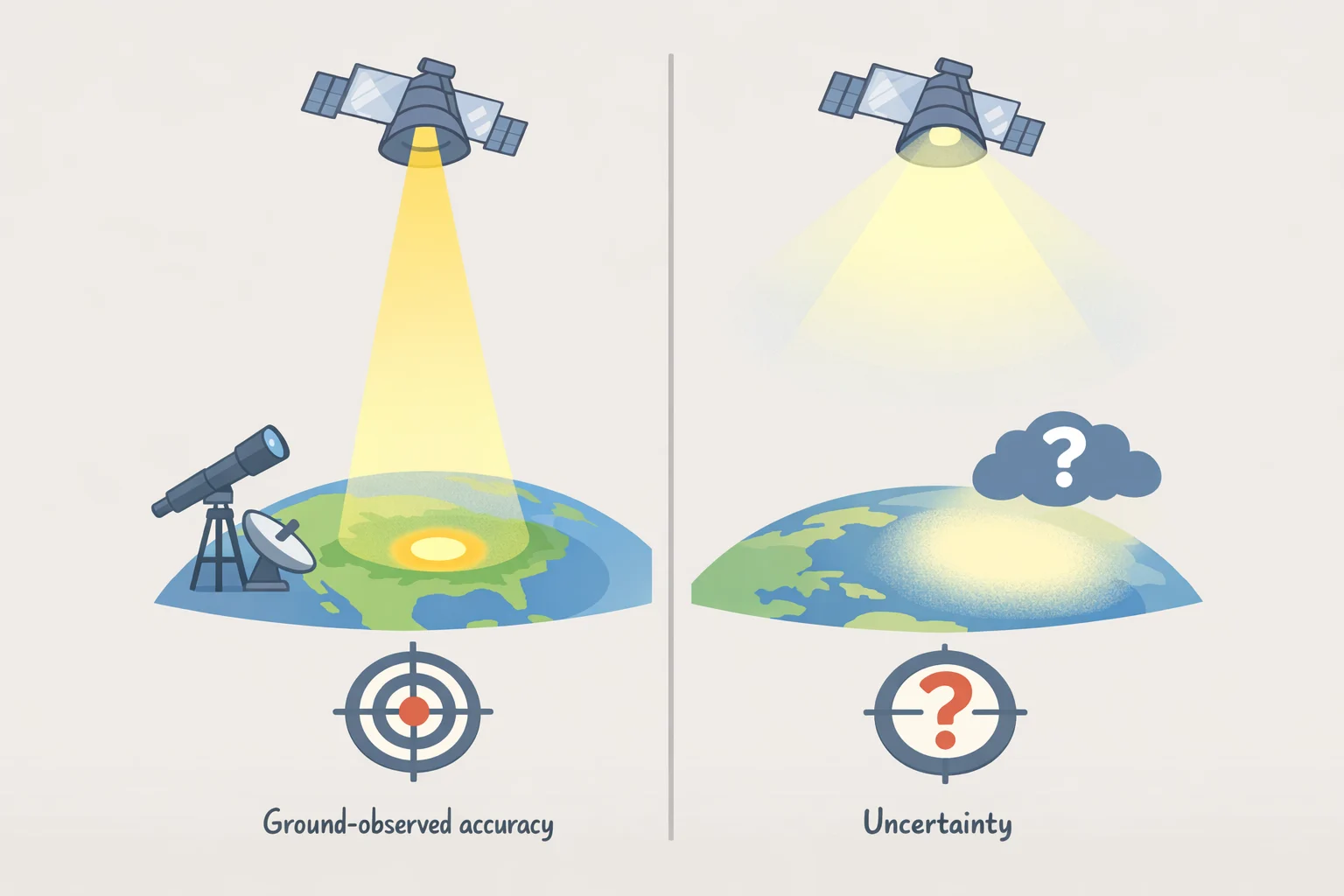
Under the license terms, Reflect Orbital has until July 2032 to launch and reach its assigned orbit, though the company has said it plans to fly later this year, SpaceNews reported.
A year of operations will produce real data. Whether the steerable reflector can hit a five-kilometer ground footprint with the precision Reflect Orbital claims, or whether the thin-film optics scatter light more broadly than advertised, as Tyson and others suspect, will be measurable. Ground illumination levels, brightness as seen from observatories, targeting accuracy those results will either validate or undercut the company's core technical case. That data would be useful regardless of where one stands on the project.
The governance question is a different matter entirely. No test result will answer who reviews the next application, or whether voluntary coordination with astronomers is an adequate substitute for enforceable license conditions when a satellite is designed from the ground up to be as bright as possible. The FCC has made clear it will not resolve that through spectrum licensing. Congress could assign the authority elsewhere; another agency could claim it; the courts could weigh in if a plaintiff with standing steps forward.
The 1,900 comments opposing this filing, an unusually high number for an FCC satellite application, suggest the constituency watching this gap extends well beyond professional astronomers. Whatever Eärendil-1 reveals about light-reflecting technology in orbit, it has already run one test on the oversight framework. That result is in.