OpenAI Codex Micro keyboard: the AI agent controller explained
OpenAI opened orders today for the Codex Micro, a compact desktop controller built for developers running multiple Codex coding agents at once. Priced at $230 and available while supplies last, it is the company's first branded hardware product, as reported by Business Insider and The Verge. Despite being marketed as a keyboard, the OpenAI Codex Micro keyboard is more accurately a shortcut controller: a square block of backlit buttons, a joystick, and a rotary dial designed not for typing but for monitoring and steering AI agents.
This is separate from OpenAI's unreleased hardware project with designer Jony Ive, which reports suggest could be some kind of smart speaker and is rumored to launch next year.
What the Codex Micro keypad actually does
Video of the Day

Physical macro controllers have long been used to reduce repetitive actions in developer and creative environments the same principle behind audio mixing boards and video editing control surfaces, as DevOps.com noted two weeks ago. Codex Micro applies that established pattern specifically to supervising AI agents.
The problem it addresses is concrete. A developer running several Codex threads simultaneously must constantly break focus to check task status, approve or reject code changes, and redirect agents that have stalled or hit an error. Each of those checks is a context switch. Physical controls move that monitoring to the periphery, accessible by muscle memory rather than deliberate attention.
OpenAI describes Codex Micro as designed to give users more ways to "monitor and manage their agents," The Verge reports. The device has six frosted backlit keys that provide what Work Louder cofounder Mike Di Genova, in a product video reported by The Verge, calls a "live view of your Codex threads," color-coded by status: running, complete, awaiting feedback, or errored. A developer can assess the state of all active agents at a glance without leaving their editor.
Command keys handle the most frequent actions: push-to-talk, accepting or rejecting code changes, and sending prompts. The joystick triggers common workflows; the rotary dial adjusts the agent's reasoning level. All controls are configurable through the ChatGPT desktop app, The Verge reports. The device also ships with 32 additional keycaps featuring Codex icons for further remapping.
OpenAI spokesperson Dominik Kundel described the Work Louder Codex Micro collaboration at AI Engineer World's Fair in late June as a keyboard "designed to supercharge people's Codex usage," DevOps.com reported. The pre-launch teaser OpenAI posted to X, which DevOps.com noted received nearly one million views within 24 hours, offered a glimpse of the square-shaped controller alongside the message "Your favorite Codex shortcuts are getting an upgrade" but withheld technical specifications until today's launch.
Video of the Day
Who it's for and what launch coverage still hasn't clarified
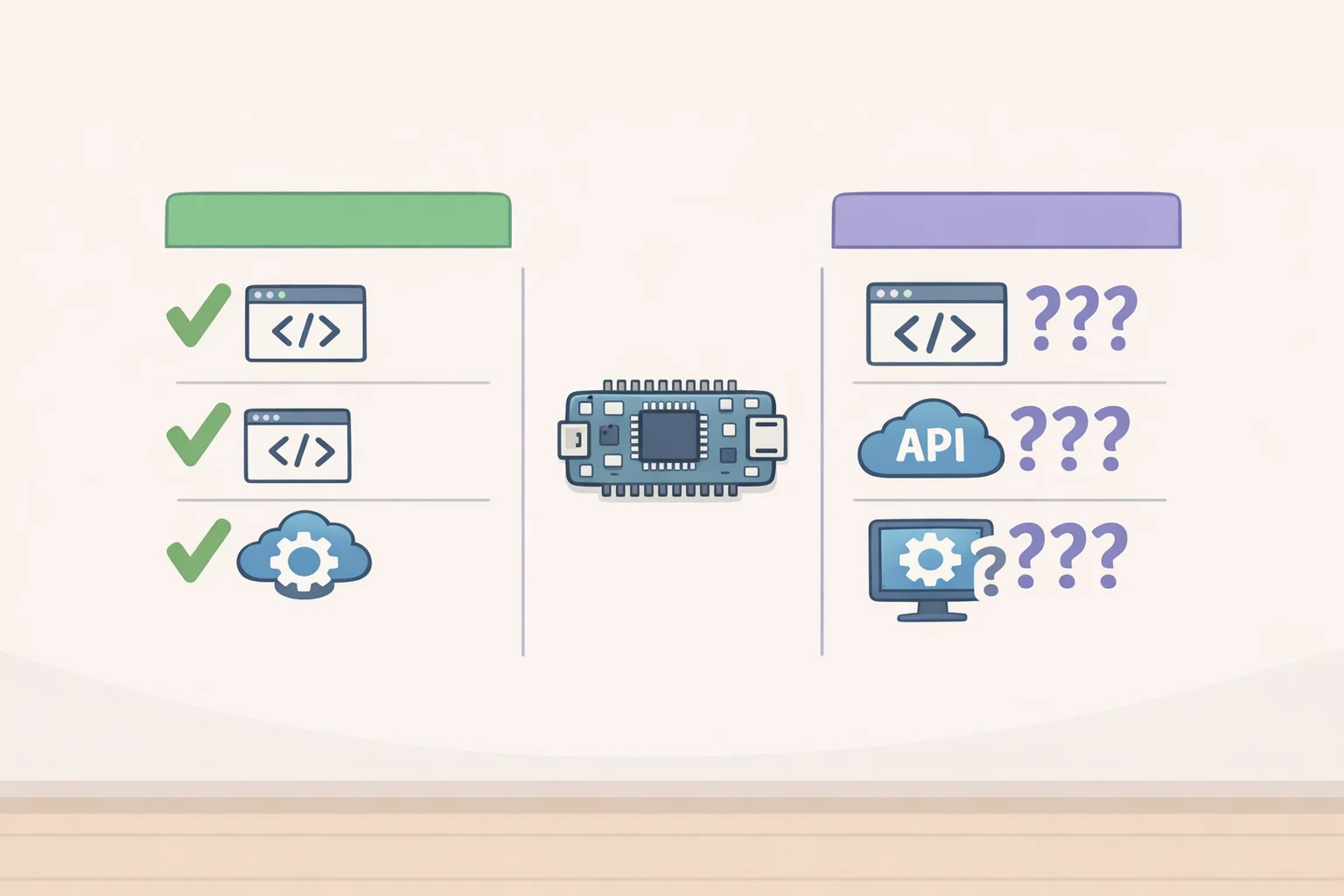
The Verge describes the Codex Micro as a niche device for power users who run Codex agents continuously and need ambient awareness of their status. OpenAI positioned it as a limited-run collaboration targeting that specific slice of its developer base, not a general-purpose accessory.
The $230 price carries real unknowns that today's launch coverage has not resolved. Two weeks ago, DevOps.com flagged that OpenAI had not clarified whether the device would integrate directly with IDEs, expose an API for custom key mappings, or operate on predefined shortcut profiles. OS compatibility was similarly unconfirmed. Neither The Verge nor Business Insider addressed those gaps in their launch reporting.
Those gaps matter for purchase decisions. Whether the OpenAI $230 keyboard represents a deep workflow integration or a branded shortcut controller with limited configurability is not answerable from current public information. Available coverage draws on company demos and statements rather than independent testing, so practical productivity gains remain unverified.
The Verge notes the device sells through Supply Co while supplies last; OpenAI has not disclosed how many units are available. Whether that reflects limited production capacity, a cautious market test, or deliberate scarcity positioning is not clear from launch reporting.
Work Louder built it on hardware they already make
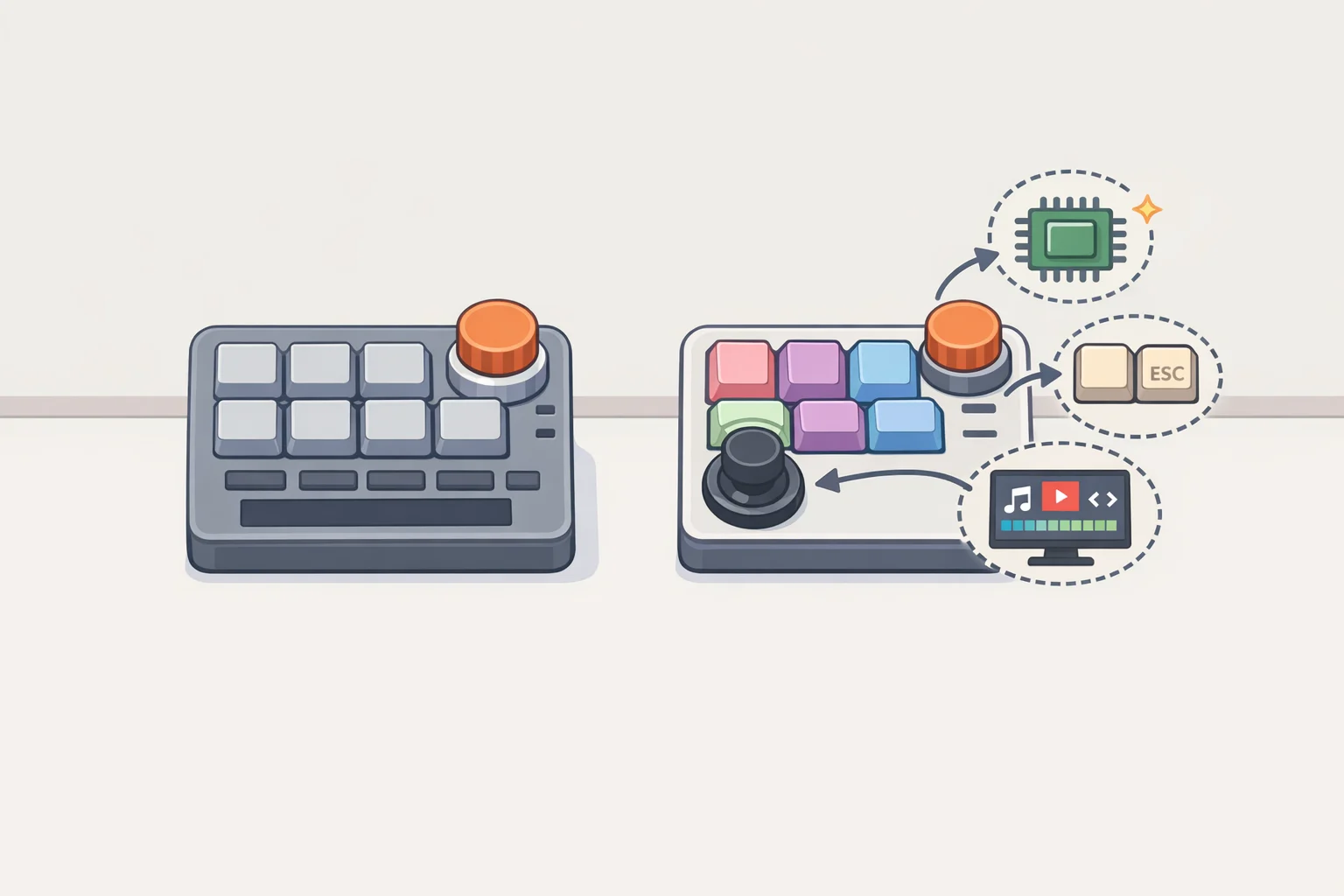
The Work Louder Codex Micro is a collaboration with a Canadian-Italian boutique manufacturer that specializes in programmable mechanical keyboards and shortcut controllers for developers and designers, per Business Insider.
Demos shown at AI Engineer World's Fair in late June suggested the device is based on Work Louder's existing Creator Micro 2, a programmable macro pad with mechanical keys, a joystick, and touch-sensitive controls, with Codex-specific firmware, keycaps, and software integration added on top, DevOps.com reported at the time. The Creator Micro 2 sells for approximately $199 in the US, putting the Codex premium at roughly $31 over what appears to be the underlying platform. Work Louder has previously produced co-branded macro pads for Figma, making the arrangement a known model for both parties, DevOps.com noted.
The "first hardware product" milestone is real. What reporting suggests, though, is that OpenAI's contribution centered on software integration and workflow-specific design decisions rather than building a novel hardware platform from the ground up. Whether that distinction affects the product's value depends on how deep the Codex integration turns out to be in practice something launch reporting cannot yet answer.
The manufacturing arrangement is worth understanding separately from the milestone framing. Work Louder is not a mass-market supplier; it's a boutique shop that builds programmable controllers for niche professional workflows. Choosing that kind of partner rather than a consumer electronics manufacturer signals something about who OpenAI is actually targeting here. This is tooling for a specific category of developer, not a product pitched to the general market.
What the launch signals about OpenAI's hardware direction
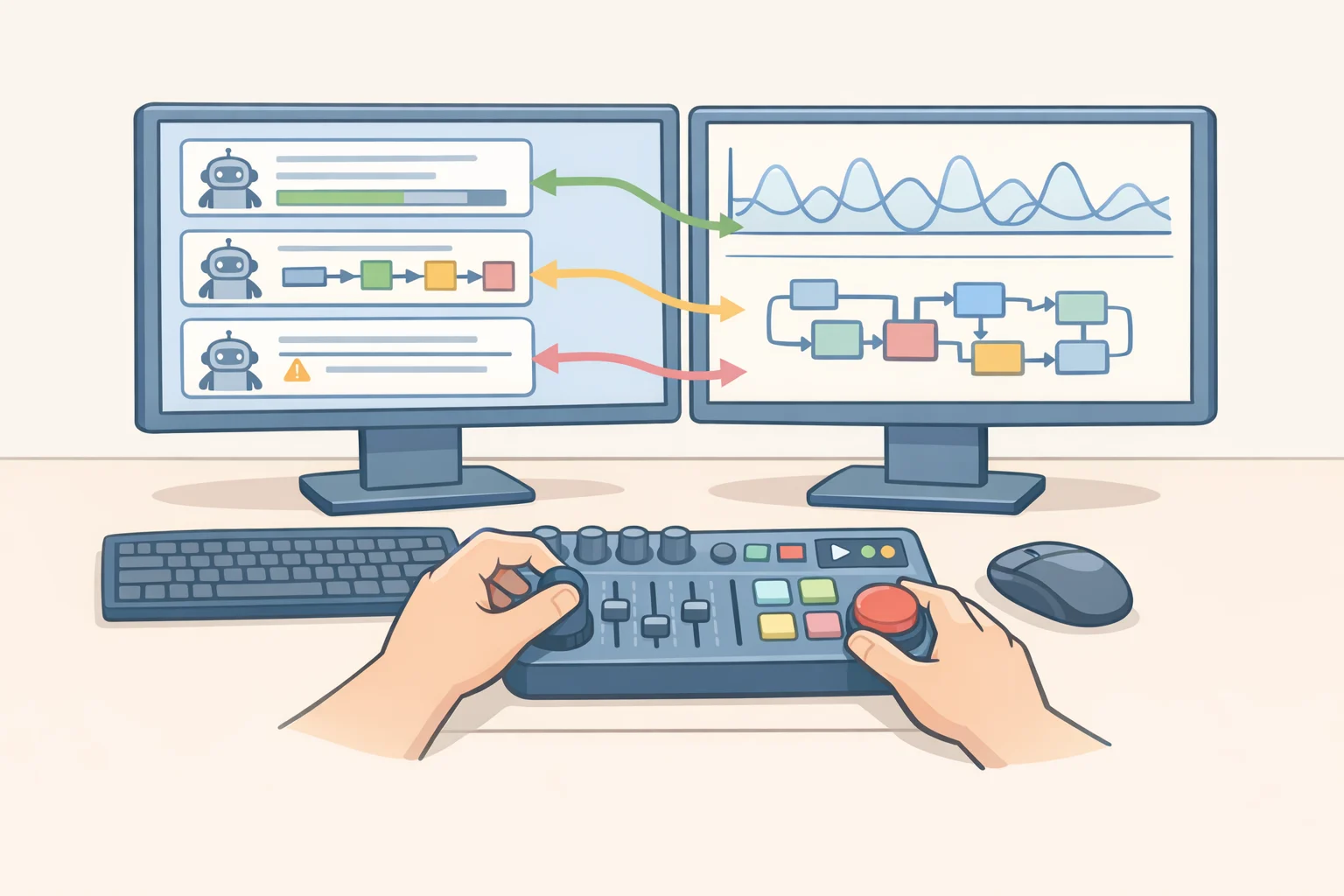
DevOps.com framed today's release as a focus on improving developer productivity rather than introducing new AI capabilities. That framing tracks with how OpenAI positions the device: launch coverage describes the friction point as supervision and control, not model performance. The question being answered by Codex Micro is how to make managing agents faster, not how to make agents more capable.
Every major outlet covering the release calls it OpenAI's first branded hardware product. But the scope tells a more careful story. A limited run, a niche developer audience, a partner-built hardware base, a single storefront as Business Insider, The Verge, and DevOps.com all note, it has the profile of a cautious pilot rather than a committed hardware push.
The broader question Codex Micro poses is whether physical control surfaces become a standard part of AI-assisted development workflows as agent thread counts grow. If running five or ten simultaneous Codex threads becomes routine, software-only interfaces may genuinely struggle to keep pace with the monitoring overhead. The Codex Micro keypad is OpenAI's first attempt to answer that, narrowly scoped and pointed in intent.
That verdict won't be available until the device has had real use. For now, the reported facts are these: orders are open, supply is limited, and a significant number of practical questions about how the device integrates with developer environments remain publicly unresolved.