Willie Smit Smart Glasses Disqualification and the UCI Rule Explained
South African cyclist Willie Smit was pulled from the results of the July 11 opening stage of the Tour of Magnificent Qinghai after race officials determined his camera-equipped smart glasses violated UCI equipment regulations. The Willie Smit smart glasses disqualification has attracted significant coverage for two reasons: the governing rule was revised just three months before the incident, and Smit says he had no idea it existed.
Smit, 33, was racing for the China Anta-Mentech Cycling Team when officials removed him from the stage results, according to Domestique Cycling. The violation centered on his Oakley Meta Vanguard AI sunglasses, which are fitted with a built-in camera. He subsequently announced the disqualification on X and posted crash footage captured during the stage, Mashable reported.
What Smit said happened
Video of the Day

"Today I was disqualified for the first time in my cycling career (14 years), for wearing glasses that record video," Smit wrote on X. "Unfortunately I was not aware of a new rule that was implemented in April that prohibited this."
Smit said race officials told him the UCI had specifically requested his disqualification after identifying the glasses, according to Domestique Cycling. That claim has not been confirmed by the UCI directly. He added that had he known about the rule, he would never have uploaded the stage footage to social media a detail that matters because the footage itself became part of his public account of the incident.
On the severity of the penalty, Smit pushed back plainly. "A warning, fine, or yellow card could have also been enough," he wrote. He also disputed any suggestion the glasses gave him a competitive edge, arguing they have no functional AI capabilities when used without a phone and were doing nothing during the stage beyond recording video. That characterization of the product's capabilities comes from Smit himself, as reported by BikeRadar.
His sharpest challenge was a direct comparison to the Tour de France. "But what I struggle to understand is why in the Tour de France can you quite literally vlog with a camera in your hand which is perfectly legal…but because the camera is in the glasses you get an automatic Disqualification?!" he wrote on X. He was referring to Lidl-Trek's Toms Skujiņš, who was documented vlogging mid-race using an on-bike camera during Stage 3 of the Tour. That incident appeared nowhere in the Stage 3 jury report, and no sanction was announced, Velo reported.
Video of the Day
Why a cyclist was disqualified for smart glasses while on-bike cameras remained allowed
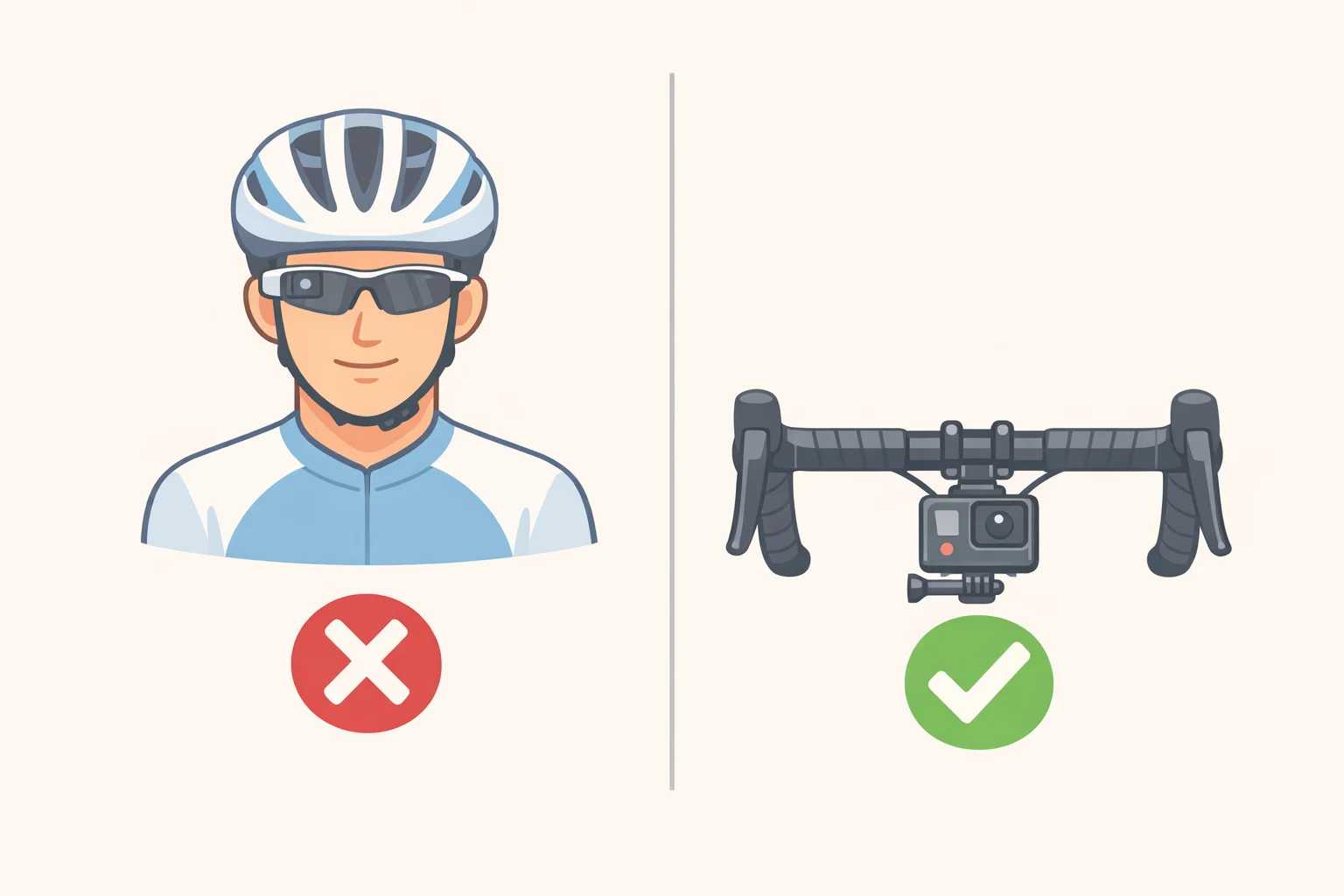
The rule at issue is UCI regulation 1.3.006, which governs onboard technology during competition. Under the April revision, devices capable of collecting or transmitting data are permitted only when physically mounted on the bicycle, according to Domestique Cycling and BikeRadar. Wearable video-recording glasses are not among the listed exemptions. The rule makes their use prohibited regardless of which features are active during a race.
That distinction also resolves most of Smit's Tour de France comparison, even if it doesn't fully answer the underlying grievance. On-bike race footage has been part of cycling broadcasts for years, Velo noted. The camera Skujiņš used belonged to Velon, a cycling media company, and was mounted on his bike. Under the rule as written, where the camera sits matters as much as whether it records: a fixed, bike-mounted device from a sanctioned media partner sits in a different regulatory category than a consumer product worn on a rider's face.
Smit's "hypocrisy" framing is understandable from where he stood, but the rule draws a categorical line rather than a judgment call. The simpler reading is that the on-bike camera was compliant because it was on the bike. The harder question his comparison raises one the UCI has not answered in the coverage reviewed for this article is whether the governing body communicated clearly enough that body-worn cameras now occupy a completely different category before dropping a disqualification on the first rider it caught.
The underlying rationale for the April revision also remains unexplained in that coverage. Whether the driving concern is real-time coaching over a live connection, unfair access to performance data, broadcast rights, or simply cleaner enforcement logistics is not stated anywhere in the public record. That gap matters. Without a stated purpose, the rule's proportionality is hard to assess, and riders are left to guess at its scope.
The UCI smart glasses rule and what it means for riders beyond this case

The glasses at the center of the incident are not a niche product. Smit appeared to be wearing the Oakley Meta Vanguard AI sunglasses, a commercially available product combining a built-in camera with navigation and performance features aimed at endurance athletes, Velo reported. Any professional cyclist wearing comparable consumer smart eyewear faces the same regulatory exposure Smit ran into.
The compressed timeline between the rule change and its first publicly reported enforcement is worth sitting with. Three months separated the April revision from the July 11 disqualification. The coverage reviewed for this article does not mention formal team notifications, prior warnings, or educational guidance distributed in that window, BikeRadar and Gizmodo reported. Smit's account, that he simply did not know, is consistent with no such notice being reported anywhere.
The concern cycling's rule appears designed to address is the same one that led India's top cricket league to ban smart glasses outright as an anti-cheating measure, according to Gizmodo: the potential for a body-worn device to enable real-time communication between an athlete and people off the field of play. No such use has been documented in professional cycling. The rule doesn't require proof of misuse, though it draws the line at body-worn recording devices categorically, whether or not any prohibited feature is running.
That categorical approach reflects a real structural difference between fixed race cameras and consumer wearables. Sports have managed on-bike cameras for years because those devices are fixed, visible, operated by sanctioned media partners, and physically attached to the bicycle where officials can see them. Consumer smart glasses collapse those conditions entirely. They're purchased independently by the rider, worn on the body, and their full range of capabilities, including features the rider may not be using, is set by the manufacturer. A commissaire looking at Smit's face mid-race would have seen sunglasses. Nothing about their appearance would have signaled a device capable of recording, transmitting, or in theory connecting to outside assistance.
That invisibility is precisely what the rule targets. And it's what makes this case different from earlier debates about power meters, earpieces, or aerodynamic equipment. Those were visible, debated publicly before being adopted or restricted, and governed through a negotiation between teams, riders, and officials over many seasons. Smart glasses arrived in the peloton as a consumer product, already in use, already recording, before the rulebook had made clear they were a problem.
What riders and teams should know now
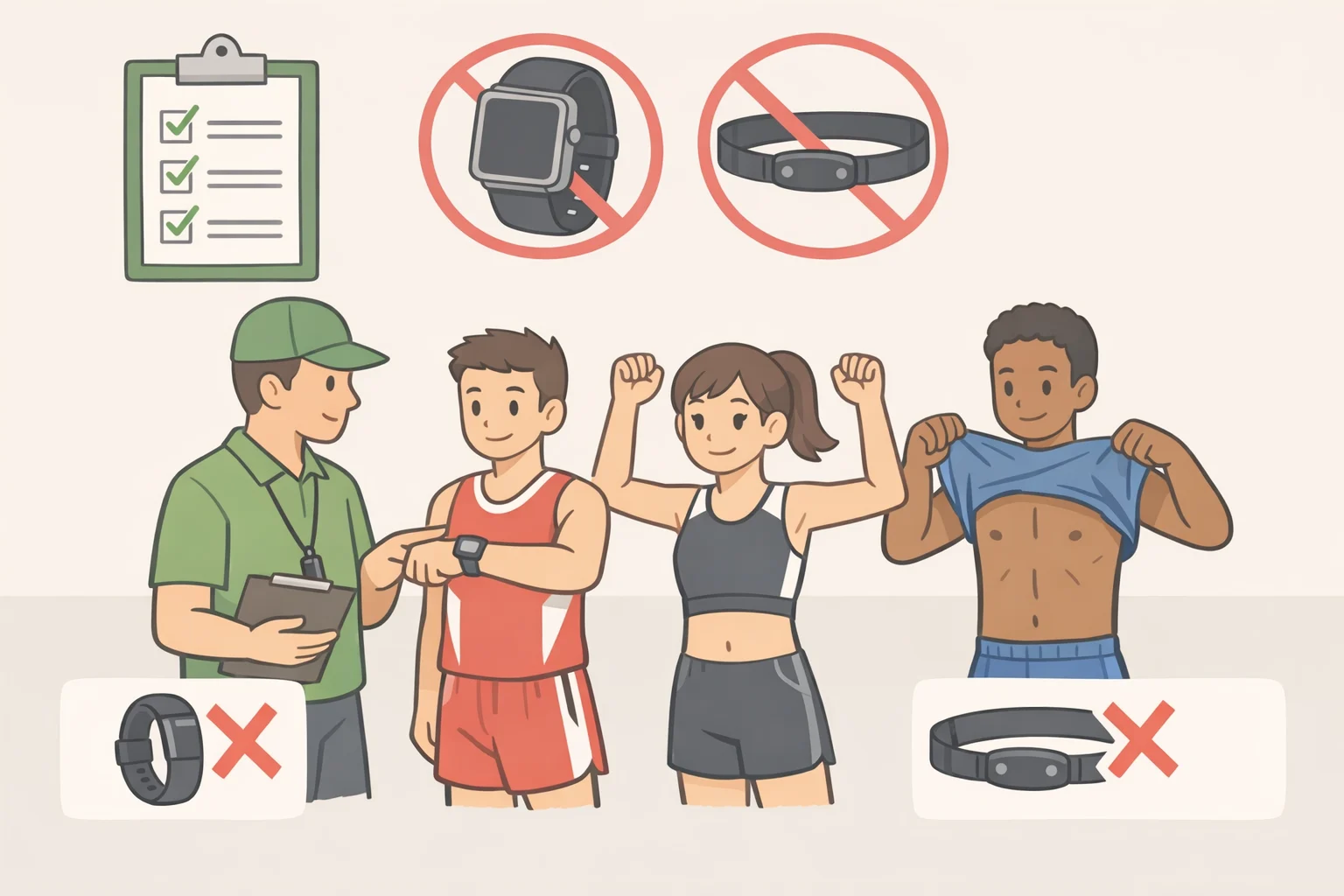
The rule is on the books and has now been enforced in at least one publicly reported case. Body-worn camera devices, including mainstream consumer smart glasses, are prohibited under UCI regulation 1.3.006 regardless of whether advanced features are active, per Domestique Cycling and BikeRadar. Smit's case confirms that enforcement can originate from the UCI itself rather than from local commissaires exercising discretion.
As of the coverage reviewed here, the UCI had not publicly addressed Smit's disqualification, explained the rule's rationale, or clarified whether teams were formally notified of the April revision, Domestique Cycling reported. Those three questions are connected. Without answers, teams cannot assess whether their riders are at risk, and riders cannot make an informed judgment about what they can wear to the start line.
Consumer smart eyewear is now a documented compliance risk, and the question of whether teams need pre-race equipment checks to cover glasses, not just bikes, has a practical answer after this week. The Tour of Magnificent Qinghai runs through July 18, according to Domestique Cycling, and Smit's team presumably has riders still in that race navigating exactly that question.
Smart glasses are getting cheaper, better, and more visible as a product category. The Smit case is the first time cycling's rulebook met that reality in a public enforcement action. Whether it's the last depends on whether the UCI treats rule communication as seriously as rule enforcement, two things that, right now, appear to be moving at very different speeds.