SR-71 Blackbird Engine Failure Over Soviet Union: Inlet Unstart at Mach 3
The crisis began not with a missile lock or a Soviet radar ping, but with a sound. A deafening bang, a violent sideways lurch, two crew members slamming their helmets into the canopy at 83,000 feet. The SR-71 Blackbird had just suffered an inlet unstart near Vladivostok, and for the next several minutes, one of the fastest aircraft ever built would be falling with zero thrust, its crew calculating whether staying aboard was safer than ejecting over Soviet Far Eastern territory.
The account comes secondhand, through a retired Reconnaissance Systems Officer whose recollection was reported by National Security Journal earlier this year. The exact date is unconfirmed, the precise location disputed. The physics are not.
That is the central point of this story. The SR-71 was never shot down. What nearly destroyed it, repeatedly, was the flight regime required to be unshootable. An inlet unstart was the sharpest expression of that contradiction: a failure mode built into the same engineering that made the aircraft so hard to catch.
SR-71 Blackbird inlet unstart over Vladivostok: what happened and in what order
Video of the Day
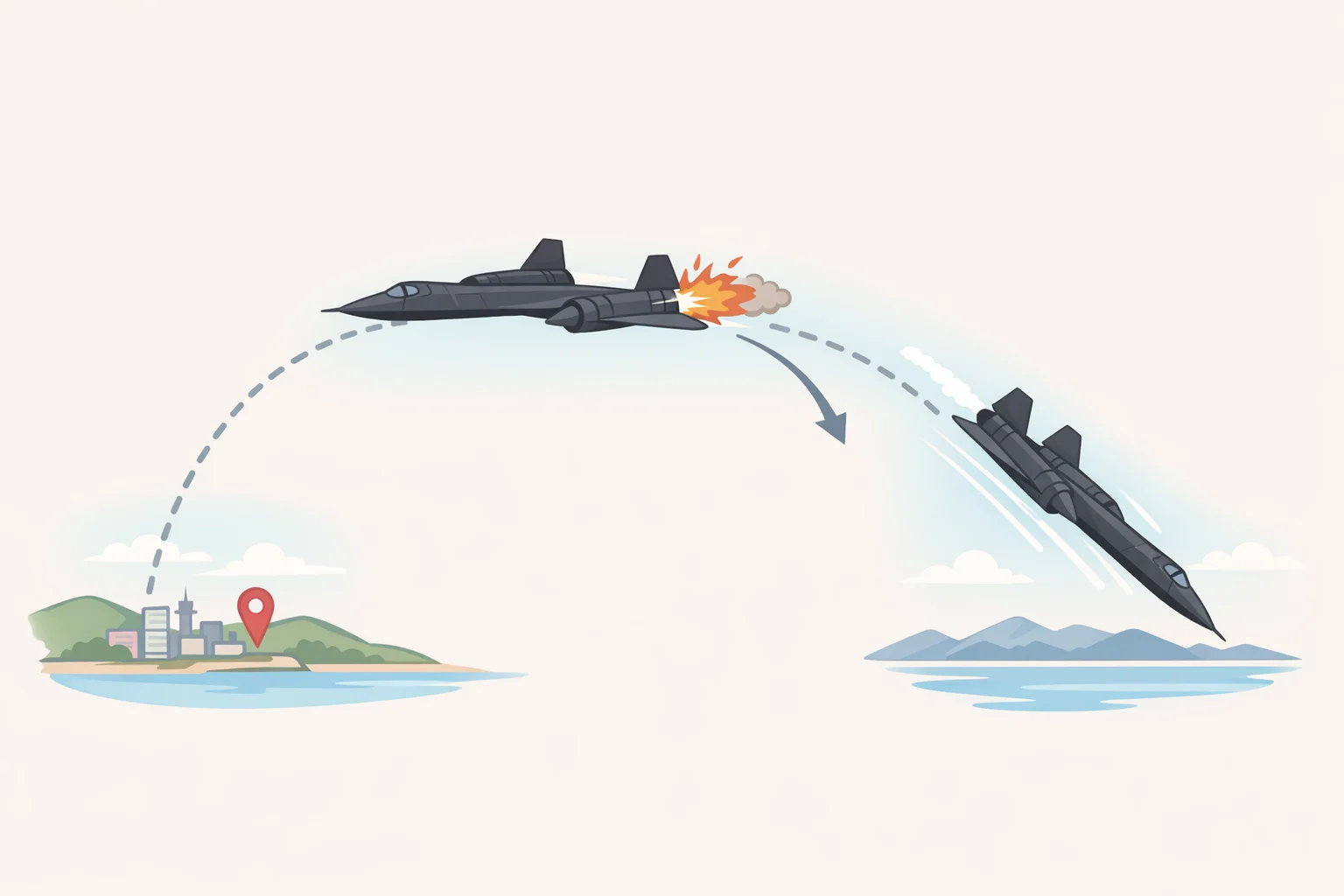
Sometime in the late 1960s or early 1970s, an SR-71 was conducting a reconnaissance mission near Vladivostok, the major Soviet port on the Pacific, cruising at roughly 83,000 feet and Mach 3. One engine then suffered an inlet unstart.
The aircraft immediately yawed sideways with enough force to throw the crew against the canopy. Deafening concussive bangs rolled through the airframe as the displaced shockwave thrashed it. At Mach 3, aerodynamic friction heats the exterior enough that the cockpit registers above 400°F, and both crew members flew in full pressure suits; when the unstart hit, that already-extreme environment became violently unstable in an instant, as National Security Journal reported.
The pilot's next move sounds counterintuitive. He shut down the second engine, the one still working. At Mach 3, a single functioning engine on an asymmetric aircraft generates what engineers call catastrophic asymmetric thrust: uneven force large enough to tear the airframe apart. Eliminating it was the only way to stabilize the jet. The result was an SR-71 with zero thrust, somewhere near Soviet territory, dropping in a steep unpowered descent, National Security Journal reported.
The crew chose not to eject. The alternative was landing in or near Soviet territory and near-certain capture. Staying with a falling aircraft was the more rational bet. They worked the restart sequence during the descent, eventually recovered the aircraft, and diverted to South Korea for repairs, National Security Journal reported.
That same sequence, unstart to violent yaw to second engine shutdown to powerless descent to successful restart, appears again in 1984, better documented, with a named aircraft. The Vladivostok story is not an anomaly. It is representative.
Video of the Day
Why an SR-71 Blackbird free-fall at 83,000 feet left almost no options
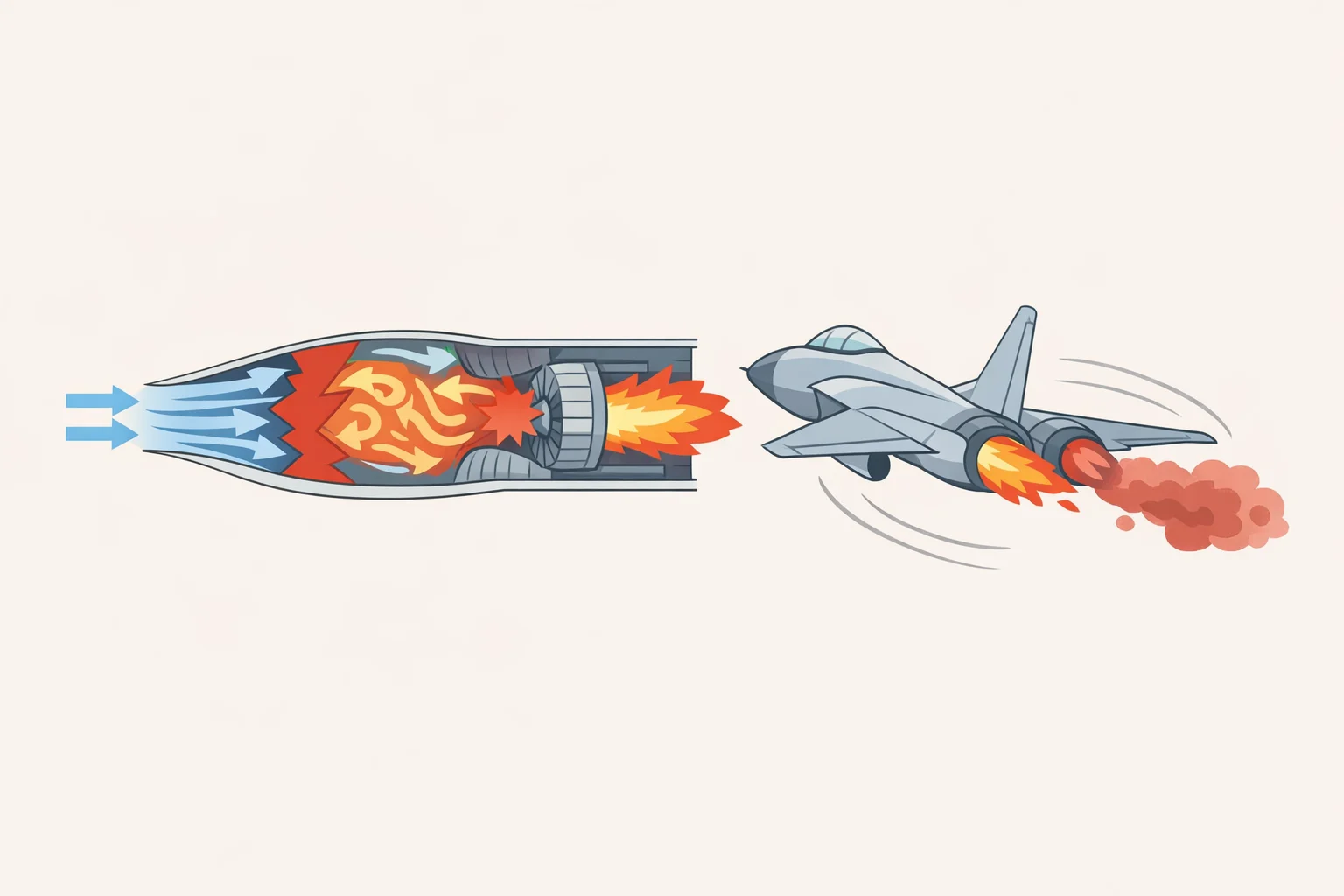
At 83,000 feet, the atmosphere is thin enough that aerodynamic control surfaces generate far less corrective force than they would at normal cruise altitudes. The standard engine-out recovery procedures a pilot would use lower down are simply unavailable, as National Security Journal noted. That physical constraint is what makes an unstart at that altitude so dangerous, and understanding what an unstart actually is makes the crew's options even clearer.
An inlet unstart happens when the inlet stops managing airflow correctly. The SR-71's engines could not consume raw supersonic air directly; the inlet system existed to compress and slow that airflow into something the engine could use. When it failed, the result was a violent, instantaneous loss of thrust on one side while the other engine kept pushing. At Mach 3, that asymmetry is not a manageable yaw. It becomes a structural event, with forces capable of exceeding the airframe's design limits within seconds, National Security Journal reported. Shutting down the second engine was not a choice so much as the only thing the physics permitted.
The 1966 breakup of an SR-71 during a high-Mach turn makes the stakes concrete. An unstart on one inlet during the maneuver produced a yaw so violent that pilot Bill Weaver had no time to attempt a restart before losing control. Neither Weaver nor RSO Jim Zwayer ejected; the aircraft disintegrated around them. Zwayer broke his neck and did not survive. Weaver was thrown clear at roughly 78,800 feet and, by some combination of suit integrity and improbable luck, reached the ground alive, Aviation Geek Club reported last year.
The pilot near Vladivostok who killed his second engine was not improvising. He was doing the only thing the aircraft's physics left open.
What the program changed, and what it couldn't fix
The 1966 accident produced two changes to the SR-71 program. The smaller one came first. Weaver had been thrown into air sitting around -65°F at roughly 80,000 feet. His visor froze solid. The program had no heated faceplate because no one had survived an ejection from that altitude to describe needing one. Subsequent aircraft carried a battery-powered heated visor as standard equipment, Aviation Geek Club reported.
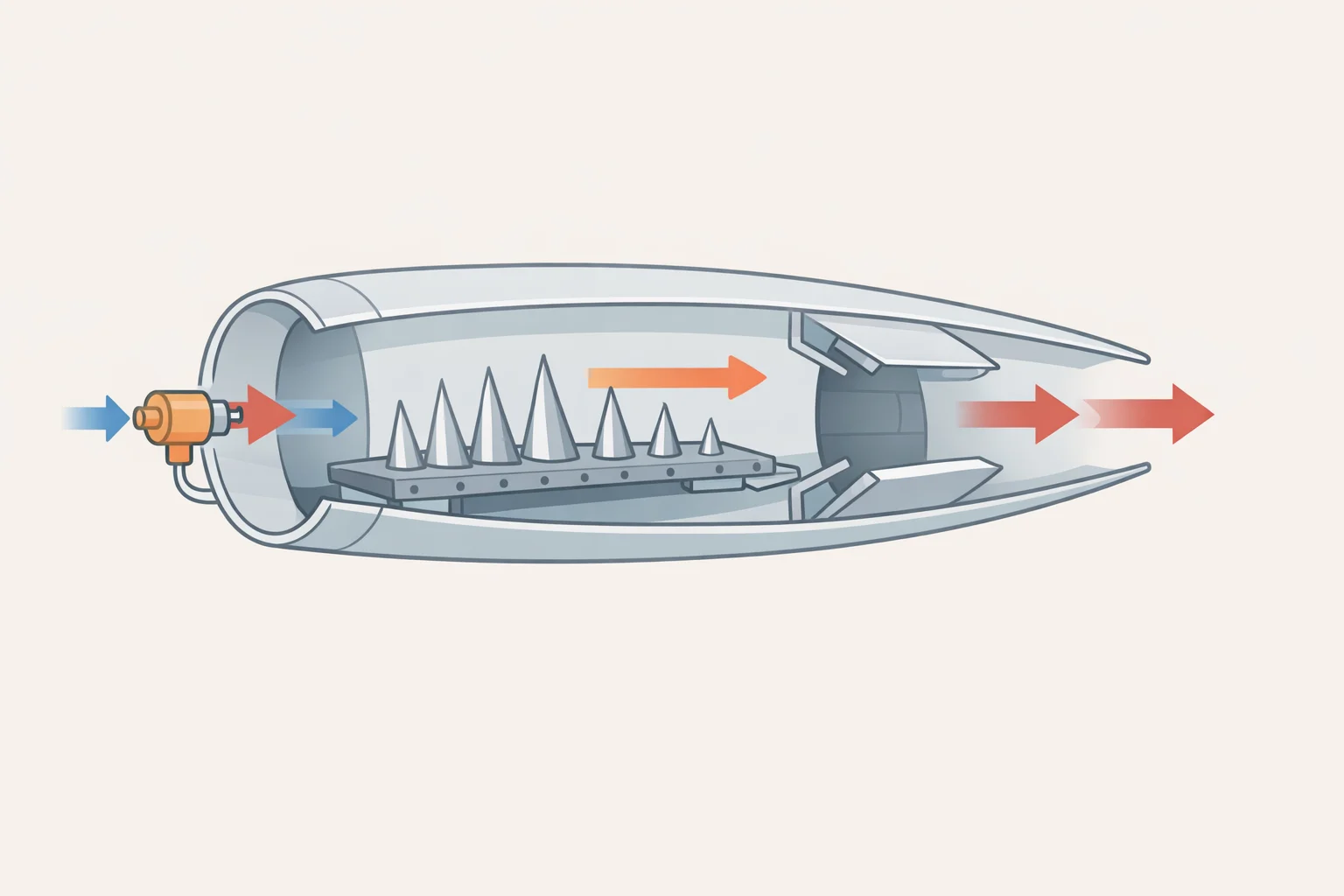
The more consequential fix was the Shock Expulsion System. Before 1966, there was no automatic restart mechanism. After the accident, engineers designed one: when pressure sensors detected a differential of just 0.125 psi between the two inlets, the SES simultaneously pushed both spikes forward and opened both forward bypass doors on each side, attempting to recapture the shockwave and restore symmetry before asymmetric forces could build. The spikes then retracted to the appropriate position for the current Mach, and the doors resumed automatic function, Aviation Geek Club reported.
The threshold was set deliberately small. One pilot captured how fast the system worked: the only reliable way to identify which inlet had failed was to notice which side of the canopy you'd just hit your head on, Aviation Geek Club reported.
The SES made unstarts survivable more often. It did not change what was underneath.
In 1984, SR-71 tail number 61-7974, on a documented mission tracking Soviet naval activity near the Kola Peninsula, ran through the same sequence eighteen years after the fixes were introduced. Severe unstart at 83,000 feet. The aircraft yawed so hard the crew described it as feeling like it was "going sideways." Second engine shutdown. Powerless descent toward the Barents Sea. Restart attempts failed multiple times. A manual restart eventually succeeded at a much lower altitude, after the crew had approached the point where ejection would have been mandatory. They reached their aerial tanker with virtually no fuel remaining, National Security Journal reported earlier this year.
Every fix the program introduced was a negotiation with physics. The 1984 crew ran through the same checklist the 1966 accident was supposed to prevent, and nearly didn't come back anyway.
The threat the Soviets couldn't solve, and the one they didn't have to
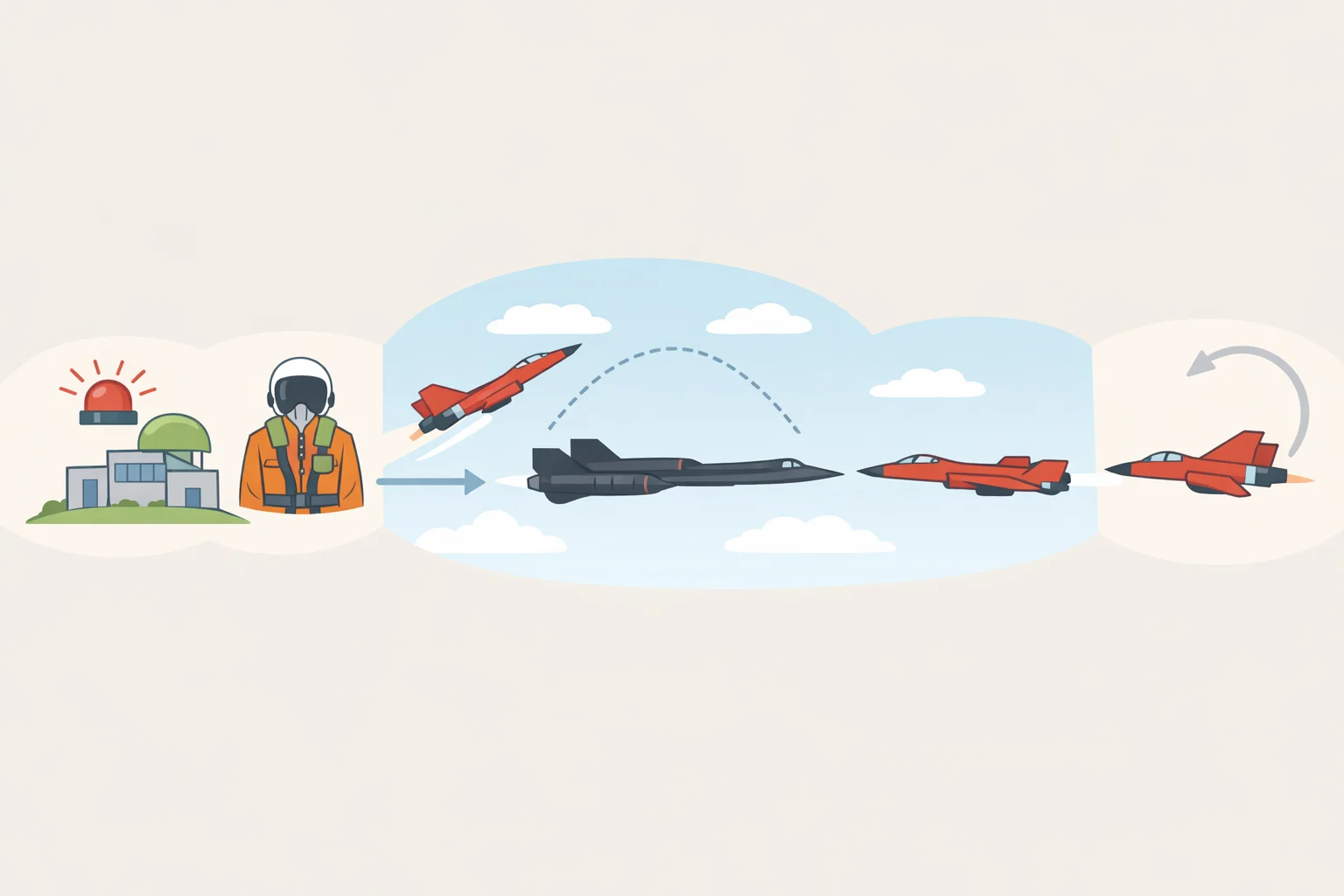
Soviet air defenses dedicated serious resources to the problem. In the early 1980s, they deployed the MiG-31, a purpose-built high-speed interceptor, and developed interception procedures that required crews to launch exactly sixteen minutes after receiving an alert. Pilot Mikhail Myagkiy claimed fourteen "successful" intercepts using this approach, The National Interest reported. "Successful" there means achieving intercept geometry, not engagement: the SR-71 was flying in international airspace, and none of those intercepts produced a shootdown.
Mission tracks were specifically planned to remain in international airspace, as pilot Maj. Tom Alison confirmed in a firsthand account published by Aviation Geek Club earlier this year. After the U-2 shootdown in 1960, the U.S. officially ended direct overflights of Soviet territory. Whether the Vladivostok mission skirted that boundary or stayed cleanly outside it, the crew's situation was the same: a powerless aircraft over hostile geography, with no good options below.
The accident record is a different ledger. Of the 32 SR-71s built, 12 were lost over the course of the program, all to accidents, National Security Journal reported. That figure reflects not a flawed design but the sustained material cost of sustained operation at the edge of what the engineering could support.
The 1984 Kola crew's recovery shows exactly how thin that edge was: manual restart at significantly reduced altitude, fuel nearly gone, approaching the mandatory ejection threshold. All from a failure mode the program had identified and designed around nearly two decades earlier. The Vladivostok account, uncertain in its date and disputed in some details, holds up precisely because it is not exceptional. The SR-71's speed and altitude put it beyond Soviet air defenses. Those same qualities generated the conditions under which it could destroy itself. The performance envelope and the danger were not separate features of the design. They were the same thing.
Readers looking for primary source material should consult Paul F. Crickmore's Lockheed Blackbird: Beyond the Secret Missions, which draws on declassified mission records and named pilot accounts and underpins several of the secondary reports cited here.