Augmental MouthPad Tongue-Controlled Mouse Goes Public: Full Cost and Evidence Explained
Augmental opened public sales of the MouthPad this week, two years after quietly building a user base through an early access program. The device is a custom-molded intraoral mouthpiece that translates tongue movements, head motion, and sip-and-puff gestures into full cursor control across phones, tablets, and computers. More than 100 people with mobility impairments have been using it as their primary computing interface, some for up to 16 hours a day, according to the company.
This is not a concept demo. It ships. It costs $1,400 before the dental scan. Those facts together place it firmly in specialized assistive hardware territory, not the consumer gadget aisle.
What follows covers what the device actually is, what it costs in full, what the evidence does and doesn't support, and how to think about it depending on why you're reading this.
How the tongue-controlled touchpad works
Video of the Day
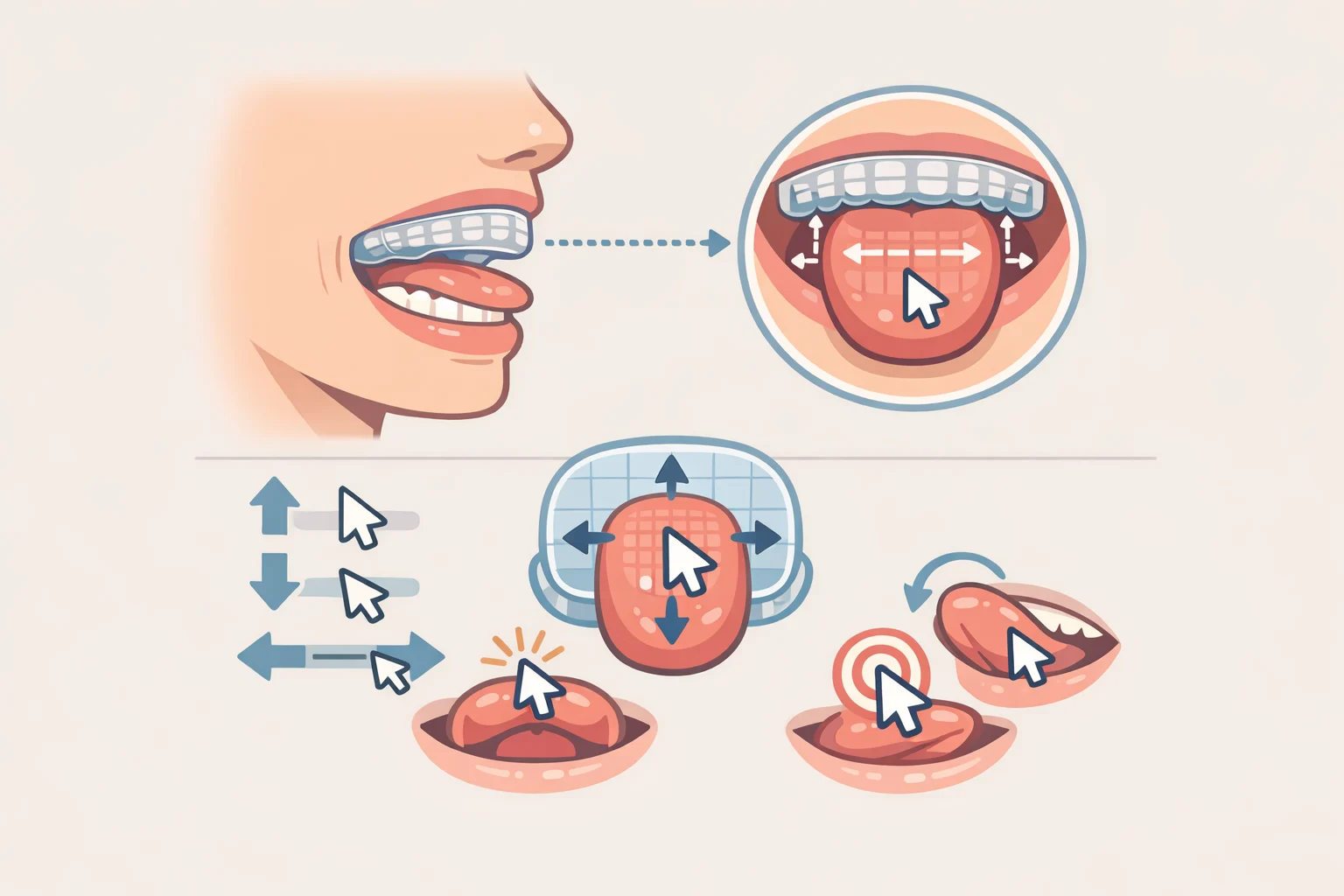
The MouthPad is built from dental resin, custom-molded to the wearer's palate from a 3D intraoral scan. An embedded touchpad sits against the roof of the mouth; the tongue navigates the cursor the same way a finger navigates a laptop trackpad. Additional inputs, left-click, right-click, scroll, drag, and cursor pause, come through head movements, bite pressure, and sip-and-puff gestures, as CNX Software documented this week.
The connectivity approach is deliberately standard. CNX Software reports that MouthPad uses standard Bluetooth HID and is compatible with macOS, Windows, Linux, iOS, and Android; New Mobility notes that some setups also use an accompanying app. No proprietary drivers are required for the core connection, meaning it works with whatever hardware a user already owns.
The form factor matters more than it might seem. Legacy assistive input tools, head arrays, external sip-and-puff rigs, eye-tracking cameras mounted to monitors, are visually conspicuous and often tethered to specific desk setups. The MouthPad fits flush against the palate, making it essentially invisible when worn, per New Mobility's review this week. For users who need assistive input in classrooms, offices, or social settings, that distinction carries real weight.
One practical constraint upfront: the device cannot be worn while eating or drinking hot beverages, though cold water is fine, according to CNX Software. For anyone considering it as a primary workday input device, that's a real daily-use variable to plan around.
Video of the Day
What it actually costs to own and use
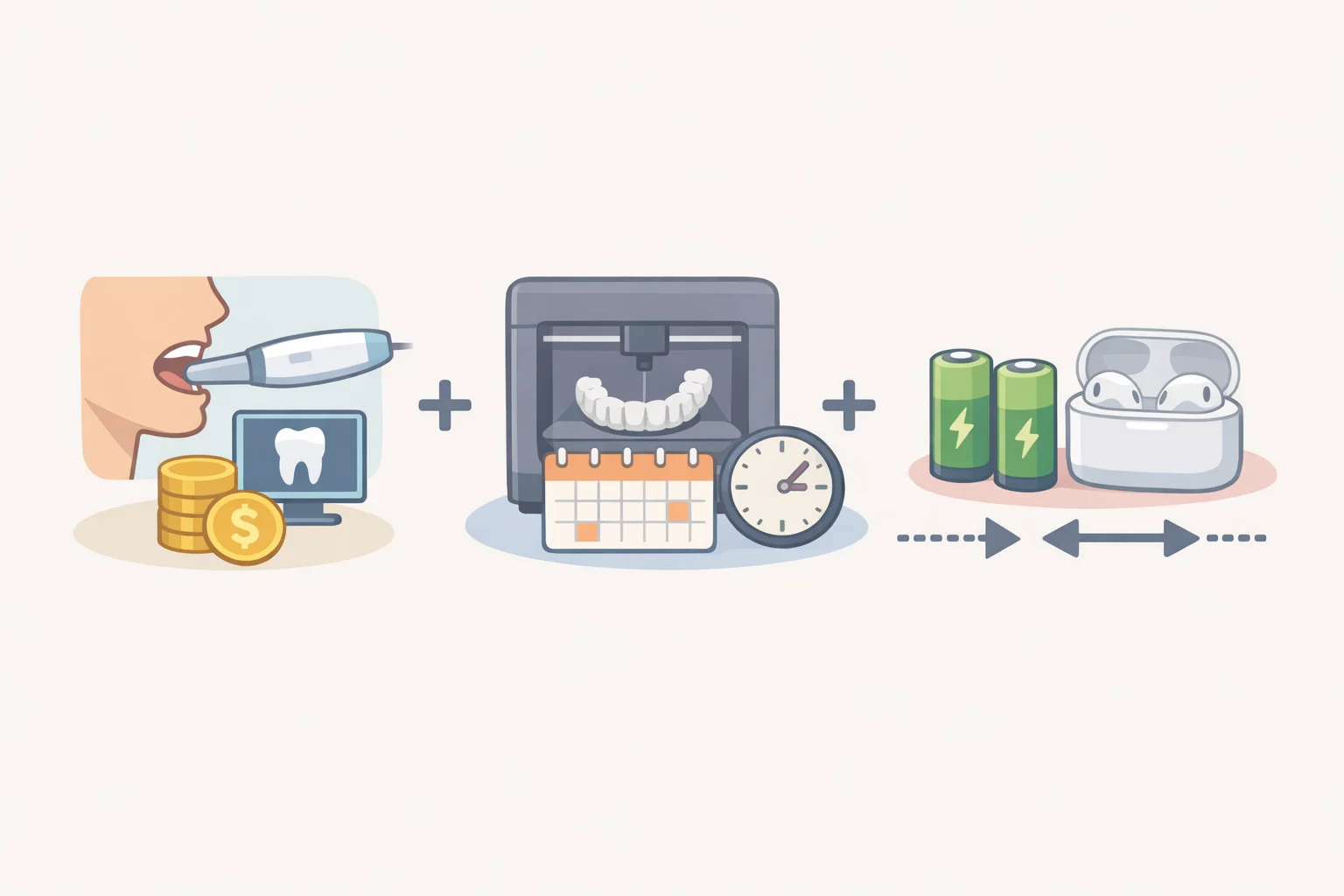
The $1,400 price is the starting point, not the total.
Before ordering, buyers must obtain an intraoral 3D scan from a dentist or scanning provider. New Mobility puts that cost at $75 to $150; CNX Software estimates $50 to $150. After the scan, buyers wait up to six months for the custom unit to be manufactured and shipped. The device is estimated to last two to three years, per New Mobility.
Battery life on the current Hydros model runs five to eight hours per charge, with a 90-minute recharge time. For users who need continuous all-day coverage, Augmental sells a two-unit bundle for $1,900, the practical workaround for a battery ceiling that can fall short of a full workday, as CNX Software noted this week.
Augmental offers a 30-day full refund window, but its practical value is limited. The dental scan is a separate out-of-pocket expense, the device is custom-fabricated to one person's mouth, and the six-month lead time means buyers can't evaluate the product under live conditions before committing. No public information is available on insurance reimbursement, HSA/FSA eligibility, or clinical classification, a significant gap for buyers approaching this as assistive hardware rather than a consumer purchase.
Augmental does provide structured onboarding support to all buyers, according to New Mobility, which suggests the learning curve is real. The tongue is capable of precise movement, but mapping that precision onto cursor control requires building new physical habits from scratch.
The practical summary: from order to first use is up to six months. Plan on replacement every two to three years. For all-day use, budget for two units. The $1,400 sticker is the floor, not the ceiling.
Who it's for, what the evidence supports, and what it doesn't
The strongest and best-evidenced use case is people with severe mobility impairments who have lost reliable use of their hands. The early access cohort included students, artists, and gamers using MouthPad as their primary computing interface, with some logging 16-hour days, a signal of genuine functional dependence rather than casual evaluation, per Augmental's launch announcement. For this group, $1,400 is high but within the range typical of specialized assistive input hardware.
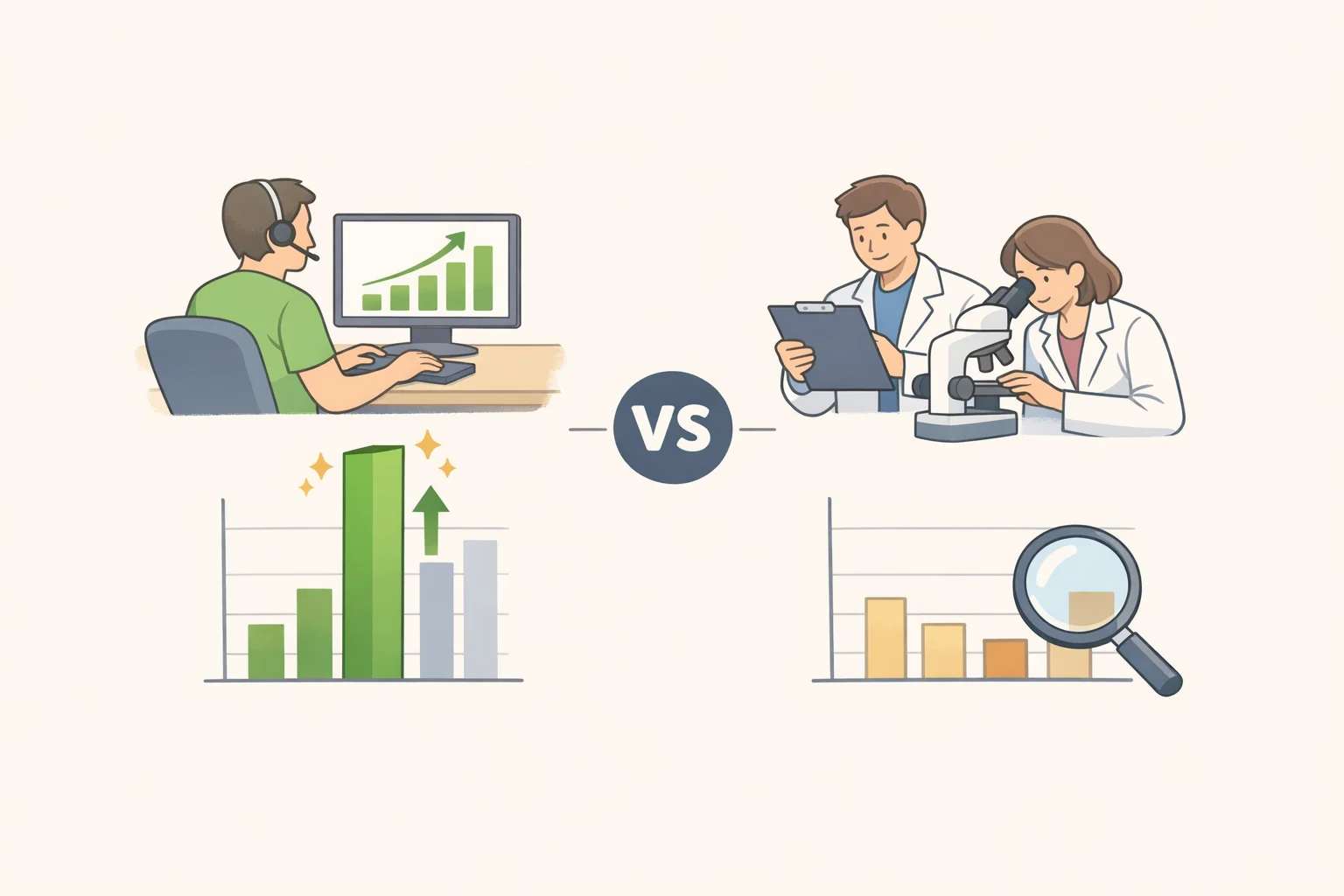
Augmental's most striking claim appears in the same press materials: one experienced user recorded 10.47 bits per second on a cursor-control task, which the company says matches the throughput of state-of-the-art implanted brain-computer interfaces, without brain surgery. That claim is remarkable, and it rests entirely on company-produced data from a single user. No independent researchers have replicated it. Treat it as a directional signal, not a validated benchmark.
The broader academic picture isn't much help yet. A 2021 IEEE paper evaluating iTongue, an earlier commercialized tongue-computer interface for PC and powered-wheelchair control, tested its activation method on just two able-bodied participants. That's not a knock on MouthPad specifically; it reflects where the field sits. Independent speed and accuracy benchmarks, fatigue and comfort data across multi-hour sessions, hygiene protocols, and usability testing across different mobility profiles and dental anatomies simply don't exist in the public record yet.
Augmental also reports a waitlist of more than 6,300 people, including surgeons, mechanics, pianists, and parents, professionals whose hands are occupied situationally rather than impaired, according to the company. That's a meaningful signal that demand for discreet hands-free input extends beyond disability use cases. The figure comes from company materials and says nothing about conversion rates or fulfillment capacity, so read it as directional.
For a disabled user who has exhausted conventional alternatives, the MouthPad offers real capability at a high but defensible price, pending hands-on evaluation. For a clinician or occupational therapist assessing it for a patient, the absence of independent efficacy data and clear insurance pathways are the practical blockers. For the gadget-curious, the price, six-month wait, and custom-fitting process make it a poor impulse buy. This is specialized hardware that happens to be consumer-purchasable.
What the device still needs to prove

MouthPad is a real shipping product with a genuine user base, broad platform compatibility, and a discreet form factor that improves on the conspicuous assistive tools it's competing against. For people with severe mobility impairments who need a primary input device, it deserves serious consideration despite the cost and process friction.
The BCI throughput comparison is the headline claim, and it may even prove accurate. For now, it's one data point from one user in company-controlled conditions.
Augmental also launched a companion product alongside MouthPad this week: Vox, a $200 skin-worn microphone pendant that captures voice through body contact rather than open air, triggerable via tongue gesture when paired with MouthPad. The longer-term goal is silent speech for hands-free computing, with units expected to ship by late 2026. That's a story for another day.
What MouthPad needs most right now is external scrutiny. Independent testing covering speed, accuracy, fatigue, multi-hour comfort, and real-world usability across the full range of people this device is meant to serve, that's the work that would actually answer the questions that matter. The product is ready for that evaluation. Whether researchers or clinicians prioritize it is the open question.