Discord and Meta Lawsuit Over Teen Abuse Explained: Key Legal Claims
A woman has sued Discord and Meta this week, alleging that child abuse rings found her on Discord and Instagram as a teenager, blackmailed her into producing explicit and self-harm images, and spread that material across the internet, leaving her with lasting psychological and physical harm, Business Insider reported. Her lawyers describe the case as a potential "watershed moment" for holding platforms accountable, as the FBI has separately warned parents about a rising network of online extortion groups targeting minors.
Meta is a named defendant, but its role in the public record is narrow: Instagram appears as an initial contact point. The detailed abuse pathway in available filings runs through Discord. That imbalance is real, shapes what can be reported here, and is addressed directly below.
The civil suit lands on top of state-level litigation that has been building for more than a year. New Jersey, Arkansas, and Texas have each brought complaints advancing a version of the same argument: that Discord's default settings made minors findable, reachable by direct message, and unmonitored in sequence and that this outcome was foreseeable. Discord disputes the characterizations across all these cases, says roughly 80 percent of its users are adults, and says the lawsuits do not reflect the platform it has built, the Texas Tribune reported in May. All allegations remain untested in court.
Why Meta is named and what the public record does and doesn't show
Video of the Day
The plaintiff's complaint names both companies, and the Discord and Meta lawsuit draws on a cross-platform pattern regulators say they have seen repeatedly. Abuse rings allegedly made initial contact on both Discord and Instagram before moving to coercion, according to Business Insider. Beyond that, public filings provide little detail about Instagram's specific product role in what followed. No state attorney general complaint in the available record makes parallel design-liability claims about Instagram's defaults; the granular allegations about friend requests, direct message scanning, and parental controls all concern Discord.
The H1 framing reflects what the lawsuit names. The reporting weight falls where the documented evidence sits.
Video of the Day
How predators allegedly move children across platforms and why the pattern keeps repeating
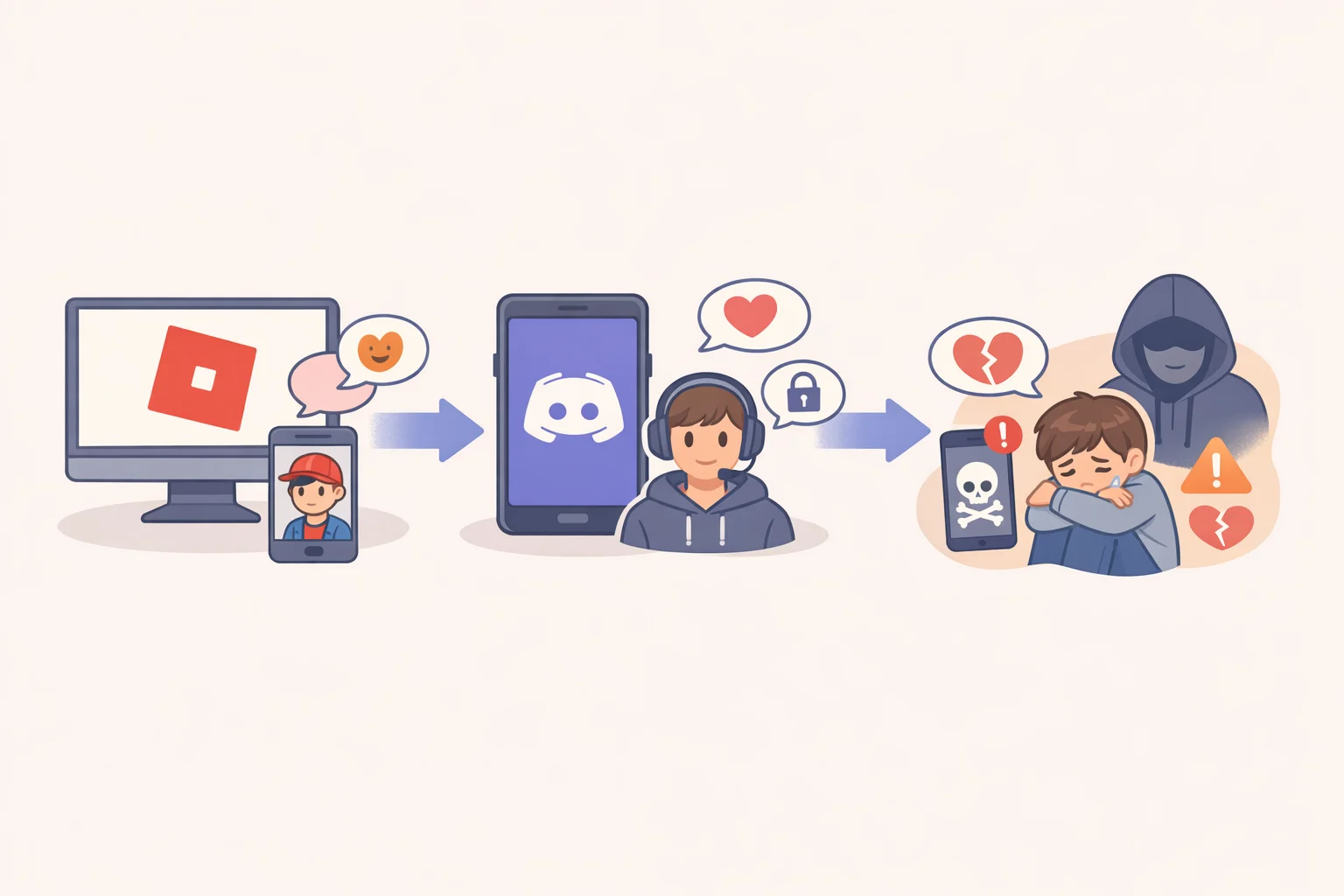
Arkansas describes this cross-platform movement as a designed pipeline, not an accident of proximity. In its complaint filed last month, the state alleges Roblox serves as the first-contact environment, where predators pose as peers and build trust, while Discord functions as the platform where abuse intensifies where explicit material is solicited, sextortion conducted, and, in dozens of documented cases, in-person assaults arranged, the Arkansas Attorney General alleged in June. Texas cited a matching case from 2025: a 13-year-old allegedly groomed on Roblox, moved to Discord, and sexually assaulted at home, the Texas Tribune reported.
What elevates this beyond a moderation complaint is the integration both platforms allegedly chose to build. Arkansas claims Roblox permitted Discord server links inside game pages and allowed Discord usernames in user profiles, while Discord enabled Roblox account linking effectively wiring the contact-to-escalation handoff into both products' features, according to the Arkansas AG. Plaintiffs argue this reframes the core question: not whether platforms failed to stop predators, but whether deliberate product decisions built the environments predators needed and connected them.
The default settings that allegedly made abuse predictable, step by step
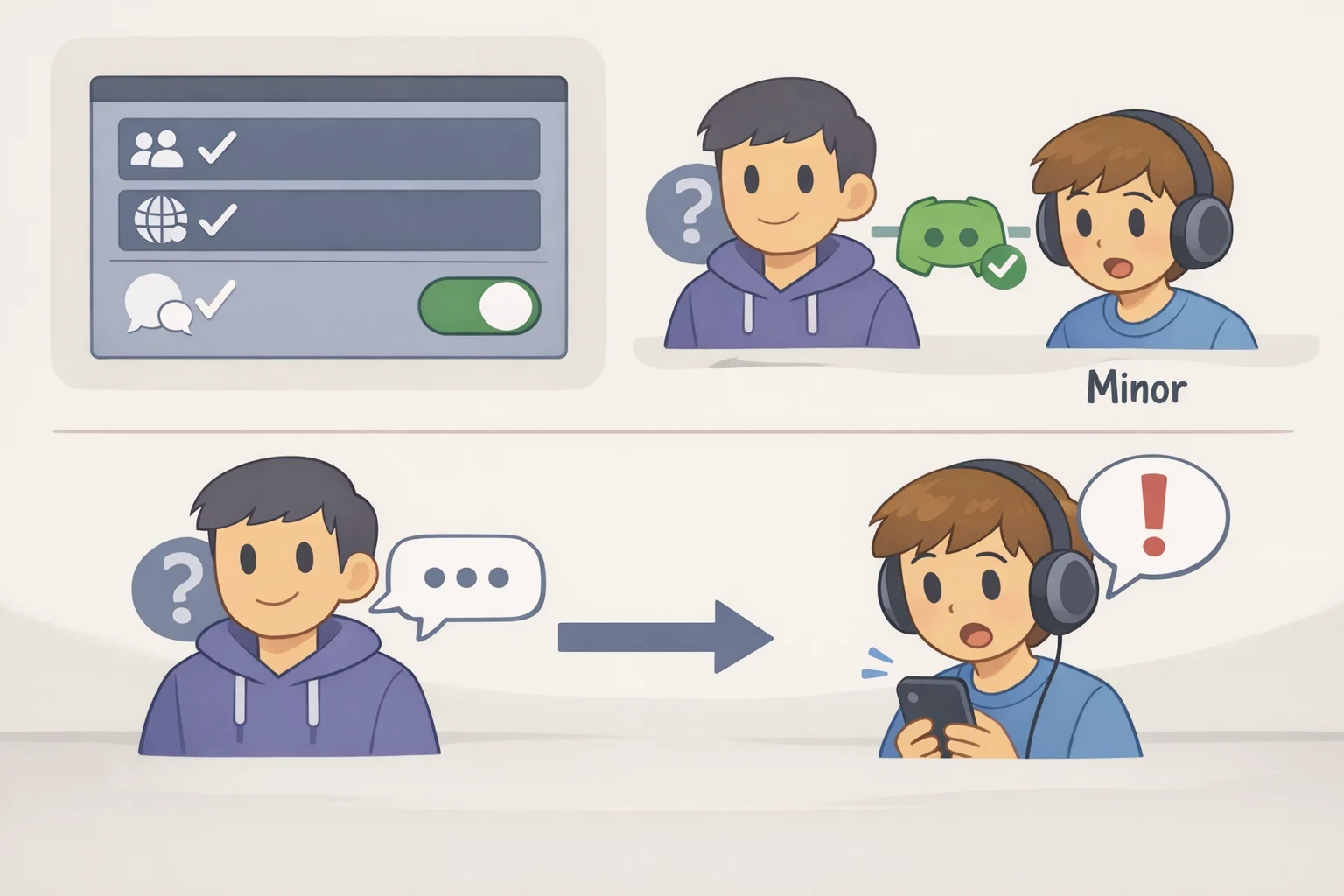
The most detailed evidence in the public record concerns a specific sequence in Discord's product architecture. By default, any user on the platform could send a friend request to a child. Anyone sharing a server with that child and servers can hold over a million users could initiate private direct messages without any prior relationship. A stranger needed only to join a large shared server to open a direct line to a minor, according to the New Jersey AG's complaint filed in April 2025.
The message-scanning feature is where the design argument becomes most concrete. Discord offered three settings; the default was labeled "My friends are nice" it scanned messages from strangers but switched off entirely once a user accepted a friend request. Accepting a friend request from an unknown adult didn't add scrutiny; it removed the scrutiny that existed, the New Jersey AG alleges. New Jersey further alleges Discord knew this scanning failed to catch all explicit content even when technically enabled, and continued marketing the feature as protective.
Regulators also contend Discord was not passively accessible to minors but was actively drawing them in. New Jersey's complaint describes the platform offering custom emojis, soundboards, and stickers designed to appeal to children, while creating student hubs and gaming communities built around titles popular with younger users, including Roblox, the New Jersey AG alleges. The legal significance is direct: a platform that deliberately attracts minors had reason to anticipate a younger user base, which makes subsequent exposure to unscanned private messages harder to characterize as incidental.
The parental controls allegedly mirrored the same structural problem. Arkansas claims Discord's Family Center monitoring tool was designed so that children, not parents, controlled whether any monitoring occurred at all a tool marketed to reassure parents that required the child's cooperation to activate, the Arkansas AG alleges. New Jersey frames the legal theory plainly: the design made it easy for children to connect with strangers while the safety features shown to parents did not function as described.
What Discord's own data suggests and why bans don't stop the problem
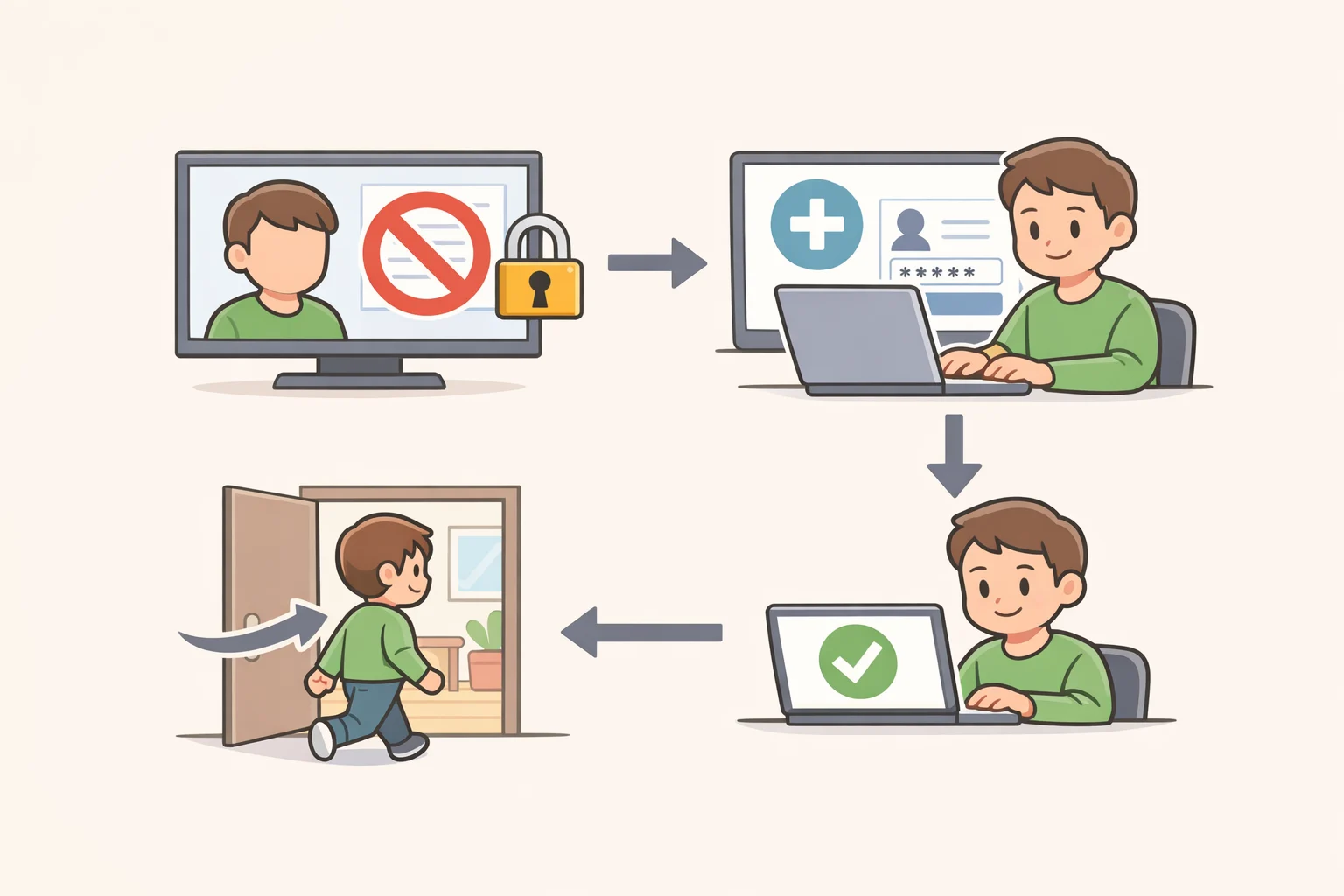
Discord's minimum age is 13, enforced by asking users to enter a date of birth at signup. Nothing about that date is verified, the New Jersey AG alleges. New Jersey found that many criminal exploitation cases it reviewed involved children under 13 meaning the stated minimum functioned as an unenforceable honor system.
Arkansas separately cites Discord's own transparency reporting, which allegedly showed child safety violations increasing 150 percent in a single quarter, according to the Arkansas AG. The underlying quarter and baseline are not specified in public filings, and whether the increase reflects more abuse, a growing platform, or improved detection is unknown. Plaintiffs argue the figure is significant regardless: it appears in Discord's own disclosures, which they say demonstrates the company understood the scale of what was occurring.
Reactive enforcement runs into an additional structural limit. When a user is banned, Discord's design allows them to create a new account immediately and re-enter, the New Jersey AG alleges. The CSE Institute, which published an analysis of Discord earlier this year, notes that the platform's enforcement has consistently been reactive dependent on victims or families to recognize and report abuse before any response is triggered. A ban that resets in minutes offers the person it removed little more than a brief interruption.
Three states have now filed their complaints under consumer protection law rather than content moderation law, and that framing is deliberate. New Jersey, Texas, and Arkansas are each arguing that Discord made safety representations to parents and users that its systems could not actually deliver, according to the New Jersey AG and Texas Tribune. The framing separates what Discord said from what its defaults actually did and deception claims tend to present different legal terrain than product-liability claims against platforms, which have historically faced high bars.
What a court could actually force Discord to change
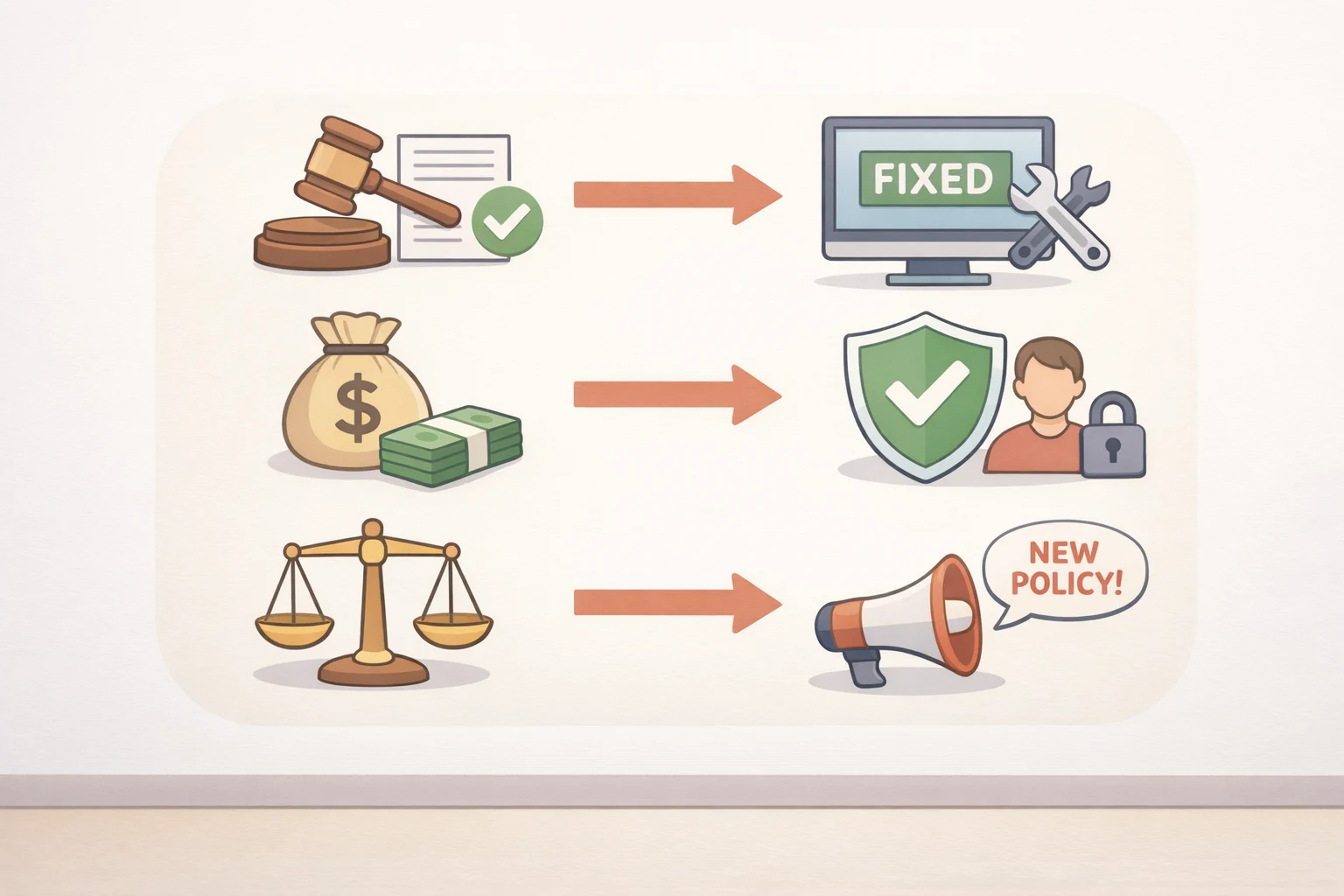
The remedies now in front of courts are specific. Texas is asking for mandatory age verification under the SCOPE Act real verification, not a self-reported birth date and financial penalties under the Deceptive Trade Practices Act, the Texas Tribune reported. Parts of the SCOPE Act have been blocked as unconstitutionally vague, so the legal path remains uncertain. New Jersey's complaint seeks an injunction against further violations and disgorgement of profits generated through the allegedly deceptive practices, the New Jersey AG stated.
Translated into product terms, those remedies mean: age checks users cannot bypass with a false birthday; direct message defaults that don't create unmonitored private channels the moment a stranger is added as a friend; parental controls that parents, not children, can switch on; and ban enforcement with enough friction to prevent immediate re-entry.
Discord said it looks forward to collaborating with policymakers toward a safer online experience, according to the Texas Tribune. What the litigation will eventually force is a more precise answer: whether the defaults at the center of every complaint have materially changed, and what Discord's own transparency data will show once courts can examine it directly. This week's lawsuit adds an individual plaintiff alleging specific injury and extends the claim to Meta. The product-design argument it rests on has been building since at least April 2025.