Autonomous Key app lock key: How a $9 NFC blocker fights doomscrolling
Autonomous is selling a passive NFC key that blocks selected apps until users tap a physical object against their phone, a low-cost attempt to turn doomscrolling into a deliberate act. The Autonomous Key app lock key is priced at $9 with free U.S. shipping, works on both iPhone and Android, and requires no subscription, according to Notebookcheck, which covered the product today. One earlier review listed the price at $19; the manufacturer's store currently shows $9.
The behavioral premise has research behind it. When participants in a PNAS Nexus study published early last year blocked all mobile internet access for two weeks, average daily screen time fell from 314 minutes to 161, and 91% improved on at least one measure of mental health or sustained attention. That study tested something far harsher than a physical key. The principle it supports that adding friction reduces use is the same one the Autonomous Key is built on.
What the research does not yet support is the product itself. No independent study has measured how often users bypass the lock, whether the behavior change holds after the first few weeks, or whether a physical key outperforms the digital time limits most people already ignore.
How the Autonomous Key NFC app blocker works
Video of the Day
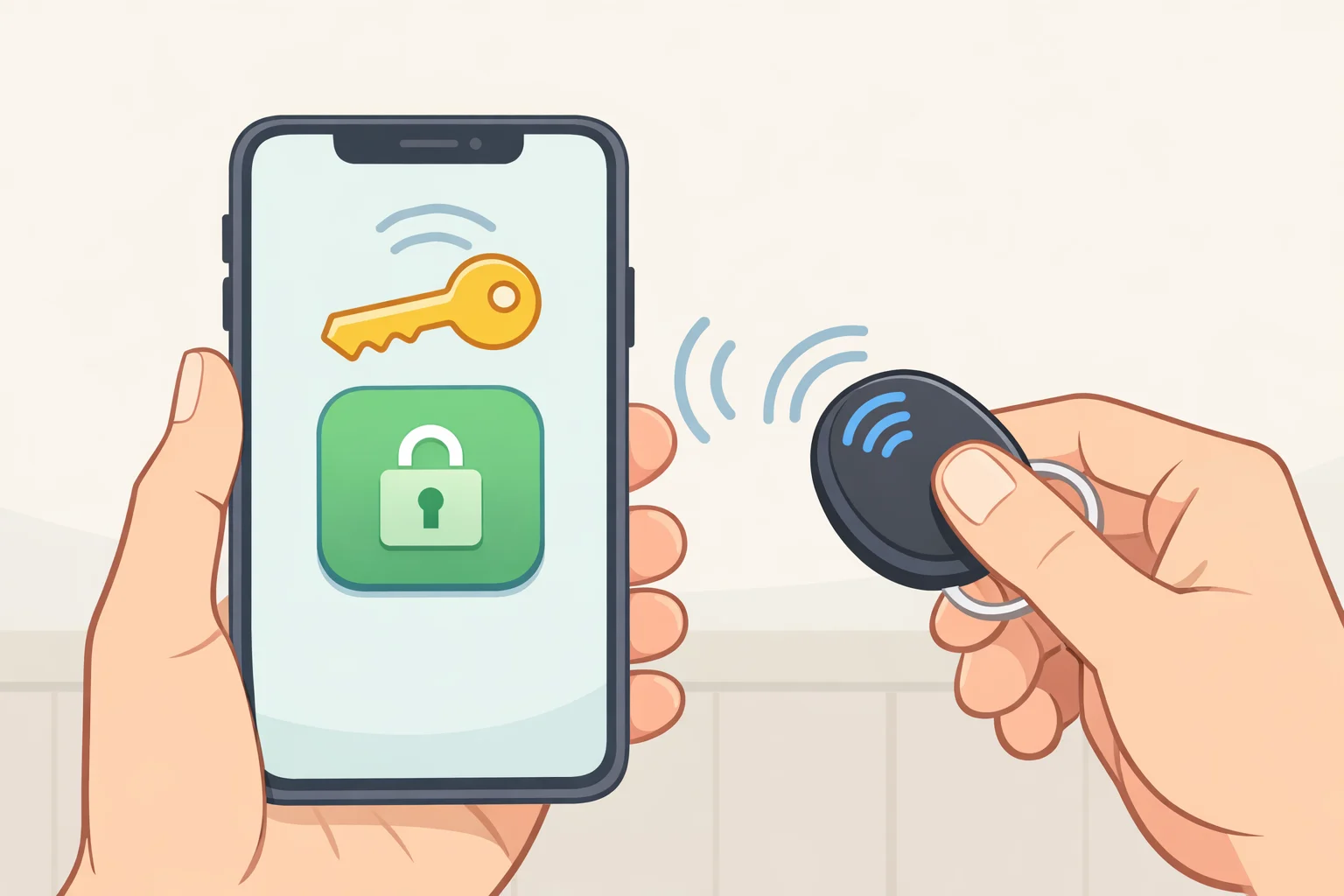
The hardware is minimal by design. The key is a 3D-printed shell with a passive NFC tag embedded inside the blade, requiring no battery or charging, per a hands-on review at Digital Reviews published three weeks ago. When a user attempts to open a locked app, the phone displays a key icon instead of launching it. Tapping the physical key against the phone grants access for a chosen duration: preset options of 15, 30, or 60 minutes, or a custom window between 1 minute and 12 hours.
The companion app is stripped down to its function. Users select which apps to lock and set unlock durations. There are no scheduling windows, exception rules, or free-time modes, the same review notes. That simplicity keeps setup fast, but it limits flexibility for anyone with irregular routines or a legitimate reason to get into an app quickly.
The bypass problem is real and worth stating plainly. Digital Reviews identifies uninstalling the companion app as the most direct exit. Physical access to the key is the system's only enforcement mechanism, which means the lock functions as designed only for users who actually want the friction.
The companion app tracks unlock frequency and session duration, feeding that data into an AI layer. Digital Reviews described the AI-generated insight reports as occasionally "snarky" in tone. Autonomous claims the product can cut social media time by nearly half and support improvements in sleep and impulse control, per Notebookcheck. Those are manufacturer claims, not independently measured outcomes.
Video of the Day
What the research actually says about friction-based intervention
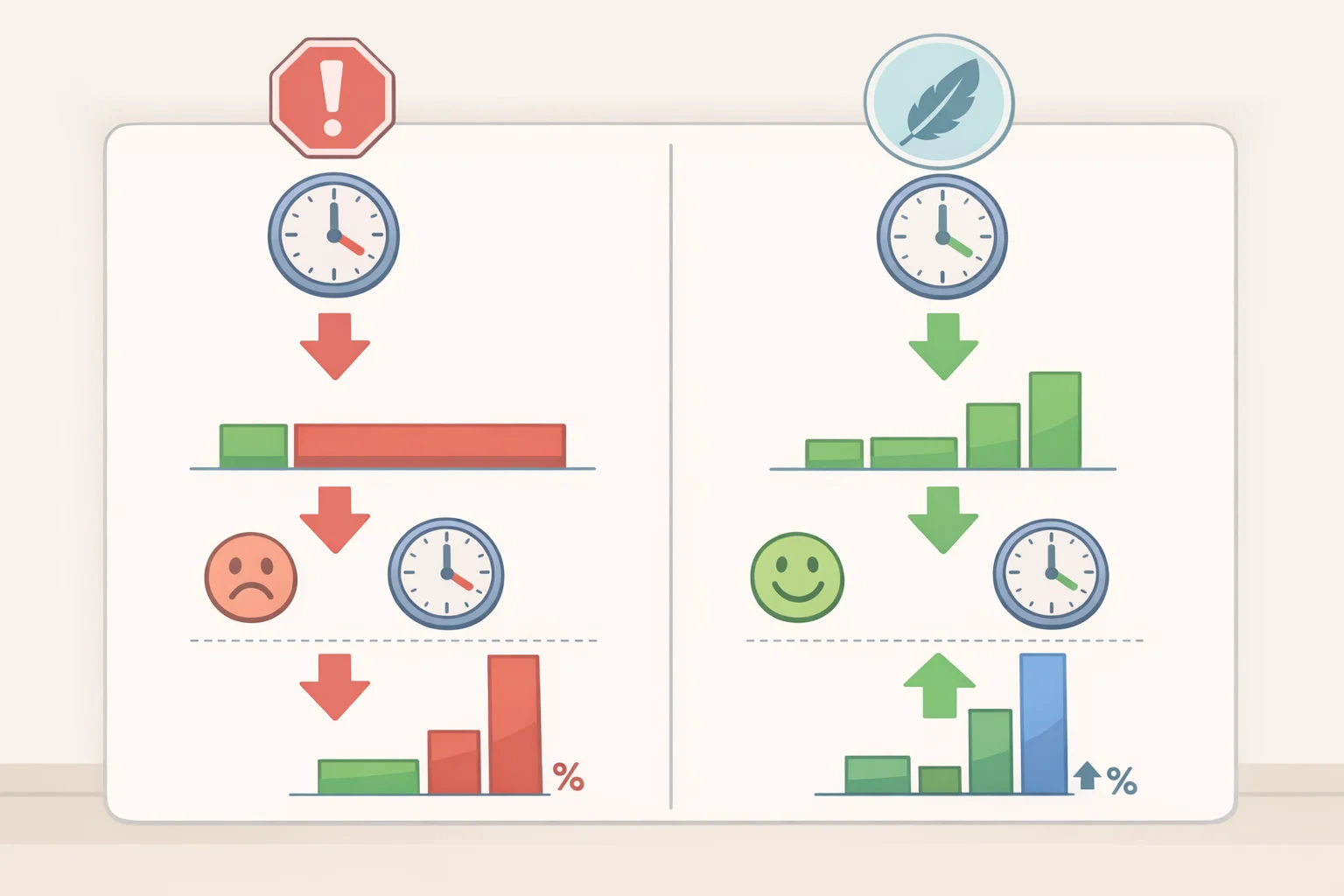
The PNAS compliance numbers deserve attention. Of the 467 participants who agreed to block all mobile internet for two weeks, only 119 met the preregistered compliance threshold of maintaining the block for at least 10 of 14 days, the PNAS Nexus study shows. Strong restriction works when people follow through. Adherence is the harder problem, and that was true even under a structured research trial.
Lighter-touch friction holds up better. A 2024 ACM CHI paper on InterActOut, a system that subtly delays and distorts touch input rather than blocking apps outright, reduced target-app usage time by an additional 15% and opening frequency by an additional 17% compared to standard timed lockout. It also achieved a 25.4% higher user acceptance rate than hard blocking. The paper attributes this to the intervention's continuous, subtle nature: users tolerated friction they barely noticed more readily than a wall they could resent and remove.
A systematic review of 19 studies across 13 apps found that only 4 of 13 apps demonstrated clear effectiveness. Targeted app-limit interventions cut Facebook use by roughly 33% in the short term and Instagram use by roughly 34% over longer follow-up. Findings on compulsive or problematic use patterns were less consistent: some apps reduced it, some showed no effect, and one study found an app increased it.
The Autonomous Key draws on the same behavioral logic as all of these interventions. It sits in its own category, though physical rather than purely digital, with no independent outcome data behind it yet.
Who the product is aimed at
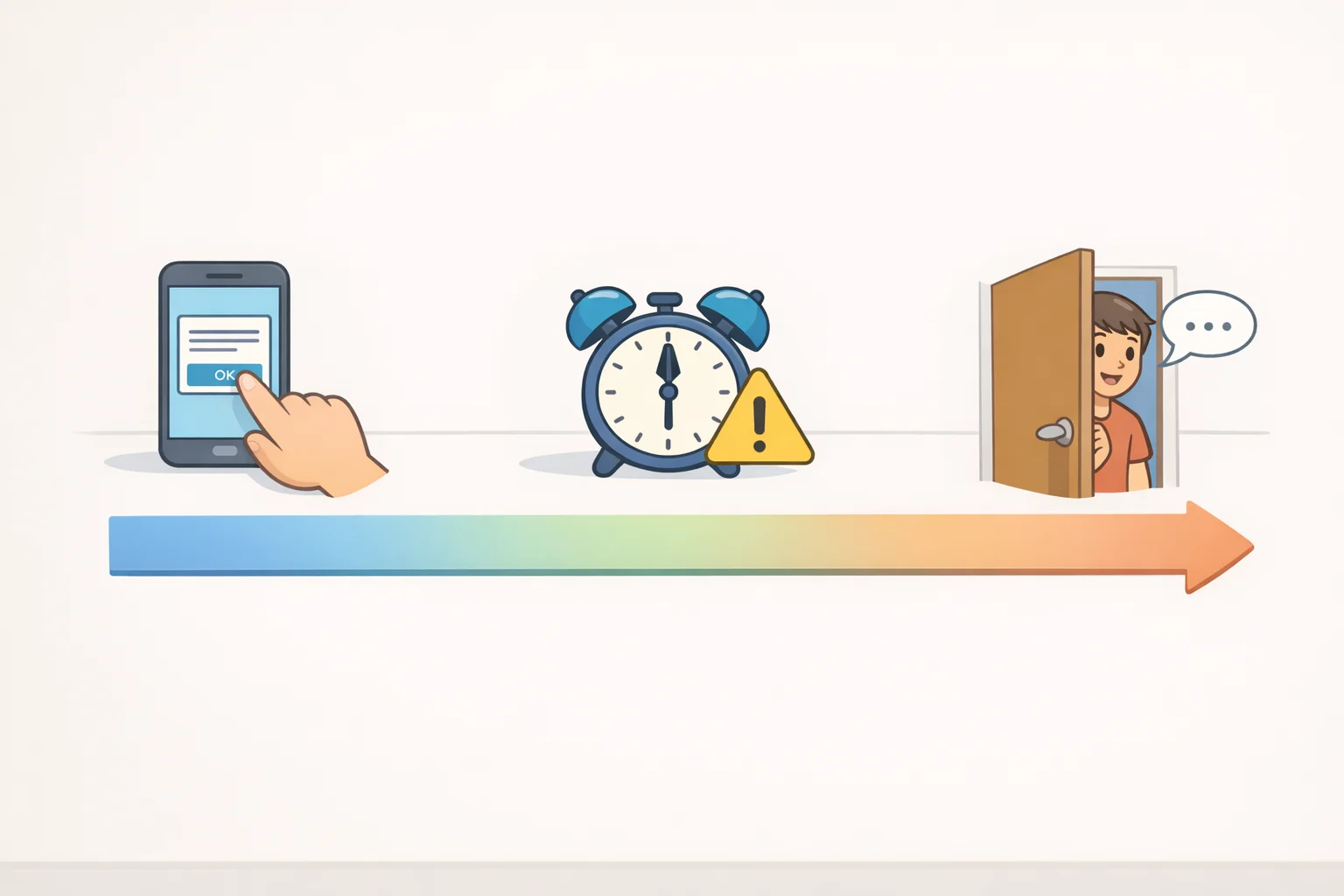
The honest framing is a spectrum. Full internet blocking, as tested in the PNAS study, produces the strongest results for those who comply, but compliance is low and the disruption is severe. Built-in timers in iOS Screen Time and Android Digital Wellbeing are easier to override with a single tap. The Autonomous Key sits between those two points: harder to dismiss than a software prompt, easier to work around than a device-level block.
The product appears aimed at a specific kind of user someone who overrides software time limits without much resistance, but who would pause if the unlocking step required a physical object. The requirement to locate the key, tap it against the phone, and confirm a duration creates a brief interruption in the automatic loop. For someone determined to scroll regardless, that interruption changes nothing.
Autonomous claims the key works with both iPhone and Android and requires no ongoing subscription, Notebookcheck reported today. At $9 with free U.S. shipping, it is priced as a low-cost experiment rather than a commitment.
What remains unproven
The device is technically simple, which is part of its appeal. A 3D-printed key with a passive NFC chip is not a sophisticated product. Its potential value is behavioral: replacing a frictionless impulse with a deliberate physical act.
The research supports the underlying mechanism. Friction-based interventions, whether through internet blocking, input manipulation, or physical barriers, have shown measurable reductions in screen time and, in some studies, improvements in wellbeing. The InterActOut study found a 15% additional reduction in target-app usage time and a 25.4% higher acceptance rate versus standard lockout. The PNAS data showed that even a crude, disruptive block moved outcomes substantially for those who maintained it.
What the Autonomous Key still lacks is its own evidence. Independent data on real-world bypass rates, adherence over weeks, and whether a physical key changes behavior differently than digital limits for different user profiles does not yet exist. The product is promising as a cheap friction tool for users who want a speed bump, and probably ineffective for anyone motivated to route around it.
The larger question is whether physical anti-distraction devices develop into a product category with outcome data behind them, or stay a niche for early adopters willing to trade a bit of convenience for a behavioral nudge they could get for free by leaving their phone in another room.