Google Pixel Tag Price Leak: Why AirTag Parity Isn't Enough
A leak that puts a product at essentially the same price as its biggest rival isn't usually the headline. But that's the story here. New reporting on the Google Pixel Tag price puts it at €34.90 in Europe, ten cents under Apple's €35 AirTag (Android Authority, today). That gap is too small to function as a real price advantage. It reads more like Google clearing the lowest possible bar before anyone takes the product seriously.
The Pixel Tag is reportedly Google's first official Android Find My Device tracker, built specifically to work with the network the company has spent years trying to get third-party accessory makers to support (Android Authority, today). It's expected to arrive on August 12, 2026, at Google's Made By Google event, where the company plans to unveil the Pixel 11 series and Pixel Watch 5 (Android Authority, today).
Here's the case this piece makes: pricing near AirTag was never going to be Google's advantage. It was the minimum requirement for being in the conversation at all. Charge more than Apple for an unproven first-party tracker, and the pitch dies before it starts. Land near parity, and Pixel Tag earns a seat at the table, nothing more. What happens at that table, whether the hardware, the network, and the privacy protections actually hold up, is still open, and a price leak can't settle it.
What the Google Pixel Tag price leak does and doesn't confirm
Video of the Day
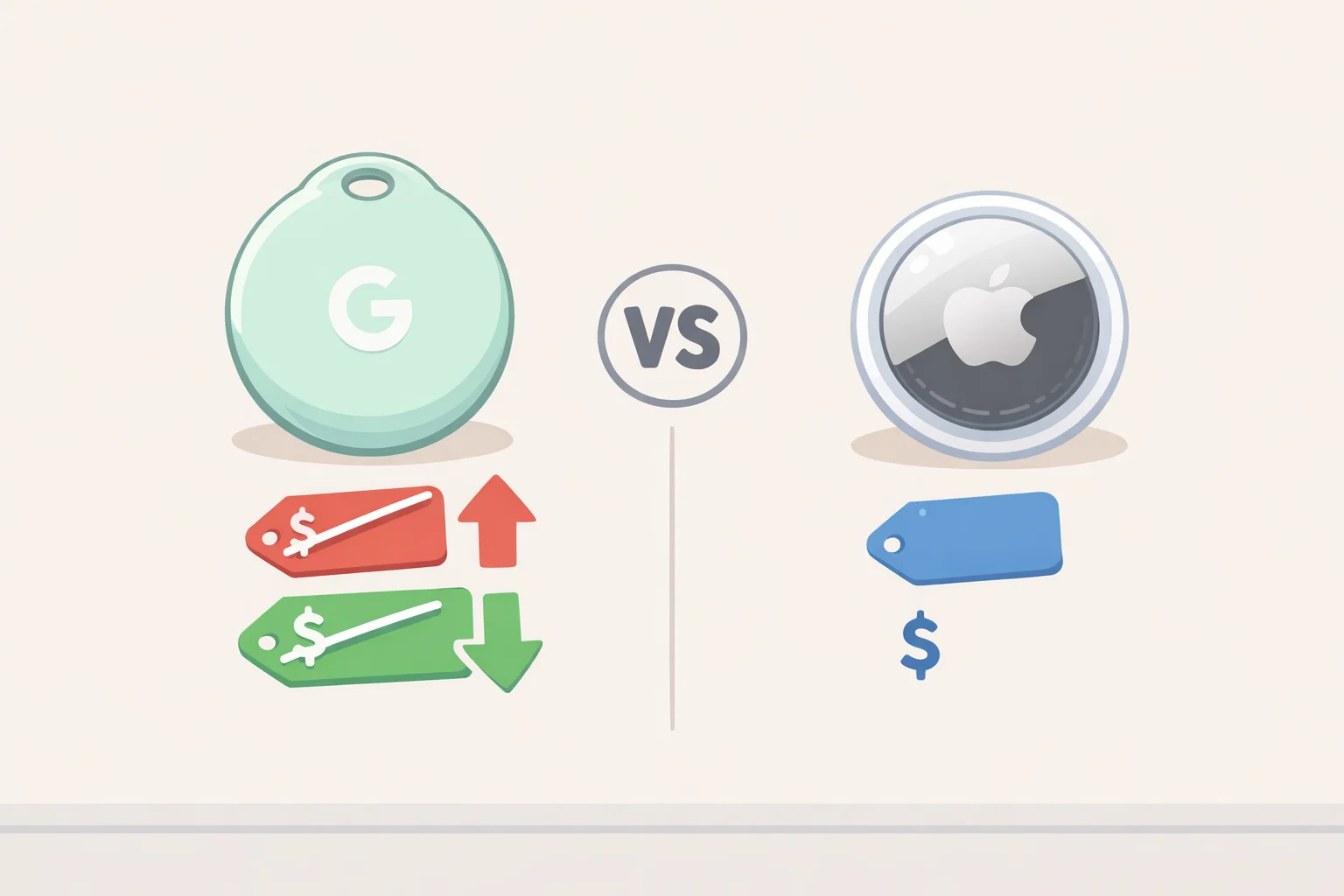
The number driving this story traces back to a single source. Dealabs, a French deals-tracking site, reportedly put Pixel Tag's European price at €34.90 (Android Authority, today). That's the fact. Everything downstream of it is inference.
Take the extrapolated Google Pixel Tag price in the US, which has circulated as $29 alongside the European figure. Android Authority arrived at that number by assuming Google would apply the same logic stateside that it appears to be applying in Europe: match AirTag's price rather than undercut it meaningfully (Android Authority, today). That's a reasonable guess given how closely €34.90 tracks AirTag's own €35. It is not a second leak. Nobody has reported a US figure independently of that assumption.
Google hasn't confirmed any of this, and open-sale timing hasn't even surfaced in reporting yet (Android Authority, today). This is pre-launch leak territory, arriving roughly a week ahead of the rumored reveal. The ten-cent gap between €34.90 and €35 isn't the story worth dwelling on. The real signal is that Google, by this account, isn't trying to charge a premium for a product with zero track record. That's a deliberate positioning choice, not a rounding accident.
Video of the Day
Why Google had little room to charge more
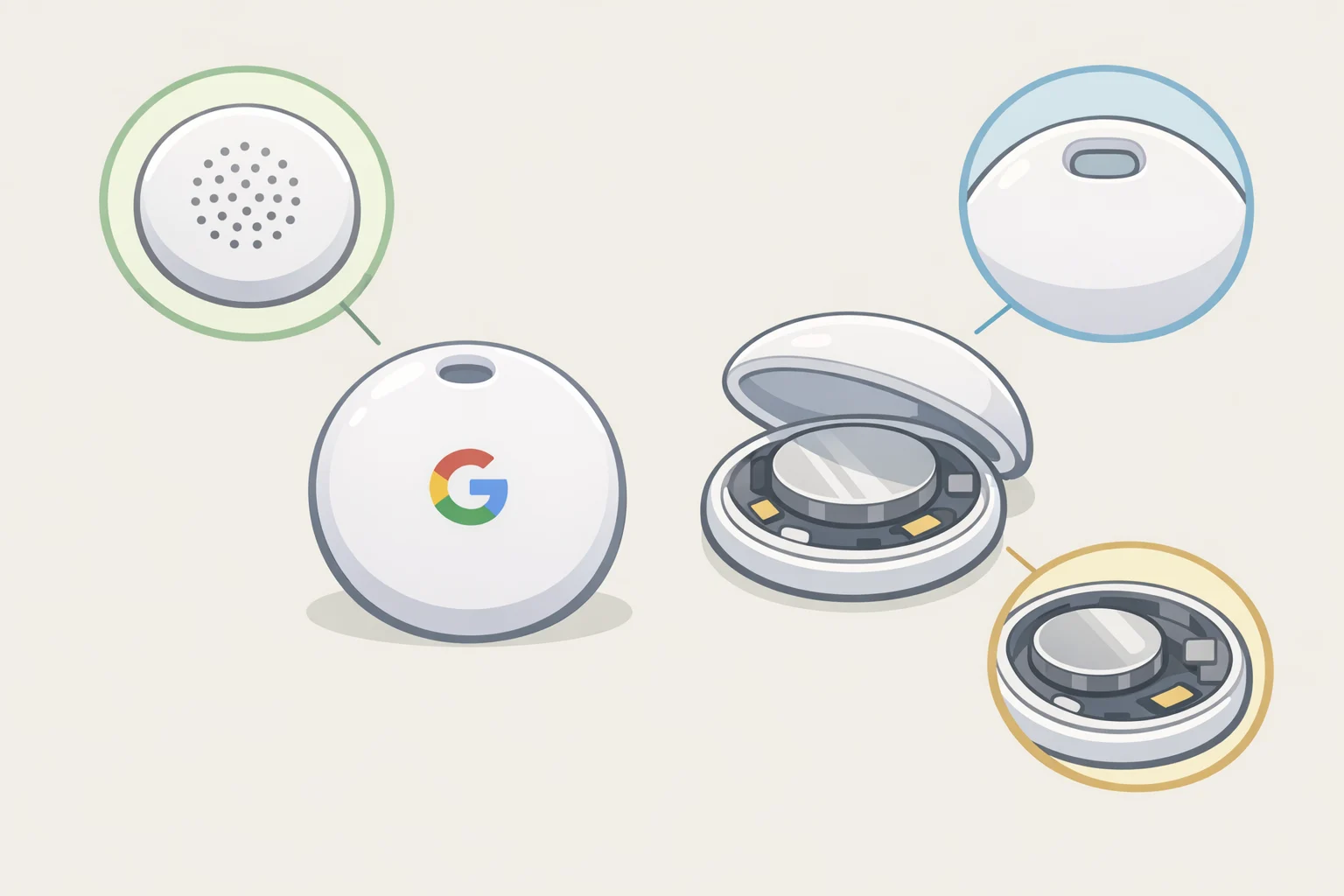
A straightforward Pixel Tag vs Apple AirTag price comparison shows just how thin Google's margin for maneuver was. AirTag is the obvious benchmark, and Google is clearly measuring itself against it directly. Worth separating two questions, though: what price Google is matching, and what actually justifies that price.
The leaked hardware doesn't offer much to hang a premium on. Renders and reporting describe a conventional puck-style tracker with a bottom speaker grille, carrying the model number GA12506 and expected in a colorway called "Fog Light" (Android Authority, today). Reported product copy calls it "compact, lightweight and durable," built to attach discreetly to items, with a speaker for nearby search (The Verge, last week). Those are fine features. They're also the standard vocabulary of the entire tracker category.
That's a judgment call, not a settled fact, but nothing in the leaked design or the marketing language points to a feature that would justify charging above what buyers already expect to pay for this kind of device. Google appears to be betting that Pixel Tag doesn't need to out-spec anyone to succeed. It needs to be cheap enough, compatible enough, and reliable enough that cost stops being a reason to say no. That's a sound strategy for a first-generation product. It isn't the same thing as building an advantage.
What price parity doesn't tell you yet
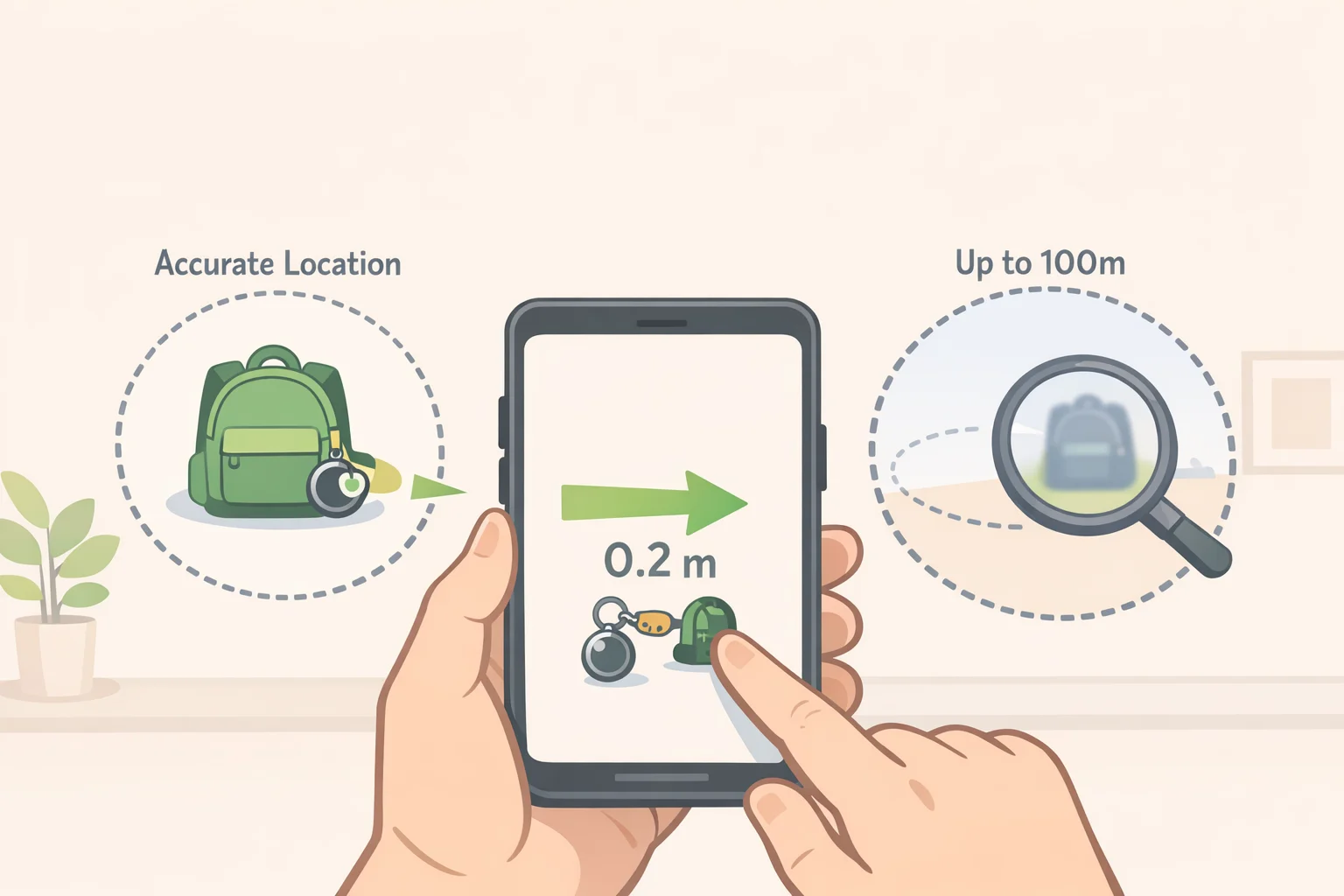
Google's own description of the product, at least as reported, leans hard on the Find My Device network being "secure" and "extensive," letting someone check the "exact location" of a lost item from a phone (The Verge, last week). That's marketing copy, and it's worth reading it that way. A product page is not an independent verification of how well a location network actually performs.
There's a real argument buried in that copy, though, worth stating plainly rather than borrowing Google's phrasing for it: a competitively priced tag is how a company gets more of them into bags, cars, and junk drawers, and more tags in circulation is generally what makes a crowdsourced location network useful in the first place. That's market logic, not a confirmed metric. Nothing in the current reporting includes data on how many devices sit on Android's Find My Device network, how dense that coverage is in any given city, or how it compares to Apple's version in practice. The reasoning holds up. The proof hasn't arrived.
What matters more than price, and what's still genuinely unknown, is whether Pixel Tag includes ultra-wideband hardware for precision finding, what its battery life looks like, whether it carries a water or dust resistance rating, and how its anti-stalking protections actually function. The Verge's reporting says the tag is "designed with your privacy and personal data in mind" (The Verge, last week), a line that sounds reassuring while specifying nothing. It's not clear how the device would alert someone if an unknown tag were traveling with them, how quickly, or on which phones that alert would even show up. A fair price gets Pixel Tag into consideration. It says nothing about whether the product holds up once it's actually being used.
What the August 12 launch can settle, and what it can't
Android Authority reports the tag will debut at Google's Made By Google event on August 12, 2026, alongside the Pixel 11 series and Pixel Watch 5 (Android Authority, today). Android Police, reporting separately, confirms that Google's Pixel event lands on that date and will reveal new hardware for the year, without detailing the specific lineup (Android Police, last week). The two reports point the same direction without claiming the same specifics. A launch bundled with flagship phones and a new watch suggests Google wants Pixel Tag treated as an accessory people add to a cart they're already filling, not a standalone gadget people go looking for.
The event itself can plausibly settle a specific list of questions: confirmed pricing in the US and Europe, whether UWB support made it in, water resistance ratings, battery life claims, and the specific mechanics of anti-stalking alerts. Those are announcement-grade facts, the kind of thing that gets nailed down on a spec sheet.
What it can't settle is whether any of that works as promised once it leaves the stage. Whether Android's Find My Device network can actually locate a lost bag in a crowded train station, or a set of keys dropped somewhere unfamiliar, is a real-world reliability question. That only gets answered through independent testing and ordinary use over weeks and months, not a launch-day demo. Don't mistake a confident announcement for a proven product. The specs will be knowable within days. The network's actual performance won't be.
The verdict, for now
Here's what's solid: a leaked European price of €34.90, a dime under AirTag's €35, an extrapolated US price around $29 built on that same logic, and a launch expected August 12, 2026, alongside Google's biggest hardware release of the year (Android Authority, today).
The position: Google declining to charge a premium for a first-party, unproven tracker is the right call, and probably the only realistic one available to it. But a competitive price is a floor, not a pitch. It removes cost as a reason to say no. It doesn't give anyone a reason to say yes.
Once the specs are confirmed, the real evaluation starts. How does Pixel Tag's price compare to the other Android-compatible trackers already on shelves? Does it include precision-finding hardware like UWB? How clearly does Google explain its anti-stalking protections, and how durable is the thing physically? And, over the months after launch rather than on day one, does the Find My Device network actually find things reliably? The price question already has an answer. Nearly everything that determines whether Pixel Tag is worth buying does not, yet.