Meta 7 million child safety ruling: record explained
The claim that Meta was ordered to pay $567 million in a child-safety lawsuit is not supported by the Harvard Gazette report reviewed for this article. The only comparable figure that shows up in that reporting is $375 million, tied to a New Mexico jury verdict covered by the Harvard Gazette earlier this year.
That jury found Meta violated the state's consumer protection law, based on two findings: the company failed to safeguard minors from online sexual predators, and it misled the public about how safe its platforms actually were, according to the report. The same report also described a separate Los Angeles case, in which a jury awarded a 20-year-old plaintiff $3 million after she sued Meta and YouTube over allegedly addictive platform design aimed at teens. Add the two figures together and the total still lands far short of $567 million.
The New Mexico verdict: what's documented
Video of the Day
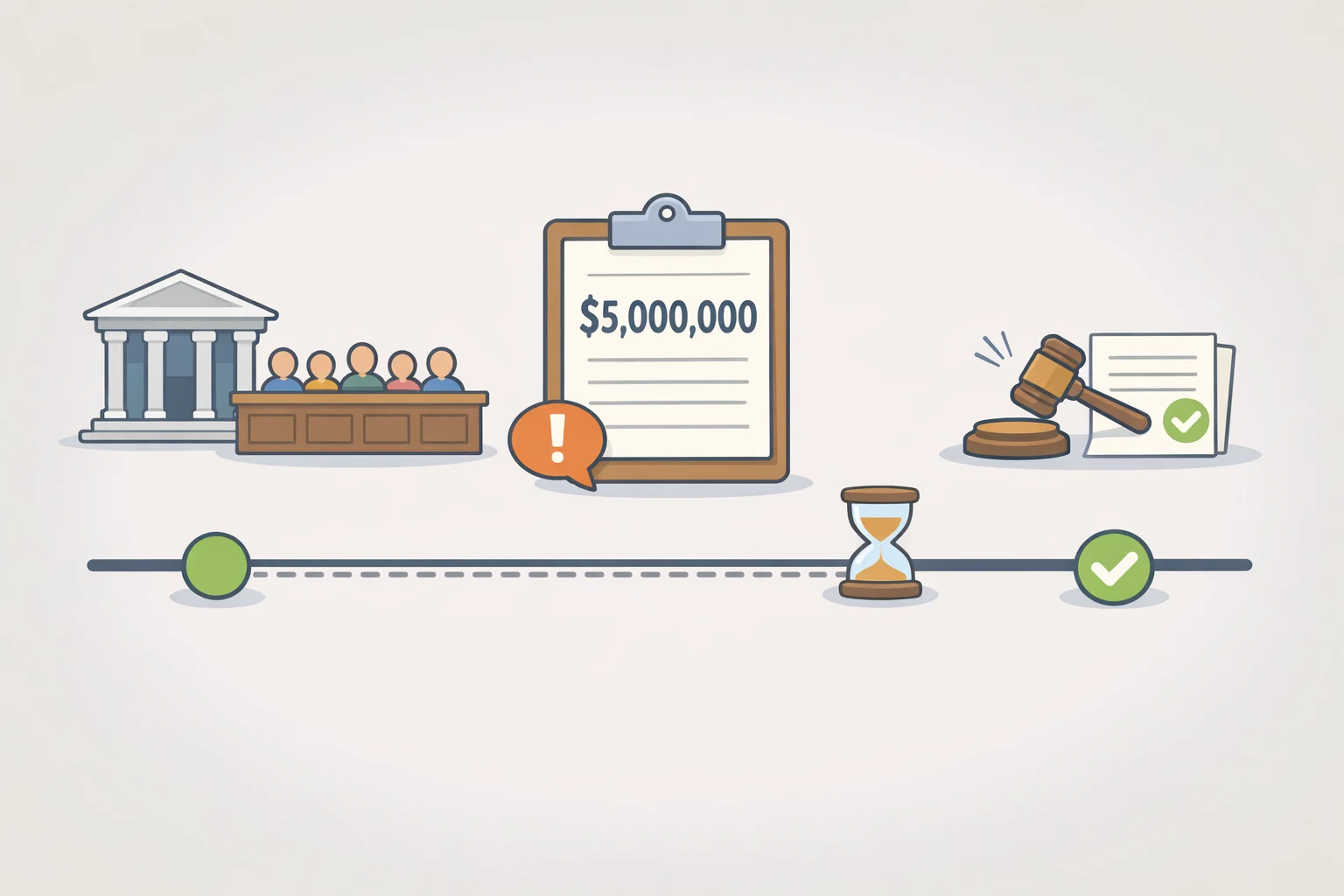
A jury in New Mexico determined Meta had violated the state's consumer protection statute, the Harvard Gazette reported earlier this year. The verdict rested on two findings: Meta's alleged failure to protect minors from predators, and misleading statements about platform safety. As a result, Meta was reported as ordered to pay $375 million in damages.
That's what the Harvard Gazette report establishes, and it's worth being precise about what it doesn't. The report does not include a case caption, a docket number, or the presiding judge's name, and no separate court record surfaced to independently verify the amount, confirm when it was entered, or clarify whether it reflects compensatory damages, punitive damages, or both. The $375 million figure remains a reported damages award tied to the jury's findings; the sources reviewed do not include the entered judgment.
None of the material reviewed contains a $567 million figure, or anything resembling one. That's a gap in what's available, not evidence one way or the other about whether the number exists somewhere else. It simply means the Harvard Gazette report, the primary source available for this article, ties Meta to $375 million and nothing higher.
Video of the Day
The Los Angeles case: a separate $3 million award
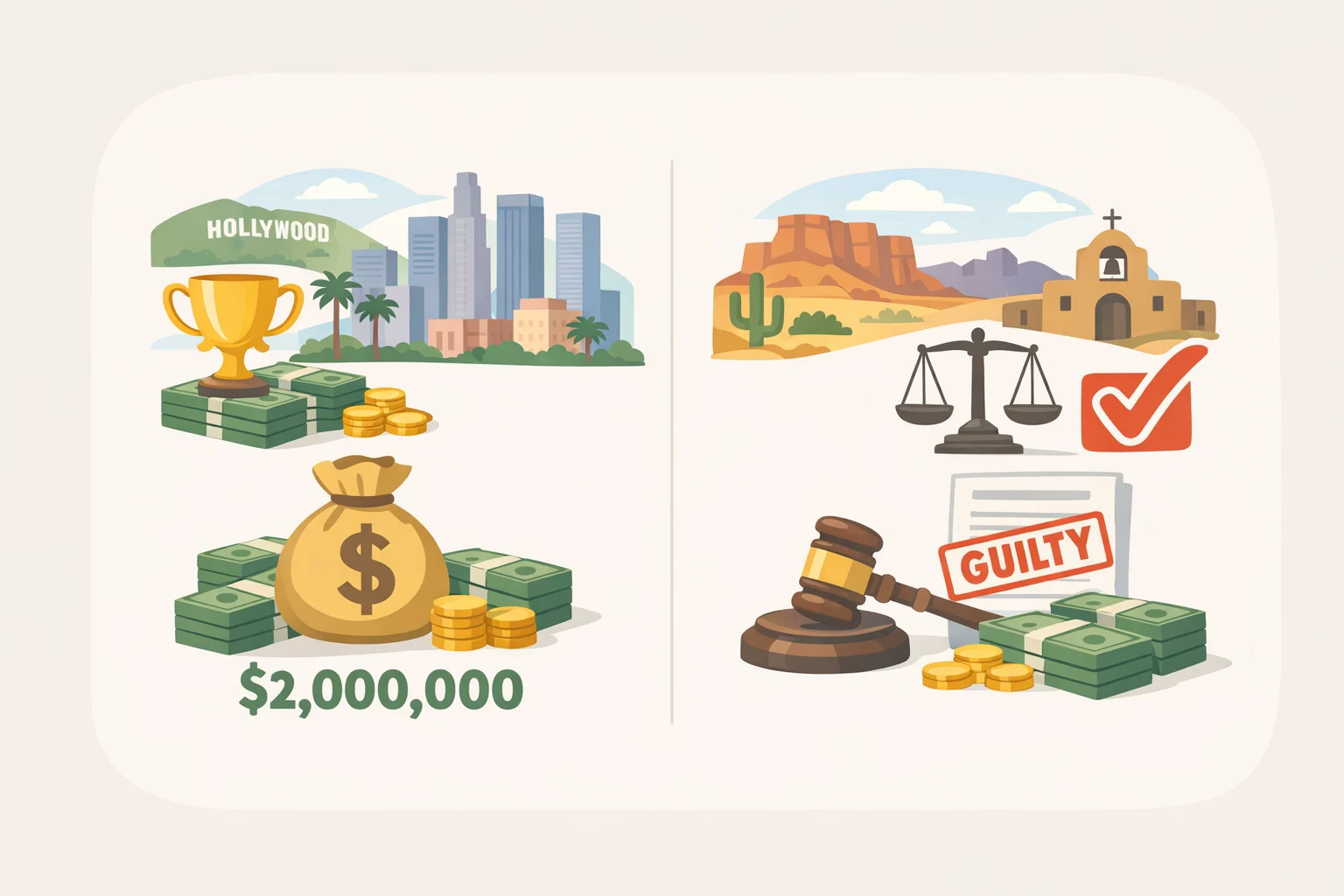
The Harvard Gazette also described a Los Angeles case built on a different argument. A 20-year-old woman sued Meta and YouTube, arguing the companies designed their platforms with addictive features aimed at teens and children, and a jury awarded her $3 million.
The award arose in a case naming both Meta and YouTube, but the reporting does not say how responsibility for the amount is divided. Treating the full $3 million as a Meta-only figure goes beyond what the source states.
Add the two reported numbers regardless, and the New Mexico verdict plus the Los Angeles award comes to $378 million, which is $189 million short of $567 million. The Harvard Gazette's headline describes both cases as bellwether trials, but that shared label is the only connection drawn between them in the report. Nothing in the available reporting suggests the two verdicts were ever combined into a single Meta-only total, and the arithmetic alone argues against trying.
Jury verdict, not yet a confirmed judgment
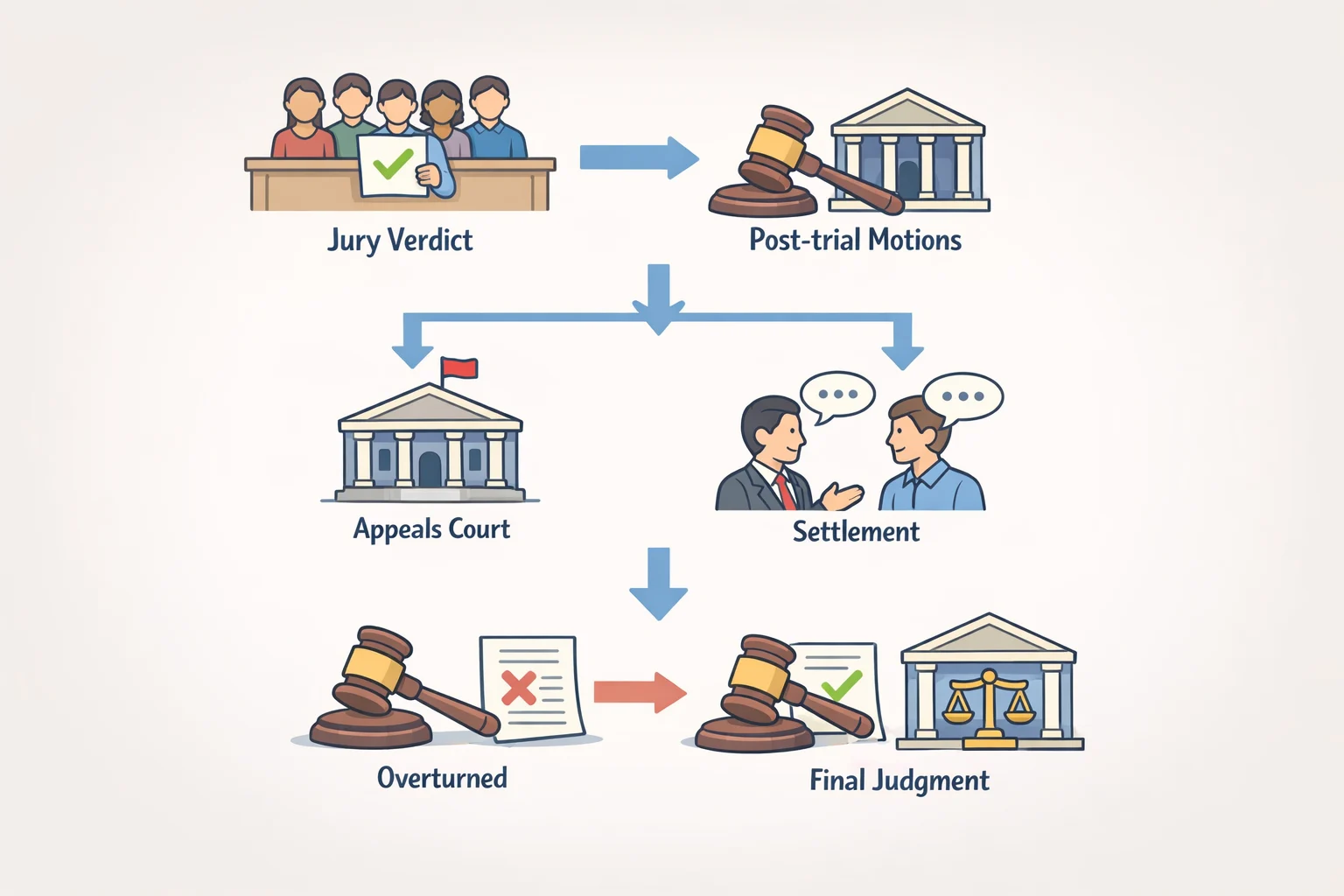
There's a meaningful difference between a jury returning a finding and a court entering a final judgment, and the Harvard Gazette report only documents the former. It describes what the jury decided and the damages figure that followed, but it doesn't say whether that figure has been formally entered as a judgment, whether Meta has filed post-trial motions, or whether an appeal is underway.
There's also no statement from Meta in the available coverage addressing the verdict, disputing the jury's findings, or describing its child-safety measures in response. Plaintiffs' counsel isn't quoted either. That's a significant gap: it means the $375 million figure, as reported, hasn't been tested against anything Meta or the plaintiffs have said publicly since the trial.
Unrelated proceedings, for context only
Meta is also involved in unrelated proceedings that don't bear on the child-safety verdict but illustrate that its platform practices are being scrutinized on more than one legal front. Earlier this year, the FTC filed notice that it would appeal a ruling that had gone in Meta's favor in the agency's monopolization case, which centers on Meta's acquisitions of Instagram and WhatsApp, according to the FTC. The agency alleges Meta has illegally maintained a monopoly in personal social networking for more than a decade by acquiring the competitive threats those two platforms posed, and the appeal will be heard by the U.S. Court of Appeals for the District of Columbia, the FTC said.
Separately, Meta settled with the Justice Department in 2022 over allegations that its housing-ad system discriminated based on race, religion, sex, disability, and other protected characteristics by relying on algorithms tied to those traits, according to the DOJ Civil Rights Division. Under that settlement, Meta stopped using its "Special Ad Audience" targeting tool for housing ads and built a replacement system, the Variance Reduction System, meant to correct disparities caused by its ad-delivery algorithms, and it paid a $115,054 civil penalty, the maximum available under the Fair Housing Act at the time. The company also agreed to third-party compliance reviews, and an independent reviewer issued the fifth of those reports about eight months after the settlement's compliance targets were finalized, according to the DOJ Civil Rights Division. Neither case touches the facts or figures in the New Mexico or Los Angeles verdicts. They're context for how Meta's algorithmic and platform-design choices have drawn scrutiny elsewhere, nothing more.
What would settle the question

Resolving the $375 million figure, let alone the $567 million claim, requires documents that aren't in the sources reviewed here: a case caption and docket number for the New Mexico trial, a copy of the verdict form or entered judgment, and confirmation of whether Meta has appealed or filed post-trial motions. A public statement from Meta or plaintiffs' counsel would also help settle whether $375 million reflects the final number or an interim figure still subject to change.
As for $567 million, the Harvard Gazette report doesn't explain where that number would have come from, and no other source reviewed for this article ties it to Meta's child-safety litigation in any form. Until a docket record, entered judgment, or statement from either side surfaces, the honest answer is straightforward: $375 million is a reported damages figure tied to a specific jury finding, and $567 million doesn't appear anywhere in the record. The two aren't interchangeable, and neither should be treated as final until the paperwork catches up with the headlines.