How to prevent sextortion: protecting kids online
FBI Jacksonville has watched this crime accelerate close to home. In the first seven months of last year, sextortion complaints filed with the bureau's Internet Crime Complaint Center across Florida rose 60% compared with the same stretch of 2024, with losses nearing $1 million (FBI Jacksonville). Learning how to prevent sextortion starts with understanding what these cases actually involve: an offender coaxing a child into sending an explicit image, or increasingly, using generative AI to fabricate one from photos that were already public (FBI IC3). Neither tactic requires breaking into a phone or a cloud account.
In North Florida specifically, the bureau logged as many complaints in those seven months as it had during the entirety of 2024 (FBI Jacksonville). This isn't a one-state problem, either. IC3's annual report for 2024 devotes its own section to sextortion schemes built on manipulated photos and videos, a sign of how central AI-generated fakes have become to the crime nationally (IC3).
This guide is written for parents and caregivers of tweens and teens, the group the FBI's own data centers on, though the manipulation tactics and AI-generated fakes described here can target adults too. It covers how these schemes typically unfold, then organizes prevention into three parts: reducing what's exposed, building a household where kids report trouble immediately, and knowing exactly what to do if a threat has already landed.
How a sextortion scheme actually unfolds
Video of the Day
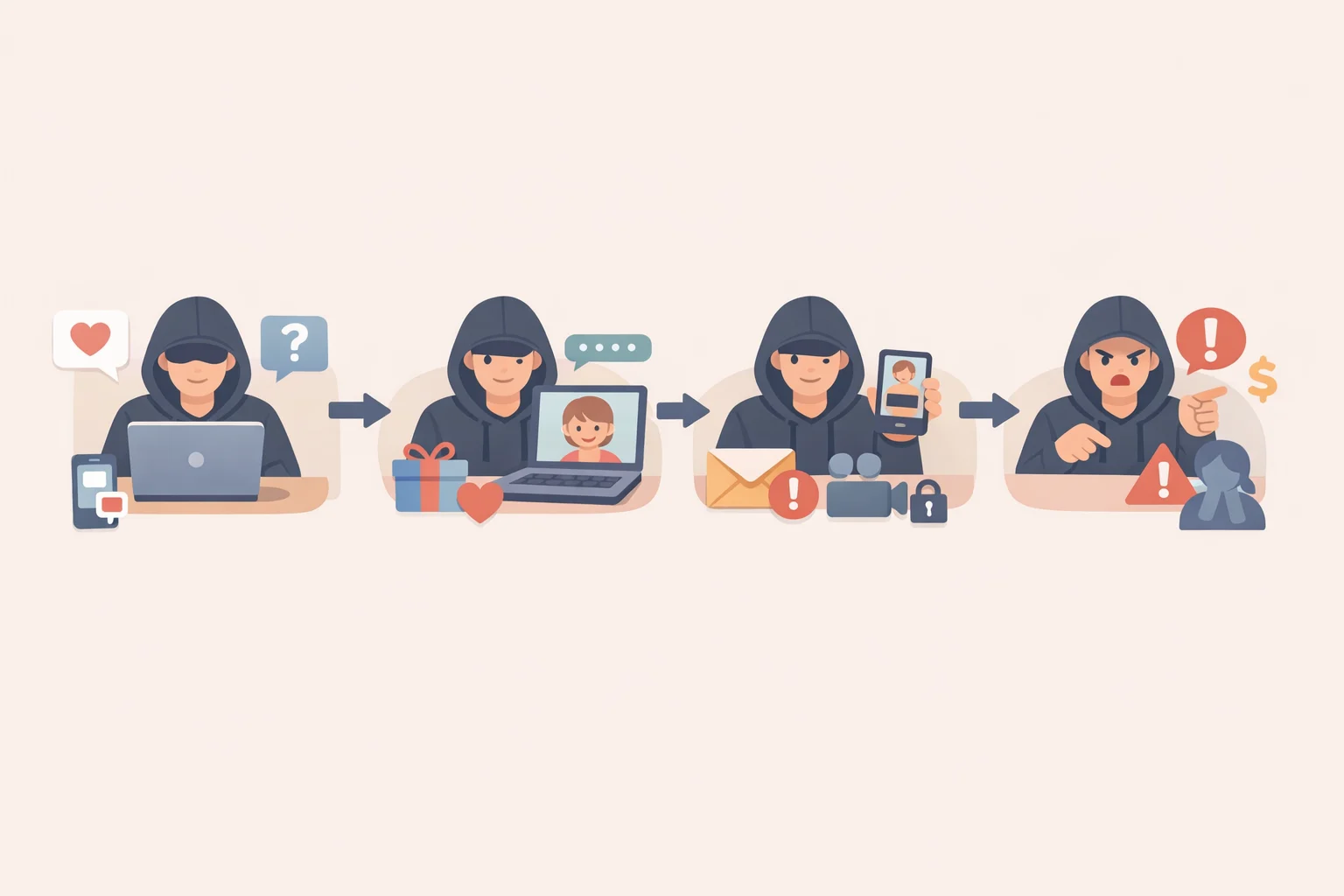
Every prevention step in this guide is built to interrupt one point in a fairly consistent sequence.
It starts on whatever platform a kid already uses, a messaging app, a game, a social feed, not some obviously "adult" corner of the internet (FBI Jacksonville). From there, an offender either builds trust through a fake persona, or skips that step and uses generative AI to fabricate a convincing explicit image or a cloned voice, which the FBI says makes these scams more believable (FBI IC3).
Once there's material, real or fabricated, the demands split into two tracks. Some offenders threaten to publish it, or threaten violence, to push the victim toward producing more images (FBI Jacksonville); others want money instead, usually in gift cards or cryptocurrency (FBI IC3). Either way, the shame, fear, and confusion that come with this cycle are often exactly what keeps a victim from telling anyone, and that silence is what lets the demands keep growing (FBI Jacksonville).
There's a darker branch of the same landscape worth knowing about. The FBI has also flagged violent online networks, including one called 764, that groom minors not for money or images but to produce extreme gore, child sexual abuse material, or acts of self-harm and animal cruelty (FBI Jacksonville). The entry point looks identical to garden-variety sextortion: a friendly contact on a platform kids already trust.
Video of the Day
How to prevent sextortion before contact turns into coercion

Reducing exposure won't stop every attempt, but it narrows what an offender has to work with.
-
Make accounts private and limit followers to people known personally. The FBI recommends this specifically to blunt AI-driven impersonation, since fraudsters use whatever is public to build convincing fake identities (FBI IC3). If the goal is to protect private photos online, a private account with a small, known follower list does more than any single app setting.
-
Strip identifying details from a child's profile. Use initials instead of full names, skip exact birthdates, and avoid photos on any account tied to a child's real identity (FBI Jacksonville).
-
Search a child's name online every so often. This is the ongoing habit the FBI recommends to catch exposed information before an offender finds it first (FBI Jacksonville).
-
Consider identity-theft monitoring. It won't prevent a sextortion attempt, but it can catch fraudulent use of a child's identity if information has already leaked (FBI Jacksonville).
-
Enroll younger kids in a structured safety course. The free FBI Safe Online Surfing program, aimed at grades three through eight, covers password security, safeguarding personal information, and recognizing predators, and can be run at home or in a classroom (FBI Jacksonville).
None of these steps replace the conversation that has to happen at home. They just make an offender's job harder before that conversation is ever tested.
How to protect children from sextortion by building trust at home
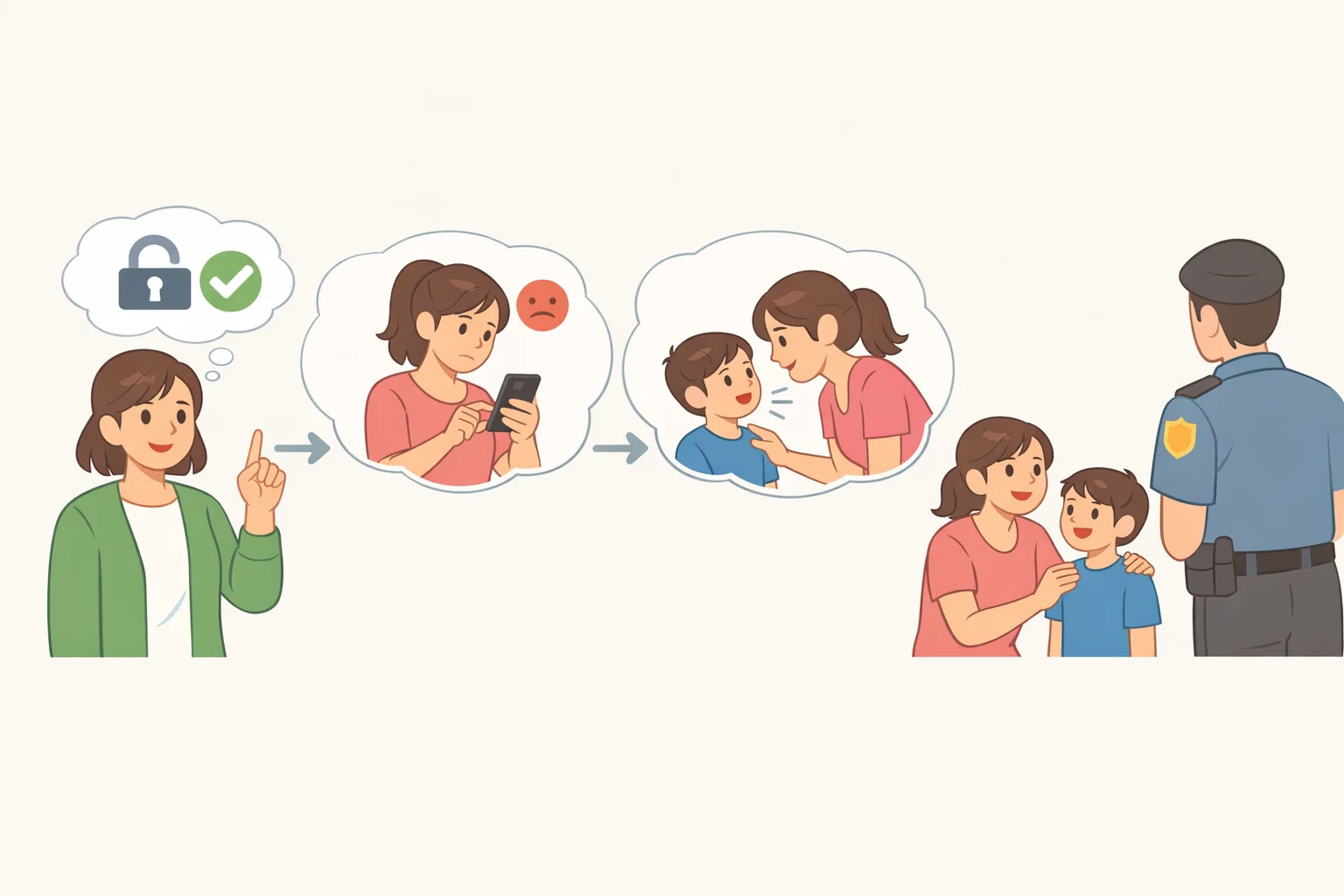
Privacy settings interrupt contact. What happens after contact depends entirely on whether a kid believes it's safe to say something.
-
Talk regularly about apps and games, before anything happens. FBI Pittsburgh describes parents and caregivers as the first line of defense, and stresses that a child's safety starts in the home rather than in a piece of software (FBI Pittsburgh). The urgency isn't abstract: NCMEC's cyber tip line took in close to 36 million reports in 2023 alone, and reports of online enticement rose 300% between 2021 and 2023 (FBI Pittsburgh).
-
Make the no-punishment promise explicit, and say it out loud. Tell a child directly, before there's ever a problem, that reporting an uncomfortable message won't cost them their phone or get them in trouble. The cycle of shame and fear described above is precisely what this promise is meant to break.
-
Rehearse one line about AI fakes. A realistic-looking explicit image or a cloned voice on a call isn't proof of anything. The FBI points to tells like distorted hands or feet, unrealistic teeth or eyes, mismatched shadows, or a voice whose tone and word choice feel slightly off (FBI IC3). But the response doesn't depend on spotting a fake; it's the same whether the material is real or fabricated.
-
Keep software updated, and be honest about its limits. Regular updates close known security gaps (FBI Jacksonville), but no software or firewall is completely effective, and kids are often better than their parents at finding ways around parental controls (FBI Pittsburgh).
If a child has already sent an image, they need to hear directly that they're not "in trouble," and that sending more images or money isn't a condition for the conversation staying calm.
What to do if someone threatens to share photos
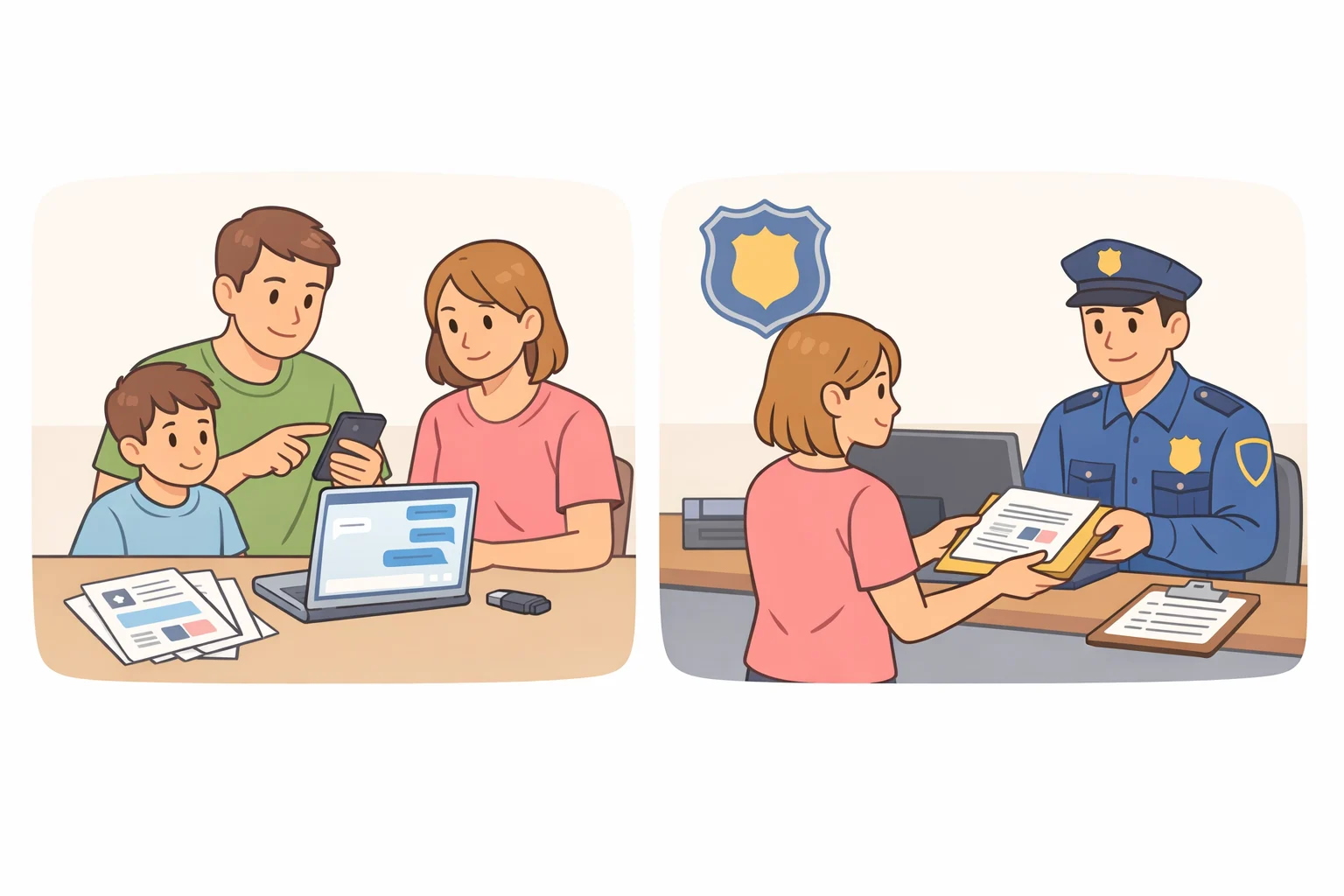
If a threat has already landed, speed and discipline matter more than anything else.
-
Stop responding to the offender. Arguing, apologizing, or trying to negotiate doesn't move things forward and only keeps the conversation going.
-
Preserve every message. Don't delete anything. The FBI explicitly warns against deleting an offender's messages, since they're important evidence for investigators, and recommends keeping every text, email, and message interaction (FBI Jacksonville).
-
Tell a trusted adult immediately. This step only works if the no-punishment promise from the section above was real. A kid has to believe disclosure is safe before they'll actually disclose.
-
Report it to law enforcement without delay. Call the FBI at 1-800-CALL-FBI (FBI Pittsburgh), or file a complaint at IC3.gov (FBI Jacksonville). Local field offices take reports too; FBI Jacksonville can be reached directly at (904) 248-7000 (same source).
-
Do not pay, and do not send more images. The FBI advises against sending money, gift cards, or cryptocurrency to anyone met only online or by phone (FBI IC3).
Whether the images are real or AI-fabricated, whether they've already circulated, or whether a payment has already gone out, reporting still matters. None of it is the victim's fault, and none of it becomes less worth reporting because it's already gone wrong once.
Where this actually gets harder to fake
Privacy settings and software updates are the easy part of this guide to implement and the easy part to forget once they're set. The harder, more durable protection is a household where a kid's first instinct, the moment something feels off, is to say so out loud.
That's not a setting anyone can toggle on. It has to be built ahead of time, tested by nothing worse than an awkward conversation, and repeated often enough that it holds when it actually matters.