Google Pixel Watch 5 vs Samsung Galaxy Watch 9: What We Know
A Google Pixel Watch 5 vs Samsung Galaxy Watch 9 comparison sounds like it should be straightforward. Two Android watchmakers, two new flagships, one obvious buying decision. Except only one of these watches has actually been tested.
Samsung's Galaxy Watch 9 has been through independent hands-on reviews from three separate outlets over the past week, covering battery life, charging speed, sleep tracking, and heart-rate accuracy against reference hardware, though not every outlet ran every test (PCMag; Trusted Reviews; SquaredTech). Google's Pixel Watch 5, meanwhile, was unveiled this same week, and one outlet framed the pairing as a genuinely fair fight between two ambitious Android watches rather than a mismatch (ZDNET). That framing assumes both sides have earned it. So far, only one has: the research gathered for this comparison includes no independent Pixel Watch 5 testing at all.
That asymmetry is the whole story here. This isn't a finished verdict between two competing products. It's a read on what's actually confirmed about the Watch 9, what Google's own track record with the Pixel Watch 4 suggests it's capable of, and how much of the Pixel Watch 5 side of this comparison simply isn't answerable yet.
What's confirmed about the Galaxy Watch 9 so far
Video of the Day
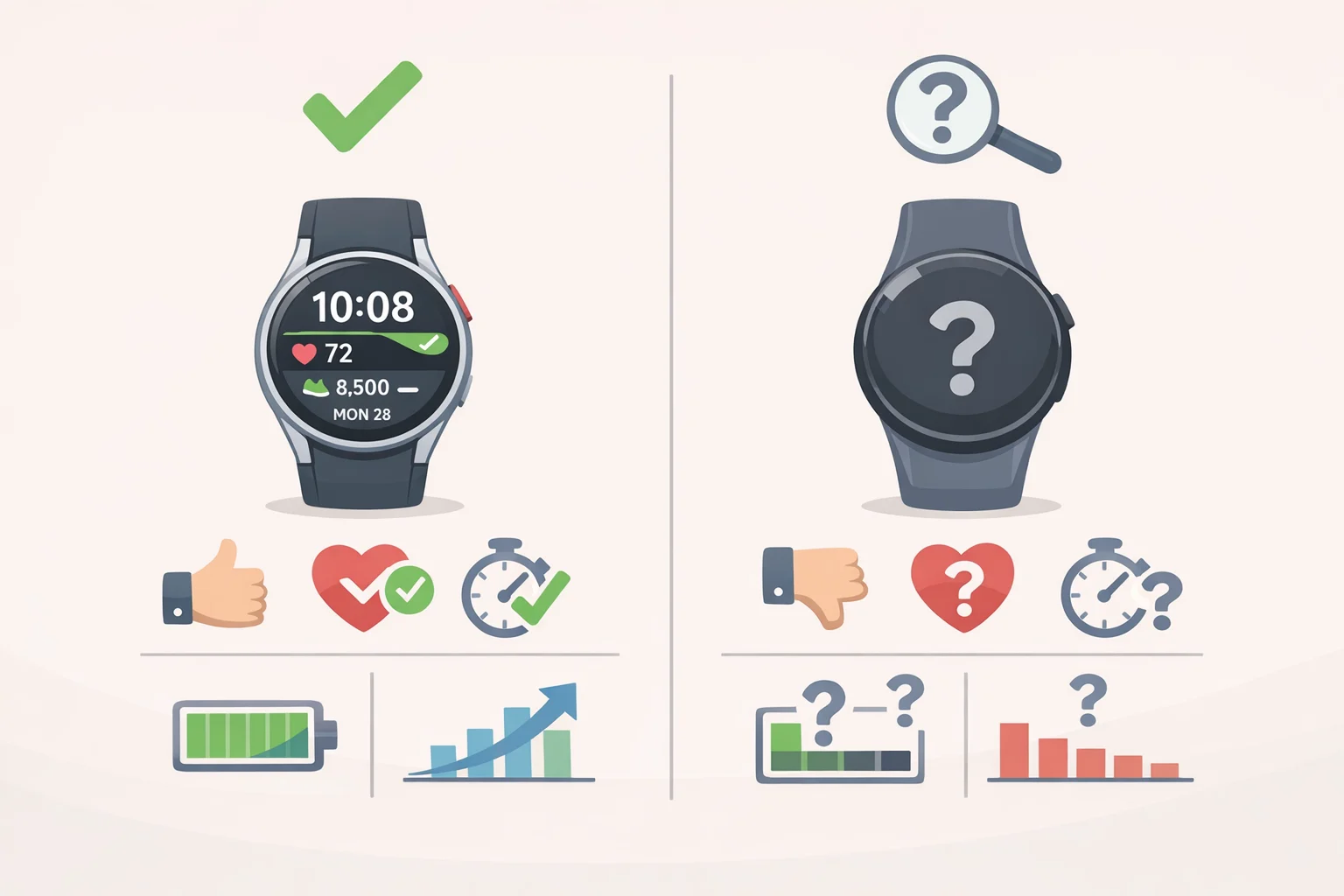
The Galaxy Watch 9 starts at $379.99 for the Bluetooth-only 40mm model, a $30 jump over the Galaxy Watch 8's launch price and roughly $80 above the base Galaxy Watch 7, which cost $299.99 when it launched in 2024 (PCMag). That price sits above the Pixel Watch 4, which starts at $349.99 (PCMag).
Samsung's watch pairs Wear OS 7 with the company's One UI 9 Watch interface, and PCMag credited the update with a faster processor alongside a run of new preventive health features: a Fitness Index that scores workout impact, a Cardio Load metric meant to guide training intensity, and a new Heart Health Score (PCMag). Memory and storage stayed flat at 2GB and 32GB, same as the Watch 8 (PCMag).
What the Pixel Watch 5 brings to match any of that is, for now, an open question. Google unveiled the watch this week, and neither its processor, its battery capacity, nor its software additions have been confirmed by any independent source in the research gathered here. The closest thing to a forward look comes from PCMag's Watch 9 review, published last week before the Pixel Watch 5's unveiling, which suggested Android buyers not committed to Samsung might be better off waiting for Google's watch rather than assuming anything about it (PCMag).
This piece treats the Watch 9's numbers as tested fact, the Pixel Watch 4's numbers as a real but previous-generation baseline for what Google can do, and the Pixel Watch 5 as exactly what it currently is: unreviewed.
Video of the Day
Health and workout tracking: where Samsung's numbers hold up
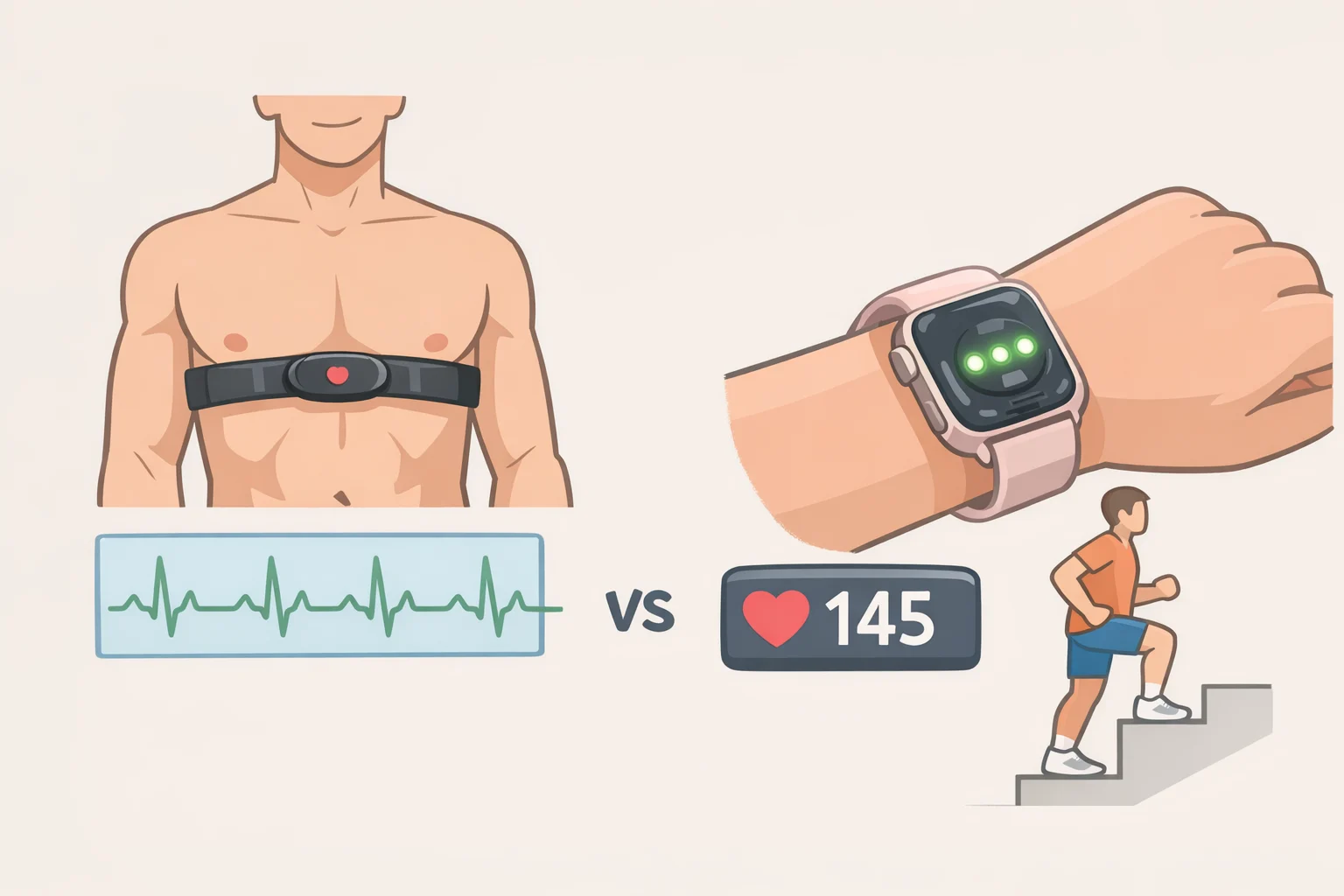
This is the part of the Watch 9 that survived contact with independent testing best. During a hard StairMaster session, the watch's optical heart-rate sensor stayed within 3 beats per minute of a Polar H10 chest strap on average heart rate, and within 1 beat per minute at peak (SquaredTech). That matters because the H10 reads the heart's electrical activity directly, which is why it remains a serious benchmark among runners and cyclists rather than just another wrist sensor (SquaredTech). Calorie estimates in the same session landed close too, at 7.9 calories per minute from the watch against 8.3 from the Polar setup (SquaredTech).
A separate 30-minute run test told a similar story. The Watch 9 stayed within 5 beats per minute of an Apple Watch Ultra 3 throughout the run, and once the run ended, its average and maximum heart-rate readings matched Apple's exactly (PCMag). Two different testers, two different reference devices, and both landed on the same conclusion: the sensor holds up under real exertion, not just at rest. PCMag also noted the watch reliably picked up a walk automatically after roughly 10 minutes of continuous movement, no manual start required (PCMag).
Day-to-day performance earned praise too. Apps load noticeably faster than on the Pixel Watch 4, and the difference is most obvious in the Gemini assistant, where voice commands appear as text on screen almost instantly (Trusted Reviews). That's one reviewer's hands-on impression rather than a formal benchmark, but it lines up with PCMag's own note that the Watch 9 carries a faster processor than its predecessor (PCMag). Samsung also finally added a raise-to-talk gesture for Gemini, letting wearers speak to the assistant without a button or wake word (PCMag). The Pixel Watch 4 already had this feature, so it's arriving on Samsung's watches roughly a year after Google shipped it (PCMag), a small reminder that Google and Samsung have been trading wins back and forth for a while, not that either side has a permanent edge.
The Fitness Index starts with a 12-minute calibration test, then builds a personalized training plan toward a goal like running a 5K (PCMag). PCMag's own score started at 39 out of 100 and climbed to 41 over the course of testing, movement modest enough to suggest the metric responds to real activity rather than sitting static for the sake of a nicer number (PCMag). SquaredTech's read on the surrounding software adds context: Daily Cardio Load is built to frame near-term exertion, while Heart Health Score is meant to track how habits compound over a longer stretch (SquaredTech).
Galaxy Watch 9 vs Pixel Watch 5 battery life and health tracking: what testing shows

Here's where the Watch 9's story gets complicated, and where the Pixel Watch 5 comparison gets genuinely interesting, because this is the exact area where Google's hardware has historically had the advantage.
Battery results diverged sharply depending on who ran the test. With the always-on display enabled, PCMag measured 26 hours of runtime, matching the Galaxy Watch 8 exactly and falling short of Samsung's own 30-hour estimate (PCMag). Turn the always-on display off, and PCMag's unit lasted 41.5 hours, a modest improvement over the Watch 8's 39 hours under the same conditions (PCMag). SquaredTech's real-world test, running the always-on setting from 98 percent down to 2 percent, recorded roughly 36 hours and 30 minutes (SquaredTech). Those numbers don't reconcile cleanly, and the available reporting doesn't explain the gap beyond noting the two outlets used different testing conditions.
What is clear is that neither number looks great next to the competition. PCMag found the Apple Watch Series 11 lasted 43 hours and the Pixel Watch 4 lasted 56 hours under identical always-on conditions (PCMag), a figure describing last year's Google watch, not a confirmed number for this year's.
Charging speed shows the same spread across testers. PCMag clocked 108 minutes for a full charge using its own 18W brick, versus 64 minutes for the previous generation using the same adapter (PCMag). Trusted Reviews measured around 90 minutes from near-zero and called the "Fast Charging" label misleading (Trusted Reviews). SquaredTech's figure was quicker still, at about 80 minutes (SquaredTech). Whatever the true middle ground is, all three land well behind the Pixel Watch 4, which PCMag recharged in 43 minutes using the same power brick it used on the Watch 9 (PCMag); SquaredTech cited a slightly different figure of around 45 minutes for the Pixel Watch 4 (SquaredTech).
There's a battery-capacity wrinkle worth flagging. The 40mm Watch 9 packs a 390mAh cell, up from the Watch 8's 325mAh, and the 44mm model grew from 435mAh to 445mAh (PCMag). Despite that bump, Samsung kept the same 30-hour estimate it used for the Watch 8 (PCMag). A bigger battery that doesn't move the always-on estimate at all raises a fair question about power efficiency in the new processor or display, though nothing in the research proves that's the cause, just that it's the pattern the numbers show.
The practical cost of all this shows up in the health data the Watch 9 is supposed to be collecting around the clock. Its sleep score draws on duration, deep sleep, REM sleep, time awake, and sleep latency, and an AI-powered Sleep Coach uses a few nights of data to suggest changes (PCMag). PCMag found that data mostly accurate, but on two separate nights, across both of its review units, the watch stopped collecting sleep data for more than an hour at a stretch (PCMag). That's a documented issue on PCMag's specific test units, not a confirmed defect across every Watch 9 sold, but it lands at an awkward moment. A watch that needs charging once a day, and that dropped tracking overnight on both units PCMag tested, complicates the pitch behind new metrics like Fitness Index and Heart Health Score, which are only as useful as the data feeding them is continuous.
Whether the Pixel Watch 5 preserves anything close to the Pixel Watch 4's battery and charging numbers is the single biggest open question hanging over this whole comparison. Nothing in the current reporting answers it either way.
Phone compatibility and price: the fine print
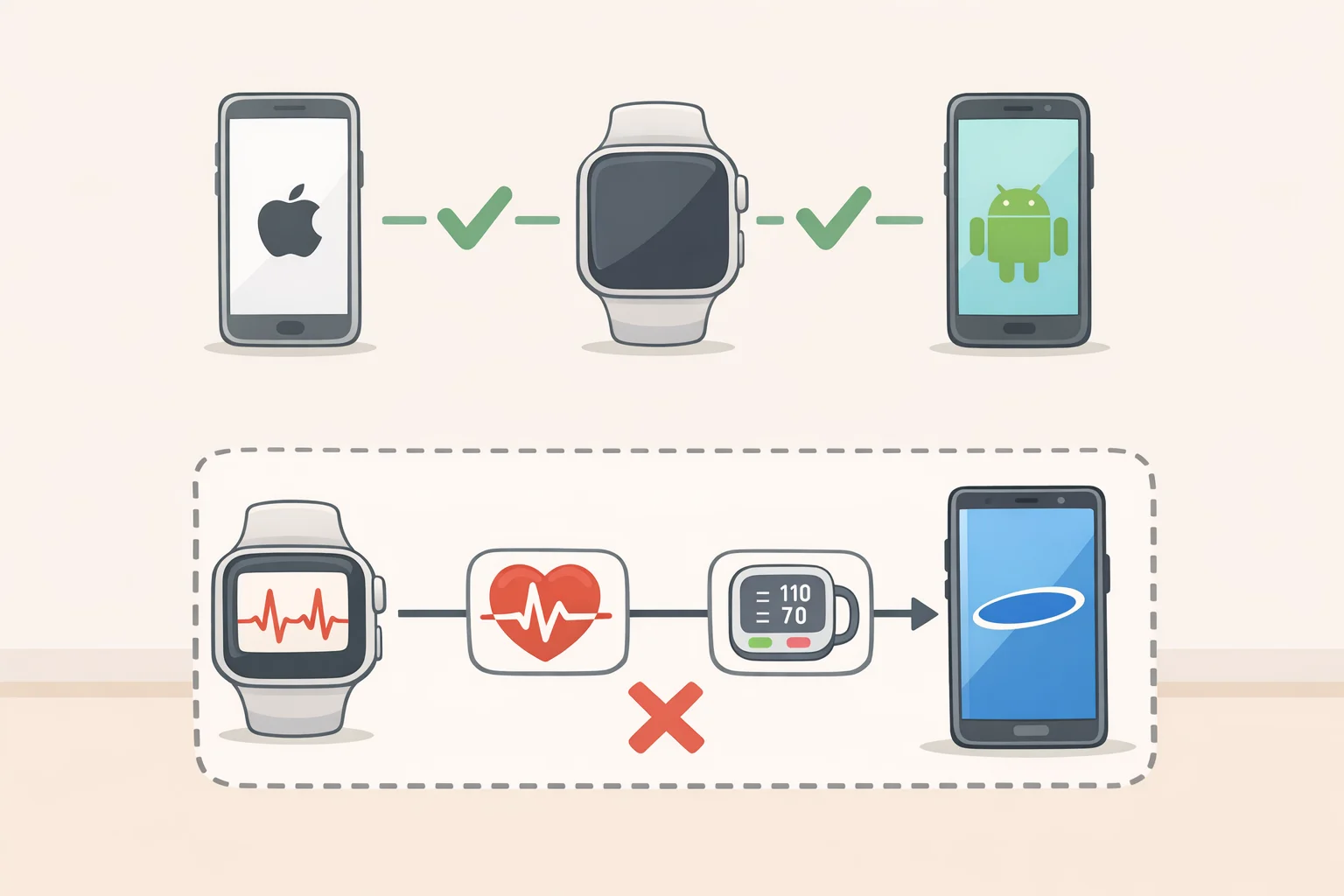
The Watch 9 pairs with any phone running Android 13 or later, and like every other Wear OS device, it cannot connect to an iPhone (Trusted Reviews). But broad compatibility only goes so far. Its most clinically interesting tools, ECG, blood pressure monitoring, and sleep apnea detection, only function when a Samsung phone is attached (Trusted Reviews).
For someone who already owns a Galaxy phone, that's an easy trade to make. One reviewer found Samsung's One UI layer over Wear OS changes the software considerably from Google's own version, usually for the better (Trusted Reviews). For a Pixel owner or anyone on a non-Samsung Android phone, it's a real limitation, since the watch's flashiest health features simply won't turn on.
What the current research doesn't establish is whether the Pixel Watch 5 carries any comparable restriction for non-Pixel Android phones. That's worth flagging precisely because it's tempting to assume Google's watch will be more open by default, and there's no confirmed evidence either way. Price is the one number already locked in on both sides: Samsung's $379.99 sits above the Pixel Watch 4's $349.99 (PCMag), and where the Pixel Watch 5 lands on price hasn't been reported anywhere in the research gathered for this piece.
Best Android smartwatch: Pixel Watch 5 or Galaxy Watch 9? Who should buy now
Strip away the speculation and the Galaxy Watch 9 is a watch with a genuinely mixed report card. It delivered strong results in two separate reviewer comparisons against reference heart-rate hardware and feels faster day to day than the Pixel Watch 4 (SquaredTech; Trusted Reviews). Set against that: slower charging than its own predecessor, battery-life results that diverge significantly between testers, sleep-tracking gaps on the specific units PCMag tested, and premium health features that only work with a Samsung phone in your pocket (PCMag; Trusted Reviews).
The Pixel Watch 5, by contrast, is still close to a blank slate on paper. It was unveiled this week, and no independent review has measured its battery life, charging speed, or heart-rate accuracy yet. Even PCMag's own Watch 9 review, written before Google's unveiling, only went as far as suggesting the Pixel Watch 5 was worth waiting for, not promising it would beat Samsung on any specific measure (PCMag).
The real test to watch for once reviews land: does the Pixel Watch 5 hold onto anything close to the Pixel Watch 4's 56-hour battery life and 43-minute recharge time, while Samsung's speed and accuracy edge stays intact? If it does, this becomes a genuinely close fight. If Google's watch also takes a step back on battery, Samsung's lead gets easier to defend despite its flaws.
Until that data exists, the practical guidance is straightforward. Galaxy phone owners who want a smartwatch now have a thoroughly tested, if imperfect, option in the Watch 9, and they know exactly what they're getting into on the battery front. Everyone else on Android, particularly anyone who prioritizes multi-day battery life, fast charging, and health features that aren't locked to one phone brand, has a better reason to wait for independent Pixel Watch 5 testing than to assume Google has already closed the gap.