Tow hitch vs tow package: what's the real difference?
Buy a truck advertised with a "tow package" and it's tempting to treat the door sticker as the final word on what you can pull behind it. It isn't. A hitch receiver carries its own weight rating. A factory tow package carries a separate, model-specific list of equipment. Neither number tells you what your specific vehicle, loaded the way you actually load it, can safely tow.
The difference between a tow hitch and tow package comes down to this: one is a piece of hardware, the other is a bundle of features built around that hardware. Confusing the two, or assuming either one raises a vehicle's actual tow rating, is exactly how people end up overloaded without realizing it.
NTEA, the trade association for truck equipment manufacturers, made this point plainly earlier this month: outfitting a vehicle for towing "involves more than matching a hitch to a trailer" (NTEA). That's the thread running through everything below: hitch class, package contents, and even a manufacturer's own advertised numbers are each only one piece of a larger system.
This piece walks through what a tow hitch actually is versus what a tow package bundles in, why a hitch's class rating isn't the same as a vehicle's towing capacity, what a factory package typically does and doesn't include, and a practical way to check what a given vehicle and trailer combination can actually handle.
Two different things wearing similar names
Video of the Day
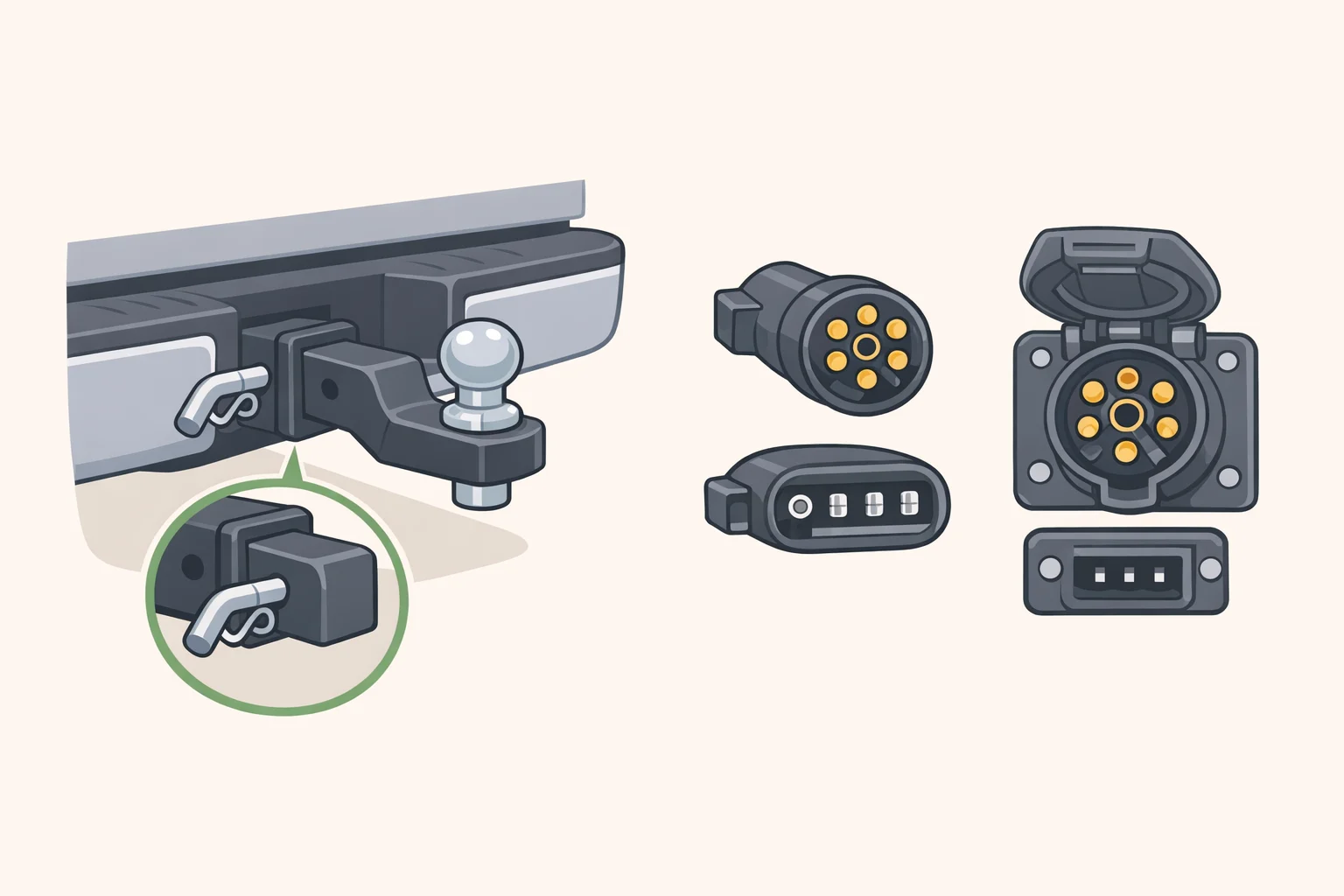
The hitch itself is mounting hardware: a receiver bolted to the frame, a ball mount that slides into the receiver, and a coupler on the trailer end that locks onto the ball. That's the whole job. It gives a trailer somewhere to attach, and it doesn't by itself change what the vehicle is rated to do.
AHG Auto Service noted in 2024 that not every vehicle with a hitch installed came with the manufacturer's factory tow package. Hitches get added on their own all the time, aftermarket, long after a truck left the factory floor (AHG Auto Service).
A tow package is broader. It's a manufacturer-specific bundle that can include the hitch receiver plus wiring, a transmission cooler, and, on higher trims, a brake controller or suspension and axle changes (AHG Auto Service).
One mix-up is worth clearing up directly. AHG Auto Service describes a hitch as "a seven or four-pin connector," but that's actually the trailer wiring connector, not the hitch itself (AHG Auto Service). The receiver handles the mechanical connection; the wiring connector carries electrical signals for the trailer's lights and brakes. Two different parts, easy to conflate, worth sorting out before shopping for either.
AHG calls the hitch "the core" of a tow package (AHG Auto Service). Fair enough. It's the piece everything else gets built around. But a vehicle can carry hitch hardware without any of the wiring, cooling, or brake-controller equipment a factory package normally bundles in, and the reverse holds too: a truck can arrive with the full package and still not be rated for the trailer someone actually wants to tow.
None of that hardware or bundling answers the only question that matters, which is what a specific vehicle, as configured, can pull. That comes down to a short list of terms worth knowing before anything else. Towing capacity is the maximum weight a vehicle can pull through the hitch. Gross vehicle weight rating, or GVWR, is the maximum total weight the vehicle itself can carry, including passengers, fuel, cargo, and the trailer's tongue weight. Tongue weight is the downward force a trailer's coupler puts on the hitch, and it draws from that same GVWR allowance rather than sitting outside it. Payload is whatever room is left in the GVWR figure once the vehicle's curb weight is subtracted: the space available for people, gear, and tongue weight combined.
Video of the Day
Tow hitch vs tow package: why towing capacity is different
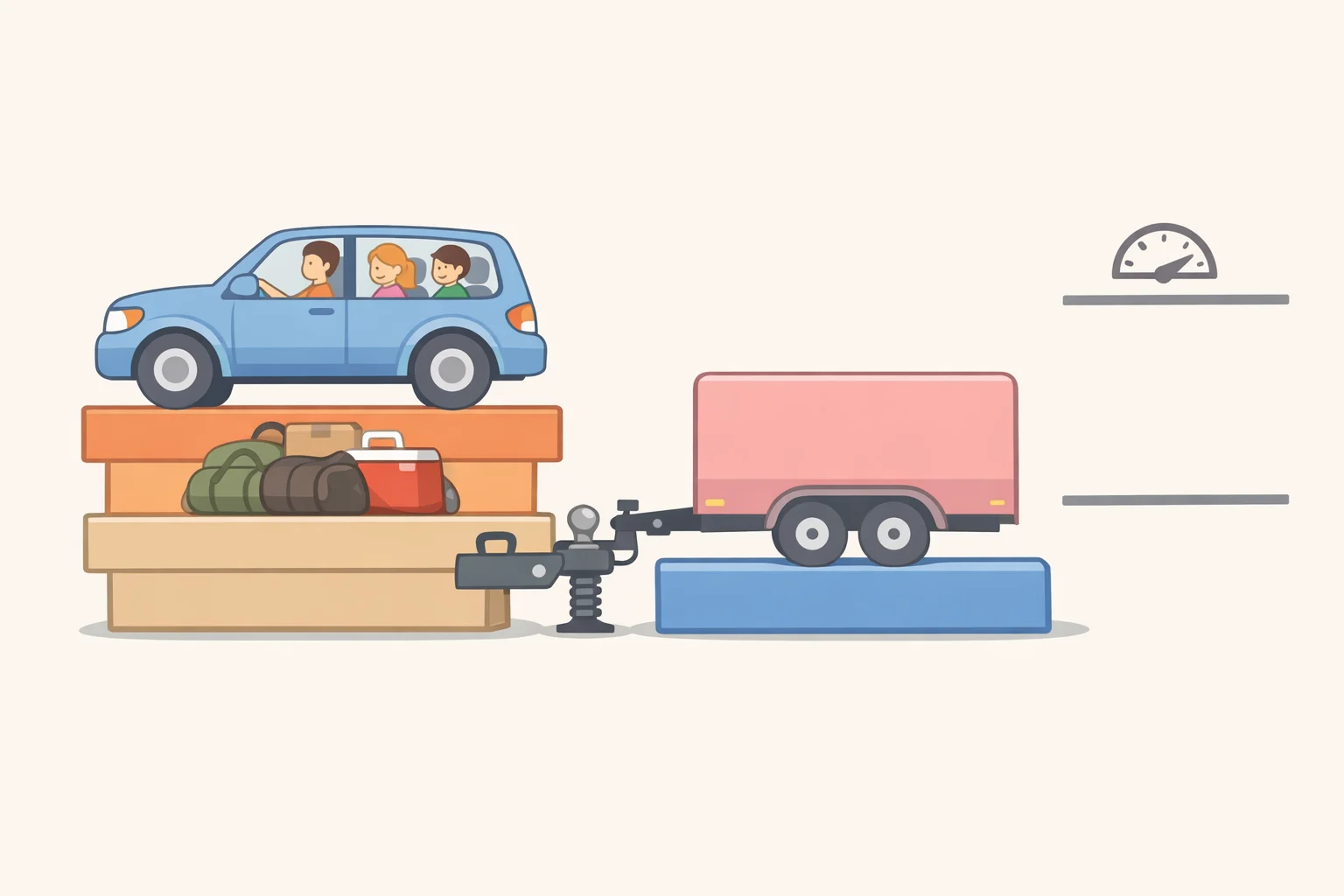
Hitch classes describe a range the hardware can handle, not a rating for a specific vehicle. A Ford dealer guide published last year breaks that range into three practical tiers: Class I and Class II hitches are light-duty, generally good for utility trailers and bike racks under 3,500 pounds; Class III is common on mid-size SUVs like the Explorer and handles boats and medium trailers up to around 6,000 pounds; Class IV and Class V show up on trucks like the F-150 and F-250 and can handle 20,000 pounds or more when paired with a gooseneck or fifth-wheel setup (JC Lewis Ford).
Notice what that range doesn't tell you. Tow hitch towing capacity is a property of the hardware, and the installed receiver, the ball mount, and the vehicle's own tow rating can all sit lower than the class ceiling suggests. Bolting a Class IV receiver onto a vehicle that isn't rated to use its full range doesn't make that vehicle capable of the class maximum.
Payload can end up being the limiting figure, not the hitch class sticker. Passengers and cargo eat into a vehicle's available payload before tongue weight even gets added to the total, which can push a loaded rig past its limit before the published tow rating ever comes into play.
The same dealer guide shows how much a single nameplate can vary. The F-150's towing capacity ranges from 5,000 to 14,000 pounds depending on engine, axle ratio, and installed tow package, with the 3.5L EcoBoost V6 paired with the Max Trailer Tow Package producing the highest figure (JC Lewis Ford). Move down the lineup and the Explorer tops out near 5,600 pounds with the Class III Trailer Tow Package and the 3.0L EcoBoost engine, the Ranger reaches 7,500 pounds with its Trailer Tow Package, and the Bronco caps out around 3,500 pounds with the available Class II package (JC Lewis Ford). Step up to the F-250 Super Duty and the ceiling jumps past 22,000 pounds, but only with a fifth-wheel setup, not a conventional receiver hitch (JC Lewis Ford). Those figures are specific to Ford and its trims. Useful as an illustration of how wide the spread can be within one brand, not a formula to apply elsewhere.
The takeaway holds across brands even where the specific numbers don't: compare the trailer's loaded weight and tongue weight against the limits for the vehicle, the receiver, the ball mount, and the braking equipment. The combination has to fit within every one of those ratings, not just the biggest number on the spec sheet.
What's included in a factory tow package
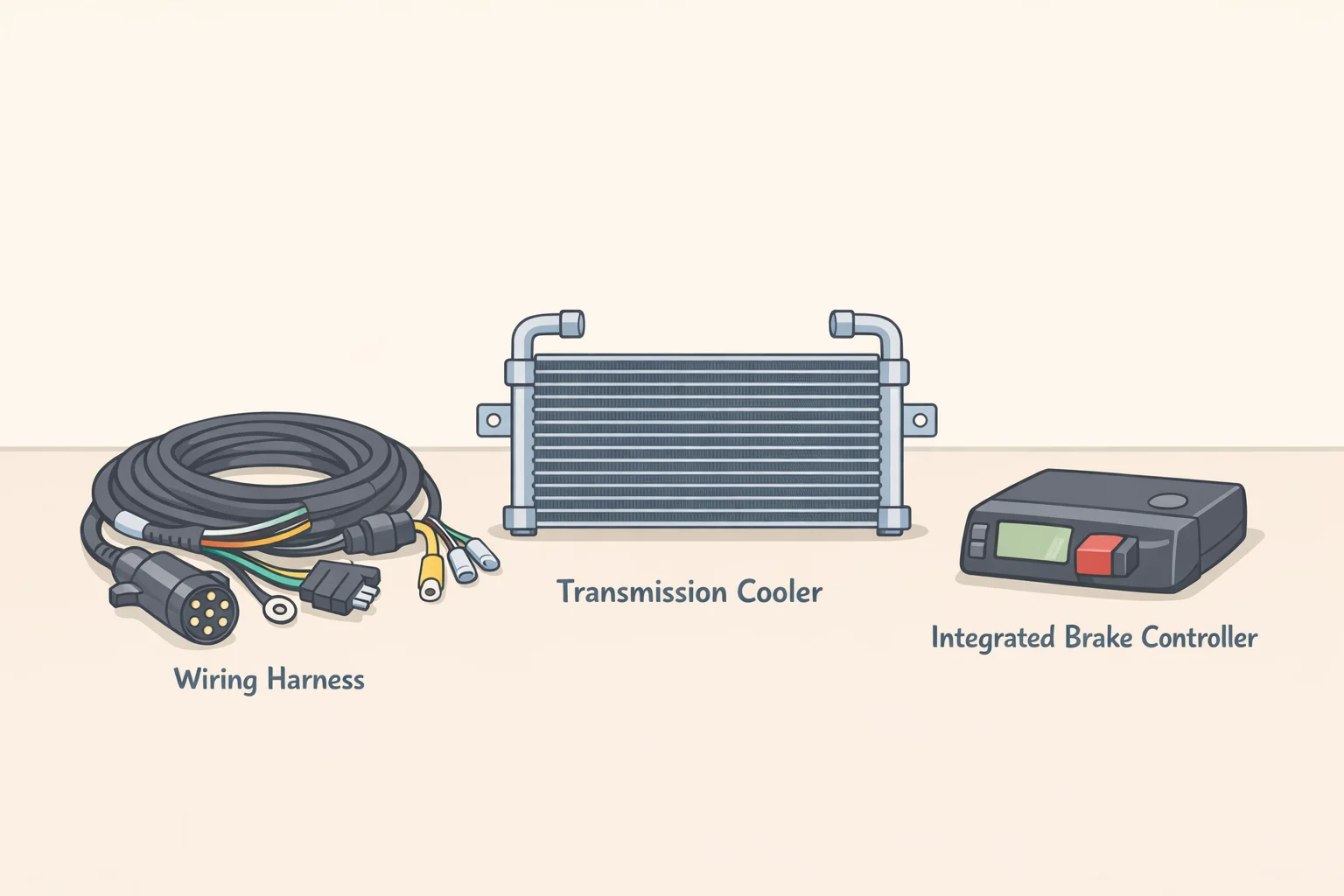
Package contents vary enough by manufacturer, model, and year that any specific list is an example, not a rule to apply elsewhere. The Ford dealer guide describes a tiered structure: the Trailer Tow Package includes a hitch receiver, a wiring harness, and usually a transmission oil cooler, while the Max Trailer Tow Package adds an upgraded rear axle ratio, a heavy-duty radiator, and an integrated trailer brake controller, sometimes with enhanced suspension (JC Lewis Ford). That's one dealer's description of specific Ford packages, not something every automaker follows.
Brake controllers deserve their own explanation, because the requirement isn't universal even within one manufacturer's lineup. The 2024 Ram 3500 owner's manual states that an electronic trailer brake controller is required when towing a trailer with electrically actuated brakes, but not required for trailers running hydraulic surge brakes (Ram 3500 Owner's Manual). The same manual recommends trailer brakes on trailers over 1,000 pounds and requires them above 2,000 pounds (Ram 3500 Owner's Manual). Those thresholds are specific to that truck and model year, not a blanket legal standard, and actual brake laws vary further by state or province, so anyone towing close to that line should check local rules separately. Some Ram trucks also include an Integrated Trailer Brake Module, and the manual notes that older electric-over-hydraulic brake systems may not be compatible with it; the dashboard warning light flags either a trailer-wiring fault or a module fault (Ram 3500 Owner's Manual).
The Ford dealer guide also lists features such as trailer sway control, blind-spot monitoring extended to cover the trailer, and a Smart Trailer Tow Connector that watches for lighting and brake-connection faults, alongside Pro Trailer Backup Assist, which steers a reversing trailer with a twist of a knob on the F-150 and Expedition (JC Lewis Ford). Those add convenience and monitoring. Nothing in that source presents them as a substitute for the package's mechanical equipment.
AHG Auto Service notes that tow packages "vary by manufacturer," with different tiers even inside one automaker's own lineup (AHG Auto Service). A package's name describes what one manufacturer chose to bundle, on one set of trims, for a limited run of model years. The only reliable way to know what a specific vehicle can tow is to check the rating for that exact trim and configuration, not the package's marketing name.
A checklist for verifying what your setup can handle
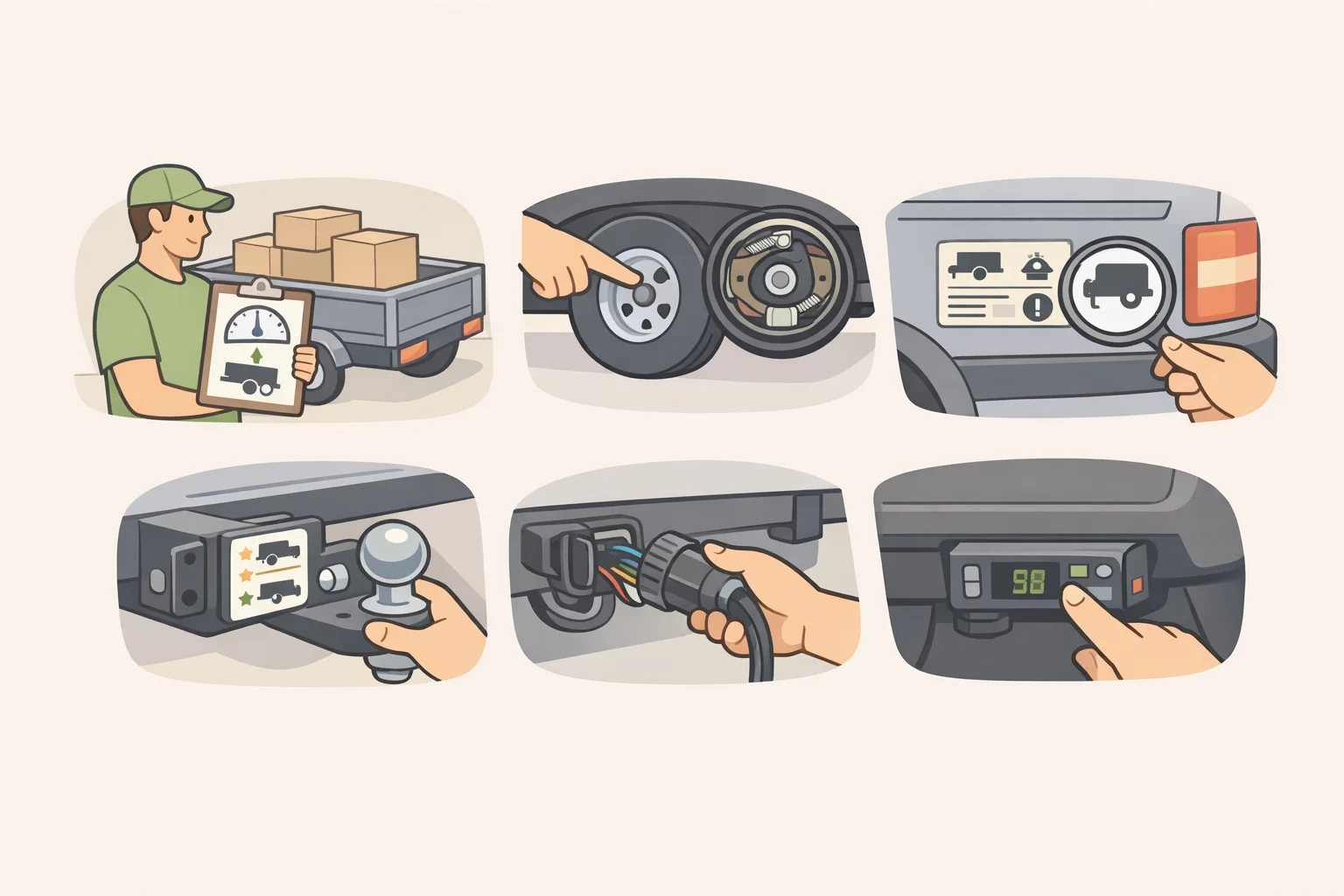
This isn't a shopping list. It's a way to confirm what's already true about a given vehicle and trailer pairing before hooking anything up.
- What does the trailer weigh loaded, not empty? Use the loaded or gross weight, not the empty or dry weight, when checking the combination against any rating.
- What type of brakes does the trailer use? Electric, electric-over-hydraulic, and surge systems interact differently with a tow vehicle's brake controller, and older electric-over-hydraulic setups may not be compatible with newer integrated brake modules (Ram 3500 Owner's Manual).
- What is this specific vehicle actually rated for? Check the payload and GVWR figures on the door-jamb label, then confirm the exact tow rating and tongue-weight limits in the owner's manual or the manufacturer's towing guide for that configuration, not a generic trim-level number pulled from a brochure.
- What is the installed receiver and ball mount actually rated for? A factory hitch and an aftermarket one can carry different ratings even on the same truck.
- Is the correct wiring, and a brake controller if one is needed, actually present and working? A connector that's physically there isn't the same as one that's wired correctly.
A VIN-based build sheet documents what left the factory. It doesn't necessarily capture hitch, wiring, or brake-controller work done afterward, which happens to be the equipment most likely to differ from one truck to the next even within the same model.
Once those five answers are in hand, compare the trailer's loaded weight and tongue weight against the vehicle's actual configured limits, not a hitch class's theoretical ceiling (NTEA). The combination has to fit within every rating at once. A single one that doesn't fit rules out the pairing, no matter what the other numbers allow.
Sorting out tow hitch vs tow package this way, hardware first, then bundle, then the vehicle's actual configured limits, is the only sequence that produces a real answer. The package name tells you what a manufacturer bundled at the factory. The vehicle's door-jamb rating, the receiver's stamped capacity, and the trailer's loaded weight determine whether a particular combination is safe to tow. Check those three before anything gets hooked up, and check them again whenever the trailer, the load, or the truck itself changes.