Can border agents search your phone at the airport?
Hand a Customs and Border Protection officer an unlocked phone at an international checkpoint, and that officer can scroll through your texts, photos, and apps without a warrant and without any suspicion that you've done anything wrong. Can border agents search your phone at the airport, in other words? Yes, and that's been the standing rule at U.S. borders for years. A Fourth Circuit ruling last month didn't invent that authority so much as restate it. The case involved a two-minute manual search of an unlocked phone that turned up illegal material and led to an arrest (EFF, last month).
This isn't a fringe practice. CBP conducted electronic device searches on 41,467 travelers in 2023 alone (UNC School of Government, 2024). The agency's own guidance is blunt about the scope of its authority: "all persons, baggage, and merchandise" arriving in or departing from the United States are subject to inspection, phones and laptops included (CBP tear sheet, 2024).
This piece covers international borders and their "functional equivalent," which includes the arrivals and departures areas of international airports. It does not cover domestic flights, where a different rule applies. What follows walks through what a manual phone search actually permits, how that differs from a forensic one, and what realistically happens if a traveler locks their phone or refuses to hand it over.
Can CBP search your phone without a warrant at the airport?
Video of the Day
The Fourth Amendment normally requires a warrant before the government can search your property. But courts have long recognized an exception at the border, rooted in the government's interest in controlling who and what enters the country (CBP Search Authority, updated earlier this year; citing 19 C.F.R. 162.6).
That exception doesn't stop at a painted line on the ground. It extends to places treated as the border's functional equivalent, including international airports (EFF, last month). It does not, however, extend to purely domestic travel. Courts that have addressed the question directly have held that passengers boarding or deplaning a domestic flight aren't subject to border searches at all (UNC School of Government, 2024, citing State v. Codner). Being inside an airport doesn't automatically put you inside the exception; where you're headed matters.
U.S. citizenship offers no shield here either. Absent diplomatic status, CBP states that "all persons entering the United States," citizens included, are subject to examination (CBP Search Authority, updated earlier this year).
Video of the Day
What a manual phone search actually allows
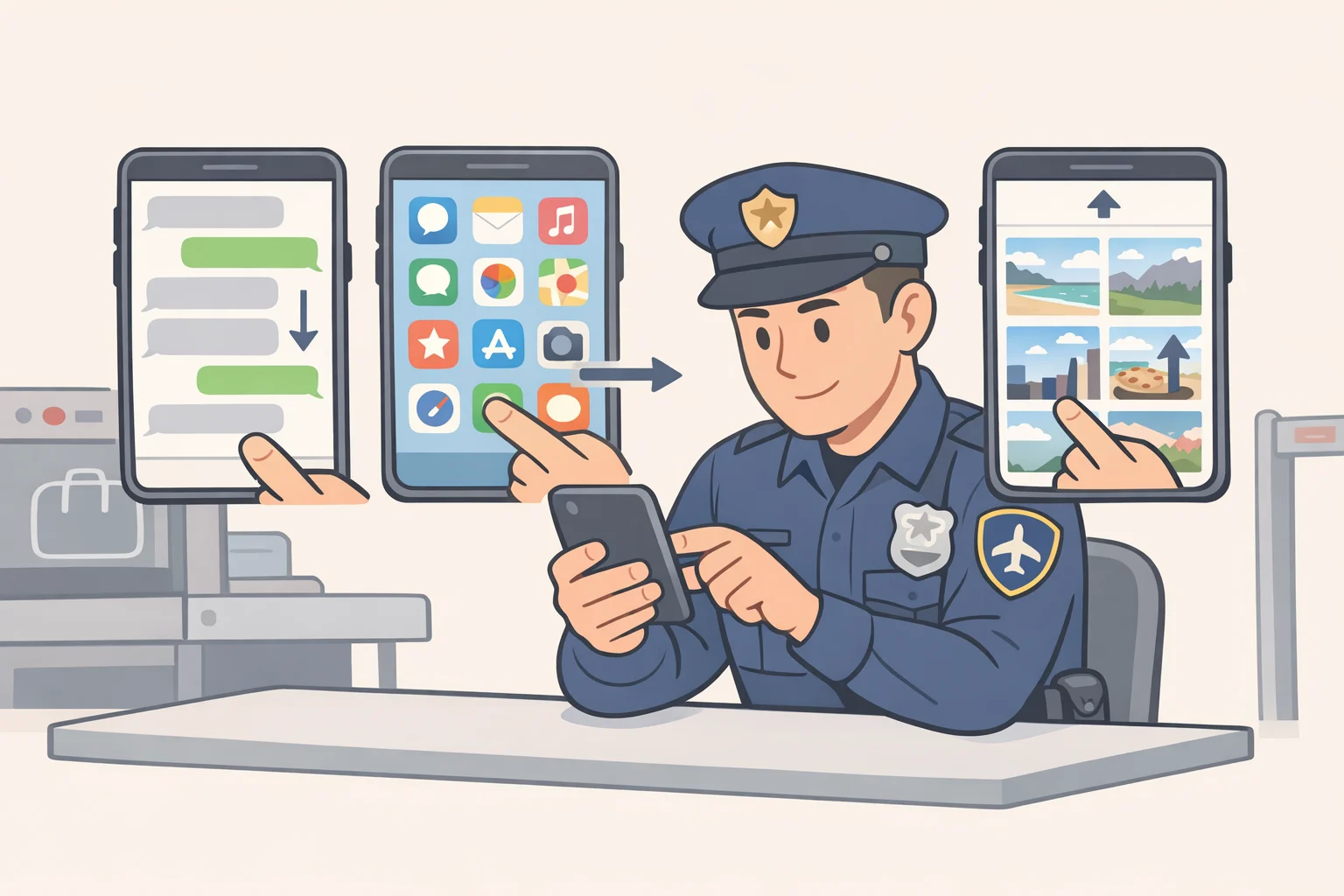
CBP splits device searches into two categories: basic and advanced. A basic, or manual, search means an officer personally navigates an unlocked device, opening apps, scrolling through messages, flipping through photos, without running any extraction software (UNC School of Government, 2024).
Every federal circuit to rule on the question has landed in the same place: a manual search is "routine," no different in the law's eyes from an officer rifling through a suitcase, and it requires no individualized suspicion (UNC School of Government, 2024, citing United States v. Castillo, 2023). The Fourth Circuit's ruling in U.S. v. Belmonte Cardozo applies that existing consensus rather than breaking new ground. In that case, a manual search of an unlocked phone surfaced child sexual abuse material and led to prosecution (EFF, last month).
One detail keeps this from being an unqualified "manual searches face no limits" story. The court leaned heavily on the fact that this particular search took two minutes, and it explicitly left open whether a much longer manual search might trigger a higher standard (EFF, last month). Duration hasn't been fully litigated yet, and neither has purpose: the Ninth Circuit has taken a narrower view of what border officers can even be looking for, limiting the justification to things like digital contraband rather than general evidence-gathering (UNC School of Government, 2024). So the actual scope of a manual search is narrower, and more circuit-dependent, than "anything goes."
Forensic searches: tighter rules, but not the same everywhere
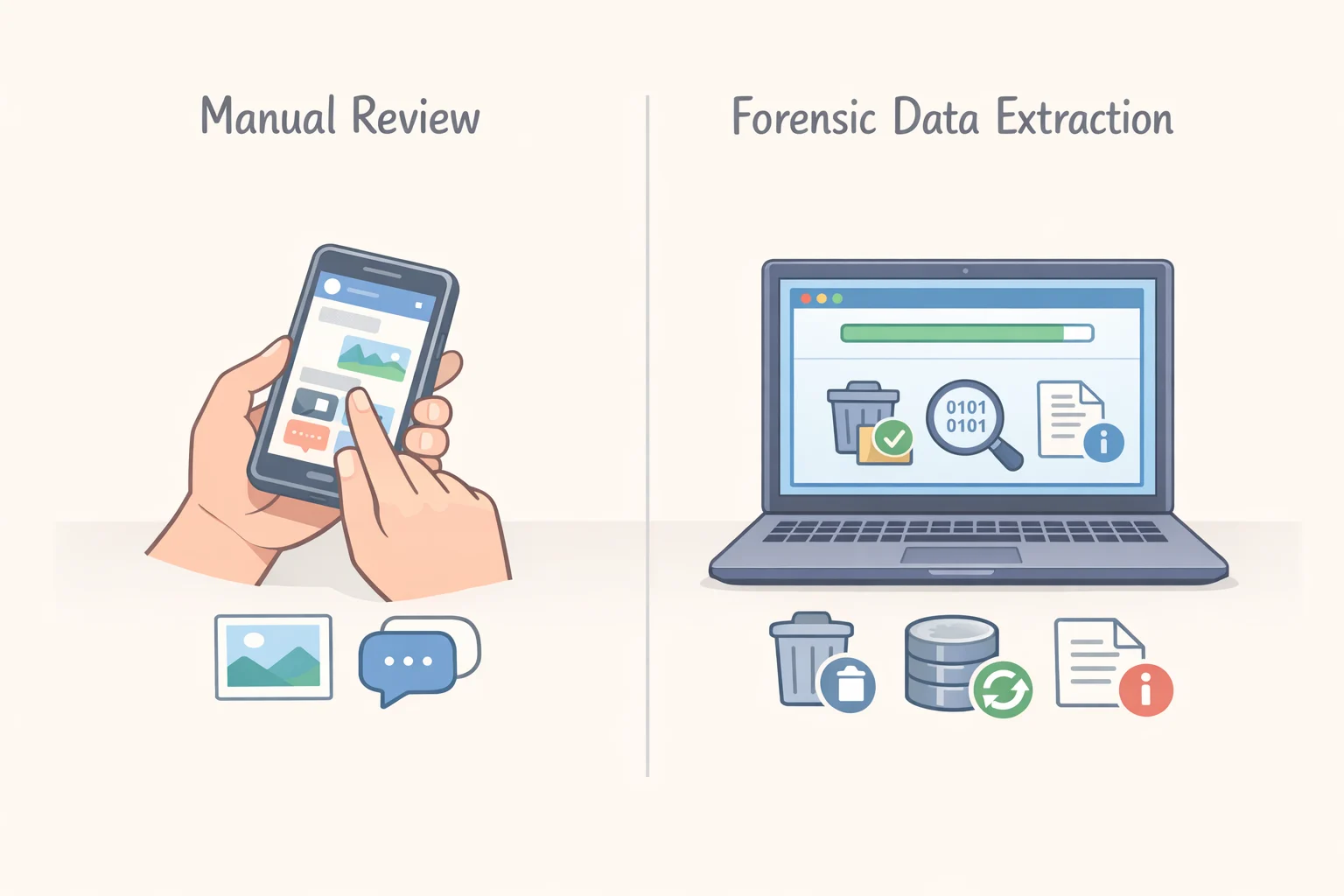
A forensic, or advanced, search is a different animal. It uses software to extract data beyond what's normally visible, deleted files, cached fragments, metadata, and it can leave CBP holding a permanent copy of the device's contents (EFF, last month).
As a matter of internal policy, CBP requires supervisory approval and "reasonable suspicion" of a violation the agency enforces, or a national-security concern, before running an advanced search. That requirement applies nationwide, regardless of which circuit's constitutional rule technically governs (UNC School of Government, 2024).
The constitutional floor underneath that policy, though, shifts depending on where you land. The Fourth Circuit requires individualized suspicion tied to recognized border-search purposes such as contraband or national security, and its earlier Aigbekaen decision goes further, requiring a warrant when a forensic search is really aimed at a purely domestic investigation (EFF, last month). The Eleventh Circuit takes the opposite view, holding that the Fourth Amendment demands no suspicion at all for a forensic border search (UNC School of Government, 2024, citing United States v. Touset).
That gap matters even to travelers who never end up in a courtroom. Even in circuits where the Constitution might permit more, CBP's own directive still requires officers to clear a higher internal bar before extracting data. It's a policy limit worth knowing separately from the legal minimum, because it's the rule actually governing the officer standing in front of you.
What happens if you refuse to unlock your phone
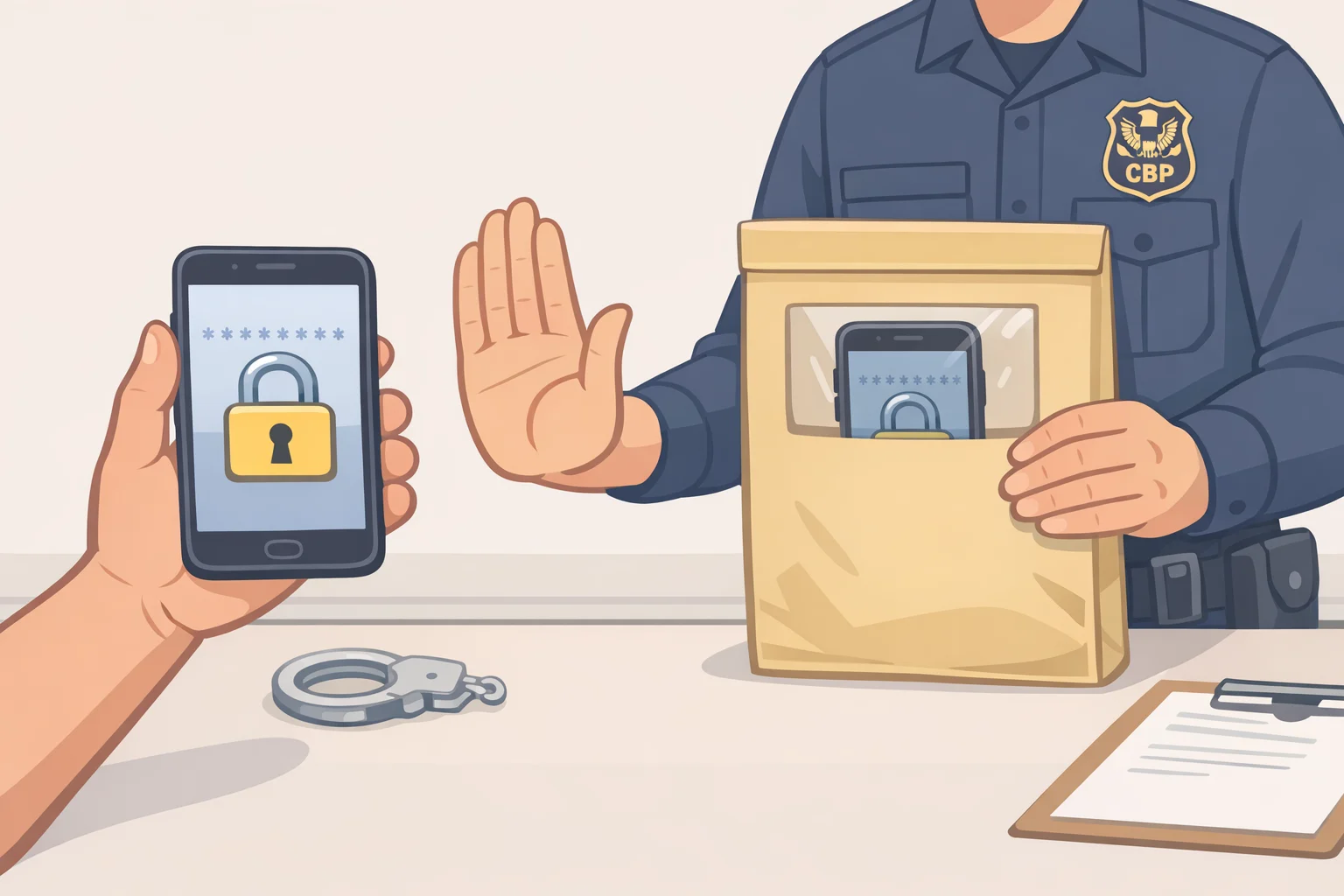
CBP's stated position is that travelers are "obligated to present" their devices in a condition that allows examination, which in practice means unlocked (UNC School of Government, 2024, quoting CBP). Declining doesn't end the encounter. It changes its shape.
CBP guidance states that a passcode-protected or encrypted device "may be subject to exclusion, detention, seizure, or other appropriate action" (UNC School of Government, 2024). Courts have generally treated a traveler's decision to unlock a device under that pressure as voluntary rather than coerced. In one case decided two years ago, a court upheld a search even after an officer warned the traveler his phone could sit in a lab for months if he refused to unlock it (UNC School of Government, 2024, citing United States v. Gavino). The threat of a months-long wait, in the court's view, didn't make the eventual unlock involuntary.
So the practical choice at the checkpoint isn't between "searched" and "not searched." It's between a manual review that happens on the spot, and a locked device that CBP may hold onto while it decides what to do next.
What preparation can (and can't) do
Nothing about advance planning changes CBP's underlying legal authority. If your phone is unlocked and accessible, a lawful manual search can happen regardless of how careful you were beforehand. Preparation reduces what's immediately visible on the device; it doesn't create a legal shield against the search itself.
Given that, the documented tradeoff is worth sitting with plainly: unlocking a device leads to a manual review on the spot, while declining shifts the encounter toward possible detention or seizure of the phone rather than stopping the inspection altogether (UNC School of Government, 2024). There's no third option where refusal simply ends the conversation.
The gap between policy and constitutional minimum
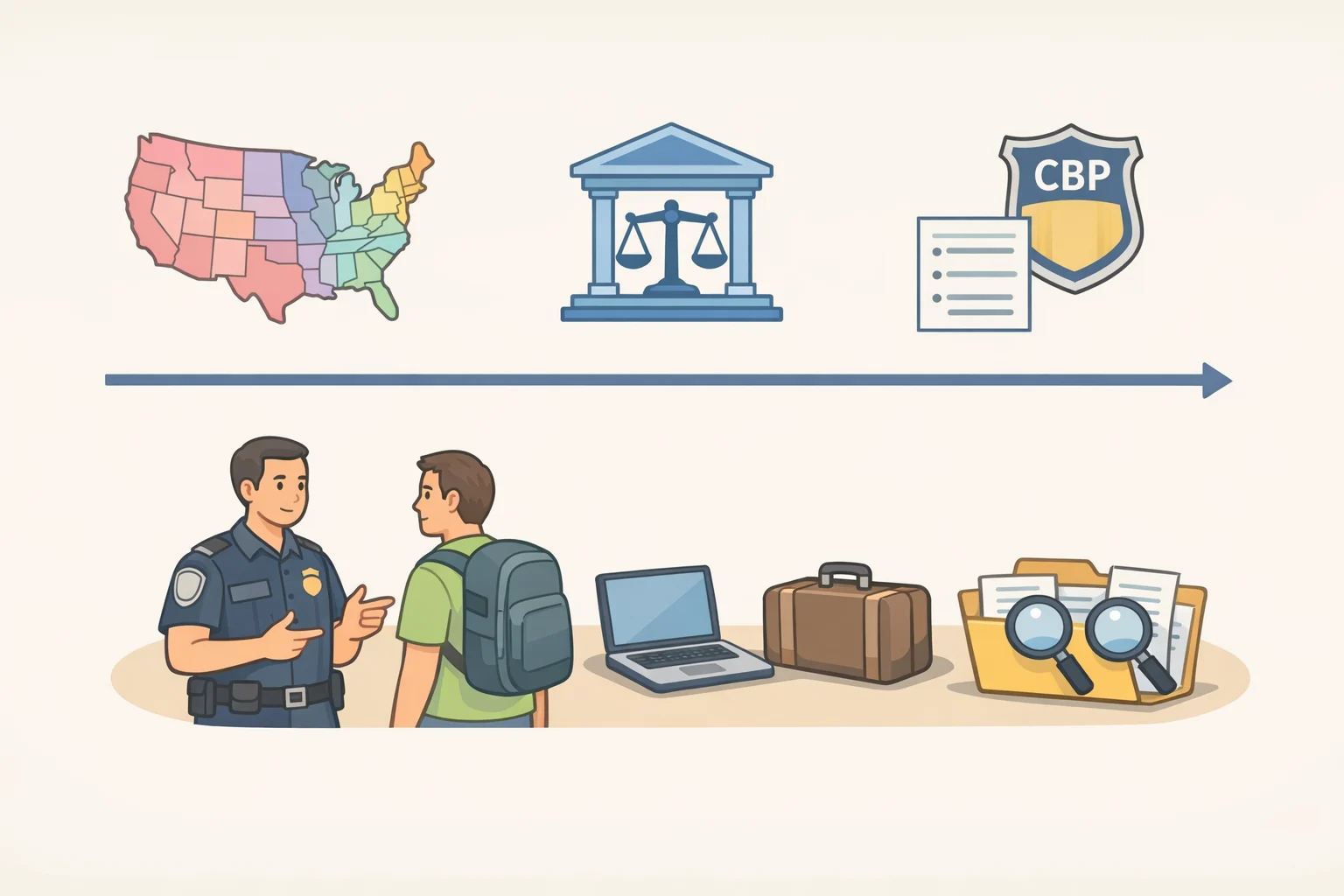
Strip away the case citations and the operative rule is narrower than "can they search my phone." Across the country, a manual review of an unlocked device requires no warrant and no individualized suspicion, a consensus the Belmonte Cardozo ruling illustrates rather than invents (UNC School of Government, 2024; EFF, last month). What's genuinely unsettled is duration, purpose, and forensic authority, where circuits disagree and CBP's internal policy sometimes offers more protection than the Constitution independently requires.
EFF, which filed an amicus brief in the Belmonte Cardozo case alongside the ACLU and its state affiliates, has said plainly that it intends to keep fighting warrantless, suspicionless device searches at the border (EFF, last month). Until a higher court steps in, the safest working assumption for international travelers isn't that everything on an unlocked phone is automatically fair game everywhere. It's that a routine manual search generally needs no warrant or suspicion under the current circuit consensus, while how long that search runs, why it's being conducted, and which circuit you're standing in can all still change the answer.