Yamaha B200A Dolby Atmos Soundbar Explained: Price, Specs
Yamaha announced the B200A today, calling it its most compact Dolby Atmos soundbar to date. At 23.5 inches wide and 2.5 inches high, it's intended for space-constrained setups where a larger bar may be impractical, according to Yamaha's announcement and an Engadget report published the same day.
The B200A is scheduled to ship in November 2026 at $249.95, with a built-in subwoofer so buyers can get Dolby Atmos sound without adding a separate subwoofer, Yamaha said.
Compact Atmos bars from Sonos, Sony and Denon have previously sold in the $399 to $499 range, with the Denon Home 550 sometimes reaching $699, according to a March 2026 TechRadar comparison. That puts the B200A's launch price below the historical prices TechRadar cited for those three competing models. Pricing on those bars fluctuates, so it isn't a clean discount comparison, and no independent reviews of the B200A were available at the time of Yamaha's announcement.
Yamaha B200A price and release date
Video of the Day

Yamaha's consumer audio director, Alex Sadeghian, framed the B200A around a specific kind of buyer. "The B200A was designed for people who want better sound without giving up valuable space," Sadeghian said, adding that it's meant for "a bedroom, apartment, home office or gaming setup," according to Yamaha's release.
Yamaha's announcement emphasizes bedrooms, apartments, home offices and gaming setups rather than a larger living-room system. The company lists those environments directly among its stated use cases, alongside the same $249.95 price and November 2026 ship date.
Video of the Day
A B200A soundbar for TV and gaming monitor setups
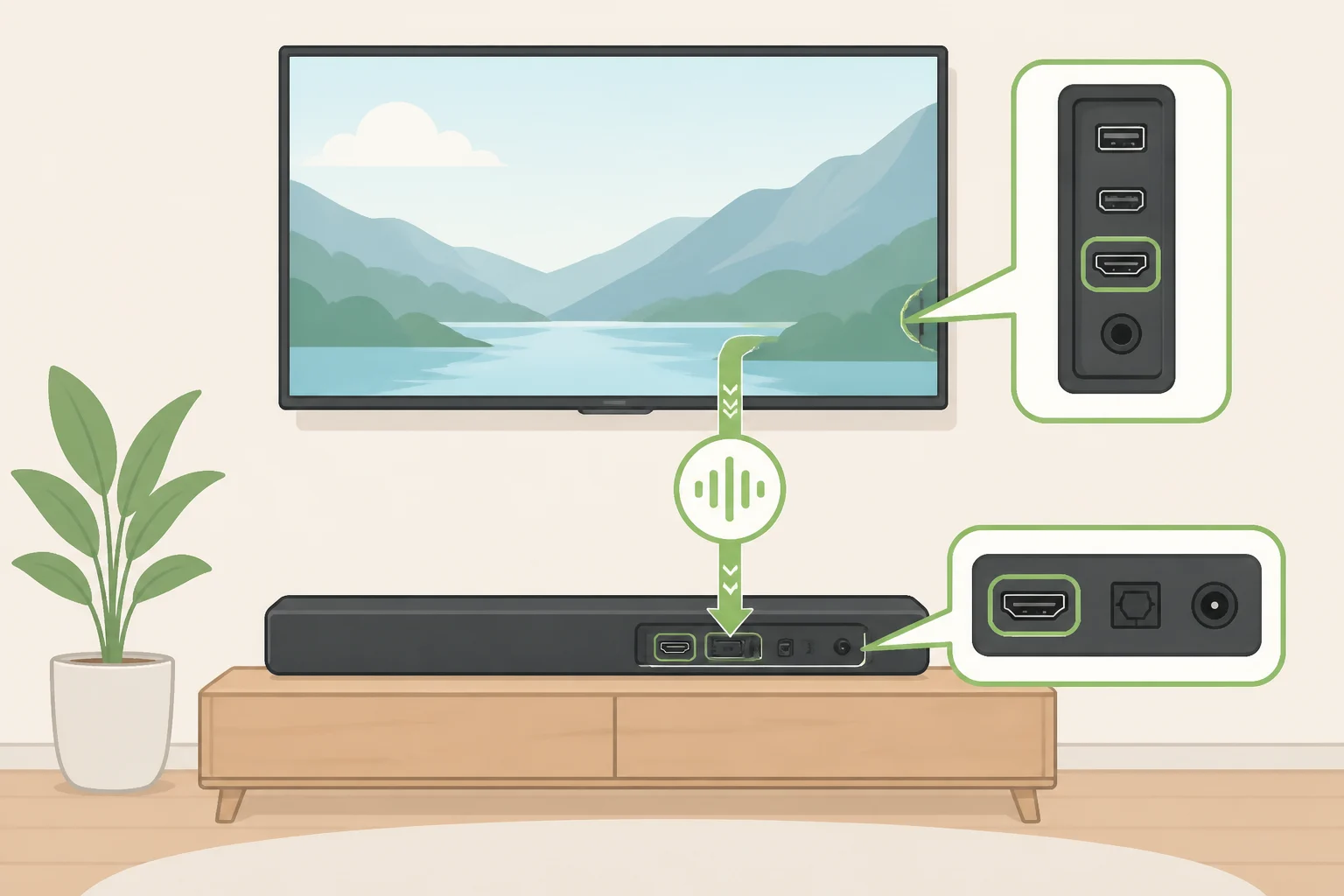
The bar can be wall-mounted to keep surfaces clear, and it's small enough to sit below most desktop displays, which Engadget frames as a fit for gaming setups as well as living-room TVs, Engadget reported. Yamaha's release lists the same pairing of environments: bedrooms, apartments, home offices and gaming setups.
Both accounts point to the same idea from different angles. Yamaha frames the B200A around who might buy it; Engadget frames it around where it might physically go. The two descriptions overlap enough to suggest a single, consistent product pitch rather than two separate marketing angles.
What Yamaha has and hasn't specified
Yamaha's spec sheet is fuller than the initial coverage might suggest, even if some details remain open. The B200A uses two drivers plus the built-in subwoofer, a compact enclosure Engadham's reporting describes without detailing driver orientation, per Engadget.
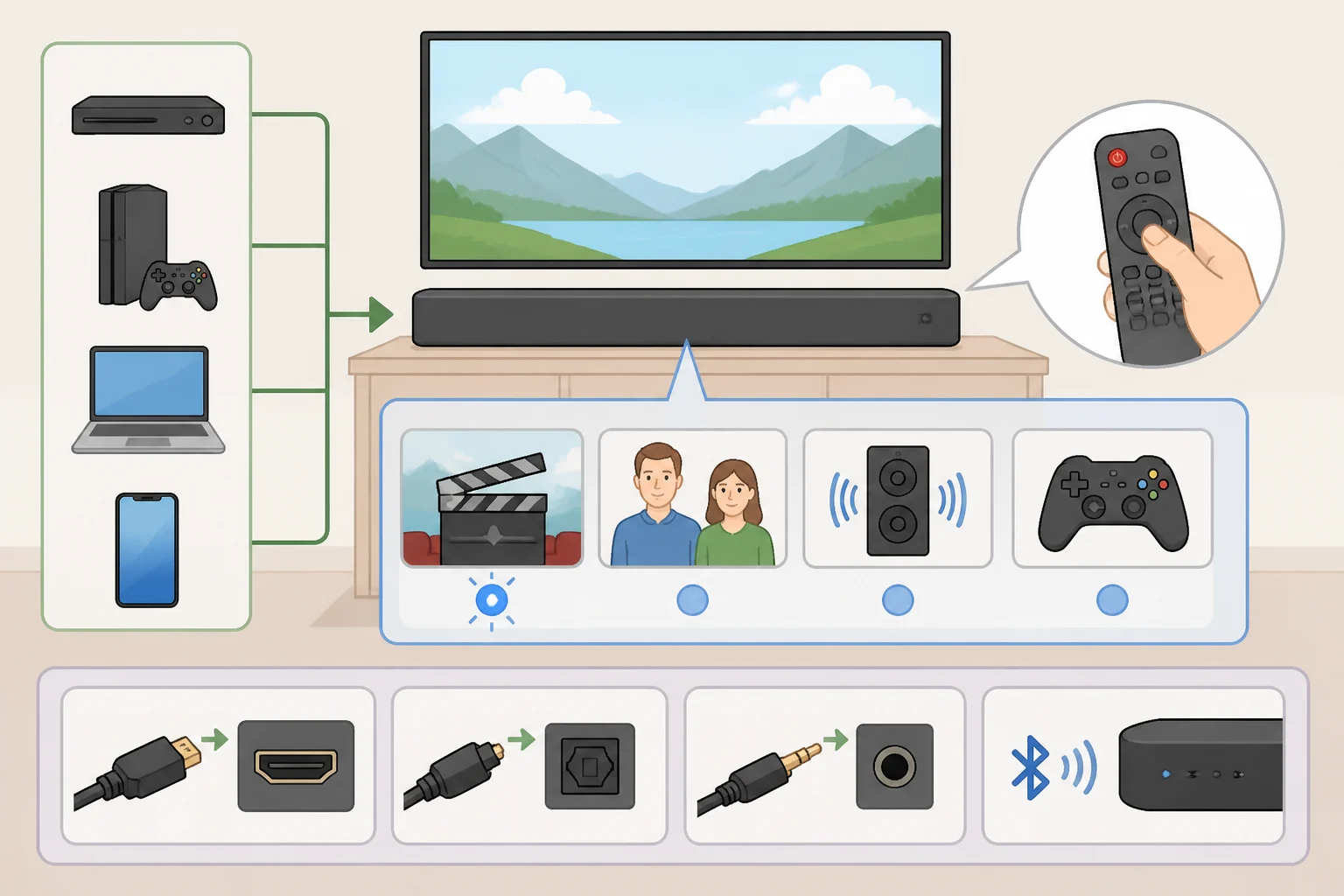
On top of that hardware, Yamaha layers a Bass Extension mode for added low end and Clear Voice technology aimed at keeping dialogue distinct from music and effects, according to Yamaha's release. The four modes are Movie, Standard, Stereo and Game, letting listeners switch presets depending on what's playing.
Connections follow the same logic of keeping things simple. Yamaha confirms the B200A supports HDMI eARC/ARC, optical, 3.5mm AUX and Bluetooth, according to its release, while Engadget's reporting notes the bar relies on a single HDMI port, per Engadget. A TV can route multiple source devices through its own HDMI inputs and return audio to the bar over eARC, so a single-TV setup shouldn't feel constrained. The single HDMI port limits direct connections to the bar itself, which matters only for buyers hoping to plug several devices straight into it.
What's missing from both accounts is just as informative as what's included. Yamaha's materials describe "rich, expansive sound" and "3D immersive sound" without providing maximum output figures, bass-extension measurements or detailed driver orientation, per Yamaha's release. Those are marketing characterizations, not numbers an independent lab has verified.
What hasn't been tested yet
Neither the announcement nor Engadget's initial report includes independent listening tests, bass measurements or maximum volume figures. Yamaha's own language, "rich, expansive sound" and "3D immersive sound," describes intent rather than measured performance, per Yamaha's release.
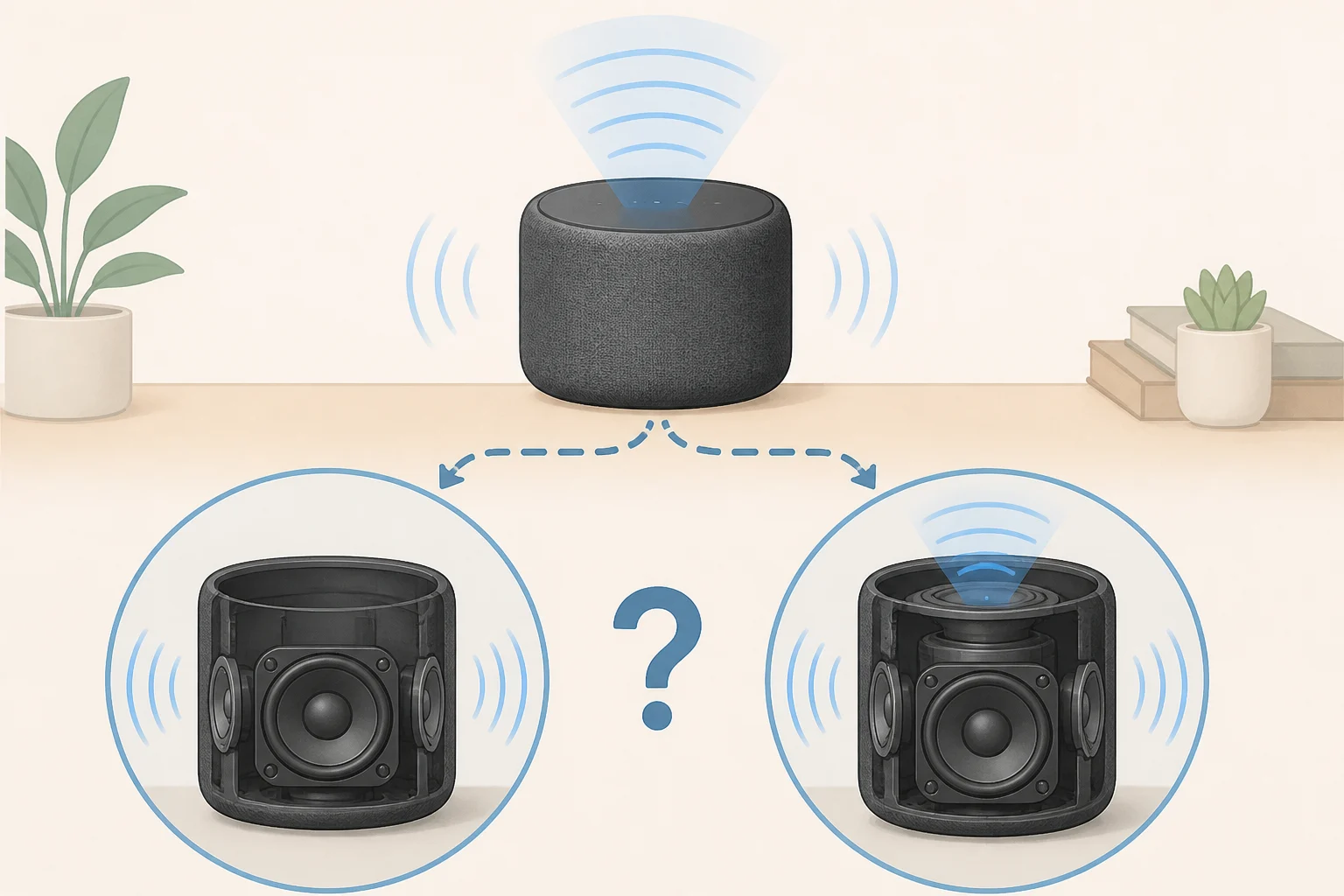
One design detail also remains unconfirmed: whether the B200A uses any up-firing drivers to bounce sound off the ceiling. Engadget's reporting describes the two-driver-plus-subwoofer layout but doesn't specify driver orientation. The sources do not say whether the B200A uses up-firing drivers, so this is an open question rather than a confirmed omission.
How compact Atmos bars have performed before
There's useful precedent for judging what a compact enclosure can do, even without hard data on the B200A itself. In a March 2026 comparison, TechRadar tested three compact Atmos bars, the Sonos Beam (Gen 2), Sony HT-S2000 and Denon Home 550, and found that none of them used up-firing speakers. All three still produced convincing spatial effects, with the Denon in particular creating what testers described as a "dome-like" sensation, according to TechRadar.
TechRadar's broader takeaway was that all three bars performed well "considering their compact size and lack of up-firing speakers." That doesn't guarantee anything about Yamaha's specific implementation, but it does show that a compact enclosure with two main drivers and a built-in subwoofer isn't automatically a dealbreaker for Atmos processing elsewhere in the category.
The same test offers a useful check on Yamaha's Clear Voice pitch. TechRadar found that all three competing bars delivered "crystal clear speech" even with no dialogue-enhancement mode active. That finding means Clear Voice is not yet evidence of an advantage over those three tested models, since they matched that clarity without any comparable feature turned on. Whether Clear Voice creates an audible difference on the B200A itself is something only a direct test can settle.
What to watch when reviews arrive
Yamaha has announced a 23.5-inch width, a $249.95 price and November availability. The next meaningful update on the B200A will come from independent testing: how far the built-in subwoofer and Bass Extension mode push low-end output, what maximum volume looks like in a small room, and whether the Atmos processing creates a convincing sense of height and width in the kind of listening tests TechRadar conducted on comparable compact bars. Clear Voice's performance against that same crystal-clear baseline is worth watching too, once reviewers can compare it directly against rivals rather than against Yamaha's own description.