ADM-160 MALD Decoy Drone: Why Getting Shot Down Wins
An enemy missile crew that fires at an ADM-160 MALD decoy drone and hits it hasn't necessarily won anything. They may have spent an interceptor, exposed a radar's location, or burned time that a real threat could have used to slip through. It's a trade-off visible in reporting from the war in Ukraine, where decoys of every kind have become a fixture of the air campaign (CEPA). Getting destroyed is one way this system succeeds. It isn't the only way, and it might not even be the most valuable one.
The ADM-160 MALD, short for Miniature Air-Launched Decoy, is an air-launched, expendable decoy missile developed by the United States for the Air Force. "Drone" is the word most people reach for, but the more precise description matters: MALD is designed primarily as a decoy, not as a reconnaissance platform or a conventional strike munition (Wikipedia). That distinction shapes everything else here.
DARPA started the MALD program three decades ago, in 1995, to build a cheap decoy for what the military calls Suppression of Enemy Air Defenses, or SEAD, a mission about manipulating radar rather than destroying it outright (Wikipedia). Ukrainian Air Force footage released last year shows Su-27 pilots describing the same idea in plainer terms: decoys are meant to "bear the brunt of the air defenses" while real strike weapons are used in the same operation (Wikipedia). Casper, identified by CEPA as one of the commanders leading Ukraine's long-range drone strikes, put it more bluntly: "We use the decoys to make a corridor for ourselves" through the most heavily defended stretch of the front (CEPA).
What follows covers what the ADM-160 actually is, the split-second decision it's built to complicate, how it fits into a real strike package, and why the illusion doesn't need to hold up for long to matter.
What is the ADM-160 MALD decoy drone?
Video of the Day
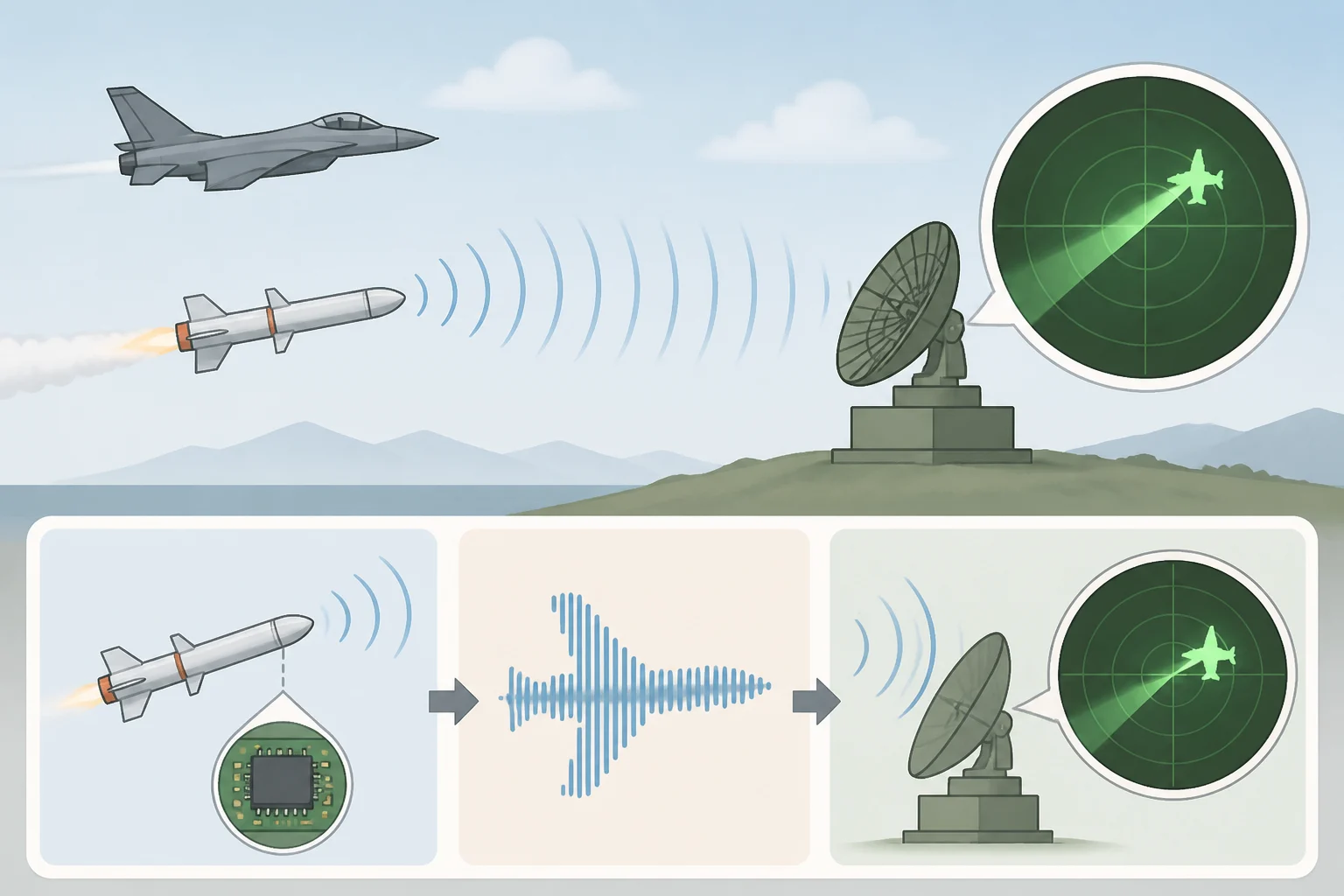
The ADM-160 is an air-launched, expendable missile that flies a preprogrammed route while its Signature Augmentation Subsystem makes it look, to a radar, like something else entirely. That subsystem can simulate the radar presentation of aircraft ranging from a lumbering B-52 Stratofortress to a stealthy F-117 Nighthawk (Wikipedia). A single decoy can be built to present as a different, more valuable aircraft than the one that actually launched it.
That illusion has limits worth naming. The Signature Augmentation Subsystem is built to reproduce a radar picture consistent with another aircraft type, not to defeat every method a defender might use to question a contact. Flight behavior, track history, and other sensor data can still work against a decoy; the deception only has to hold up long enough to matter, which is a much lower bar than holding up against every kind of scrutiny.
Navigation is handled by GPS-aided inertial guidance, and a mission can carry up to 256 preplanned waypoints. The pilot of the launching aircraft can revise that flight plan right up until the moment of release, letting a decoy's route be adjusted to match whatever the strike package needs that day (Wikipedia).
By 2014, production had scaled well past prototype status. Raytheon delivered the 1,000th MALD-J to the Air Force that May, and the program had racked up 33 consecutive successful flight tests over the preceding two years (Wikipedia). That volume supports the possibility of using decoys in quantity rather than as a one-off trick.
The program's history is also a reminder that a convincing decoy still has to fly far enough to matter. The Air Force cancelled an early version in January 2002 because it lacked the range and endurance the service needed, then reopened a broader competition later that same year for a longer-legged design. Raytheon won the resulting contract in the spring of 2003 (Wikipedia). A decoy that runs out of fuel before it reaches contested airspace doesn't deceive anyone.
Video of the Day
The decision MALD tries to complicate
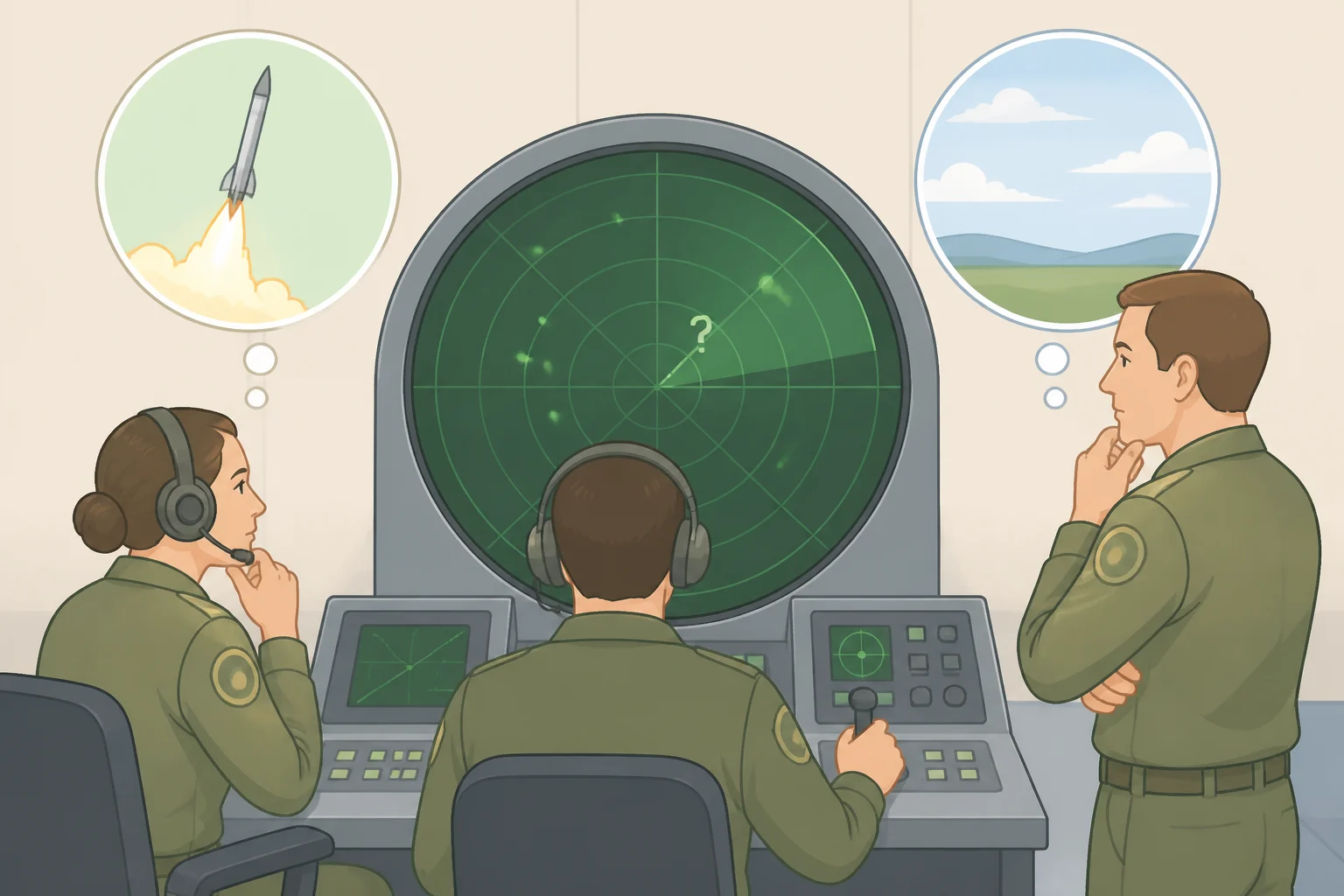
An air-defense crew watching an ambiguous radar contact can face a fast, expensive decision: fire on something that might be a decoy, or hold back on something that might be real. A well-flown ADM-160 MALD missile is built to make both options costly.
This trade-off isn't just theoretical. General Bryan Fenton, head of US Special Operations Command, told Congress that American forces often face $10,000 one-way drones with $2 million interceptor missiles, calling the exchange "upside down" (CEPA). Fenton was describing cheap aerial threats broadly, not the price of any single decoy, but the imbalance he's describing explains why forcing any reaction out of a defender has value on its own.
Serhii Kuzan, chairman of the Ukrainian Security and Cooperation Center and a former Ministry of Defense adviser, described the payoff in blunter terms. Decoys, he told CEPA, "force the Ukrainian defenders to shoot them down," which lets an attacker "identify air defense locations and units that can be either bypassed or hit by follow-on strikes" (CEPA).
Bendett told CEPA that distinguishing real drones from decoys in the middle of an attack is extremely difficult, precisely the ambiguity a decoy is built to create (CEPA). That uncertainty is easiest to see once MALD is flying inside an actual strike package, alongside weapons meant to exploit whatever it stirs up.
How the ADM-160 MALD decoy drone fits into a strike package
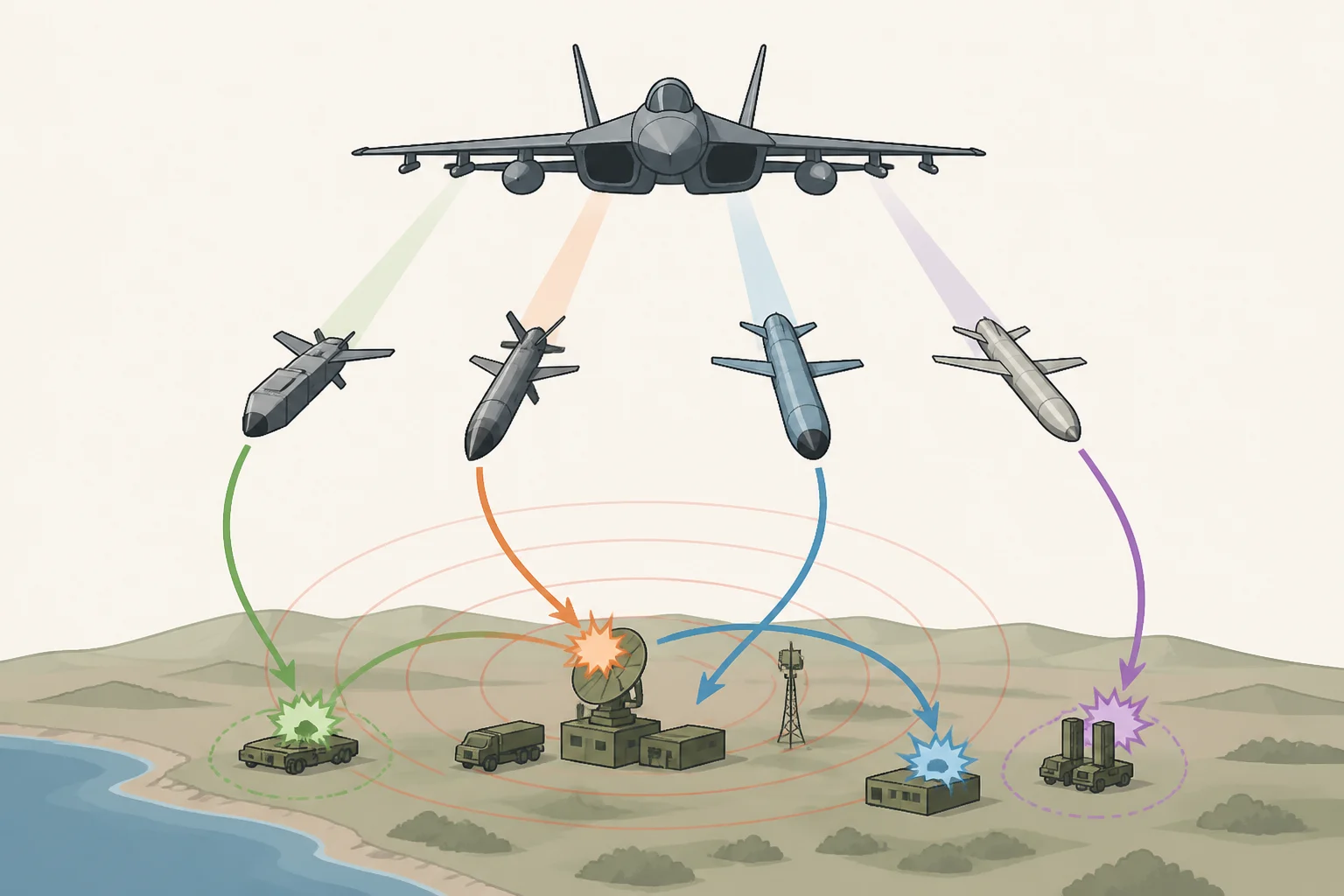
The clearest evidence of how MALD is actually used comes from Ukraine's own pilots. Footage released by the Ukrainian Air Force last year shows Su-27 crews describing MALD as typically deployed in coordination with Storm Shadow and SCALP cruise missiles, along with AGM-88 HARM anti-radiation missiles (Wikipedia). MALD had already been adapted to Ukraine's MiG-29 fighters before that Su-27 footage surfaced, so the tactic wasn't limited to a single airframe (Wikipedia).
Flying MALD alongside HARM points to a possible sequence: a decoy that causes an air-defense radar to switch on could, in principle, be positioned near a radar-seeking weapon able to exploit that signal. That specific mechanism isn't confirmed by the record, only the coordination itself, so it's worth treating as an informed inference rather than a documented outcome.
Physical evidence backs up the pattern, if less precisely. A label on wreckage found near Luhansk in 2023, after a Ukrainian strike, appeared to indicate an ADM-160B. Further wreckage turned up in the Kherson region later that year, reportedly after a mission flown alongside Storm Shadow launches (Wikipedia).
The jamming-capable MALD-J electronic warfare decoy adds a second option rather than replacing the first. It can operate in both decoy and jammer modes, and its electronic countermeasures are built to jam early-warning and target-acquisition radars, giving a single airframe two different ways to complicate an adversary's picture (Wikipedia).
Why the trick doesn't have to last forever
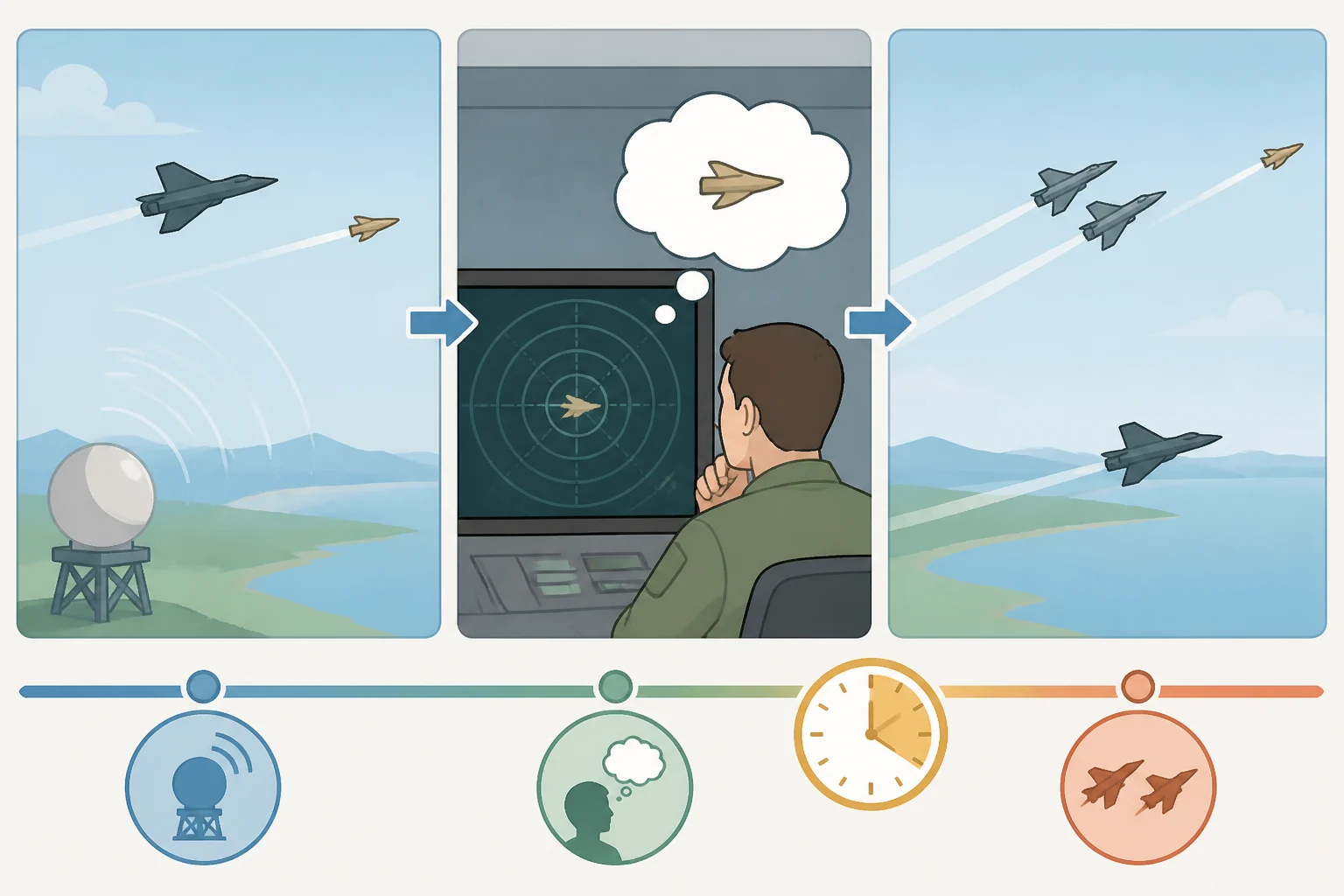
Research on Ukraine's ground-based decoys shows how little time is actually needed: medium-fidelity equipment can look real enough to fool aerial reconnaissance flying at altitude, and even after a decoy is identified in attack footage, it has already done its job by the time anyone notices (Modern War Institute).
Success, then, isn't binary. A decoy may draw an interceptor, hold up classification long enough to matter, or buy time for the rest of the strike package, depending on what the mission calls for.
Russia applies a cruder version of the same principle elsewhere in the war. Forces reportedly fit radar-reflecting Lüneburg lenses on the smaller, cheaper Gerbera drone to mimic larger Shahed-type threats and saturate Ukrainian air defenses, according to open-source weapons researcher Roy Gardiner (CEPA). Fooling a radar doesn't require a purpose-built decoy missile like MALD, just something convincing enough for long enough.
The defensive problem MALD exposes
MADIS and the Naval Postgraduate School's laser research aren't direct responses to the ADM-160 MALD decoy drone, but both target the same underlying problem: too many cheap or ambiguous aerial threats for a defender to answer with a full-price missile every time. The Marine Corps fielded MADIS, a vehicle-mounted system combining radar, sensors, electronic warfare, a 30 mm cannon, and Stinger missiles, to units in late 2024 and through 2025 to detect and defeat low-altitude drones (Navy CHIPS).
Naval Postgraduate School researchers, meanwhile, are training AI to speed up how laser weapons track and classify targets. Lead researcher Brij Agrawal put the reasoning plainly: sending million-dollar interceptors after multiple cheap drones is "a very expensive tradeoff," while a laser, once built, can fire for "a few dollars per shot" (Navy CHIPS).
MALD sits on the identification side of that same problem. A defender watching a radar contact that behaves like an aircraft has to decide, in seconds, whether it's worth an interceptor or a radar emission that gives away a position, without knowing whether it's a $2 million cruise missile or an unarmed decoy built to look like one. Getting that call wrong in either direction, firing on a decoy or holding fire on a real threat, is exactly the outcome MALD is designed to produce.
A related kind of deception has already been tested under fire. The Modern War Institute argues that decoy and camouflage techniques have helped Ukrainian Patriot air-defense units survive more than three years of sustained Russian attack, even as its researchers note that front-line US Army units still lack the equipment and training to replicate the tactic themselves (Modern War Institute).
Whether a MALD gets shot down was never the real measure of whether it worked. The measure is whether it changed what the defender did in the moment that mattered.