TikTok Alabama Child Safety Settlement: What Changes for Teens
TikTok will pay Alabama at least $100 million, and as much as $300 million if certain unspecified conditions are met, to resolve a lawsuit alleging the platform misled users about safety while designing its app to addict children, according to TechCrunch. The TikTok Alabama child safety settlement was announced Friday, days before a trial scheduled to begin Monday that Alabama's attorney general said would have been the first in the country to put state child-safety claims against TikTok before a jury, according to the Alabama Attorney General's Office.
Alabama is guaranteed the $100 million payment within 45 days. The higher $300 million figure depends on conditions the attorney general's office hasn't spelled out publicly, according to the Alabama AG's Office. Beyond the payout, TikTok committed to a set of product changes covering how the app works for underage and teen users, from daily time limits to feed personalization.
Attorney General Steve Marshall said the agreement means parents "can now rest easier knowing real protections are in place to shield their children from the dangers of social media addiction," according to TechCrunch. TikTok said the settlement "builds on our commitment and core objective to continually enhance our strong safety tools to protect teens," according to the same report. The statements cited here do not address whether TikTok admitted liability.
Settlement averts trial, doesn't decide the allegations
Video of the Day
Alabama's lawsuit alleged TikTok misled users about the safety protections built into its platform while engineering the app's features to addict children, according to TechCrunch. Those are allegations, not adjudicated findings. The settlement ended the case before the scheduled trial, so a jury never weighed the evidence.
Bloomberg Law described the deal as averting "the first courtroom test" in a wider wave of state cases against TikTok, framing the trial itself, rather than the settlement, as the unprecedented event.
Video of the Day
What the TikTok Alabama child safety settlement requires
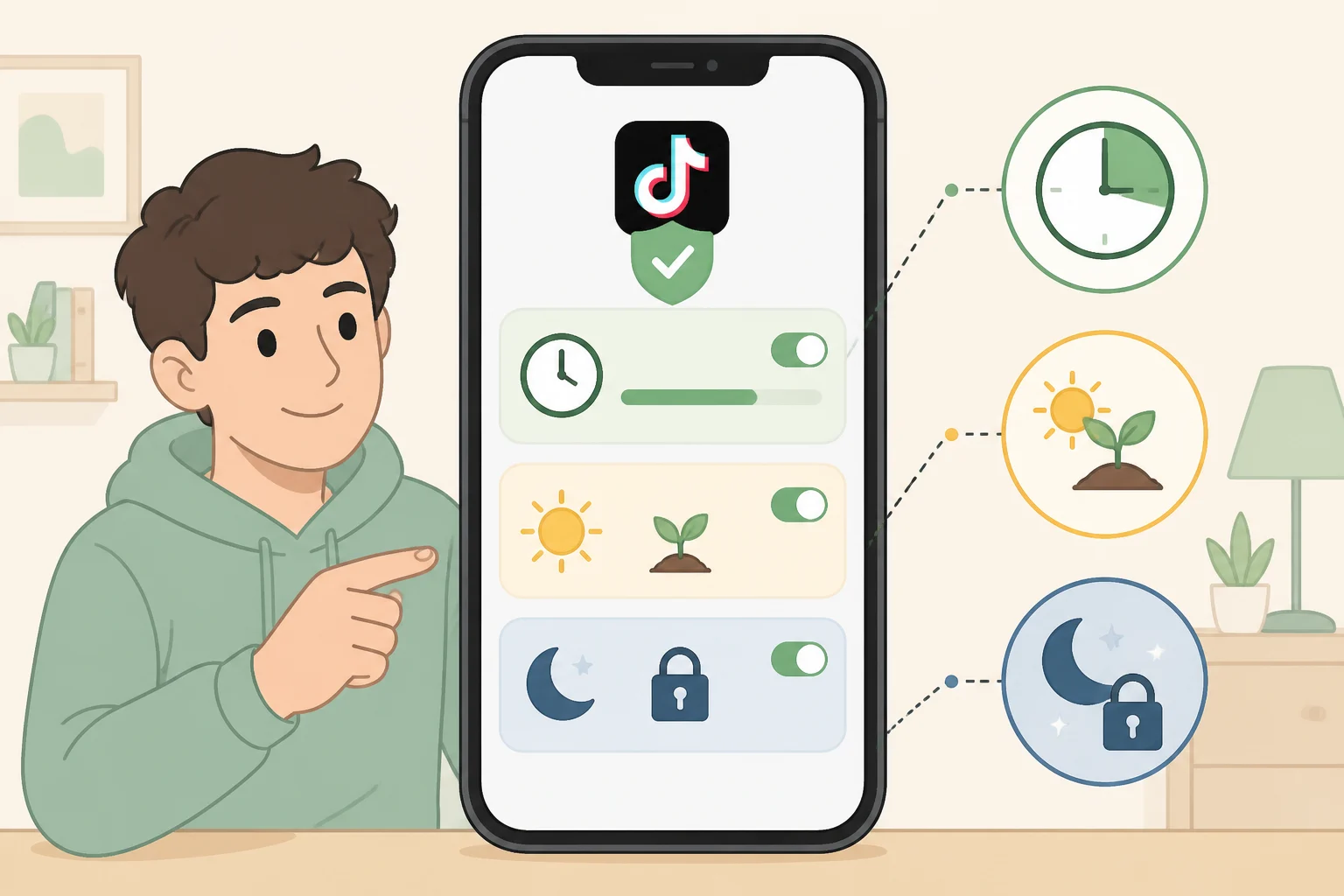
The agreement lists five product changes: a daily time limit, scroll-interrupting pauses, nighttime access restrictions, a ban on cosmetic filters, and a default non-personalized feed. The attorney general's office and TechCrunch describe the people covered by these measures with different labels, underage, teen, and children, without clarifying whether those terms refer to a single group of users or several overlapping ones.
To limit compulsive use, TikTok will cap daily use for underage users at two hours, with parental controls that let parents set stricter limits, according to TechCrunch. The app will also trigger "productive pauses" that interrupt teen users after 15 minutes of continuous use, and again at 60 and 90 minutes, according to the Alabama AG's Office.
On sleep and school disruption, TikTok will restrict children's access from midnight to 6 a.m., with additional limits on messaging and push notifications overnight and during school hours, according to the Alabama AG's Office. The release calls this "nighttime access" rather than a full blackout, and it does not specify which functions, if any, remain available during those hours.
The remaining two measures target appearance and recommendations for teen accounts: a blanket ban on cosmetic filters, and a default non-personalized feed, according to the Alabama AG's Office.
The attorney general's announcement never defines the age thresholds separating these categories, which leaves open whether all five measures reach the same population of users or apply to different age bands within TikTok's teen product.
What the announcements don't specify
The Alabama release and the reporting cited here do not specify whether these product changes apply only to TikTok users in Alabama, roll out nationally, or extend to the platform's global product, a distinction that would show whether the settlement produces a state-specific carve-out or a broader shift in how TikTok treats young users everywhere.
Nor do the announcements explain how TikTok will verify that a user actually qualifies as underage or a teen, whether parents can override the new limits, or what happens if a minor enters an inaccurate birth date.
Compliance monitoring is also absent from what's public. Neither the attorney general's release nor the reporting cited here mentions audits, independent oversight, reporting obligations to the state, or penalties if TikTok fails to implement the changes it agreed to. The conditions for receiving the possible additional payment have not been disclosed in the cited announcements either.
Where this fits in a wave of platform settlements
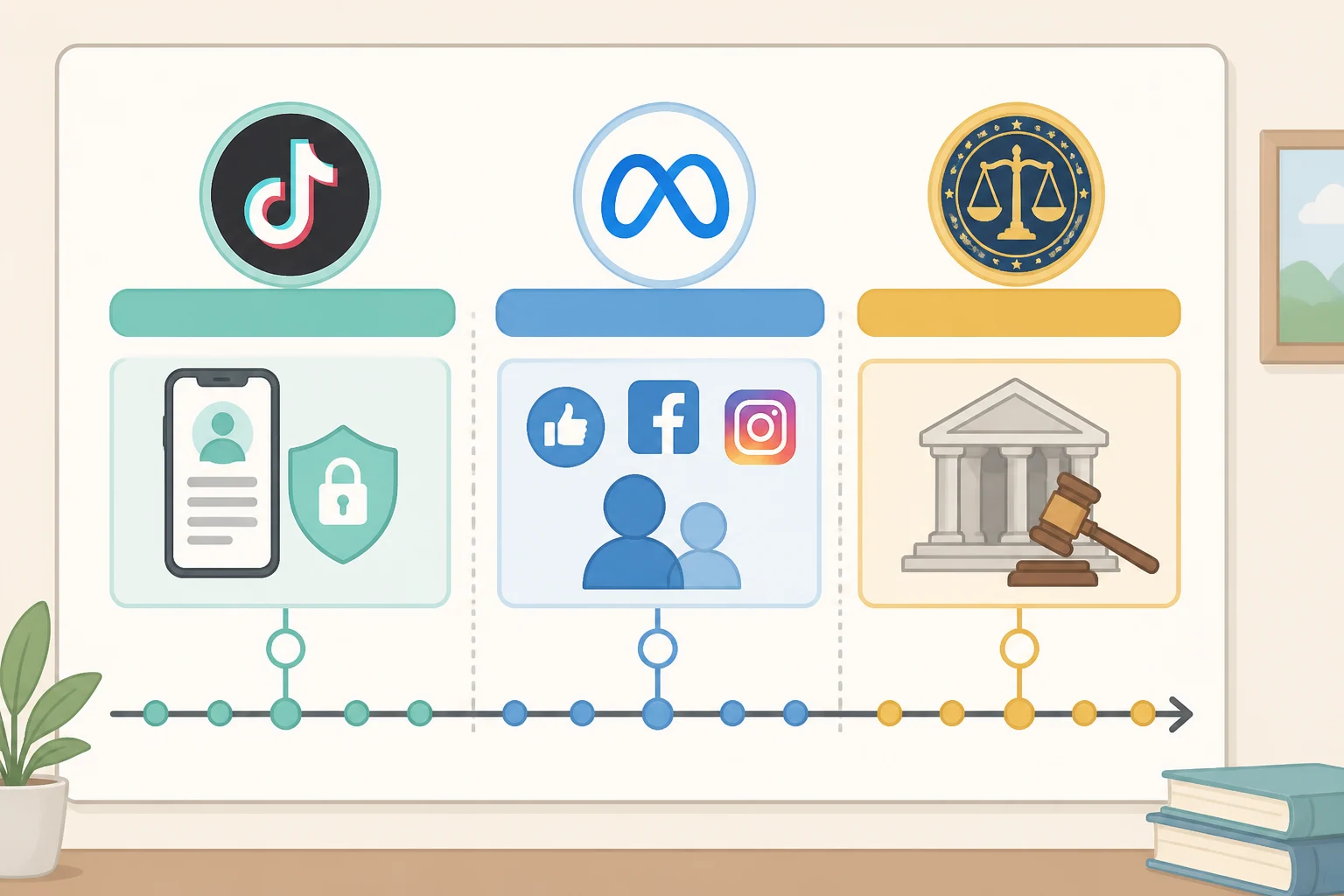
In August, TikTok reached a $400 million settlement with the Department of Justice over allegations that it violated federal child-privacy law, according to TechCrunch. That case rested on a different legal theory, brought by a different authority, than Alabama's claims about addictive design.
About a month before the Alabama settlement, Meta agreed to pay as much as $18 billion and make safety improvements to resolve claims brought by almost all U.S. states, according to Bloomberg Law. That deal dwarfs TikTok's in dollar terms, though it involves a different company and its own separate remedies.
Alabama's involvement with TikTok predates this lawsuit. In October 2024, Alabama joined an amicus brief with attorneys general from 19 other states, including Arizona, Colorado, Florida, Georgia, Michigan, Ohio and Pennsylvania, seeking court enforcement after TikTok allegedly failed to preserve and produce evidence in a multistate investigation, according to the Alabama Attorney General's Office. That brief addressed a discovery dispute, not the safety allegations at the center of the current case, and it doesn't establish that the other states involved are pursuing matching lawsuits of their own.
The TikTok, Meta and DOJ cases involve separate state and federal actions addressing different alleged harms to young users, each resting on its own legal claims and producing its own remedy. Reading them as one coordinated crackdown would overstate what the public record shows.
What to watch next
The most immediate deadline is procedural: Alabama is due to receive its guaranteed $100 million within 45 days of the settlement, a payment window that runs regardless of whether the conditions for the additional $200 million ever become public.
Whether the underlying agreement or later court filings surface will determine how much of this settlement can actually be checked, from age-verification methods to whether audit, monitoring, or enforcement provisions exist at all. Until then, Alabama's deal is a set of announced commitments rather than a fully documented one.
Whether the settlement becomes a model other states adopt against TikTok remains an open question, not a foregone conclusion. Nothing in the cited announcements or reporting indicates that other states plan comparable suits, and the terms that would make such a model replicable, verification, monitoring, penalties, still haven't been made public.